


Why the Traditional Resurrection Timeline Holds
by Pavel Mosko
One of the most common objections to the historic Christian understanding of the resurrection is this: Jesus said He would be “three days and three nights in the heart of the earth” (Matthew 12:40). A Friday afternoon crucifixion and Sunday morning resurrection seems too short — only about 36–40 hours. Doesn’t that contradict a literal 72-hour period?
After wrestling with this question (including helpful insights from a sharp Calvinist linguist on the old Theologica board and even a contrarian Messianic blogger), here are four interconnected reasons why the traditional timeline — late Friday crucifixion, all-day Saturday in the tomb, and early Sunday resurrection — is not only consistent with Scripture but the strongest reading.
“X Days and X Nights” Is a Biblical Idiom for Continuous Duration
The phrase “X days and X nights” (Xd + Xn) in Scripture functions as a set idiom, especially for extraordinary or stressful situations such as fasting, mourning, divine encounters, or being entombed.
A linguist friend summarized it well:
“The Xd+Xn phrase is used when continuous duration is intended, and typically implies an extraordinary situation (Ex. 24:18, 1 Sam. 30:12, 1 Kings 19:8, Job 2:13, Jonah 1:17, Matt. 4:2). The idiomatic nature comes with an understood distributive property: X days + X nights = X (days + nights). In other words, it equals X full day-units — even if technically only part of the last day has occurred. The part is counted as a whole.”
Notice the consistent pattern in the Bible: the numbers always match (never “seven days and six nights” or similar mismatches). This was a linguistic convention the original audience understood perfectly. It emphasizes unbroken time in remarkable circumstances, not a modern stopwatch count. Examples like the Egyptian servant in 1 Samuel 30:12 (“three days and three nights” yet “three days ago”) and Jonah confirm this flexible, idiomatic use.
Ancient Judaism Used Inclusive Reckoning
First-century Jews didn’t count time like we do with digital clocks. They practiced inclusive reckoning: any part of a day counted as a whole day.
A Jewish day began at sunset.
The well-known principle (reflected in the Talmud) states: “A day and a night are an onah (a portion of time), and the portion of an onah is as the whole of it.”
Biblical examples include:
Joseph imprisoned his brothers for “three days,” yet released them “on the third day” (Genesis 42:17-18).
Esther called for a fast “three days, night or day,” yet acted “on the third day” (Esther 4:16–5:1).
The Gospels freely interchange “after three days,” “in three days,” and “on the third day” for the same event.
Under this system, a late Friday afternoon crucifixion (part of Day 1), full Saturday (Day 2), and early Sunday morning (part of Day 3) perfectly counts as three days — exactly as the disciples described on the road to Emmaus: “Today is the third day since these things happened” (Luke 24:21).
A Strict 72-Hour Timeline Conflicts with Other Gospel Accounts
Forcing an exact 72 hours (often by shifting the crucifixion to Wednesday or Thursday) creates real tensions with the rest of the Gospels.
Jesus and the New Testament use multiple expressions interchangeably:
“Three days and three nights” (Matthew 12:40)
“After three days” (Mark 8:31; 9:31; 10:34)
“In three days” (John 2:19 — “Destroy this temple, and in three days I will raise it up”)
“On the third day” (Luke 18:33; Matthew 16:21, etc.)
On resurrection Sunday, the Emmaus disciples say it is “the third day since all this took place” (Luke 24:21). The chief priests wanted the tomb guarded “until the third day” (Matthew 27:64).
A rigid 72-hour count pushes events out of alignment and breaks this beautiful harmony. Only the traditional timeline allows every statement from Jesus and the eyewitnesses to fit together without contradiction.
The “High Holy Day” (High Sabbath) Theory Lacks Strong Scriptural or Historical Support
Some literalists appeal to John 19:31 (“that Sabbath was a high day”) to argue the crucifixion fell before an annual festival Sabbath (Nisan 15), allowing a shifted calendar for 72 hours.
All four Gospels, however, call the crucifixion day “the day of preparation” — the standard term for Friday, the day before the weekly Sabbath (Matt 27:62; Mark 15:42; Luke 23:54; John 19:14, 31, 42). John’s “high day” most naturally means the weekly Sabbath falling during the solemn Passover/Unleavened Bread season, making it especially significant. It does not require inventing an extra non-Friday Sabbath or rewriting the sequence of events.
Shifting the timeline to accommodate a literal 72 hours introduces more problems than it solves — with the Passover meal, the women’s spice preparation, and the overall flow of Passion Week. The early church uniformly understood a Friday crucifixion, and the text itself gives no clear mandate to override the weekly Sabbath pattern.
Putting It All Together
When we read Matthew 12:40 in its original linguistic, cultural, and canonical context — recognizing the idiom, inclusive reckoning, Gospel harmony, and the weakness of forced alternatives — the traditional timeline stands strong. Jesus was in the tomb for parts of three days and three nights, rose on the third day, and fulfilled every prediction exactly as the eyewitnesses recorded.
This isn’t special pleading or modern compromise. It’s faithful interpretation that honors how God’s people actually spoke, counted time, and wrote Scripture.
Note on Modern Groups
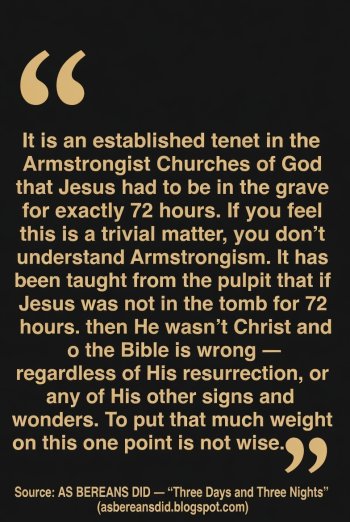
While the traditional Friday-to-Sunday timeline is the clear majority view across historic Christianity (Catholic, Orthodox, Protestant, and most Evangelical traditions), a minority of groups continue to advocate for a Wednesday or Thursday crucifixion to force a literal 72-hour period. These include certain Seventh-day Adventist Churches, the Church of God (Seventh Day), and Herbert Armstrong’s former Worldwide Church of God (and its various offshoots). Similar literalist interpretations also appear in segments of the Hebrew Roots movement, while Messianic Judaism shows a range of perspectives—some adhering to the traditional timeline and others exploring alternative chronologies.
by Pavel Mosko
One of the most common objections to the historic Christian understanding of the resurrection is this: Jesus said He would be “three days and three nights in the heart of the earth” (Matthew 12:40). A Friday afternoon crucifixion and Sunday morning resurrection seems too short — only about 36–40 hours. Doesn’t that contradict a literal 72-hour period?
After wrestling with this question (including helpful insights from a sharp Calvinist linguist on the old Theologica board and even a contrarian Messianic blogger), here are four interconnected reasons why the traditional timeline — late Friday crucifixion, all-day Saturday in the tomb, and early Sunday resurrection — is not only consistent with Scripture but the strongest reading.
“X Days and X Nights” Is a Biblical Idiom for Continuous Duration
The phrase “X days and X nights” (Xd + Xn) in Scripture functions as a set idiom, especially for extraordinary or stressful situations such as fasting, mourning, divine encounters, or being entombed.
A linguist friend summarized it well:
“The Xd+Xn phrase is used when continuous duration is intended, and typically implies an extraordinary situation (Ex. 24:18, 1 Sam. 30:12, 1 Kings 19:8, Job 2:13, Jonah 1:17, Matt. 4:2). The idiomatic nature comes with an understood distributive property: X days + X nights = X (days + nights). In other words, it equals X full day-units — even if technically only part of the last day has occurred. The part is counted as a whole.”
Notice the consistent pattern in the Bible: the numbers always match (never “seven days and six nights” or similar mismatches). This was a linguistic convention the original audience understood perfectly. It emphasizes unbroken time in remarkable circumstances, not a modern stopwatch count. Examples like the Egyptian servant in 1 Samuel 30:12 (“three days and three nights” yet “three days ago”) and Jonah confirm this flexible, idiomatic use.
Ancient Judaism Used Inclusive Reckoning
First-century Jews didn’t count time like we do with digital clocks. They practiced inclusive reckoning: any part of a day counted as a whole day.
A Jewish day began at sunset.
The well-known principle (reflected in the Talmud) states: “A day and a night are an onah (a portion of time), and the portion of an onah is as the whole of it.”
Biblical examples include:
Joseph imprisoned his brothers for “three days,” yet released them “on the third day” (Genesis 42:17-18).
Esther called for a fast “three days, night or day,” yet acted “on the third day” (Esther 4:16–5:1).
The Gospels freely interchange “after three days,” “in three days,” and “on the third day” for the same event.
Under this system, a late Friday afternoon crucifixion (part of Day 1), full Saturday (Day 2), and early Sunday morning (part of Day 3) perfectly counts as three days — exactly as the disciples described on the road to Emmaus: “Today is the third day since these things happened” (Luke 24:21).
A Strict 72-Hour Timeline Conflicts with Other Gospel Accounts
Forcing an exact 72 hours (often by shifting the crucifixion to Wednesday or Thursday) creates real tensions with the rest of the Gospels.
Jesus and the New Testament use multiple expressions interchangeably:
“Three days and three nights” (Matthew 12:40)
“After three days” (Mark 8:31; 9:31; 10:34)
“In three days” (John 2:19 — “Destroy this temple, and in three days I will raise it up”)
“On the third day” (Luke 18:33; Matthew 16:21, etc.)
On resurrection Sunday, the Emmaus disciples say it is “the third day since all this took place” (Luke 24:21). The chief priests wanted the tomb guarded “until the third day” (Matthew 27:64).
A rigid 72-hour count pushes events out of alignment and breaks this beautiful harmony. Only the traditional timeline allows every statement from Jesus and the eyewitnesses to fit together without contradiction.
The “High Holy Day” (High Sabbath) Theory Lacks Strong Scriptural or Historical Support
Some literalists appeal to John 19:31 (“that Sabbath was a high day”) to argue the crucifixion fell before an annual festival Sabbath (Nisan 15), allowing a shifted calendar for 72 hours.
All four Gospels, however, call the crucifixion day “the day of preparation” — the standard term for Friday, the day before the weekly Sabbath (Matt 27:62; Mark 15:42; Luke 23:54; John 19:14, 31, 42). John’s “high day” most naturally means the weekly Sabbath falling during the solemn Passover/Unleavened Bread season, making it especially significant. It does not require inventing an extra non-Friday Sabbath or rewriting the sequence of events.
Shifting the timeline to accommodate a literal 72 hours introduces more problems than it solves — with the Passover meal, the women’s spice preparation, and the overall flow of Passion Week. The early church uniformly understood a Friday crucifixion, and the text itself gives no clear mandate to override the weekly Sabbath pattern.
Putting It All Together
When we read Matthew 12:40 in its original linguistic, cultural, and canonical context — recognizing the idiom, inclusive reckoning, Gospel harmony, and the weakness of forced alternatives — the traditional timeline stands strong. Jesus was in the tomb for parts of three days and three nights, rose on the third day, and fulfilled every prediction exactly as the eyewitnesses recorded.
This isn’t special pleading or modern compromise. It’s faithful interpretation that honors how God’s people actually spoke, counted time, and wrote Scripture.
Note on Modern Groups
While the traditional Friday-to-Sunday timeline is the clear majority view across historic Christianity (Catholic, Orthodox, Protestant, and most Evangelical traditions), a minority of groups continue to advocate for a Wednesday or Thursday crucifixion to force a literal 72-hour period. These include certain Seventh-day Adventist Churches, the Church of God (Seventh Day), and Herbert Armstrong’s former Worldwide Church of God (and its various offshoots). Similar literalist interpretations also appear in segments of the Hebrew Roots movement, while Messianic Judaism shows a range of perspectives—some adhering to the traditional timeline and others exploring alternative chronologies.


