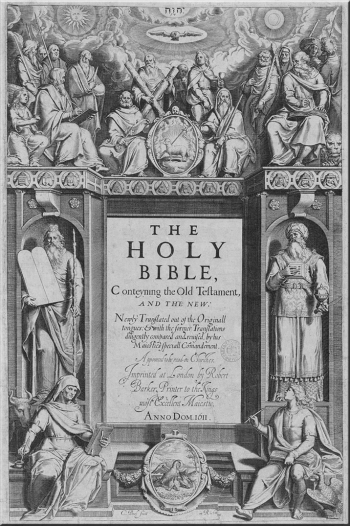
1611 KJV Motorcycle Patch?

  • Welcome to Christian Forums, a Christian Forum that recognizes that all Christians are a work in progress.

    You will need to register to be able to join in fellowship with Christians all over the world.

    We hope to see you as a part of our community soon and God Bless!

rockytopva

Mod
Staff member
Dec 31, 2010
6,525
3,391
113
Faith
Christian
Country
United States
Gender
Male
I am working on a 1611 KJV Motorcycle Patch for a black leather jacket. Any edits/ideas please post.

Width - 7.5" (716 Pixels)
Height - 11" (1075 Pixels)

1755651267845.png
 

KUWN

Well-Known Member
Sep 13, 2024
910
283
63
71
Southeast
Faith
Christian
Country
United States
I am working on a 1611 KJV Motorcycle Patch for a black leather jacket. Any edits/ideas please post.

Width - 7.5" (716 Pixels)
Height - 11" (1075 Pixels)

View attachment 68647
I would not use the 1611 KJV! There were so many errors in it. Over the next two hundred years, it went through many corrections. You will need to use a KJV in the 1900s.

Here's a little I found while researching the KJV and other translations.

He should have never put it in there!


The King James Version (KJV) was originally published, in 1611, by the royal

printer, Robert Barker. In the margins of that very first edition, there

were some 8,422 notes. Several of these notes indicate that a particular

verse itself may not be exactly correct.


For example, here is Luke 17:36 as it appears in the New King James Version


“Two men will be in the field: the one will be taken and the other left.”


Here is the note that appeared in the margin of that original 1611 edition:


“This 36. verse is wanting in most of the Greek copies.”


If you have a NIV, don’t bother looking this verse up. It is not in that

Translation. What the note said in essence was, “we have reason to believe that this verse should not be in here at all.”


Well, therein lies Textual Criticism, which is the study of what the

Original Autographs (these are the actual writings of the Apostles

themselves) exactly contained. In other words, before we can know what the

Bible says, we need to know what the Bible is. And this is no small task.

Once a group of Textual Critics finish their work, they turn their work over

to the printers to publish. That way, we can read the Bible.


In this article, I would like to draw our attention to some amusing mistakes

that found their way into the KJV. Fortunately, they have all been fixed

with subsequent Editions. Bear in mind, the King James Version went through

many revisions, including one the very next year in 1612. And again in 1613.

And many more after that.


Oddly enough, the KJV was translated from only about six Greek manuscripts

dating no earlier than the 10th century. Although there are more than 5,400

Greek manuscripts today, back in the 1600’s that was not the case.


The relatively few Greek manuscripts that are behind this KJV date between

the 10th and 14th centuries. Since the publishing of the first KJV, more

than 2,000 Greek manuscripts have been found. And some of these date back as

early as the 2nd century. (Remember, the earliest Greek manuscript

supporting the KJV is 800 years later.) With the new discovery of older

manuscripts, modern versions have come on the scene. The NIV is based on

different Greek manuscripts than is the KJV. That is why they differ at

places, as noted above.


Here is one example as to why they differ. When a man by the name of Erasmus

was putting together the Greek New Testament in the early 1500’s, he could

find no existing Greek manuscript that contained the words in 1 John 5:7,

which reads in the KJV, “For there are three that bear record in heaven; the

Father, the Word, and the Holy Spirit: and these three are one.” It’s in the

KJV even to this day, but Erasmus refused to put it in his Greek Edition,

unless…


That was his mistake! Erasmus went on public record saying that if anyone

could produce even one Greek manuscript with the disputed passage in it, he

would put it in his next Greek Edition. (These disputed words were first

noticed in a not-so-old Latin version.) Erasmus’ first two Greek New

Testaments did not contain this passage.


Well, along comes an enemy of Erasmus, by the name of Edward Lee, and he

mysteriously produces a Greek manuscript (a very highly suspect one, I might

add) that contained these words. So, Erasmus, true to his word, yet being

convinced it would not do too much damage to sacred Scripture, unwillingly,

put it in his third Edition. Erasmus did note that he doubted its

authenticity. Right here is where my opening line fits in. He was true to

his word, but not the Word of God.


Well, no early Greek manuscript has this passage in it. Not one early

manuscript! No Greek manuscript dated in the first 5 centuries has this

passage in it. So, if we look at most modern versions, we simply will not

find that passage in it. There are a lot of these types of disputes in the

various manuscripts, practically all of them very insignificant. So, one set of Greek manuscripts read one way and another set of manuscripts say something slightly different, and that’s why we have different versions today.


These differences in Greek manuscripts are actually to be expected. Let’s

suppose, for example, you asked 100 people to copy the book, Moby Dick. Do

you think any two would be exactly alike? Of course not! And if we took the

original book away, and then tried to recreate it, using only the 100

copies, how close to the original Moby Dick do you think we could get? Real

close! If on page 28, I wrote Moby Dock, and my brother, Tiger, wrote Muby

Dick, and 98 other people wrote Moby Dick, would you consider my wording

(Dock) or my brother’s wording (Muby) correct? There is your answer to the

Greek manuscripts. The variants are about as tough to work through as this

preceding example. (In fact, I know my brother well enough to also say the

he will misspell “receive” every time. He puts the i before the e. And

remember, every time that “receive” is misspelled, that’s another variant, even though it’s the same variant each time. If, for example each time misspelled is observed, that’s 48 times, that’s 48 variants. As you can see, they add up pretty quickly.)


Let me show you why some people are initially shocked when they begin their

study of Textual Criticism. The Greek New Testament has roughly 138,162

words. Taking all the 5,400 manuscripts together, there are somewhere

between 400,000 and 500,000 variations. That’s about 3+ variants PER WORD!


Maybe this will help. Let me give you a couple of those variants in one

small phrase in the Bible:


In John 4:1 some manuscripts read, “Then when Jesus knew.” Some other

manuscripts read, “Then when the Lord knew.” One manuscript has, “Then when

Jecus knew.” So, some say “Jesus” and some say “the Lord” and one misspelled

“Jesus.” (There are actually a few more that misspell “Jesus”)


So, how many variants do you see? Are you concerned with any of them? Here’s

the good news: That is just about the extent of the vast majority of

variants in the New Testament. As you can see, not knowing the history of the Bible makes us vulnerable to every wind of doctrine, or false claims against the Word. But when we add up all the ‘discrepancies’ and ‘variants’ there is absolutely nothing to be concerned with. Absolutely nothing! The preservation of the Word of God over the years, one could argue, has a supernatural element to it.

I mentioned earlier that since the first publication of the KJV of 1611, of

which there have literally been thousands of corrections to it, many Greek

Manuscripts have been discovered. How one or two of those manuscripts were

discovered are interesting stories.


More than 200 years after the first KJV, in the Spring of 1844, a man by the

name Count Konstantin von Tischendorf, a man (genius) fluent in classical

languages and dialects, took a trip to Mount Sinai to visit a monastery. He

took this trip in hopes of discovering ancient biblical documents. The

monastery he visited was called St. Catherine’s, then occupied by Russian

monks. Initially, he was a bit disappointed when he was unable to find what

he was looking for. However, as he looked in a small room near the Library,

he noticed something very unusual in the trash can, of all places! His heart

began to race as he approached this waste basket. The contents, sheets of

‘paper’ written on animal skin, seemed all too familiar to him. He was well

aware that ancient documents were written on the very kind of “trash” he was

looking at. Well learned in Koine Greek, he picked up a sheet and began

reading it. It was the Old Testament! As he kept digging deeper, the New

Testament was also there. There were 129 pages of the oldest known

recordings of the Bible, written almost 1,500 years earlier. Who knows how

many pages had already been burned to warm those Russian monks.

 

KUWN

Well-Known Member
Sep 13, 2024
910
283
63
71
Southeast
Faith
Christian
Country
United States
I would not use the 1611 KJV! There were so many errors in it. Over the next two hundred years, it went through many corrections. You will need to use a KJV in the 1900s.

Here's a little I found while researching the KJV and other translations.

He should have never put it in there!


The King James Version (KJV) was originally published, in 1611, by the royal

printer, Robert Barker. In the margins of that very first edition, there

were some 8,422 notes. Several of these notes indicate that a particular

verse itself may not be exactly correct.


For example, here is Luke 17:36 as it appears in the New King James Version


“Two men will be in the field: the one will be taken and the other left.”


Here is the note that appeared in the margin of that original 1611 edition:


“This 36. verse is wanting in most of the Greek copies.”


If you have a NIV, don’t bother looking this verse up. It is not in that

Translation. What the note said in essence was, “we have reason to believe that this verse should not be in here at all.”


Well, therein lies Textual Criticism, which is the study of what the

Original Autographs (these are the actual writings of the Apostles

themselves) exactly contained. In other words, before we can know what the

Bible says, we need to know what the Bible is. And this is no small task.

Once a group of Textual Critics finish their work, they turn their work over

to the printers to publish. That way, we can read the Bible.


In this article, I would like to draw our attention to some amusing mistakes

that found their way into the KJV. Fortunately, they have all been fixed

with subsequent Editions. Bear in mind, the King James Version went through

many revisions, including one the very next year in 1612. And again in 1613.

And many more after that.


Oddly enough, the KJV was translated from only about six Greek manuscripts

dating no earlier than the 10th century. Although there are more than 5,400

Greek manuscripts today, back in the 1600’s that was not the case.


The relatively few Greek manuscripts that are behind this KJV date between

the 10th and 14th centuries. Since the publishing of the first KJV, more

than 2,000 Greek manuscripts have been found. And some of these date back as

early as the 2nd century. (Remember, the earliest Greek manuscript

supporting the KJV is 800 years later.) With the new discovery of older

manuscripts, modern versions have come on the scene. The NIV is based on

different Greek manuscripts than is the KJV. That is why they differ at

places, as noted above.


Here is one example as to why they differ. When a man by the name of Erasmus

was putting together the Greek New Testament in the early 1500’s, he could

find no existing Greek manuscript that contained the words in 1 John 5:7,

which reads in the KJV, “For there are three that bear record in heaven; the

Father, the Word, and the Holy Spirit: and these three are one.” It’s in the

KJV even to this day, but Erasmus refused to put it in his Greek Edition,

unless…


That was his mistake! Erasmus went on public record saying that if anyone

could produce even one Greek manuscript with the disputed passage in it, he

would put it in his next Greek Edition. (These disputed words were first

noticed in a not-so-old Latin version.) Erasmus’ first two Greek New

Testaments did not contain this passage.


Well, along comes an enemy of Erasmus, by the name of Edward Lee, and he

mysteriously produces a Greek manuscript (a very highly suspect one, I might

add) that contained these words. So, Erasmus, true to his word, yet being

convinced it would not do too much damage to sacred Scripture, unwillingly,

put it in his third Edition. Erasmus did note that he doubted its

authenticity. Right here is where my opening line fits in. He was true to

his word, but not the Word of God.


Well, no early Greek manuscript has this passage in it. Not one early

manuscript! No Greek manuscript dated in the first 5 centuries has this

passage in it. So, if we look at most modern versions, we simply will not

find that passage in it. There are a lot of these types of disputes in the

various manuscripts, practically all of them very insignificant. So, one set of Greek manuscripts read one way and another set of manuscripts say something slightly different, and that’s why we have different versions today.


These differences in Greek manuscripts are actually to be expected. Let’s

suppose, for example, you asked 100 people to copy the book, Moby Dick. Do

you think any two would be exactly alike? Of course not! And if we took the

original book away, and then tried to recreate it, using only the 100

copies, how close to the original Moby Dick do you think we could get? Real

close! If on page 28, I wrote Moby Dock, and my brother, Tiger, wrote Muby

Dick, and 98 other people wrote Moby Dick, would you consider my wording

(Dock) or my brother’s wording (Muby) correct? There is your answer to the

Greek manuscripts. The variants are about as tough to work through as this

preceding example. (In fact, I know my brother well enough to also say the

he will misspell “receive” every time. He puts the i before the e. And

remember, every time that “receive” is misspelled, that’s another variant, even though it’s the same variant each time. If, for example each time misspelled is observed, that’s 48 times, that’s 48 variants. As you can see, they add up pretty quickly.)


Let me show you why some people are initially shocked when they begin their

study of Textual Criticism. The Greek New Testament has roughly 138,162

words. Taking all the 5,400 manuscripts together, there are somewhere

between 400,000 and 500,000 variations. That’s about 3+ variants PER WORD!


Maybe this will help. Let me give you a couple of those variants in one

small phrase in the Bible:


In John 4:1 some manuscripts read, “Then when Jesus knew.” Some other

manuscripts read, “Then when the Lord knew.” One manuscript has, “Then when

Jecus knew.” So, some say “Jesus” and some say “the Lord” and one misspelled

“Jesus.” (There are actually a few more that misspell “Jesus”)


So, how many variants do you see? Are you concerned with any of them? Here’s

the good news: That is just about the extent of the vast majority of

variants in the New Testament. As you can see, not knowing the history of the Bible makes us vulnerable to every wind of doctrine, or false claims against the Word. But when we add up all the ‘discrepancies’ and ‘variants’ there is absolutely nothing to be concerned with. Absolutely nothing! The preservation of the Word of God over the years, one could argue, has a supernatural element to it.

I mentioned earlier that since the first publication of the KJV of 1611, of

which there have literally been thousands of corrections to it, many Greek

Manuscripts have been discovered. How one or two of those manuscripts were

discovered are interesting stories.


More than 200 years after the first KJV, in the Spring of 1844, a man by the

name Count Konstantin von Tischendorf, a man (genius) fluent in classical

languages and dialects, took a trip to Mount Sinai to visit a monastery. He

took this trip in hopes of discovering ancient biblical documents. The

monastery he visited was called St. Catherine’s, then occupied by Russian

monks. Initially, he was a bit disappointed when he was unable to find what

he was looking for. However, as he looked in a small room near the Library,

he noticed something very unusual in the trash can, of all places! His heart

began to race as he approached this waste basket. The contents, sheets of

‘paper’ written on animal skin, seemed all too familiar to him. He was well

aware that ancient documents were written on the very kind of “trash” he was

looking at. Well learned in Koine Greek, he picked up a sheet and began

reading it. It was the Old Testament! As he kept digging deeper, the New

Testament was also there. There were 129 pages of the oldest known

recordings of the Bible, written almost 1,500 years earlier. Who knows how

many pages had already been burned to warm those Russian monks.

see next post
 

KUWN

Well-Known Member
Sep 13, 2024
910
283
63
71
Southeast
Faith
Christian
Country
United States
Let me add an interesting twist (the second story). Tischendorf had a friend

named Samuel Tragelles. Tragelles was also a scholar. Excited by von

Tischendorg’s discovery, and in hopes of finding more biblical manuscripts

himself, Tragelles asked the Pope if he could visit the Vatican library. The

Pope agreed to let him in, but put some unusual restrictions on him. The

Pope insisted that he not bring any writing material with him into the

library. To insure compliance, he would be searched on his way in and out.

Additionally, he was only allowed to sit there for six hours a day. All of

this Tragelles agreed to, and did so for three months. Tragelles discovered

a document similar to that of his friend, Tischendorf. Rather than notifying

the Pope that he had just stumbled upon an ancient manuscript of the Bible,

he took another route. You may not believe this, but Tragelles, apparently

endowed with a great memory, memorized the entire manuscript, piece by

piece, not just the Greek and Hebrew, but the Aramaic as well! What he did

was memorize a small portion, about six hour’s worth, then went to his

personal room and wrote down what he had memorized. After three months, he

was able to memorized most of the Bible in its original languages!


Hope you enjoyed that brief digression.


Well, I think I said I wanted to list a few amusing mistakes that the

printers made while publishing the KJV. Here they are:


In the KJV, the seventh commandment was slightly altered. The word “not” was

accidentally omitted. With this oversight, the KJV read, “You shall commit

adultery.” Not sure how many copies were circulated before this omission was

noticed. I do know this, after this error was duly noted, and corrected I

might add, scoffers labeled this edition the “Wicked Bible.”


In the garden of Gethsemane, the first KJV had “Judas” going there to pray,

not Jesus.


When John in Revelation 21:1 saw the new heaven and earth, he described it

as having “no more sea.” The KJV, in an early edition, once again omitted a

word (no). Hence, in this version’s rendition of the new heaven and earth,

there was actually ‘more sea.’


Here’s a good one. In 1 Corinthians 6:9, it’s not the ‘righteous’ who

inherit the kingdom, it’s the “unrighteous.” Not so sure I don’t like that

better!


John 5:14 is a close second for the funniest. After Jesus heals the

paralytic man, he admonishes him to “sin no more.” However, two letters

where reversed in this KJV. Can you guess which two? Yup! If the printer was

right, that man was asked to sin ‘on’ more! Must have been the same person

who worked on the Commandments.


Psalm 119:161 was goofed. But in this case, we can see why. Here is that

verse as it should have appeared:


Princes persecute me without a cause,

But my heart stands in awe of Your word.


Notice how the printers subliminally personalize it, albeit by mistake. Here

is how it appeared in that KJV:


Printers persecute me without a cause,

But my heart stands in awe of Your word.


In Luke, you recall when Jesus told Peter that he would deny Him three

times. Nope, It was Philip, as far as the KJV printers could tell. At least

both names start with a P.


Although a rather obscure passage, the mistake in Ezekiel 47:10 should have

been caught (get it?). In this verse, the fisherman stand (that’s the

correct wording), but according to the KJV, the fish stand. That would be

quite a feat.


This last one I mention is found in the section of Scripture from which I

chose the name for my daughter. The KJV got all the words right, they just

put two in the wrong order. As we can see they switched them. Here is how it

should have appeared:


“Then Rebekah and her damsels arose, and they rode on the camels and

followed the man.”


Now, I close with this final error. This is how it actually appeared in the

KJV. Talk about a damsel in distress!


“Then Rebekah and her camels arose, and they rode on the damsels and

followed the man.”

How in the world can anyone make a misteak like that?
 

Moontan13

Member
Oct 6, 2025
43
28
18
66
Colorado Springs
Faith
Christian
Country
United States
I would not use the 1611 KJV! There were so many errors in it. Over the next two hundred years, it went through many corrections. You will need to use a KJV in the 1900s.

Here's a little I found while researching the KJV and other translations.

He should have never put it in there!


The King James Version (KJV) was originally published, in 1611, by the royal

printer, Robert Barker. In the margins of that very first edition, there

were some 8,422 notes. Several of these notes indicate that a particular

verse itself may not be exactly correct.


For example, here is Luke 17:36 as it appears in the New King James Version


“Two men will be in the field: the one will be taken and the other left.”


Here is the note that appeared in the margin of that original 1611 edition:


“This 36. verse is wanting in most of the Greek copies.”


If you have a NIV, don’t bother looking this verse up. It is not in that

Translation. What the note said in essence was, “we have reason to believe that this verse should not be in here at all.”


Well, therein lies Textual Criticism, which is the study of what the

Original Autographs (these are the actual writings of the Apostles

themselves) exactly contained. In other words, before we can know what the

Bible says, we need to know what the Bible is. And this is no small task.

Once a group of Textual Critics finish their work, they turn their work over

to the printers to publish. That way, we can read the Bible.


In this article, I would like to draw our attention to some amusing mistakes

that found their way into the KJV. Fortunately, they have all been fixed

with subsequent Editions. Bear in mind, the King James Version went through

many revisions, including one the very next year in 1612. And again in 1613.

And many more after that.


Oddly enough, the KJV was translated from only about six Greek manuscripts

dating no earlier than the 10th century. Although there are more than 5,400

Greek manuscripts today, back in the 1600’s that was not the case.


The relatively few Greek manuscripts that are behind this KJV date between

the 10th and 14th centuries. Since the publishing of the first KJV, more

than 2,000 Greek manuscripts have been found. And some of these date back as

early as the 2nd century. (Remember, the earliest Greek manuscript

supporting the KJV is 800 years later.) With the new discovery of older

manuscripts, modern versions have come on the scene. The NIV is based on

different Greek manuscripts than is the KJV. That is why they differ at

places, as noted above.


Here is one example as to why they differ. When a man by the name of Erasmus

was putting together the Greek New Testament in the early 1500’s, he could

find no existing Greek manuscript that contained the words in 1 John 5:7,

which reads in the KJV, “For there are three that bear record in heaven; the

Father, the Word, and the Holy Spirit: and these three are one.” It’s in the

KJV even to this day, but Erasmus refused to put it in his Greek Edition,

unless…


That was his mistake! Erasmus went on public record saying that if anyone

could produce even one Greek manuscript with the disputed passage in it, he

would put it in his next Greek Edition. (These disputed words were first

noticed in a not-so-old Latin version.) Erasmus’ first two Greek New

Testaments did not contain this passage.


Well, along comes an enemy of Erasmus, by the name of Edward Lee, and he

mysteriously produces a Greek manuscript (a very highly suspect one, I might

add) that contained these words. So, Erasmus, true to his word, yet being

convinced it would not do too much damage to sacred Scripture, unwillingly,

put it in his third Edition. Erasmus did note that he doubted its

authenticity. Right here is where my opening line fits in. He was true to

his word, but not the Word of God.


Well, no early Greek manuscript has this passage in it. Not one early

manuscript! No Greek manuscript dated in the first 5 centuries has this

passage in it. So, if we look at most modern versions, we simply will not

find that passage in it. There are a lot of these types of disputes in the

various manuscripts, practically all of them very insignificant. So, one set of Greek manuscripts read one way and another set of manuscripts say something slightly different, and that’s why we have different versions today.


These differences in Greek manuscripts are actually to be expected. Let’s

suppose, for example, you asked 100 people to copy the book, Moby Dick. Do

you think any two would be exactly alike? Of course not! And if we took the

original book away, and then tried to recreate it, using only the 100

copies, how close to the original Moby Dick do you think we could get? Real

close! If on page 28, I wrote Moby Dock, and my brother, Tiger, wrote Muby

Dick, and 98 other people wrote Moby Dick, would you consider my wording

(Dock) or my brother’s wording (Muby) correct? There is your answer to the

Greek manuscripts. The variants are about as tough to work through as this

preceding example. (In fact, I know my brother well enough to also say the

he will misspell “receive” every time. He puts the i before the e. And

remember, every time that “receive” is misspelled, that’s another variant, even though it’s the same variant each time. If, for example each time misspelled is observed, that’s 48 times, that’s 48 variants. As you can see, they add up pretty quickly.)


Let me show you why some people are initially shocked when they begin their

study of Textual Criticism. The Greek New Testament has roughly 138,162

words. Taking all the 5,400 manuscripts together, there are somewhere

between 400,000 and 500,000 variations. That’s about 3+ variants PER WORD!


Maybe this will help. Let me give you a couple of those variants in one

small phrase in the Bible:


In John 4:1 some manuscripts read, “Then when Jesus knew.” Some other

manuscripts read, “Then when the Lord knew.” One manuscript has, “Then when

Jecus knew.” So, some say “Jesus” and some say “the Lord” and one misspelled

“Jesus.” (There are actually a few more that misspell “Jesus”)


So, how many variants do you see? Are you concerned with any of them? Here’s

the good news: That is just about the extent of the vast majority of

variants in the New Testament. As you can see, not knowing the history of the Bible makes us vulnerable to every wind of doctrine, or false claims against the Word. But when we add up all the ‘discrepancies’ and ‘variants’ there is absolutely nothing to be concerned with. Absolutely nothing! The preservation of the Word of God over the years, one could argue, has a supernatural element to it.

I mentioned earlier that since the first publication of the KJV of 1611, of

which there have literally been thousands of corrections to it, many Greek

Manuscripts have been discovered. How one or two of those manuscripts were

discovered are interesting stories.


More than 200 years after the first KJV, in the Spring of 1844, a man by the

name Count Konstantin von Tischendorf, a man (genius) fluent in classical

languages and dialects, took a trip to Mount Sinai to visit a monastery. He

took this trip in hopes of discovering ancient biblical documents. The

monastery he visited was called St. Catherine’s, then occupied by Russian

monks. Initially, he was a bit disappointed when he was unable to find what

he was looking for. However, as he looked in a small room near the Library,

he noticed something very unusual in the trash can, of all places! His heart

began to race as he approached this waste basket. The contents, sheets of

‘paper’ written on animal skin, seemed all too familiar to him. He was well

aware that ancient documents were written on the very kind of “trash” he was

looking at. Well learned in Koine Greek, he picked up a sheet and began

reading it. It was the Old Testament! As he kept digging deeper, the New

Testament was also there. There were 129 pages of the oldest known

recordings of the Bible, written almost 1,500 years earlier. Who knows how

many pages had already been burned to warm those Russian monks.
 

Moontan13

Member
Oct 6, 2025
43
28
18
66
Colorado Springs
Faith
Christian
Country
United States
I got a 1611 Bible with altered wording (and the Apocrypha). If anything, your post makes me want to read it more. I was raised with a Scofield KJV. After my wife died I tried out a NIV for the readability. The church I now follow uses the NKJV, and gives them away for anyone who needs a Bible. I also use BibleHub to switch between versions. I heard a radio pastor going on about The Message, then a few weeks later used The Message version to clarify a passage. Go figure. Most of the time he works with NKJV and sometimes NIV to clarify. The Bible I like the most is the Kingstone Bible because it's so beautifully rendered, kids love it and it's a bargain for what you get (Hardback version). I've not done any sort of deep dive with it though.
 

rockytopva

Mod
Staff member
Dec 31, 2010
6,525
3,391
113
Faith
Christian
Country
United States
Gender
Male
Whatever version, I believe it is the book that made England great. I like the graphics of the 1611 version best!
 
  • Like
Reactions: Moontan13

Moontan13

Member
Oct 6, 2025
43
28
18
66
Colorado Springs
Faith
Christian
Country
United States
Whatever version, I believe it is the book that made England great. I like the graphics of the 1611 version best!
I didn't buy it for the best-ness or accuracy. I got it because I want to see how it was written for the time and the society where the ability to read and write wasn't necessarily a common skill. As to the Apocrypha, I've heard a lot about them but now I have them to read for myself.
 
  • Like
Reactions: rockytopva