


- Feb 9, 2013
- 1,555
- 207
- 63
- Faith
- Other Faith
- Country
- United States
- Gender
- Male
The following image file is from a Pinterest page.
Source: Panoramio (which is no longer available).
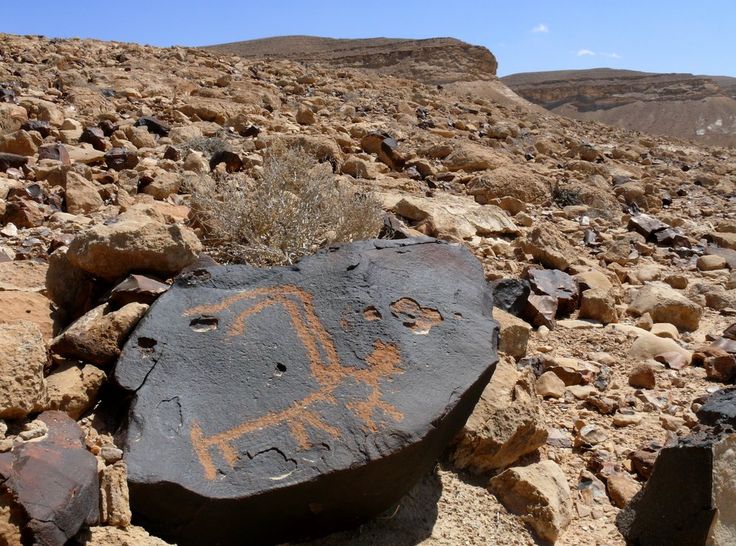
Photo of Petroglyphs of Har Karkom, the engraving of an ibex and a...man (?) | Petroglyphs, Pictograph, Rock art
According the Scripture Text from Genesis 22:
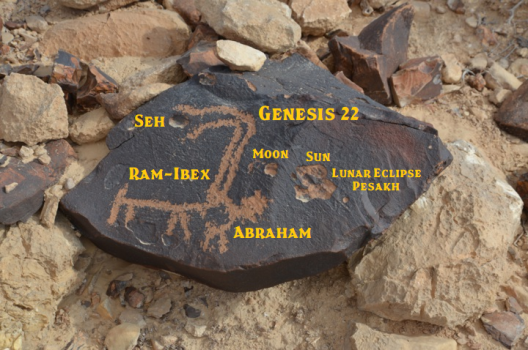
Har Karkom information:
Prof. Emmanuel Anati: Mount Sinai has been found: Archaeological discoveries at Har Karkom
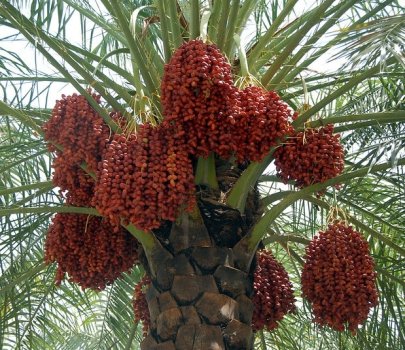
A seh is typically a small member of the flock, such as a lamb, or a sheep, or a goat, but can also be used for a portion: a portion of just about anything, (like bread). In the rock inscription above the seh is caught in the thicket or copse of the horns of the ram. An ayil or ram is also an ayil or palm tree, and the date palm also has a thicket or copse with portions in the copse of its horns.
Genesis 22:13 Hebrew Text (Consonants Only)
וישא אברהם את עיניו וירא והנה איל אחר נאחז בסבך בקרניו וילך אברהם ויקח את האיל ויעלהו לעלה תחת בנו׃
The word following אחר, ('achar, behind), is ne'echaz, which is H270 אחז 'achaz, and often means to sieze or something seized, (rendered herein most often as caught), but it also means a possession and is also used in the Torah for a portion, in the sense of a possession, and is so rendered as a portion in the KJV in the following passage.
Numbers 31:30 KJV
30 And of the children of Israel's half, thou shalt take one portion of fifty, of the persons, of the beeves, of the asses, and of the flocks, of all manner of beasts, and give them unto the Levites, which keep the charge of the tabernacle of the LORD.
If we read the second occurrence of 'eth, (את), as H854 את instead of H853 את we have the following reading.
וישא אברהם את עיניו וירא והנה איל אחר נאחז בסבך בקרניו וילך אברהם ויקח את האיל ויעלהו לעלה תחת בנו׃
And Abraham lifted up his eyes and looked, and behold, behind him a ram with a portion in the copse of his horns: and Abraham went and took it from the ram, and offered it up for an ascending offering instead of his son.
In this reading it is not the ram itself that is offered up as a slaughtered animal burnt offering, but rather, it is the portion which was in the copse of its horns that is offered up for an ascending offering. In the image file from the top this is precisely what we see portrayed in the rock inscription or carving found at Har Karkom, the mount of Elohim, (Sinai-Horeb). The seh, (Gen 22:7-8), achaz, (Gen 22:13), or portion, is being held in the horns of the ram, and Abraham is taking, (or receiving), the portion from the ram to offer the portion as an ascending offering.
The minhah, (oblation), flour offering for a lamb is one tenth of an ephah of fine flour, and this is the smallest minhah. The minhah for a ram is two tenths of an ephah of fine flour. The minhah for a bullock, son of the herd, heifer, etc., is three tenths of an ephah of fine flour. Abraham does not offer the Ram! He offers the smallest minhah, which is one tenth of an ephah of fine flour: the size which pertains to a seh, that is, a lamb, (or a kebes-lamb, etc.), just as he states to his son earlier in the text of Gen 22, for Yitzhak already knows the offering is supposed to be a lamb or seh, (Gen 22:7), and Abraham responds accordingly, that Elohim himself will provide the lamb or seh, (Gen 22:8).
Why the seh of Gen 22:7-8 cannot be the ram of Gen 22:13.
Genesis 22:7-8
7 And Yitzhak spoke to Abraham his father, and said, My father: and he said, Here am I, my son. And he said, Behold the fire and the wood: but where is the lamb [H7716 seh] for an ascending offering?
8 And Abraham said, My son, Elohim himself will provide a lamb [H7716 seh] for an ascending offering: so the two of them went together.
It is clear enough by English translations that seh herein is rendered as a lamb, however, again, a lamb is not the same size offering as a ram. And in the Torah we are taught the difference by way of the sizes of the flour offerings for each of the three different sizes of the sacrifices, as explained above, (and in reality the animals themselves represent the three different sizes of the flour offerings, which are, again, called minhah or minchah).
To hopefully drive this point home:
A lamb, the smallest minchah, is one tenth of an ephah of fine flour.
A ram, the middle size minchah, is two tenths of an ephah of fine flour.
A member of the herd, the largest minchah, is three tenths of an ephah of fine flour.
Numbers 15:1-16 KJV
1 And the LORD spake unto Moses, saying,
2 Speak unto the children of Israel, and say unto them, When ye be come into the land of your habitations, which I give unto you,
3 And will make an offering by fire unto the LORD, a burnt offering, or a sacrifice in performing a vow, or in a freewill offering, or in your solemn feasts, to make a sweet savour unto the LORD, of the herd, or of the flock:
4 Then shall he that offereth his offering unto the LORD bring a meat offering [H4503 minchah] of a tenth deal of flour mingled with the fourth part of an hin of oil.
5 And the fourth part of an hin of wine for a drink offering shalt thou prepare with the burnt offering or sacrifice, for one lamb.
6 Or for a ram, thou shalt prepare for a meat offering [H4503 minchah] two tenth deals of flour mingled with the third part of an hin of oil.
7 And for a drink offering thou shalt offer the third part of an hin of wine, for a sweet savour unto the LORD.
8 And when thou preparest a bullock for a burnt offering, or for a sacrifice in performing a vow, or peace offerings unto the LORD:
9 Then shall he bring with a bullock a meat offering [H4503 minchah] of three tenth deals of flour mingled with half an hin of oil.
10 And thou shalt bring for a drink offering half an hin of wine, for an offering made by fire, of a sweet savour unto the LORD.
11 Thus shall it be done for one bullock, or for one ram, or for a lamb, or a kid.
12 According to the number that ye shall prepare, so shall ye do to every one according to their number.
13 All that are born of the country shall do these things after this manner, in offering an offering made by fire, of a sweet savour unto the LORD.
14 And if a stranger sojourn with you, or whosoever be among you in your generations, and will offer an offering made by fire, of a sweet savour unto the LORD; as ye do, so he shall do.
15 One ordinance shall be both for you of the congregation, and also for the stranger that sojourneth with you, an ordinance for ever in your generations: as ye are, so shall the stranger be before the LORD.
16 One law and one manner shall be for you, and for the stranger that sojourneth with you.
Thus an ayil, (ram), is not a seh, and by the context the text itself points the observant reader and hearer to the correct understanding of Gen 22:13 by the fact that we find seh written in Gen 22:7-8. Neither the author, nor Abraham, nor Yitzhak made a mistake in using the word seh in Gen 22:7-8.
Genesis 22:10-14
10 And Abraham stretched forth his hand, and took the knife to slay his son:
11 And the Malak of YHWH called to him out of heaven, and said, Abraham, Abraham: and he said, Here am I.
12 And he said, Lay not your hand upon the lad, neither do any thing unto him: for now I know that you fear Elohim, seeing you have not withheld your son, your only son, from me.
13 And Abraham lifted up his eyes and looked, and behold, behind him a ram with a portion in the copse of his horns: and Abraham went and took it from the ram, and offered it up for an ascending offering instead of his son.
14 And Abraham called the name of that place HE WHO IS SHALL BE SEEN, because he said that day, In the mountain, HE WHO IS has been seen!
RELATED:
Revelation 1:10
10 I was in the Spirit on the day pertaining to the Master, and I heard behind me a great voice, as of a shofar, [ram's horn]
John 1:26-27
26 Yohannai answered them, saying, I immerse with water: in the midst of you stands one whom you know not:
27 the One coming behind me, the strap of whose sandal I am not worthy to unloose.
John 8:56
56 Your father Abraham exulted that he might see my day: and he saw it, and rejoiced.
Source: Panoramio (which is no longer available).
Photo of Petroglyphs of Har Karkom, the engraving of an ibex and a...man (?) | Petroglyphs, Pictograph, Rock art
According the Scripture Text from Genesis 22:
Har Karkom information:
Prof. Emmanuel Anati: Mount Sinai has been found: Archaeological discoveries at Har Karkom
A seh is typically a small member of the flock, such as a lamb, or a sheep, or a goat, but can also be used for a portion: a portion of just about anything, (like bread). In the rock inscription above the seh is caught in the thicket or copse of the horns of the ram. An ayil or ram is also an ayil or palm tree, and the date palm also has a thicket or copse with portions in the copse of its horns.
Genesis 22:13 Hebrew Text (Consonants Only)
וישא אברהם את עיניו וירא והנה איל אחר נאחז בסבך בקרניו וילך אברהם ויקח את האיל ויעלהו לעלה תחת בנו׃
The word following אחר, ('achar, behind), is ne'echaz, which is H270 אחז 'achaz, and often means to sieze or something seized, (rendered herein most often as caught), but it also means a possession and is also used in the Torah for a portion, in the sense of a possession, and is so rendered as a portion in the KJV in the following passage.
Numbers 31:30 KJV
30 And of the children of Israel's half, thou shalt take one portion of fifty, of the persons, of the beeves, of the asses, and of the flocks, of all manner of beasts, and give them unto the Levites, which keep the charge of the tabernacle of the LORD.
If we read the second occurrence of 'eth, (את), as H854 את instead of H853 את we have the following reading.
וישא אברהם את עיניו וירא והנה איל אחר נאחז בסבך בקרניו וילך אברהם ויקח את האיל ויעלהו לעלה תחת בנו׃
And Abraham lifted up his eyes and looked, and behold, behind him a ram with a portion in the copse of his horns: and Abraham went and took it from the ram, and offered it up for an ascending offering instead of his son.
In this reading it is not the ram itself that is offered up as a slaughtered animal burnt offering, but rather, it is the portion which was in the copse of its horns that is offered up for an ascending offering. In the image file from the top this is precisely what we see portrayed in the rock inscription or carving found at Har Karkom, the mount of Elohim, (Sinai-Horeb). The seh, (Gen 22:7-8), achaz, (Gen 22:13), or portion, is being held in the horns of the ram, and Abraham is taking, (or receiving), the portion from the ram to offer the portion as an ascending offering.
The minhah, (oblation), flour offering for a lamb is one tenth of an ephah of fine flour, and this is the smallest minhah. The minhah for a ram is two tenths of an ephah of fine flour. The minhah for a bullock, son of the herd, heifer, etc., is three tenths of an ephah of fine flour. Abraham does not offer the Ram! He offers the smallest minhah, which is one tenth of an ephah of fine flour: the size which pertains to a seh, that is, a lamb, (or a kebes-lamb, etc.), just as he states to his son earlier in the text of Gen 22, for Yitzhak already knows the offering is supposed to be a lamb or seh, (Gen 22:7), and Abraham responds accordingly, that Elohim himself will provide the lamb or seh, (Gen 22:8).
Why the seh of Gen 22:7-8 cannot be the ram of Gen 22:13.
Genesis 22:7-8
7 And Yitzhak spoke to Abraham his father, and said, My father: and he said, Here am I, my son. And he said, Behold the fire and the wood: but where is the lamb [H7716 seh] for an ascending offering?
8 And Abraham said, My son, Elohim himself will provide a lamb [H7716 seh] for an ascending offering: so the two of them went together.
It is clear enough by English translations that seh herein is rendered as a lamb, however, again, a lamb is not the same size offering as a ram. And in the Torah we are taught the difference by way of the sizes of the flour offerings for each of the three different sizes of the sacrifices, as explained above, (and in reality the animals themselves represent the three different sizes of the flour offerings, which are, again, called minhah or minchah).
To hopefully drive this point home:
A lamb, the smallest minchah, is one tenth of an ephah of fine flour.
A ram, the middle size minchah, is two tenths of an ephah of fine flour.
A member of the herd, the largest minchah, is three tenths of an ephah of fine flour.
Numbers 15:1-16 KJV
1 And the LORD spake unto Moses, saying,
2 Speak unto the children of Israel, and say unto them, When ye be come into the land of your habitations, which I give unto you,
3 And will make an offering by fire unto the LORD, a burnt offering, or a sacrifice in performing a vow, or in a freewill offering, or in your solemn feasts, to make a sweet savour unto the LORD, of the herd, or of the flock:
4 Then shall he that offereth his offering unto the LORD bring a meat offering [H4503 minchah] of a tenth deal of flour mingled with the fourth part of an hin of oil.
5 And the fourth part of an hin of wine for a drink offering shalt thou prepare with the burnt offering or sacrifice, for one lamb.
6 Or for a ram, thou shalt prepare for a meat offering [H4503 minchah] two tenth deals of flour mingled with the third part of an hin of oil.
7 And for a drink offering thou shalt offer the third part of an hin of wine, for a sweet savour unto the LORD.
8 And when thou preparest a bullock for a burnt offering, or for a sacrifice in performing a vow, or peace offerings unto the LORD:
9 Then shall he bring with a bullock a meat offering [H4503 minchah] of three tenth deals of flour mingled with half an hin of oil.
10 And thou shalt bring for a drink offering half an hin of wine, for an offering made by fire, of a sweet savour unto the LORD.
11 Thus shall it be done for one bullock, or for one ram, or for a lamb, or a kid.
12 According to the number that ye shall prepare, so shall ye do to every one according to their number.
13 All that are born of the country shall do these things after this manner, in offering an offering made by fire, of a sweet savour unto the LORD.
14 And if a stranger sojourn with you, or whosoever be among you in your generations, and will offer an offering made by fire, of a sweet savour unto the LORD; as ye do, so he shall do.
15 One ordinance shall be both for you of the congregation, and also for the stranger that sojourneth with you, an ordinance for ever in your generations: as ye are, so shall the stranger be before the LORD.
16 One law and one manner shall be for you, and for the stranger that sojourneth with you.
Thus an ayil, (ram), is not a seh, and by the context the text itself points the observant reader and hearer to the correct understanding of Gen 22:13 by the fact that we find seh written in Gen 22:7-8. Neither the author, nor Abraham, nor Yitzhak made a mistake in using the word seh in Gen 22:7-8.
Genesis 22:10-14
10 And Abraham stretched forth his hand, and took the knife to slay his son:
11 And the Malak of YHWH called to him out of heaven, and said, Abraham, Abraham: and he said, Here am I.
12 And he said, Lay not your hand upon the lad, neither do any thing unto him: for now I know that you fear Elohim, seeing you have not withheld your son, your only son, from me.
13 And Abraham lifted up his eyes and looked, and behold, behind him a ram with a portion in the copse of his horns: and Abraham went and took it from the ram, and offered it up for an ascending offering instead of his son.
14 And Abraham called the name of that place HE WHO IS SHALL BE SEEN, because he said that day, In the mountain, HE WHO IS has been seen!
RELATED:
Revelation 1:10
10 I was in the Spirit on the day pertaining to the Master, and I heard behind me a great voice, as of a shofar, [ram's horn]
John 1:26-27
26 Yohannai answered them, saying, I immerse with water: in the midst of you stands one whom you know not:
27 the One coming behind me, the strap of whose sandal I am not worthy to unloose.
John 8:56
56 Your father Abraham exulted that he might see my day: and he saw it, and rejoiced.


