Are there contradictions in the 4 gospels concerning the resurrection of Christ?

  • Welcome to Christian Forums, a Christian Forum that recognizes that all Christians are a work in progress.

    You will need to register to be able to join in fellowship with Christians all over the world.

    We hope to see you as a part of our community soon and God Bless!

MonoBiblical

Well-Known Member
Apr 18, 2024
1,588
261
83
52
midwest
Faith
Christian
Country
United States
Why titles came later
The formal naming of works like “Gospel of Mark” or “Epistle to the Romans” developed as the canon was defined in the 4th century, especially after councils such as Nicaea (325 CE) and the work of church fathers like Eusebius. Before that, the same text could be called by different names in different regions, or simply referred to by its content.

In summary
Before standardized titles, early Christian texts were recognized by their content, audience, or language. This fluidity reflects the diversity of early Christian communities and the gradual process of canon formation, where many works were preserved, others lost, and only a few became the fixed “New Testament” we know today
Without evidence, you say these things.
 

MonoBiblical

Well-Known Member
Apr 18, 2024
1,588
261
83
52
midwest
Faith
Christian
Country
United States
How do scholars know a Christian text is a true copy?
As it is now museums are full of antient Christian texts as a whole or fragments.
Those that date before 250 AD are thought to be closer to the originals.
So how do they know what are true copies.
1. They do not have titles.
2. They know the errors in the older texts and if those errors are corrected they know it is not a true copy.
3. The older Texts do not include the additional verses and stories found in texts after 250 AD.
How does anyone know the date of manuscripts which are not dated by radiocarbon?
 

Grailhunter

Well-Known Member
Jun 19, 2019
15,674
6,440
113
69
FARMINGTON
Faith
Christian
Country
United States
Gender
Male
How does anyone know the date of manuscripts which are not dated by radiocarbon?

Don't make repeat myself. The "paper" for ancient Christian texts come from plants which definitely can be carbon dated.

Are Ancient Texts Carbon Dated?
Yes — some ancient texts have been carbon dated, but it is not the primary or most common method for dating manuscripts, and it has important limitations.

How carbon dating applies to ancient texts​

Radiocarbon dating measures the decay of carbon‑14 in organic material to estimate when the material stopped exchanging carbon with the environment — in the case of a manuscript, when the plant or animal source (papyrus, parchment, vellum) died Wikipedia Wikipedia+1. This can give a date for the production of the support material, which is often close to the date of the text itself.
For example, papyrus fragments and parchment leaves from ancient biblical manuscripts have been carbon dated, including the Dead Sea Scrolls, which helped confirm their antiquity Wikipedia Wikipedia. However, the method is only reliable for samples up to about 50,000 years old, and for manuscripts it is usually accurate to within ±50–100 years Evidence for Christianity Evidence for Christianity.

Why it’s not the main dating method​

Scholars often prefer non‑destructive methods for valuable manuscripts because carbon dating requires destroying part of the material Evidence for Christianity Evidence for Christianity. Instead, they use:
  • Paleography — analyzing handwriting styles, letter forms, and ink types, which change over time Updated American Standard Version Updated American Standard Version.
  • Material analysis — studying paper, parchment, or papyrus composition.
  • Archaeological context — dating associated artifacts or layers.
  • Colophons — dates written by scribes, when available Biblical Archaeology Society Biblical Archaeology Society.
These methods can often match or surpass the precision of carbon dating without damaging the text Evidence for Christianity Evidence for Christianity+1.

When carbon dating is used​

It is applied when:
  • The manuscript’s age is uncertain and the material is organic and within the dating range.
  • Other methods are inconclusive or insufficient.
  • The goal is to confirm authenticity or provide an absolute date for a fragment.

Key points​

  • Yes, some ancient texts have been carbon dated, especially when the material is organic and the date is unknown.
  • No, it is not the standard method for all ancient manuscripts because it is destructive, less precise for very old or rare items, and often supplemented or replaced by paleographic and contextual evidence Evidence for Christianity Evidence for Christianity+1.
  • Example: The Dead Sea Scrolls were carbon dated to confirm their antiquity Wikipedia Wikipedia, but many other manuscripts are dated through style and material analysis.
In short, carbon dating is a valuable tool for certain ancient texts, but scholars use it alongside — or instead of — other methods depending on the manuscript’s condition, value, and research goals.


Ronald David Bruno

Well-Known Member
Nov 7, 2020
5,393
2,653
113
Southern
Faith
Christian
Country
United States
Gender
Male
I agree that evidence points to a designer, I happen to think that the designer didn't necessarily intend for Homosapiens to exist or any other animal or plant life for that matter....
We are nothing special.
If you don't believe in God then who or what is the designer ... nature itself?
We are special ... the Bible says fiercely made, in His image, meaning spiritual nature : rational mind, will, emotioms, creativity ... all invisible qualities. You can't cut open a person's brain and see thoughts, ideas, memories, talent). Of course you are blind to be aware of spiritual things - you sense them, but oass them off as something else. You cannot discern scripture nor understand these things by yourself. You can't remove the veil of blindness, only God can. You must humble yourself and seek God, like a child, without preconceived notions. It's normal to have doubts, but just look at Jesus. Read the book of John and ask first, "God is you are real show me, enlighten me, guide me as I read this book. That is the approach you need. Prude and arrogance keeps a person from God. You see, He knows you doubt - but give Him the benefit of the doubt and He will reveal Himself.
Not much time left for you to seek God/Jesus. Your door ( of your heart) has been closed all your life and so you've rejected the gospel, invitations, witnesses, ministries of the truth. Not totally though- because you are here. It's curiously or just a cruel intent to attack our beliefs? Jesus is the truth. Truth means reality. So you are not in touch with reality. He stands at the door and knocks ( doesn't force Himself on anyone) and if you open the door, He will come in. The clock is ticking ... seriously. You don't want to experience what us on the other side of death without Christ - it's Evil, void of Good. You know good and evil, see it all around. Everything that is good comes from God. So choose the LIGHT NOT THE DARKNESS, because soon it will be separated. A Great Tribulation is coming. We are in what is called the Beginning of Sorrows ( Matthew 24).
 

MonoBiblical

Well-Known Member
Apr 18, 2024
1,588
261
83
52
midwest
Faith
Christian
Country
United States
Don't make repeat myself. The "paper" for ancient Christian texts come from plants which definitely can be carbon dated.

Are Ancient Texts Carbon Dated?
Yes — some ancient texts have been carbon dated, but it is not the primary or most common method for dating manuscripts, and it has important limitations.

How carbon dating applies to ancient texts​

Radiocarbon dating measures the decay of carbon‑14 in organic material to estimate when the material stopped exchanging carbon with the environment — in the case of a manuscript, when the plant or animal source (papyrus, parchment, vellum) died Wikipedia Wikipedia+1. This can give a date for the production of the support material, which is often close to the date of the text itself.
For example, papyrus fragments and parchment leaves from ancient biblical manuscripts have been carbon dated, including the Dead Sea Scrolls, which helped confirm their antiquity Wikipedia Wikipedia. However, the method is only reliable for samples up to about 50,000 years old, and for manuscripts it is usually accurate to within ±50–100 years Evidence for Christianity Evidence for Christianity.

Why it’s not the main dating method​

Scholars often prefer non‑destructive methods for valuable manuscripts because carbon dating requires destroying part of the material Evidence for Christianity Evidence for Christianity. Instead, they use:
  • Paleography — analyzing handwriting styles, letter forms, and ink types, which change over time Updated American Standard Version Updated American Standard Version.
  • Material analysis — studying paper, parchment, or papyrus composition.
  • Archaeological context — dating associated artifacts or layers.
  • Colophons — dates written by scribes, when available Biblical Archaeology Society Biblical Archaeology Society.
These methods can often match or surpass the precision of carbon dating without damaging the text Evidence for Christianity Evidence for Christianity+1.

When carbon dating is used​

It is applied when:
  • The manuscript’s age is uncertain and the material is organic and within the dating range.
  • Other methods are inconclusive or insufficient.
  • The goal is to confirm authenticity or provide an absolute date for a fragment.

Key points​

  • Yes, some ancient texts have been carbon dated, especially when the material is organic and the date is unknown.
  • No, it is not the standard method for all ancient manuscripts because it is destructive, less precise for very old or rare items, and often supplemented or replaced by paleographic and contextual evidence Evidence for Christianity Evidence for Christianity+1.
  • Example: The Dead Sea Scrolls were carbon dated to confirm their antiquity Wikipedia Wikipedia, but many other manuscripts are dated through style and material analysis.
In short, carbon dating is a valuable tool for certain ancient texts, but scholars use it alongside — or instead of — other methods depending on the manuscript’s condition, value, and research goals.

What if the Paleography is a forgery? Capital Greek letters are rumored by some to have come later. Was the carbon dating on the wood or the ink?

Alexandria and Sinaiticus have not been carbon dated, EVER. Many are ignorant about this, the which includes you.
 

Grailhunter

Well-Known Member
Jun 19, 2019
15,674
6,440
113
69
FARMINGTON
Faith
Christian
Country
United States
Gender
Male
What if the Paleography is a forgery? Capital Greek letters are rumored by some to have come later. Was the carbon dating on the wood or the ink?

Alexandria and Sinaiticus have not been carbon dated, EVER. Many are ignorant about this, the which includes you.

You can look this up yourself.
There is no wood? The paper was made from plants. So carbon dating is no problem. As the texts moved forward through history they gathered a few extra stories and verses. Like the story of the adulterous woman brought before Yeshua, the extra verses at the end of Mark, and the Johannine Comma addition.
 

shepherdsword

Encounter Team - Eagle
Staff member
Encounter Team
Feb 12, 2009
2,481
2,217
113
Millington
Faith
Christian
Country
United States
Gender
Male

Summary​

  • No original titles in the earliest manuscripts.
  • Titles added later to distinguish between versions.
  • Gospels’ author-based titles emerged ~200 CE, after the church recognized multiple accounts.
  • Other NT books were similarly identified by later attribution, not by the original authors.
In short, the titles we see today are later scholarly and ecclesiastical labels, not original book titles, and they reflect the historical process of standardizing and distinguishing the New Testament texts as they were transmitted.
All you did was regurgitate some Bart Ehrman talking points and an AI copy/paste. Stop pretending you have done any deep research. Anyone can look at your prior posts and see how cursory your responses are.

I can use AI too.
Can it be proven that early gospels did not have titles? (my question)

Answer:
No. It cannot be proven that the earliest copies of the four Gospels circulated without titles. The evidence does not establish that they were originally anonymous, either. The most accurate historical conclusion is that the question remains debated because we do not possess the original manuscripts of Matthew, Mark, Luke, or John.
There is an important distinction between three claims:
  1. The original Gospels had no titles. This has not been proven.
  2. The original Gospels had titles identifying their authors. This has not been proven with surviving original manuscripts, either.
  3. The earliest surviving Gospel manuscripts identify their authors. This is supported by manuscript evidence, although the surviving copies are later than the originals.
Let's examine what the actual evidence establishes.

1. What do the earliest surviving manuscripts show?​

Papyrus 66 (P66) — Gospel of John
Title survives
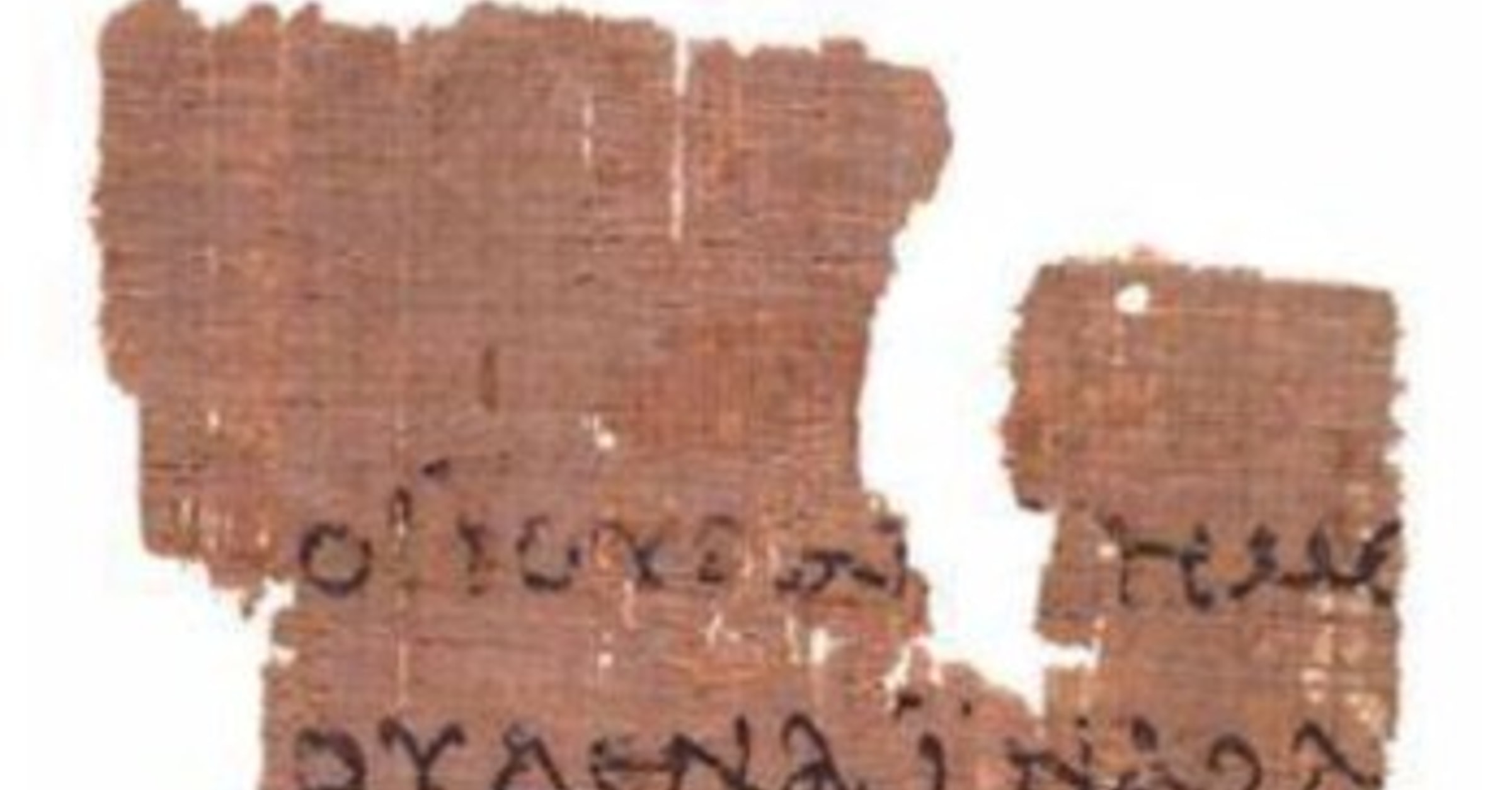
Usually dated to around the late second or third century, P66 preserves a title reading ΕΥΑΓΓΕΛΙΟΝ ΚΑΤΑ ΙΩΑΝΝΗΝ — “Gospel according to John.” It is among the earliest surviving manuscript witnesses to a Gospel title.
favicons

Cambridge Core


The Text of the Gospels: Papyrus 4 and the Mystery at Coptos


Papyrus 4 (P4) — Gospel of Matthew
Title survives
This manuscript preserves a title identifying Matthew. The dating and reconstruction of the manuscript's original form have been discussed by scholars, but it provides early evidence for the named title.
favicons

Cambridge Core


These manuscripts establish that titles identifying the Gospels were in use relatively early. They do not, by themselves, establish what appeared on the original copies written by the evangelists.
Also, a fragment that does not preserve a title cannot automatically be classified as a manuscript that originally lacked one. The beginning or ending of the document may simply be missing.

2. What about evidence from the second century?​

The early Christian writers are relevant because they show how early Christians identified the Gospels.
  • Papias, writing in the first half of the second century, discusses Mark and Matthew in a passage preserved by Eusebius (Ecclesiastical History 3.39.15–16). His statements connect those names with Gospel traditions, although he does not provide surviving manuscript title pages.
  • Justin Martyr, around the middle of the second century, refers to the “memoirs of the apostles” in First Apology 66.3 and 67.3. These passages do not individually identify all four canonical Gospels by their familiar titles.
  • Irenaeus, around AD 180, explicitly discusses the fourfold Gospel and identifies Matthew, Mark, Luke, and John in Against Heresies 3.1.1 and 3.11.8.
These sources establish an early tradition of associating the four Gospels with their familiar names. They do not conclusively establish whether each original manuscript carried a written title.

The disagreement is not over whether the surviving original manuscripts are available: they are not. It concerns what conclusion should be drawn from the indirect evidence.

Conclusion​

The evidence supports these distinctions:
ClaimWhat can be established?
The originals survive with their title pages intact.No.
Early surviving manuscripts have Gospel titles.Yes.
The familiar authorial attributions existed by the late second century.Yes.
The originals definitely circulated without titles.No; this is unproven.
The original copies definitely had the exact titles found in later manuscripts.Also unproven.
My conclusion based on the evidence: Saying “the Gospels were originally circulated anonymously” as though it were an established fact goes beyond what the manuscripts prove. It is a scholarly hypothesis, not a demonstrated fact. The alternative—that the authorial attributions originated with the Gospels—is also an inference, although scholars such as Gathercole argue that it best explains the available evidence.
For further primary-source verification, the most useful references are Irenaeus, Against Heresies 3.1.1 and 3.11.8; Papias as quoted in Eusebius, Ecclesiastical History 3.39.15–16; and the manuscript evidence for P66 and P4.

 

Grailhunter

Well-Known Member
Jun 19, 2019
15,674
6,440
113
69
FARMINGTON
Faith
Christian
Country
United States
Gender
Male
All you did was regurgitate some Bart Ehrman talking points and an AI copy/paste. Stop pretending you have done any deep research. Anyone can look at your prior posts and see how cursory your responses are.

I can use AI too.
Can it be proven that early gospels did not have titles? (my question)

Answer:

Well there ya go we disagree.
If you have wondered who wrote John, the answer involves early church tradition, internal clues, and modern scholarly debate.

Traditionally, Christians have identified John the Apostle, the son of Zebedee, as the author.

But the text itself does not name its writer, which is why historians and biblical scholars continue to examine the question closely.

The Gospel of John is anonymous, unlike many ancient letters that explicitly identify the writer.

When Titles Were Added to the Gospels​

Scholars agree that the four Gospels were originally written without the modern “According to Matthew,” “According to Mark,” etc. titles. The earliest surviving manuscripts that carry these titles date to around 200 CE The Bart Ehrman Blog The Bart Ehrman Blog+1.

Earliest Evidence​

  • Papyrus 4 (c. 200 CE) contains the title euangelion kata Maththaion (“Gospel according to Matthew”), making it the earliest known manuscript title for any Gospel Wikipedia Wikipedia.
  • Other early codices with titles also appear in the early third century, but no extant Gospel manuscript from the first or early second century carries these ascriptions .

When Did the Names Appear in Writings?​

  • Before ~185 CE: Early Christian writers such as Justin Martyr (c. 150 CE) quote from the Gospels but refer to them generically as “Memoirs of the Apostles” without naming the author Biblical Hermeneutics Stack Exchange Biblical Hermeneutics Stack Exchange.
  • c. 185 CE: Irenaeus, in Against Heresies, is the first known writer to explicitly identify the Gospels by name (Matthew, Mark, Luke, John) Biblical Hermeneutics Stack Exchange Biblical Hermeneutics Stack Exchange.
  • This suggests that while the titles may have been in use in manuscripts by 200 CE, they were not widely attested in early Christian literature until the mid‑second century .

Why the Delay?​

According to Bart Ehrman and other textual scholars, the Gospels were anonymous in their original form. Titles likely emerged only when:
  1. Multiple versions of the Gospel were circulating, creating a need to distinguish them The Bart Ehrman Blog The Bart Ehrman Blog.
  2. A tradition of attribution developed, linking each Gospel to an apostle or evangelist, even if the actual authorship is debated .
  3. Manuscript transmission in the early second century standardized the “According to…” formula The Bart Ehrman Blog The Bart Ehrman Blog+1.

Summary Timeline​

  • 1st century CE: Gospels written without author names; Mark may have used a descriptive title in its opening (“The Beginning of the Gospel of Jesus Christ”) .
  • c. 150 CE: Early writers cite Gospels without naming them Biblical Hermeneutics Stack Exchange Biblical Hermeneutics Stack Exchange.
  • c. 185 CE: Irenaeus first names the Gospels in writing Biblical Hermeneutics Stack Exchange Biblical Hermeneutics Stack Exchange.
  • ~200 CE: Earliest surviving manuscripts with “According to…” titles appear .
In short: The familiar titles were not part of the original Gospels; they were added in the early second century, with the earliest manuscript evidence around 200 CE, and the first written attribution by Irenaeus about 185 CE .
 

Grailhunter

Well-Known Member
Jun 19, 2019
15,674
6,440
113
69
FARMINGTON
Faith
Christian
Country
United States
Gender
Male
All you did was regurgitate some Bart Ehrman talking points and an AI copy/paste. Stop pretending you have done any deep research. Anyone can look at your prior posts and see how cursory your responses are.

I actually went to college on theology, I bet you did not.
Most scholars agree that the Gospel of John was completed between 90–100 (AD).[6][7] It identifies an unnamed "disciple whom Jesus loved" as its source and, perhaps, author.[8][9][10] 20th-century scholarship interpreted the gospel within the paradigm of a "Johannine community,"[11][12][13] but this has been increasingly challenged in the 21st century;[14] the gospel's historical context remains debated.[15] Most scholars treat the gospel and the Johannine epistles, along with the Book of Revelation, as a single corpus of Johannine literature, albeit not by the same author.[16]
 

Grailhunter

Well-Known Member
Jun 19, 2019
15,674
6,440
113
69
FARMINGTON
Faith
Christian
Country
United States
Gender
Male
All you did was regurgitate some Bart Ehrman talking points and an AI copy/paste. Stop pretending you have done any deep research. Anyone can look at your prior posts and see how cursory your responses are.

Britannica
Gospel According to John
, fourth of the four New Testament narratives recounting the life and death of Jesus Christ. John’s is the only one of the four not considered among the Synoptic Gospels (i.e., those presenting a common view). Although the Gospel is ostensibly written by St. John the Apostle, “the beloved disciple” of Jesus, there has been considerable discussion of the actual identity of the author. The language of the Gospel and its well-developed theology suggest that the author may have lived later than John and based his writing on John’s teachings and testimonies. Moreover, the facts that several episodes in the life of Jesus are recounted out of sequence with the Synoptics and that the final chapter appears to be a later addition suggest that the text may be a composite. The Gospel’s place and date of composition are also uncertain; many scholars suggest that it was written at Ephesus, in Asia Minor, about 100 ce for the purpose of communicating the truths about Christ to Christians of Hellenistic background.
 

Grailhunter

Well-Known Member
Jun 19, 2019
15,674
6,440
113
69
FARMINGTON
Faith
Christian
Country
United States
Gender
Male
All you did was regurgitate some Bart Ehrman talking points and an AI copy/paste. Stop pretending you have done any deep research. Anyone can look at your prior posts and see how cursory your responses are.

We may never know for certain who wrote the Gospel of John, any more than we can know who wrote the books of Matthew, Mark and Luke. We do know that John is a gospel apart, however. Early Matthew, Mark and Luke are so alike in their telling that they are called the Synoptic Gospels, meaning “seen together”—the parallels are clear when they are looked at side by side. Matthew and Luke follow the version of events in Mark, which is thought by scholars to be the earliest and most historically accurate Gospel. John, however, does not include the same incidents or chronology found in the other three Gospels, and the fact that it is so different has spurred a debate over whether John’s Gospel is historical or not, something that has been noted in Gospel of John commentary for hundreds—even thousands—of years.


Grailhunter

Well-Known Member
Jun 19, 2019
15,674
6,440
113
69
FARMINGTON
Faith
Christian
Country
United States
Gender
Male
All you did was regurgitate some Bart Ehrman talking points and an AI copy/paste. Stop pretending you have done any deep research. Anyone can look at your prior posts and see how cursory your responses are.

The Gospel of John provides no explicit internal evidence concerning its author. John, the disciple, is nowhere identified by name.


Grailhunter

Well-Known Member
Jun 19, 2019
15,674
6,440
113
69
FARMINGTON
Faith
Christian
Country
United States
Gender
Male
All you did was regurgitate some Bart Ehrman talking points and an AI copy/paste. Stop pretending you have done any deep research. Anyone can look at your prior posts and see how cursory your responses are.

Like the other three, John's gospel first circulated without a name. This gospel includes a character referred to in the third person, 'the beloved disciple' as an intimate disciple of Jesus. During the 2nd century CE, the Church Fathers claimed that a man known as John the Elder in the community at Ephesus was one of the last living disciples. They claimed that this was 'the beloved disciple,' the brother of James (the two sons of Zebedee), and thus the name.


shepherdsword

Encounter Team - Eagle
Staff member
Encounter Team
Feb 12, 2009
2,481
2,217
113
Millington
Faith
Christian
Country
United States
Gender
Male
The Gospel of John provides no explicit internal evidence concerning its author. John, the disciple, is nowhere identified by name.

1. What do the earliest surviving manuscripts that have a title page show?​

Papyrus 66 (P66) — Gospel of John
Title survives
Usually dated to around the late second or third century, P66 preserves a title reading ΕΥΑΓΓΕΛΙΟΝ ΚΑΤΑ ΙΩΑΝΝΗΝ — “Gospel according to John.” It is among the earliest surviving manuscript witnesses to a Gospel title.
favicons


Cambridge Core


The Text of the Gospels: Papyrus 4 and the Mystery at Coptos


If a manuscript of John doesn't show John as the author then the title page is missing.