


PARASHA: “Mishpatim” (Judgments) “God's Jurisprudence for His chosen people.”
It is very interesting how this Torah/Bible study portion begins in the original Hebrew language: "V'eileh ha mishpatim." "AND these are the judgments, or rulings..." When a verse begins with "and" (the Hebrew letter "V" = "and"), it means it is a continuation from the previous chapter. The previous chapter was over the Ten Commandments, so we know that those are our basic commandments concerning our direct relationship with God (the first 5) and our relationship with our fellow man (the last 5), now between Exodus 21 and 24, are the "fine details" or "fine print." or, as a lawyer could state, the "stipulations and rulings within a contract"
All in all, if we were to count all the commandments/rulings/stipulations from Genesis to Deuteronomy, there would be a total of 613. Those 613 come under the basic 10 Commandments in Exodus 20, and Jesus/Yeshua sums up ALL the commandments in two commandments: "Love God and love your neighbor as yourself, ( Matthew 22:37-39), which is really what the 10 Commandments teach us.
So as not to take you, my dear reader, into the great halls of God's justice system 3500 years ago, I would like to mention just a few cases. How can we relate these cases or rulings to our society today? We must remember that 3500 years ago, Israel was under a "Theocracy" (governed by God and by God alone), while today we are ruled by a "Democracy" (governed by more than one person, president, congress, etc.) Well, each country has a different setup.
The scripture begins by introducing the system of owning a slave. The word for slave in Hebrew is "eved." This word is also the word for "servant."
Hebrew words can take on many meanings. Today, the word "eved" can invoke the titles: "worker, day laborer, maid, live-in servant, child-care giver, employee, etc... The word "Master" could remind us of the titles; Boss, shift leader, manager, assistant manager, CEO, etc...
Way back thousands of years ago, men and women often had to take out loans or pay off debts, just as today. Someone with money would offer to pay the debt or give the loan in exchange for 6 years of labor or servitude. It often involved a man, and at times, both the man and the wife. They would work for the Master and had to be treated fairly and not abused. At the end of 6 years, the debt would be considered canceled. Today, workers receive a daily or weekly wage, whether they live with the employer or not.
The "slavery" or "Servitude" system was NOT like the slavery of the 1600s and 1700s in North America, Central, and South America by the English, French, Spanish, and Portuguese, treating African slaves as mere property to be used or misused as seemed fit. The servants had rights and had to be treated fairly. If the slave or servant decided that he or she would rather stay with the Master, and NOT go free, then, the scripture states the following;
, “Then his master will bring him before Elohim, and shall bring him to the door, or the doorpost, and his master shall pierce his ear with an awl.”
The word, Elohim, can not only mean “God” but also “Those who represent God,” perhaps Levites, officials of the Tabernacle, the temple, city, etc. The word “Master” is a form of “Adonai” in this part; it is spelled “Adonav” (his master). The doorpost was the official place of doing business, like at the county clerk’s office. So, the person who loved his master made his love for him official, before “Adonav” (His master), before “Elohim” (God himself and before those who represent Him. If the slave was hurt in any way, say the master hit the slave and knocked a tooth out, or put an eye out, the slave was to be released immediately, and with compensation. Not so in America during the years of slavery.
Paul the Apostle talks about being “bond slaves” to Messiah Yeshua (Jesus our Messiah), and that is our state. Would we want to be “released” from following HIM? Would we want to be under a “different master?” There are only two that claim our lives: Yeshua or HaSatan? We were “bought with a price,” the price of blood, and we were released from Satan's bondage, to follow and subject ourselves to a new master, “Adonai,” which means, “my master.” We are “servants” to the Most High God. That means we, our family, husband, wife, and children are all "bond servants" to the LORD. Why would we want to be released from following HIM? Then who would follow? Who would we serve? Our service is a LIFETIME of service, until we are called home to glory, and even in Heaven, we will continue to praise and serve the LORD!
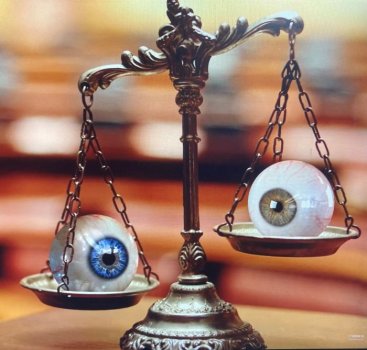
”An eye for an eye, tooth for tooth, hand for hand, foot for foot, burning for burning, wound for wound, stripe for stripe; (21:24....) if you read on, we see that it doesn't mean, “if you knock out my tooth, I have a right to knock your tooth out too” or “if you blind me in on eye, I have the right to put out your eye” or in modern terminology, “If you break my stereo, I have the right to go into your house and smash your stereo” how, I ask you, does that solve the problem? It doesn't, it just creates more problems. If we look at this situation in light of scripture, it is saying in other words; “just compensation for hurt or damage received”
How would that work? If I broke your arm accidentally or on purpose, I would be responsible for taking you to the doctor and paying the medical bill, and even paying you “lost wages” if you couldn't work. It doesn't mean that the other guy could break “my arm too”. If you broke my stereo, then I would expect you to either pay to have it fixed, or buy me another one of equal value (arm for arm, stereo for stereo, etc)
We continue to read about many rules, commandments, and judgments that make very good sense, even today, yet many of these judgments are not practiced; everyone is off to the lawyers for a lawsuit. My opinion is that if the legal system were set up today to reflect the Biblical standards of criminal justice, there would be a lot less crime. The criminals would think twice before committing crimes. An example: A man goes to prison for stealing a car, he sells it, spends the money, so the prisoner has to work in prison, and the money he makes would be sent to the victim to compensate for the loss. His sentence would end only when the sum is completed. Or...the court system would pay the victim the money lost in the theft, and the thief would have to work to pay back the court. This type of punishment would reflect more the Torah standard of criminal justice.
” If you meet an enemy's ox or his ass going astray, you will bring it back to him again” (Ex 23:4).
This is one way to make your enemy your friend: make peace with him. Would not this be for today as well? Of course it would! We could even say, "any lost item," not only a lost pet.
“Do not oppress the stranger, seeing you were strangers in the land of Egypt.”
Other Bibles say “foreigner.” In many countries, foreigners are oppressed and paid lower wages. God sees all injustice If you read from chapters 21 to 24, look carefully at the commandments/judgments, you will see that some make perfect sense even in our modern days. If you have any questions and would like to know how some of those judgments or rulings could apply to today's society, leave a comment, and I can answer you personally. God's Word is right on the money!
"An eye for an eye, just compensation for damages received"
It is very interesting how this Torah/Bible study portion begins in the original Hebrew language: "V'eileh ha mishpatim." "AND these are the judgments, or rulings..." When a verse begins with "and" (the Hebrew letter "V" = "and"), it means it is a continuation from the previous chapter. The previous chapter was over the Ten Commandments, so we know that those are our basic commandments concerning our direct relationship with God (the first 5) and our relationship with our fellow man (the last 5), now between Exodus 21 and 24, are the "fine details" or "fine print." or, as a lawyer could state, the "stipulations and rulings within a contract"
All in all, if we were to count all the commandments/rulings/stipulations from Genesis to Deuteronomy, there would be a total of 613. Those 613 come under the basic 10 Commandments in Exodus 20, and Jesus/Yeshua sums up ALL the commandments in two commandments: "Love God and love your neighbor as yourself, ( Matthew 22:37-39), which is really what the 10 Commandments teach us.
So as not to take you, my dear reader, into the great halls of God's justice system 3500 years ago, I would like to mention just a few cases. How can we relate these cases or rulings to our society today? We must remember that 3500 years ago, Israel was under a "Theocracy" (governed by God and by God alone), while today we are ruled by a "Democracy" (governed by more than one person, president, congress, etc.) Well, each country has a different setup.
The scripture begins by introducing the system of owning a slave. The word for slave in Hebrew is "eved." This word is also the word for "servant."
Hebrew words can take on many meanings. Today, the word "eved" can invoke the titles: "worker, day laborer, maid, live-in servant, child-care giver, employee, etc... The word "Master" could remind us of the titles; Boss, shift leader, manager, assistant manager, CEO, etc...
Way back thousands of years ago, men and women often had to take out loans or pay off debts, just as today. Someone with money would offer to pay the debt or give the loan in exchange for 6 years of labor or servitude. It often involved a man, and at times, both the man and the wife. They would work for the Master and had to be treated fairly and not abused. At the end of 6 years, the debt would be considered canceled. Today, workers receive a daily or weekly wage, whether they live with the employer or not.
The "slavery" or "Servitude" system was NOT like the slavery of the 1600s and 1700s in North America, Central, and South America by the English, French, Spanish, and Portuguese, treating African slaves as mere property to be used or misused as seemed fit. The servants had rights and had to be treated fairly. If the slave or servant decided that he or she would rather stay with the Master, and NOT go free, then, the scripture states the following;
, “Then his master will bring him before Elohim, and shall bring him to the door, or the doorpost, and his master shall pierce his ear with an awl.”
The word, Elohim, can not only mean “God” but also “Those who represent God,” perhaps Levites, officials of the Tabernacle, the temple, city, etc. The word “Master” is a form of “Adonai” in this part; it is spelled “Adonav” (his master). The doorpost was the official place of doing business, like at the county clerk’s office. So, the person who loved his master made his love for him official, before “Adonav” (His master), before “Elohim” (God himself and before those who represent Him. If the slave was hurt in any way, say the master hit the slave and knocked a tooth out, or put an eye out, the slave was to be released immediately, and with compensation. Not so in America during the years of slavery.
Paul the Apostle talks about being “bond slaves” to Messiah Yeshua (Jesus our Messiah), and that is our state. Would we want to be “released” from following HIM? Would we want to be under a “different master?” There are only two that claim our lives: Yeshua or HaSatan? We were “bought with a price,” the price of blood, and we were released from Satan's bondage, to follow and subject ourselves to a new master, “Adonai,” which means, “my master.” We are “servants” to the Most High God. That means we, our family, husband, wife, and children are all "bond servants" to the LORD. Why would we want to be released from following HIM? Then who would follow? Who would we serve? Our service is a LIFETIME of service, until we are called home to glory, and even in Heaven, we will continue to praise and serve the LORD!
”An eye for an eye, tooth for tooth, hand for hand, foot for foot, burning for burning, wound for wound, stripe for stripe; (21:24....) if you read on, we see that it doesn't mean, “if you knock out my tooth, I have a right to knock your tooth out too” or “if you blind me in on eye, I have the right to put out your eye” or in modern terminology, “If you break my stereo, I have the right to go into your house and smash your stereo” how, I ask you, does that solve the problem? It doesn't, it just creates more problems. If we look at this situation in light of scripture, it is saying in other words; “just compensation for hurt or damage received”
How would that work? If I broke your arm accidentally or on purpose, I would be responsible for taking you to the doctor and paying the medical bill, and even paying you “lost wages” if you couldn't work. It doesn't mean that the other guy could break “my arm too”. If you broke my stereo, then I would expect you to either pay to have it fixed, or buy me another one of equal value (arm for arm, stereo for stereo, etc)
We continue to read about many rules, commandments, and judgments that make very good sense, even today, yet many of these judgments are not practiced; everyone is off to the lawyers for a lawsuit. My opinion is that if the legal system were set up today to reflect the Biblical standards of criminal justice, there would be a lot less crime. The criminals would think twice before committing crimes. An example: A man goes to prison for stealing a car, he sells it, spends the money, so the prisoner has to work in prison, and the money he makes would be sent to the victim to compensate for the loss. His sentence would end only when the sum is completed. Or...the court system would pay the victim the money lost in the theft, and the thief would have to work to pay back the court. This type of punishment would reflect more the Torah standard of criminal justice.
” If you meet an enemy's ox or his ass going astray, you will bring it back to him again” (Ex 23:4).
This is one way to make your enemy your friend: make peace with him. Would not this be for today as well? Of course it would! We could even say, "any lost item," not only a lost pet.
“Do not oppress the stranger, seeing you were strangers in the land of Egypt.”
Other Bibles say “foreigner.” In many countries, foreigners are oppressed and paid lower wages. God sees all injustice If you read from chapters 21 to 24, look carefully at the commandments/judgments, you will see that some make perfect sense even in our modern days. If you have any questions and would like to know how some of those judgments or rulings could apply to today's society, leave a comment, and I can answer you personally. God's Word is right on the money!
"An eye for an eye, just compensation for damages received"

 "An Eye for an Eye, an Eye for a Tooth": The Ancient Principle of Justice
 Jesus's Overturning: From "Justice" to "Grace"

