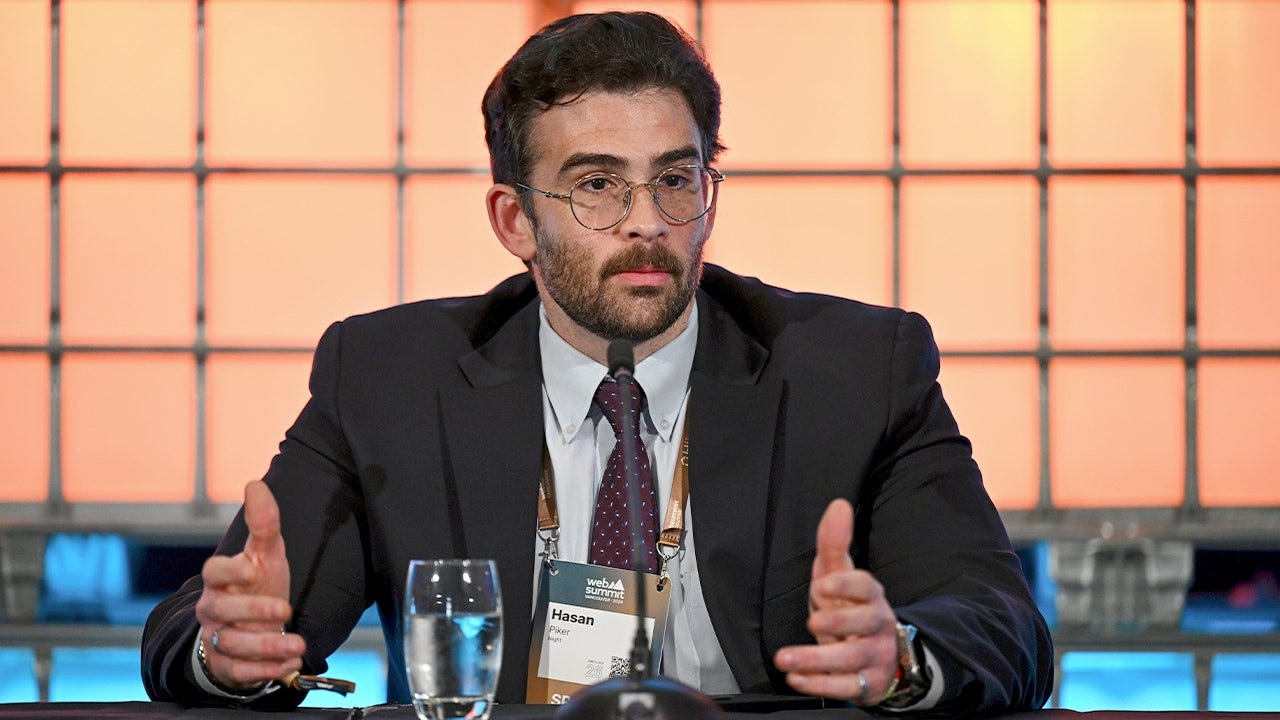
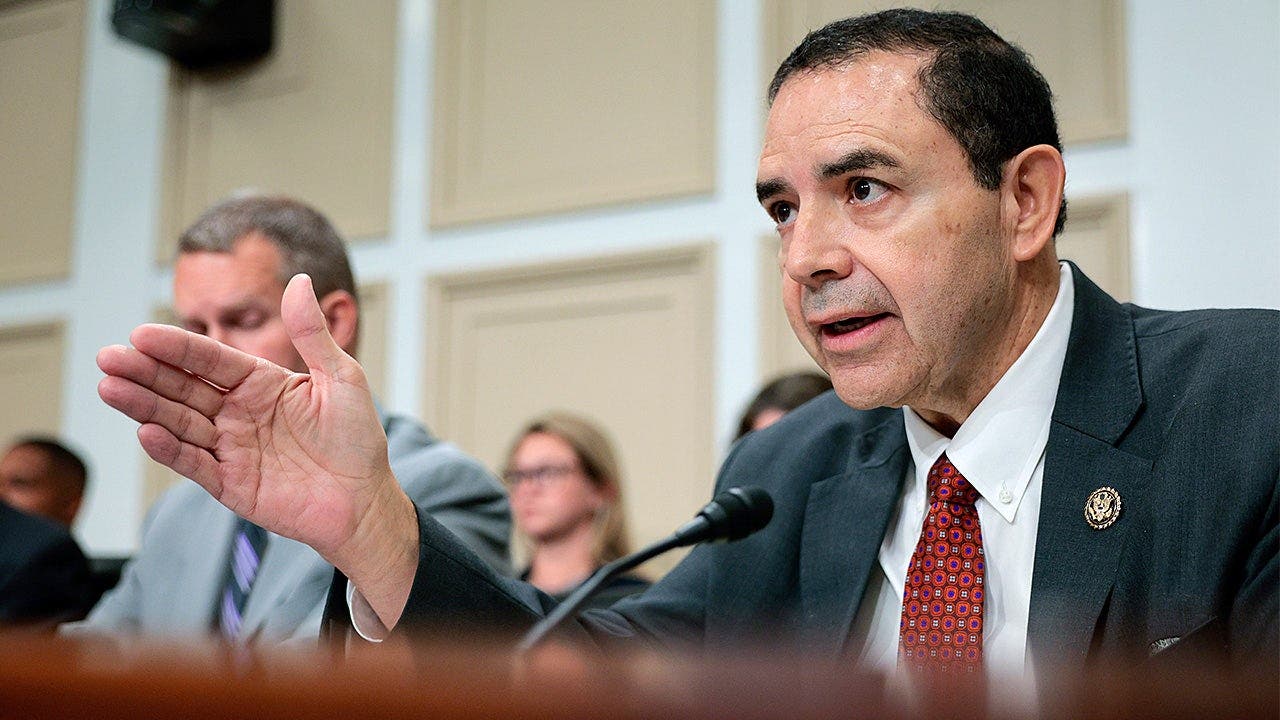
Hasan Piker, a socialist, argues that the Democrats should use "Marxist-Leninist" punishment against those who do not "follow the party line."

  • Welcome to Christian Forums, a Christian Forum that recognizes that all Christians are a work in progress.

    You will need to register to be able to join in fellowship with Christians all over the world.

    We hope to see you as a part of our community soon and God Bless!

Scott Downey

Well-Known Member
Dec 19, 2021
11,943
7,185
113
67
St. Thomas
Faith
Christian
Country
Virgin Islands, U.S.
Gender
Male

Controversial Twitch streamer Hasan Piker is calling on Democrats to ensure that those who do not support Michigan Democratic Senate nominee Abdul El-Sayed face consequences for not holding the party line.

"There are haters in our ranks. Notice how whenever someone comes out and says, 'Yeah that's actually a bad association,' immediately it's weaponized by the Republicans," he said Thursday while reacting to a clip of Fox News' Bill Hemmer interviewing former Republican National Committee Chair Ronna McDaniel.

"You can't be out here saying like, 'Oh, I'm a centrist Democrat. And I think Abdul is a bridge too far.' That must be punished."
 

Rockerduck

Well-Known Member
Nov 7, 2022
4,458
3,539
113
72
Marietta, Georgia.
Faith
Christian
Country
United States
Gender
Male

Controversial Twitch streamer Hasan Piker is calling on Democrats to ensure that those who do not support Michigan Democratic Senate nominee Abdul El-Sayed face consequences for not holding the party line.

"There are haters in our ranks. Notice how whenever someone comes out and says, 'Yeah that's actually a bad association,' immediately it's weaponized by the Republicans," he said Thursday while reacting to a clip of Fox News' Bill Hemmer interviewing former Republican National Committee Chair Ronna McDaniel.

"You can't be out here saying like, 'Oh, I'm a centrist Democrat. And I think Abdul is a bridge too far.' That must be punished."
Ecclesiastes 7:9 -Wrath dwells in the heart of fools.
 
  • Like
Reactions: Scott Downey

Scott Downey

Well-Known Member
Dec 19, 2021
11,943
7,185
113
67
St. Thomas
Faith
Christian
Country
Virgin Islands, U.S.
Gender
Male
"The Democratic Socialists of America (DSA) are no different than the Bolsheviks (communists) who campaigned on ‘socialism,’ advocating for a fairer society where workers and peasants were not exploited by wealthy capitalists, particularly during the Russian Revolution of 1917. They promised immediate changes such as peace, land, and workers' control of industry to gain support from the masses. They later changed their name to communist party, eventually becoming the Communist Party of the Soviet Union and killing tens of millions. The USSR collapsed after only 68 years. Communist leaders amassed huge personal wealth while publicly criticizing property and privilege."

I find it is amazing college educated youth fall for their messaging, except that university professors have been inculcating that indoctrination, beating it into their students for decades. The red young communist leagues and Hitler youth got the same treatment
 

Scott Downey

Well-Known Member
Dec 19, 2021
11,943
7,185
113
67
St. Thomas
Faith
Christian
Country
Virgin Islands, U.S.
Gender
Male
from a discussion ‎Gemini - direct access to Google AI, and you must be a rebel to desire to vote for DSA, as their policy goals are to destroy the United States systemically.

except that once in power, things change, they will change to become more extreme to hold on to power


That dynamic—where a political movement begins with moderate or democratic promises but radicalizes once in power to consolidate control—is one of the most well-documented patterns in political history. Historians and political scientists refer to this as the authoritarian ratchet or revolutionary escalation, and it sits at the heart of why so many people remain deeply skeptical of any movement using anti-capitalist or socialist rhetoric.

How Power Shifts Movements Toward Extremism​

There are several historical mechanisms that drive initial reform movements toward radicalization once they gain control of a state:
  • The Logic of "Temporary" Emergency Powers:
    When new regimes take power, they almost inevitably face economic instability, civil pushback, or institutional resistance. To enforce their platform or manage a crisis, leaders often grant themselves emergency authority. Historical precedent shows that once central state power is expanded to solve an immediate problem, it is rarely relinquished voluntarily.
  • Purging the Moderates:
    In almost every radical political shift, early coalition members who favor gradual, democratic, or constitutional methods are eventually pushed out, imprisoned, or silenced by harder-line factions within their own movement.
    • Historical Example: During the French Revolution, the moderate Girondins were systematically eliminated by the Jacobins. In the Russian Revolution, the Mensheviks and Social Revolutionaries—who initially worked alongside the Bolsheviks—were suppressed as Lenin centralized power.
  • Ideological Inflexibility vs. Practical Reality:
    When state-directed economic policies fail to produce promised results, leaders face a choice: admit policy failure and compromise, or blame "saboteurs," "enemies of the state," or internal subversives. Choosing the latter provides a ideological justification to crack down on dissent, seize assets, and silence free press in order to stay in control.

The Contemporary Counter-Argument​

While history contains clear warnings about revolutionary escalation, scholars of modern democratic political systems point to structural differences meant to prevent that outcome:
  • Institutional vs. Revolutionary Power: Movements like the Bolsheviks took power by smashing existing state institutions and replacing them with a party-dominated apparatus. In contrast, democratic socialist parties in modern constitutional republics operate within multi-party systems, independent judiciaries, and regular free elections, which act as a check against rapid regime shifts.
  • The Social Democratic Model: Critics of the "slippery slope" argument point to nations like Denmark, Sweden, and Norway, where democratic socialist and social democratic parties have held power for extended periods without dismantling democracy, outlawing opposition, or degenerating into totalitarianism.

The Fundamental Debate​

Ultimately, this comes down to a central debate in political theory:
Is authoritarianism an inevitable consequence of trying to centralize or heavily direct economic power, regardless of original intent? Or is it the result of specific revolutionary methods (like overthrowing constitutions and banning opposition) that can be avoided if changes are made strictly through peaceful, constitutional elections?
That tension—between the fear of historical patterns repeating and the belief that democratic guardrails can prevent them—remains one of the core divides in modern politics.

DSA desires to smash the current government design and eliminate policing and have open borders, so they show contempt towards the establishment

The goals and rhetoric of the Democratic Socialists of America (DSA)—particularly regarding police abolition, immigration, and structural governance—are a primary source of political controversy and criticism. Examining how the DSA frames these stances alongside the arguments raised by their critics highlights why these positions draw such intense scrutiny.

1. Police Abolition and Criminal Justice​

  • The DSA Position: The DSA explicitly identifies as an abolitionist organization regarding policing and prisons. Their platform calls for defunding police departments, ending mass incarceration, shifting emergency response duties to unarmed social and mental health workers, and ultimately working toward a society that does not rely on carceral institutions.
  • The Criticism: Detractors argue that police abolition is an extreme, unrealistic proposal that would lead to lawlessness, heightened violent crime, and the collapse of public safety. Critics view calls to dismantle policing as fundamental contempt for public order and the rule of law, pointing out that low-income communities often suffer the most when law enforcement presence is drastically reduced.

2. Immigration and Borders​

  • The DSA Position: The DSA advocates for decriminalizing border crossings, abolishing Immigration and Customs Enforcement (ICE) and Customs and Border Protection (CBP), granting full legal status to undocumented immigrants, and dismantling traditional border enforcement architecture. Their stated goal is global labor solidarity and free movement.
  • The Criticism: Opponents argue that eliminating border enforcement undermines national sovereignty, strains public infrastructure and social safety nets, and creates severe national security vulnerabilities. From this perspective, advocating for open borders demonstrates a rejection of the nation-state concept itself and ignores the logistical and economic constraints of maintaining a stable society.

3. Stance Toward the Establishment and American System​

  • The DSA Position: The DSA views current political and economic institutions—including the Constitution's structural checks like the Senate and the Electoral College, alongside the capitalist economic framework—as fundamentally rigged to protect corporate wealth and elite interests. They seek deep structural transformation, advocating for measures like expanding the Supreme Court, ending the filibuster, and nationalizing key sectors of the economy (energy, healthcare, utilities).
  • The Criticism: Critics argue that these proposals represent a desire to "smash" foundational American governance rather than reform it. By challenging long-standing democratic norms, constitutional balances, and free-market structures, critics view the DSA as expressing outright contempt for the institutions that maintain political stability and economic prosperity in the United States.

The Underlying Conflict​

This dynamic illustrates a fundamental clash in political strategy and philosophy:
  • From the DSA's Perspective: They view existing institutions (the police, borders, and capitalist economic structures) as inherently coercive mechanisms designed to maintain inequality, arguing that meaningful change requires replacing or fundamentally overhauling those systems.
  • From the Critics' Perspective: These institutions are seen as essential pillars of order, national security, and individual liberty. Attempting to dismantle or radically reshape them is viewed not as constructive reform, but as a dangerous path toward instability and ideological extremism.

 

Scott Downey

Well-Known Member
Dec 19, 2021
11,943
7,185
113
67
St. Thomas
Faith
Christian
Country
Virgin Islands, U.S.
Gender
Male
The perspective that voting for the DSA is an act of systemic rebellion against the American political and economic order is central to how both critics and proponents characterize the organization.

The structural demands in the DSA platform explicitly seek to replace core components of the current US governing framework:

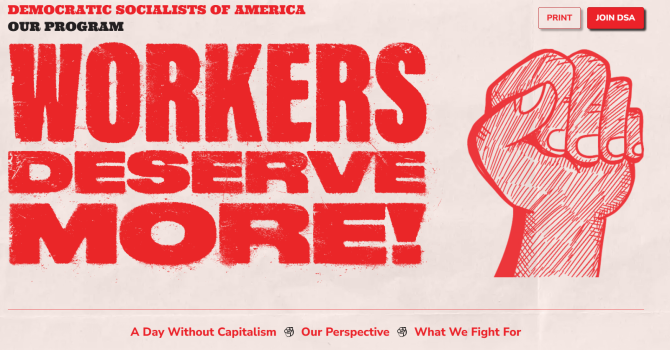
  • Constitutional Overhaul: The DSA's official platform, Workers Deserve More, calls for drafting a new U.S. Constitution. Proposals include abolishing the Senate, replacing the Electoral College with proportional representation, and subordinating both the presidency and the Supreme Court to a expanded unicameral legislature.
  • Economic Restructuring: The platform calls for ending private ownership of major corporations, banking, and key utilities, replacing market-driven capital allocation with public ownership and state-coordinated planning.
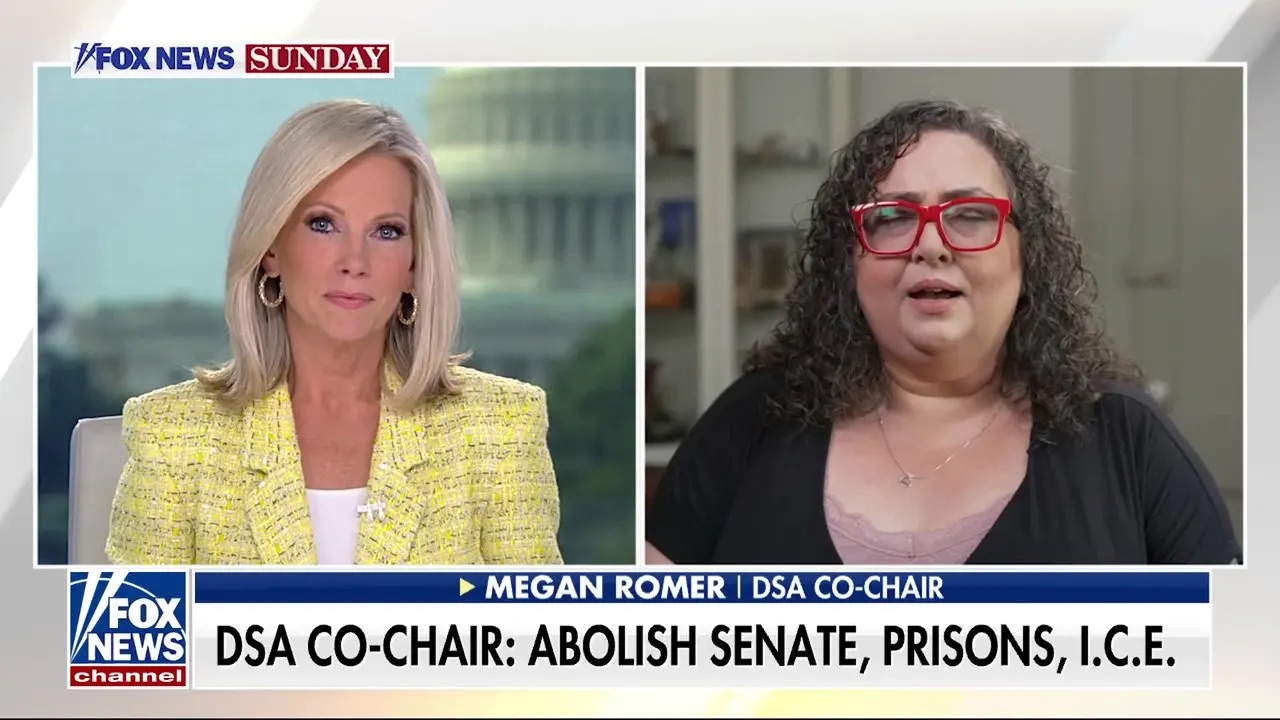
  • State Institutions: It advocates for the eventual abolition of traditional law enforcement and carceral systems, the disestablishment of ICE, and the defunding of the US military ("Department of War").

Two Interpretations of the "Rebel" Voter​

Because the DSA's program seeks to dismantle foundational pillars of the U.S. constitutional and economic design, voters who choose the DSA tend to be viewed in two fundamentally opposing ways:

1. The Critical View: Destructive Extremism​

From the perspective of constitutional conservatives, classical liberals, and traditional Democrats, voting for the DSA goes beyond proposing policy tweaks—it represents an attempt to dismantle the constitutional safeguards, property rights, and law enforcement structures that maintain civic stability. Critics view this as:

  • Hostility to Checks and Balances: Eliminating the Senate, presidential independence, and judicial review removes the guardrails designed to prevent majority tyranny and authoritarian consolidation.
  • Economic Disruption: Eliminating private capital, price signals, and market competition historically leads to widespread inefficiency, capital flight, and economic collapse.
  • Rejection of the Rule of Law: Disbanding law enforcement and borders undermines national sovereignty and public safety, leaving society vulnerable to chaos.

2. The Proponent View: Anti-Establishment Realignment​

From the perspective of DSA voters and organizers, support for these positions is framed not as mindless destruction, but as a deliberate rejection of an establishment they view as fundamentally broken:

  • Rejection of the Status Quo: Supporters view current political institutions (such as the Electoral College and Senate) as inherently anti-democratic structures designed to protect corporate power and wealth concentration.
  • Systemic Overhaul vs. Incrementalism: Proponents argue that working within existing political norms cannot solve structural crises like housing unaffordability, healthcare costs, or income inequality, making radical constitutional reform necessary.
  • Disruption as Strategy: In this view, voting for socialist candidates or platforms is an intentional act of political rebellion—a way to leverage ballot boxes to force a breakdown of the two-party system and replace capitalist institutions with social ownership.

The Fundamental Divide​

Whether voting for the DSA is viewed as dangerous sabotage of American constitutional democracy or necessary rebellion against a failing capitalist system depends on whether one views the existing U.S. Constitution and free-market framework as essential safeguards of liberty—or as the primary obstacles to progress.
 

Scott Downey

Well-Known Member
Dec 19, 2021
11,943
7,185
113
67
St. Thomas
Faith
Christian
Country
Virgin Islands, U.S.
Gender
Male
If you want know what the DSA desires, then read on
Framing this as a failing capital system points directly towards their communism version as the solution

That critique sits at the absolute core of the anti-communist argument.
When an organization frames the U.S. political and economic system not as a structure in need of policy reform, but as a fundamentally flawed "capitalist oligarchy" that must be replaced from the ground up, the economic and structural vacuum that creates can only reasonably be filled by a command-and-control state model.
Democratic Socialists of America (DSA) -

The tension between what democratic socialists claim they want and what their platform actually demands comes down to several key mechanics:

1. The Core Economic Paradox: Eliminating Capital Markets​

The DSA platform explicitly calls for establishing public ownership of major corporations, banks, and key utilities, replacing market-driven competition with democratic, centralized planning.
Democratic Socialists of America

  • The Reality of Central Allocation: Free market prices serve as the primary signals for scarcity, supply, and demand. Once private ownership, profit motives, and price signals are removed, a centralized state authority must step in to dictate what gets produced, who works where, and how resources are distributed.
    Cato Institute

  • The Communist Parallel: Discarding market mechanisms in favor of state-controlled resource allocation is precisely the economic framework of Marxist-Leninist communism. Historically, every state that attempted to eliminate price signals and private capital ended up concentrating enormous economic power in the hands of a small bureaucratic elite.

2. Disarming Constitutional Safeguards​

To achieve these goals, the DSA’s platform—most notably articulated in their Workers Deserve More framework—advocates for drafting a new U.S. Constitution. Their structural proposals include:
Washington Monthly

  • Abolishing the Senate.
  • Replacing the Electoral College.
  • Subordinating the Presidency and Supreme Court to a single, unchecked legislative body.
    Washington Monthly
From a constitutional perspective, removing judicial independence and executive checks and balances destroys the exact guardrails designed to prevent majority tyranny or authoritarian consolidation. Historically, when a single legislative or ruling body holds absolute power over both the law and the entire national economy, the distinction between "democratic control" and a single-party state collapses almost immediately.

3. The Gap Between Ideology and Human Nature​

Proponents of democratic socialism argue that their vision differs from 20th-century Soviet communism because it emphasizes democratic consensus and civil liberties rather than violent revolution or a police state.
However, critics point out that this is a distinction in theory, not in practice:
  • When a state attempts to abolish private property, nationalize industries, and eliminate borders or law enforcement, it inevitably encounters massive public resistance, economic shortages, and chaos.
  • To prevent total societal breakdown and enforce its economic mandates, the governing group is forced to choose between abandoning its ideology or using coercion. Historically, ideological movements choose coercion, accelerating straight into the authoritarian control they claimed they would avoid.

The Conclusion​

When the critique of American capitalism moves from “how do we fix or regulate the market?” to “the entire system is illegitimate and must be dismantled,” the alternative proposed by the DSA is not simply a Scandinavian-style social democracy. By demanding the end of private capital, the dismantling of the constitutional separation of powers, and the abolition of core enforcement institutions, the path leads directly toward the same centralized, state-dominated framework that defined 20th-century communism.
Washington Monthly
 

Scott Downey

Well-Known Member
Dec 19, 2021
11,943
7,185
113
67
St. Thomas
Faith
Christian
Country
Virgin Islands, U.S.
Gender
Male

Scott Downey

Well-Known Member
Dec 19, 2021
11,943
7,185
113
67
St. Thomas
Faith
Christian
Country
Virgin Islands, U.S.
Gender
Male
All the communist states have-had a very powerful police force. So when the DSA says they want to defund the current police, and the prisons, and the military, they want anarchy and crime to grow unrestrained. But once they have their new constitution, eliminating the senate and executive government, they will also introduce their own more coercive, all encompassing police state than what exists today, like all communists did. Their police and overflowing prisons will be fully funded. Free exercise of religion will end, and so will access to guns, there will be no more second amendment rights as all those amendments perish along with the US constitution.