


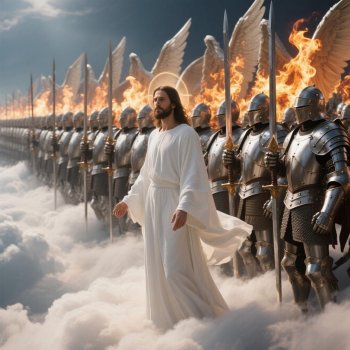
Types of Prayer: Intercession and Spiritual Warfare
Prayer is the lifeline of the believer. Scripture reveals two distinct, yet complementary, streams of prayer: intercessory prayer and spiritual warfare prayer. Intercession appeals to God’s mercy, while spiritual warfare enforces Christ’s victory over the enemy. Understanding the difference and how they work together is essential for effective prayer ministry.Intercessory Prayer
Intercessory prayer is when a believer stands in the gap on behalf of others, asking the Lord to have mercy, intervene, or bless their lives. It is a humble and compassionate form of prayer that brings the needs of others into God’s presence.Old Testament Examples:
- Abraham interceded for Sodom, asking God to spare the city if righteous people could be found there (Genesis 18:22–33).
- Moses interceded for Israel after they sinned with the golden calf, pleading with God not to destroy His people (Exodus 32:11–14).
- Paul urges believers to offer “supplications, prayers, intercessions, and thanksgivings… for all people, for kings and all who are in high positions” (1 Timothy 2:1–2).
- Jesus continually intercedes for us, “always living to make intercession” (Hebrews 7:25).
I remember a time when I prayed all night for my father, who was taken to the hospital. He was not a believer, and he needed an emergency operation to save his life; however, the chances of him surviving were slim. So I prayed to the Lord all night until the morning, asking him for mercy, to divinely intervene and heal him because he was not saved yet. The Holy Spirit kept telling me to relent (cease; stop praying), and I eventually did. My biggest issue was that if he died, we would not see him again. I relented but asked the Lord if it was his will that when the surgeon/specialists came to prep him for surgery, they would find nothing and he would be allowed to come home that day.
They checked on him the following morning. The specialist said, “Well, what was there before has gone now!” And they let him go home. Glory to God.
Spiritual Warfare Prayer
Spiritual warfare Prayer uses the sword of the Spirit, the Word of God, in the authority of Christ to resist, rebuke, and remove spiritual forces affecting people’s lives. It is more confrontational and authoritative in nature.Old Testament Example:
Joshua commanded the sun and moon to stand still during Israel’s battle with the Amorites (Joshua 10:12–14), demonstrating bold faith and obedience resulting in victory.
New Testament Examples:
- Jesus used the Word of God to defeat Satan in the wilderness. Matt 4:1-11
- Ephesians 6:12–17 reminds us that our battle is against principalities, powers, and spiritual wickedness. The believer’s weapon is the Word of God, wielded in faith and obedience.
- Jesus rebuked unclean spirits with authority (Mark 1:23–25).
- Paul cast out the spirit of divination from a slave girl in Philippi (Acts 16:16–18).
- Believers are told to “submit to God, resist the devil, and he will flee” (James 4:7).
I recall a situation when a newly married young Christian man came to see me to ask for prayer. I happened to be home with my intercessor friend (I am a prayer warrior). He wanted to ask us to pray for a healing for his back. He had had a back problem for many years, and now that he was building a family, he wanted to be able to work. As an intercessor, my friend was able to tell me what and where a specific spirit was hiding in his body. I bound it by the authority I have been given in Jesus' name and cast it out along with other spirits that were plaguing him. He knew that he had been healed, and he is still healed today after many years.
Cautionary Note: Misused Authority
Scripture provides cautionary examples of what happens when spiritual authority is attempted without submission, preparation, or intimacy with God.Old Testament Context:
- Israel only achieved victory when following God’s specific instructions (Joshua 6; 2 Chronicles 20).
- The seven sons of Sceva (Acts 19:13–16) tried to cast out demons in Jesus’ name without walking in the Spirit. The spirit replied, “Jesus I know, and Paul I know, but who are you?” and overpowered them. Authority cannot be borrowed or imitated.
- In Matthew 17:14–21 and Mark 9:14–29, the disciples could not cast out a demon from a boy. Jesus explained that this kind of spirit requires prayer and fasting, showing that spiritual authority comes with preparation, consecration, and alignment with God.
- The Lord warns about novices taking authority too soon (1 Timothy 3:6). Inexperience can lead to conceit or failure. This principle extends beyond leadership to spiritual warfare: believers must grow in intimacy with God, discernment, and obedience before tackling strongholds or high-level spiritual assignments.
- Even Michael the archangel invoked God’s authority rather than acting independently (Jude 1:9).
A Personal Encounter
I remember a situation where a woman came over with her boy, who was slithering around on the floor with his tongue flicking in and out like a snake.
My son was at my house at the time, and, through corporate revelation by the Holy Spirit, we were able to free him through strategies the Lord gave us as we listened and obeyed his will. That was an extremely powerful battle of good over evil, as the enemy was not going to let him go easily, but he was set free by the power of God and is still free today. All glory to God!
Balancing Intercession and Spiritual Warfare
Intercessory prayer appeals to God on behalf of people, while spiritual warfare prayer resists the enemy in the authority of Christ. Both are essential and often overlap. For example, when praying for someone trapped in addiction or spiritual bondage, intercession may begin with petitions for mercy, while warfare follows to break strongholds and enforce freedom in Jesus’ name.When done correctly, intercession and warfare demonstrate the fullness of prayer: intercession brings heaven’s mercy, and warfare enforces heaven’s victory. Both require intimacy with God, obedience to the Holy Spirit, and alignment with His Word. Authority cannot be taken lightly. It flows from relationship with Christ and must be exercised wisely, often in unity and under His guidance.
Concluding Remarks:
Intercession and spiritual warfare prayer are complementary forms of powerful prayer. Intercession pleads for mercy, blessing, and salvation, while warfare exercises Christ’s authority over the enemy. Misuse of authority, presumption, or inexperience can lead to failure or harm, emphasizing the need for submission, preparation, and often corporate support. When led by the Spirit, these forms of prayer bring transformation, breakthrough, and the advancement of God’s kingdom.Angelina: Prayer Warrior 19/08/2025
Last edited:


