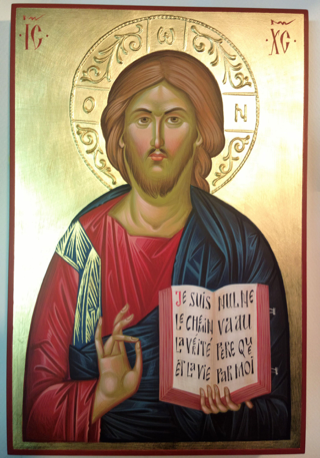
Warning about the Orthodox Church....the icons

  • Welcome to Christian Forums, a Christian Forum that recognizes that all Christians are a work in progress.

    You will need to register to be able to join in fellowship with Christians all over the world.

    We hope to see you as a part of our community soon and God Bless!

Debp

Mod - Encounter Team
Staff member
Encounter Team
Jul 5, 2020
12,999
15,990
113
California
Faith
Christian
Country
United States
Gender
Female
The following information is from Fidei Defensor, a poster at another Christian forum. He has firsthand information about this through his research of five years and in-depth conversations with monks and Orthodox priests. @Wynona @amigo de christo @Nancy


"Icons act as transmitters, conduits, and windows into a spiritual dimensions, which frankly is rather creepy. I do not read anywhere in Scripture where an Apostle or Jesus emphasizes such mystical practices. Icons are suppose to help Orthodox travel in time to the event depicted or transport you spiritually to a place with them, and if you are Orthodox you suppose to greet an Icon as if its the person represented, wither Christ or saint, and kiss the icon. All of this is called veneration, but It borders on idolatry and worse in my book."

Also from Fidei Defensor:

"Every Eastern Orthodox Christian then believes you are icon of God, an image of God and that when you sin, you taint that image by "missing the mark" and must repent "turn from sin" to restore the image of God for others to see Him better. A beautiful thought no? But this goes further, Orthodox believe icons, the painting you see above, is also an icon (person), and that icons are windows into heaven, time traveling devices back to those scenes depicted like Crucifixion, and etc. Icons are believed to be transmitters, and wormholes to other places; very mystical: According to the official stance on Icons in Eastern Orthodoxy, "they are windows into heaven and time". (From Book Praying with Icons, Linette Martin, Ancient Spiritual Disciples."
 
  • Wow
Reactions: amigo de christo

Debp

Mod - Encounter Team
Staff member
Encounter Team
Jul 5, 2020
12,999
15,990
113
California
Faith
Christian
Country
United States
Gender
Female
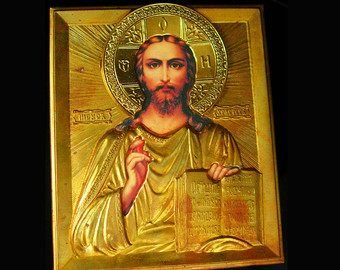
Examples of icons.

1756593316133.jpeg

1756593439982.png
 

Wynona

Encounter Team
Staff member
Encounter Team
Jan 27, 2021
4,555
7,332
113
North Carolina
Faith
Christian
Country
United States
Gender
Female
Hi @Debp
I have no real opinion one way or another on icons. For other reasons, we may not join become members of the Orthodox church.
 
  • Like
Reactions: Debp

amigo de christo

Well-Known Member
Sep 12, 2020
37,133
60,876
113
54
San angelo
Faith
Christian
Country
United States
Gender
Male
The following information is from Fidei Defensor, a poster at another Christian forum. He has firsthand information about this through his research of five years and in-depth conversations with monks and Orthodox priests. @Wynona @amigo de christo @Nancy


"Icons act as transmitters, conduits, and windows into a spiritual dimensions, which frankly is rather creepy. I do not read anywhere in Scripture where an Apostle or Jesus emphasizes such mystical practices. Icons are suppose to help Orthodox travel in time to the event depicted or transport you spiritually to a place with them, and if you are Orthodox you suppose to greet an Icon as if its the person represented, wither Christ or saint, and kiss the icon. All of this is called veneration, but It borders on idolatry and worse in my book."

Also from Fidei Defensor:

"Every Eastern Orthodox Christian then believes you are icon of God, an image of God and that when you sin, you taint that image by "missing the mark" and must repent "turn from sin" to restore the image of God for others to see Him better. A beautiful thought no? But this goes further, Orthodox believe icons, the painting you see above, is also an icon (person), and that icons are windows into heaven, time traveling devices back to those scenes depicted like Crucifixion, and etc. Icons are believed to be transmitters, and wormholes to other places; very mystical: According to the official stance on Icons in Eastern Orthodoxy, "they are windows into heaven and time". (From Book Praying with Icons, Linette Martin, Ancient Spiritual Disciples."
People get so easily led astray with things my friend . The sheep shall follow Christ JESUS .
Stay dug in the bible as well my friend . Far too many are simply teachings what is known as fables .
To the trenches Debp , to the trenches , the hour is late .
 
M

Muna

Guest
The following information is from Fidei Defensor, a poster at another Christian forum. He has firsthand information about this through his research of five years and in-depth conversations with monks and Orthodox priests. @Wynona @amigo de christo @Nancy


"Icons act as transmitters, conduits, and windows into a spiritual dimensions, which frankly is rather creepy. I do not read anywhere in Scripture where an Apostle or Jesus emphasizes such mystical practices. Icons are suppose to help Orthodox travel in time to the event depicted or transport you spiritually to a place with them, and if you are Orthodox you suppose to greet an Icon as if its the person represented, wither Christ or saint, and kiss the icon. All of this is called veneration, but It borders on idolatry and worse in my book."

Reminds me of this


Deut.9
[16] And I looked, and, behold, ye had sinned against the LORD your God, and had made you a molten calf: ye had turned aside quickly out of the way which the LORD had commanded you.
[21] And I took your sin, the calf which ye had made, and burnt it with fire, and stamped it, and ground it very small, even until it was as small as dust: and I cast the dust thereof into the brook that descended out of the mount.

Hos.13
[2] And now they sin more and more, and have made them molten images of their silver, and idols according to their own understanding, all of it the work of the craftsmen: they say of them, Let the men that sacrifice kiss the calves.
 
M

Muna

Guest
They call the brazen serpent an icon as well (because God commanded Moses to make it) but it still had to be destroyed because they acted unlawfully toward it. And Hezekiah destroyed it, and it says here...

2 Kings 18:3 And he (Hezekiah) did that which was right in the sight of the LORD, according to all that David his father did.

2 Kings 18:4 He removed the high places, and brake the images, and cut down the groves, and brake in pieces the brasen serpent that Moses had made: for unto those days the children of Israel did burn incense to it: and he called it Nehushtan.

But the Orthodox do what is called "censing icons" and you can see in the above they were burning incense unto the brasen serpent (which they consider an icon) because Moses made it, so where they might justify to do that because they call it an icon Hezekiah on the otherhand destroyed it because they were doing just that to it


Edit fixed sentence
 
Last edited by a moderator:
M

Muna

Guest
They call the brazen serpent an icon as well (because God commanded Moses to make it) but it still had to be destroyed because they acted unlawfully toward it. And Hezekiah destroyed it, and it says here...

2 Kings 18:3 And he (Hezekiah) did that which was right in the sight of the LORD, according to all that David his father did.

2 Kings 18:4 He removed the high places, and brake the images, and cut down the groves, and brake in pieces the brasen serpent that Moses had made: for unto those days the children of Israel did burn incense to it: and he called it Nehushtan.

But the Orthodox do what is called "censing icons" and you can see in the above they were burning incense unto the brasen serpent (which they consider an icon) because Moses made it, so where they might justify to do that because they call it an icon Hezekiah on the otherhand destroyed it because they were doing just that to it


Edit fixed sentence
Which reminded me of something I had read about this man St John of Damascus, that I put into the search to find it again, it says of him, read the highlighted in red

St John Damascene Icons​

St. John of Damascus believed that anyone who tried to destroy icons was the enemy of Christ, the Holy Mother of God, and the saints, as such actions were seen as upholding the devil and his demons. He argued that the veneration of icons, which represent Christ, the Virgin Mary, and the saints, is a way of honoring the divine reality they signify, not the material object itself. According to Damascene, the destruction of icons is an attack on the Incarnation, which is central to Christian theology, and thus represents a fundamental opposition to the Christian faith.

And just so we are clear

John of Damascus regarded the brazen serpent as an icon
, and the Orthodox tradition holds that such images, like the serpent, are not worshipped but venerated, with the honor given to the image passing to its prototype, Christ.

What exactly do they mean that icons can be "venerated"?

What it means is they encourage the burning incense to icons (such as they consider the brasen serpent to be)


Orthodox Church Incense​

The Orthodox Church burns incense to icons as a profound act of veneration and reverence, symbolizing the prayers of the faithful rising to God like a sweet-smelling fragrance.

And so again

2 Kings 18:3 And he (Hezekiah) did that which was right in the sight of the LORD, according to all that David his father did.

2 Kings 18:4 He removed the high places, and brake the images, and cut down the groves, and brake in pieces the brasen serpent that Moses had made: for unto those days the children of Israel did burn incense to it: and he called it Nehushtan.

How would Hezekiah be viewed for doing the above?

St. John of Damascus believed that anyone who tried to destroy icons was the enemy of Christ, the Holy Mother of God, and the saints, as such actions were seen as upholding the devil and his demons.

Even though it says,


2 Kings 18:3 And he (Hezekiah) did that which was right in the sight of the LORD, according to all that David his father did.

See what I mean?
 
  • Like
Reactions: Debp

Debp

Mod - Encounter Team
Staff member
Encounter Team
Jul 5, 2020
12,999
15,990
113
California
Faith
Christian
Country
United States
Gender
Female
St. John of Damascus believed that anyone who tried to destroy icons was the enemy of Christ, the Holy Mother of God, and the saints, as such actions were seen as upholding the devil and his demons.

Even though it says,


2 Kings 18:3 And he (Hezekiah) did that which was right in the sight of the LORD, according to all that David his father did.

Fidei Defensor from whom I got the information said he had icons, some of which were very expensive. But once he knew the mysticism behind them, he destroyed them.
 
M

Muna

Guest
Fidei Defensor from whom I got the information said he had icons, some of which were very expensive. But once he knew the mysticism behind them, he destroyed them.

I like what Hezekiah called the brasen serpent

2 Kings 18:4 He removed the high places, and brake the images, and cut down the groves, and brake in pieces the brasen serpent that Moses had made: for unto those days the children of Israel did burn incense to it: and he called it Nehushtan.

Nehushtan- "a thing of brass"


Notice how they are still worshiping things of brass in Revelation

Rev 9:20 And the rest of the men which were not killed by these plagues yet repented not of the works of their hands, that they should not worship devils, and idols of gold, and silver, and brass, and stone, and of wood: which neither can see, nor hear, nor walk:
 
M

Muna

Guest
Fidei Defensor from whom I got the information said he had icons, some of which were very expensive. But once he knew the mysticism behind them, he destroyed them.

Regarding the mysticism behind them (images or icons or idols), you do not believe these handmade images have any actual power in/or behind them do you? Because its just someones superstition devotions in respects to them, belieiving they have some sort of power.
 
  • Like
Reactions: amigo de christo

Debp

Mod - Encounter Team
Staff member
Encounter Team
Jul 5, 2020
12,999
15,990
113
California
Faith
Christian
Country
United States
Gender
Female
Regarding the mysticism behind them (images or icons or idols), you do not believe these handmade images have any actual power in/or behind them do you?
Of course not. I only started this topic because @Wynona said she and her husband were interested in the Orthodox Church.
 
  • Like
Reactions: amigo de christo
M

Muna

Guest
Of course not.
When you wrote, "once he knew the mysticism behind them, he destroyed them"

I thought you were agreeing with him on that assessment, thanks for clarifying

I only started this topic because @Wynona said she and her husband were interested in the Orthodox Church.

I would have no idea why you started it, but I will say that I have spoken to many Orthodox over the years and I have never heard of what this Fidei Defensor has posted concerning icons. I just never heard of it.
 

Debp

Mod - Encounter Team
Staff member
Encounter Team
Jul 5, 2020
12,999
15,990
113
California
Faith
Christian
Country
United States
Gender
Female
When you wrote, "once he knew the mysticism behind them, he destroyed them"

I thought you were agreeing with him on that assessment, thanks for clarifying


I would have no idea why you started it, but I will say that I have spoken to many Orthodox over the years and I have never heard of what this Fidei Defensor has posted concerning icons. I just never heard of it.

The following were his sources:

Quoting Fidei Defensor:

"I have studied Eastern Orthodoxy for five years by read books by Bishop Kallistos Ware's The Orthodox Church and Katherine Clark's Orthodox Church Simple Guides, read from The Orthodox Church: An Introduction to Its History, Doctrines, and Spiritual Culture by John Anthony McGuckin, watching videos of Orthodox Priests teaching theology and doxology, and visiting theological Orthodox sites.

I have been to Eastern Orthodox Vigil Service.

I have talked extensively with Father Photios, a priest in Eastern Orthodox Church.

I have been in communication with Eastern Orthodox Ascetics and Monks.

I have spent time reading on Icons, and their effects. -From Book Praying with Icons, Linette Martin, Ancient Spiritual Disciples and The Orthodox Church Simple Guides, Katherine Clark, and websites.

I owned expensive Icons, IC XC Christ Pantokrator and had to throw them out. I had icons blessed by priests, I had expensive ones made of monastic church wood, and jeweled ones from Russia. I have since removed them after learning about their mystical properties and the strange doctrines and spiritually surrounding them."
 
  • Like
Reactions: Muna
M

Muna

Guest
The following were his sources:

Quoting Fidei Defensor:

"I have studied Eastern Orthodoxy for five years by read books by Bishop Kallistos Ware's The Orthodox Church and Katherine Clark's Orthodox Church Simple Guides, read from The Orthodox Church: An Introduction to Its History, Doctrines, and Spiritual Culture by John Anthony McGuckin, watching videos of Orthodox Priests teaching theology and doxology, and visiting theological Orthodox sites.

I have been to Eastern Orthodox Vigil Service.

I have talked extensively with Father Photios, a priest in Eastern Orthodox Church.

I have been in communication with Eastern Orthodox Ascetics and Monks.

I have spent time reading on Icons, and their effects. -From Book Praying with Icons, Linette Martin, Ancient Spiritual Disciples and The Orthodox Church Simple Guides, Katherine Clark, and websites.

I owned expensive Icons, IC XC Christ Pantokrator and had to throw them out. I had icons blessed by priests, I had expensive ones made of monastic church wood, and jeweled ones from Russia. I have since removed them after learning about their mystical properties and the strange doctrines and spiritually surrounding them."
This must be why they defend it? I do not know, I did do a search and apparently they do believe some sort of power come from it. I do know through past conversations they use the brasen serpent itself to prove God gives power to "icons" (even though Moses was for a testimony of what was to be spoken after in respects to Jesus Christ/the power of God) and that God specifically commanded Moses to make that serpent which would later be referred to by Jesus Christ (in relation to himself.). Knowing the law having a shadow of things which were to come (figures of the true) And so the LORD had Moses make a serpent in Numbers

Numbers 21:8 And the LORD said unto Moses, Make thee a fiery serpent, and set it upon a pole: and it shall come to pass, that every one that is bitten, when he looketh upon it, shall live.

And so that is what Moses did according to the LORD's instruction

Numbers 21:9 And Moses made a serpent of brass, and put it upon a pole, and it came to pass, that if a serpent had bitten any man, when he beheld the serpent of brass, he lived.

Which were image of the true, and so after that pattern Jesus would be lifted up on upright stake

John 3:14-15 And as Moses lifted up the serpent in the wilderness, even so must the Son of man be lifted up:
That whosoever believeth in him should not perish, but have eternal life.

The children of Israel instead of just looking to the same in the typology (as they were told) they took up the practice of burning incense to images. And Incense is simply a figure for prayer (Psalm 41:2)

2 Kings 18:4 He removed the high places, and brake the images, and cut down the groves, and brake in pieces the brasen serpent that Moses had made: for unto those days the children of Israel did burn incense to it: and he called it Nehushtan.

They will say they just pray "before the icon" but not "to the icon" and do all sorts of gynastics to justify it. I heard something like, God became flesh and is a living icon, therefore it is just fine to make images of Jesus. In whatever way they justify it. But if, in Jesus Christ dwelled the fullness of the Godhead bodily, and we would justify something like that, we could then say, "the Godhead is like unto gold, or silver, or stone, graven by art and man's device" when the Godhead is not.

Acts 17:29 Forasmuch then as we are the offspring of God, we ought not to think that the Godhead is like unto gold, or silver, or stone, graven by art and man's device.

Not forgetting to mention, that we are not to know Christ after the flesh any longer, what can anyone know of anyone by the outward image of any person by graven art or man's device? Afterall Jesus is the image f the IVISIBLE God, so knowing the Father by Christ was the express image of his person, not by his outward appearance. And if there be the mystery of Christ in us, I would think concrete images and various arts which depict him after the flesh would make that a bit more difficult to comprehend. Thats my thoughts on it though.
 
  • Like
Reactions: Debp