Twelve, Eleven, then Ten? (Apostles)

  • Welcome to Christian Forums, a Christian Forum that recognizes that all Christians are a work in progress.

    You will need to register to be able to join in fellowship with Christians all over the world.

    We hope to see you as a part of our community soon and God Bless!

dak

Well-Known Member
Feb 9, 2013
1,457
188
63
Messianica
sites.google.com
Faith
Other Faith
Country
United States
Gender
Male
Awe, I was hoping for a fresh restart with you: but you did not answer in such a manner that would allow it. Howbeit, back to the topic, please do your best to stay on-topic from here on.

PS: for those who may be interested, the evidence for much of what is in this thread is compounded by the fact that, according to Paul himself, the Gospel of Luke is his Gospel, which has now been posted in the following new thread.


amigo de christo

Well-Known Member
Sep 12, 2020
37,035
60,733
113
54
San angelo
Faith
Christian
Country
United States
Gender
Male
No, I don't, but I'm more the willing to hear what it is "you see"

I was curious about where Peter (10) was included in the 11, but clearly, he is in Luke 24:34...but I might be off as to what you are seeing.

I actually really enjoy this style of study as it gets you thinking!
Oh i see what he is implying . But mark my words you aint gonna like it .
I think we gots us one here that is trying to plant doubts .
reading into things and trying to see errors in the scrips .
Often when men come to plant doubt , well they aint gonna come right out and say it .
THEY gonna keep planting and keep trying to make IT SEEM as though this or that .
But i darn sure aint gonna heed this man . AND may i suggest you go and do likewise .
NOW if he decides to just come out and say it
THEN perhaps we can have a discussion .
 
  • Like
Reactions: Marvelloustime

Hiddenthings

Well-Known Member
May 19, 2025
3,777
415
83
Leeton NSW
Faith
Christian
Country
Australia
Oh i see what he is implying . But mark my words you aint gonna like it .
I think we gots us one here that is trying to plant doubts .
reading into things and trying to see errors in the scrips .
Often when men come to plant doubt , well they aint gonna come right out and say it .
THEY gonna keep planting and keep trying to make IT SEEM as though this or that .
But i darn sure aint gonna heed this man . AND may i suggest you go and do likewise .
NOW if he decides to just come out and say it
THEN perhaps we can have a discussion .
It’s challenging to engage with those who are overly sensitive, which is why I’ll be focusing on other threads that are of greater interest to me.

I'll check in to see what his findings are but for now moving right along...
 
  • Love
Reactions: amigo de christo

amigo de christo

Well-Known Member
Sep 12, 2020
37,035
60,733
113
54
San angelo
Faith
Christian
Country
United States
Gender
Male
It’s challenging to engage with those who are overly sensitive, which is why I’ll be focusing on other threads that are of greater interest to me.

I'll check in to see what his findings are but for now moving right along...
move along lil doggie , I am headed out with ya my friend .
 

dak

Well-Known Member
Feb 9, 2013
1,457
188
63
Messianica
sites.google.com
Faith
Other Faith
Country
United States
Gender
Male
Oh i see what he is implying . But mark my words you aint gonna like it .
I think we gots us one here that is trying to plant doubts .
reading into things and trying to see errors in the scrips .
Often when men come to plant doubt , well they aint gonna come right out and say it .
THEY gonna keep planting and keep trying to make IT SEEM as though this or that .
But i darn sure aint gonna heed this man . AND may i suggest you go and do likewise .
NOW if he decides to just come out and say it
THEN perhaps we can have a discussion .

Nothing to say about the topic and the evidence from the Gospel of Luke? Luke says "the Eleven" were there, and yes the Greek contains the article, "the Eleven", at the evening appearance of the Master, (Luke 24:33), which episode is the same as the one recorded in the Gospel of John, where it rather says that Thomas, "one of the Twelve", was not present.

Please answer this question: since Luke 24:33 states that the Eleven were present, which of the Twelve was missing in Luke 24:33? Was it Thomas called Didymus that was missing? or was it Judas the betrayer that was missing? It cannot be both because Luke says "the Eleven".

This question is not difficult to understand and answer unless one has a paradigm to uphold regardless of the truth.
 

amigo de christo

Well-Known Member
Sep 12, 2020
37,035
60,733
113
54
San angelo
Faith
Christian
Country
United States
Gender
Male
I'll take that as you pleading the fifth, (Amendment), and choosing not to answer.
Take it however you like . Deconstructionists dont listen .
What a sad life it is
for one to go around , And rather than preaching the Truth in the scriptures
and exhorting the brethren , ALL they do is come to try and plant doubts
How depressing is that .
You have no ear to hear
so no matter what i bring you would twist it to fit what you desire to see as truth .
 
  • Like
Reactions: Marvelloustime

amigo de christo

Well-Known Member
Sep 12, 2020
37,035
60,733
113
54
San angelo
Faith
Christian
Country
United States
Gender
Male
Lets face the music and the facts .
The reason many love to heed men who twist scrips , deconstructionist
IS because deep down there are sins in the bible
and they desire not to have to beleive what they love is STILL SIN in the eyes of GOD .
Rather they desire to believe the bible has faults
and that times change and they love to go with the flow of the times
WELL SO long as those flows dont expose their sins .
 
  • Like
Reactions: Marvelloustime

dak

Well-Known Member
Feb 9, 2013
1,457
188
63
Messianica
sites.google.com
Faith
Other Faith
Country
United States
Gender
Male
Take it however you like . Deconstructionists dont listen .
What a sad life it is
for one to go around , And rather than preaching the Truth in the scriptures
and exhorting the brethren , ALL they do is come to try and plant doubts
How depressing is that .
You have no ear to hear
so no matter what i bring you would twist it to fit what you desire to see as truth .

I simply asked you a simple question which you avoided like the plague. Making a bunch of false accusations isn't going change anything: you are just revealing who you are and what is in you.
 

amigo de christo

Well-Known Member
Sep 12, 2020
37,035
60,733
113
54
San angelo
Faith
Christian
Country
United States
Gender
Male
I simply asked you a simple question which you avoided like the plague. Making a bunch of false accusations isn't going change anything: you are just revealing who you are and what is in you.
luke summed it all up real quickly .
Others explained the events more in detail in this case .
I mean look at what paul himself says in acts
and what luke recorded about his event at damascus .
But later paul goes into even more detail about that event .
To you that probably seems like an error . Nope .
You are fishing for errors . Rather than just reading the bible for yourself
your desire is to find errors .
And beleive me that being your desire , ITS EXACTLY what you shall find .
 
  • Like
Reactions: Marvelloustime

dak

Well-Known Member
Feb 9, 2013
1,457
188
63
Messianica
sites.google.com
Faith
Other Faith
Country
United States
Gender
Male
Lets face the music and the facts .
The reason many love to heed men who twist scrips , deconstructionist
IS because deep down there are sins in the bible
and they desire not to have to beleive what they love is STILL SIN in the eyes of GOD .
Rather they desire to believe the bible has faults
and that times change and they love to go with the flow of the times
WELL SO long as those flows dont expose their sins .

There was once a man who ended up being diagnosed with a cancerous tumor. His doctor told him he was lucky because they had caught it early, and explained to him that they needed to go in and remove it as soon as possible. However, the man was terrorized by the thought and exceeding fearful of going under the knife. So he said to the doctor, No way are you going to cut me open and remove anything from my body! Deconstruction destroys!

So the man kept his beloved tumor and eventually it destroyed him. The End. :clmSmlx
 

amigo de christo

Well-Known Member
Sep 12, 2020
37,035
60,733
113
54
San angelo
Faith
Christian
Country
United States
Gender
Male
There was once a man who ended up being diagnosed with a cancerous tumor. His doctor told him he was lucky because they had caught it early, and explained to him that they needed to go in and remove it as soon as possible. However, the man was terrorized by the thought and exceeding fearful of going under the knife. So he said to the doctor, No way are you going to cut me open and remove anything from my body! Deconstruction destroys!

So the man kept his beloved tumor and eventually it destroyed him. The End. :clmSmlx
Yea rather there are many who fear the truth in the scriptures .
Thus they will not submit to the GOD who inspired such scrips .
IT is as a man who went to the ocean
and seen a group of men cheering on a drowning child .
He quickly said HEY my child i have a life line for you to grab a hold of and you will be saved .
But the other men quickly tell the boy
Child there are many ways in which you can save yourself
there is no need to grab ahold of that line .
And if you do they will simply drag you from your fun , your sins , and will never allow you to go back into that
ocean you so love to swim in , I MEAN SIN IN .
People love their sins and those who do will always fear truth and seek to find errors with the truth .
FOR THOUGH the TRUTH surely could have helped them
it exposes their sins they love so dearly .
You aint fooling me . The only one being decieved here is you and you sure seem to love to have that so my friend .
 
  • Like
Reactions: Marvelloustime

Hiddenthings

Well-Known Member
May 19, 2025
3,777
415
83
Leeton NSW
Faith
Christian
Country
Australia
There was once a man who ended up being diagnosed with a cancerous tumor. His doctor told him he was lucky because they had caught it early, and explained to him that they needed to go in and remove it as soon as possible. However, the man was terrorized by the thought and exceeding fearful of going under the knife. So he said to the doctor, No way are you going to cut me open and remove anything from my body! Deconstruction destroys!

So the man kept his beloved tumor and eventually it destroyed him. The End. :clmSmlx
@amigo de christo I did see the funny side of this! It's not harmful to deconstruct Scripture provided it's for the benefit of edification and learning.
 

Soul.og

Member
Feb 8, 2026
95
10
18
Inland Northwest
Faith
Christian
Country
United States
Gender
Female
The Gospel of Luke tells us that "the Eleven" were already there, gathered together with the others, when the two other disciples returned to Yerushalem following their journey to Emmaus because of their encounter with the risen Master.

However, if we read the companion passage in John 20:19-29, the number of the apostles that were present is not given, (for fairly obvious reasons imo), and therefore the critical issue is not so evident when the text says that Thomas was missing. However when comparing the Luke passage with the John companion passage the issue becomes readily apparent: according to the John passage both Judas the betrayer and Thomas are missing, and that is not eleven but rather only ten. I see no way around this, unless someone here might have an acceptable explanation based on scripture evidence and reasoning, for Luke is explicit that the eleven apostles, (without Judas the betrayed) were all present in this episode. In other words, according to Luke, Thomas was there.

Do you see what I see?

The supposed contradiction dissolves once we recognize how the Gospel writers use group titles.

1. Judas’s death leaves eleven apostles.
Matthew 27:5 makes clear that Judas Iscariot died shortly after Jesus’s arrest. From that point forward, the apostolic band consists of eleven men.

2. “The Eleven” is a group designation, not a headcount.
When the Emmaus disciples return to Jerusalem (Luke 24:33), they find “the Eleven and those with them.” This phrase functions exactly like “the Twelve,” which continues to be used as a title even after Judas’s death (e.g., John 20:24). It does not require that all eleven were physically present at that moment. Luke’s point is simply that the Emmaus pair returned to the apostolic circle.

3. The appearance scenes align perfectly across the Gospels.
Mark 16:14, Luke 24:36-43, and John 20:19-25 all describe the same event: Jesus’s first appearance to the gathered apostles after the Emmaus report. John explicitly states that Thomas was absent (John 20:24). That means ten of the eleven apostles were physically there—exactly what we would expect.

4. John then records a second appearance with Thomas present. Eight days later, Jesus appears again (John 20:26–29), this time with Thomas included. Now the full eleven are present.


Putting the timeline together

  • Luke 24:33-35 — The Emmaus disciples return and report to the apostolic group (“the Eleven”) and others.
  • Mark 16:14; Luke 24:36-43; John 20:19-25 — Jesus appears to the apostles later that evening; Thomas is absent, so ten are physically present.
  • John 20:26-29 — Eight days later, Jesus appears again; Thomas is present, making eleven.

Conclusion

There is no contradiction between Luke and John. Luke uses “the Eleven” as a group label, not a literal headcount, just as “the Twelve” continues to function as a title even when the number is not twelve. John’s narrative simply clarifies who was physically present at each appearance. The passages fit together cleanly once we recognize this standard ancient Jewish way of referring to a defined group.
 
Last edited:
  • Like
Reactions: rvmb

dak

Well-Known Member
Feb 9, 2013
1,457
188
63
Messianica
sites.google.com
Faith
Other Faith
Country
United States
Gender
Male
Not long after Jesus’s arrest, Judas Iscariot died (Matt. 27:5; Ac. 1:18), leaving eleven apostles.

In Lk. 24:33–35, the two disciples from Emmaus, Cleopas and Simon, return to Jerusalem and find “the Eleven” gathered together. Luke’s use of “the Eleven” is a title for the group, just as “the Twelve” remains a title even after Judas’s death (cf. Jn. 20:24). It does not require that all eleven were physically present at every moment. Luke’s point is simply that they returned to the apostolic circle and reported what had happened.

The next scene — Lk. 24:36-43 — corresponds to Jn. 20:19-25. This is a later moment, when Jesus appears to the gathered apostles for the first time after His resurrection. John explicitly notes that Thomas was not present during this appearance. That is why only ten apostles are physically there, even though the group is still referred to collectively as “the Eleven".

Then in Jn. 20:26-29, eight days later, the apostles are gathered again — this time with Thomas present — and Jesus appears to them a second time.

So the passages fit together naturally:

Luke 24:33-35: The Emmaus disciples return to the apostolic group (“the eleven”).
Luke 24:36-43;John 20:19-25: Jesus appears to the apostles; Thomas is absent (ten present).
John 20:26-29: Jesus appears again eight days later; Thomas is present (eleven present).

John 20:24 ~ After the death of Judas the betrayer, whenever the N/T speaks of "the twelve", that phrase includes Matthias who replaced Judas. This is evident in Acts 6:2 where "the twelve" called the multitude of the disciples to speak to them: at this point in the narrative Paul wasn't anywhere in the picture, so "the twelve" surely includes Matthias. After the John 20:24 statement the original twelve are not referred to anywhere else in the N/T, even 1Cor 15:5 employs the phrase and cannot be speaking of the original twelve because Judas was already dead, so it necessarily means the twelve including Matthias.

John 20:24 KJV
24 But Thomas, one of the twelve, called Didymus, was not with them when Jesus came.

This instance is speaking of the original twelve, so you would be correct, Judas wasn't there and therefore there were only ten original apostles present. I've already made that point: it is already a fairly large part of my argument, (the redactors did not mention the number ten for rather obvious reasons, as explained, (the error would be too obvious)).

Luke 24:33 ~ It says what it says, "the eleven", and there is no way around it, and this is the companion passage to John 20:24 where there were only ten apostles present according to the erroneous text handed down through church censors, redactors, editors, and twisters.

Luke 24:33-34 KJV
33 And they rose up the same hour, and returned to Jerusalem, and found the eleven gathered together, and them that were with them,
34 Saying, The Lord is risen indeed, and hath appeared to Simon.

These two passages are no doubt companion passages speaking of the same occasion:

Luke 24:33-40 KJV
33 And they rose up the same hour, and returned to Jerusalem, and found the eleven gathered together, and them that were with them,
34 Saying, The Lord is risen indeed, and hath appeared to Simon.
35 And they told what things were done in the way, and how he was known of them in breaking of bread.
36 And as they thus spake, Jesus himself stood in the midst of them, and saith unto them, Peace be unto you.
37 But they were terrified and affrighted, and supposed that they had seen a spirit.
38 And he said unto them, Why are ye troubled? and why do thoughts arise in your hearts?
39 Behold my hands and my feet, that it is I myself: handle me, and see; for a spirit hath not flesh and bones, as ye see me have.
40 And when he had thus spoken, he shewed them his hands and his feet.
41 And while they yet believed not for joy, and wondered, he said unto them, Have ye here any meat?
42 And they gave him a piece of a broiled fish, and of an honeycomb.
43 And he took it, and did eat before them.
44 And he said unto them, These are the words which I spake unto you, while I was yet with you, that all things must be fulfilled, which were written in the law of Moses, and in the prophets, and in the psalms, concerning me.
45 Then opened he their understanding, that they might understand the scriptures, [John 20:22]

John 20:19-24 KJV
19 Then the same day at evening, being the first day of the week, when the doors were shut where the disciples were assembled for fear of the Jews, came Jesus and stood in the midst, and saith unto them, Peace be unto you.
20 And when he had so said, he shewed unto them his hands and his side. Then were the disciples glad, when they saw the Lord.
21 Then said Jesus to them again, Peace be unto you: as my Father hath sent me, even so send I you.
22 And when he had said this, he breathed on them, and saith unto them, Receive ye the Holy Ghost: [Luke 24:45]
23 Whose soever sins ye remit, they are remitted unto them; and whose soever sins ye retain, they are retained.
24 But Thomas, one of the twelve, called Didymus, was not with them when Jesus came.

Luke has the eleven remaining apostles present, but John has only ten remaining apostles present, and the most likely answer for this error has already been offered in the sum of this thread: the answer simply isn't acceptable for the indoctrinated mind.

 

Soul.og

Member
Feb 8, 2026
95
10
18
Inland Northwest
Faith
Christian
Country
United States
Gender
Female
Luke 24:33 ~ It says what it says, "the eleven", and there is no way around it, and this is the companion passage to John 20:24 where there were only ten apostles present according to the erroneous text handed down through church censors, redactors, editors, and twisters.

You’re asserting a contradiction where the text simply doesn’t require one. Luke 24:33 says “the Eleven,” but that phrase functions as a group designation, not a literal roll call. The same thing happens repeatedly in the Gospels: “the Twelve” is used as a title even after Judas is dead (John 20:24). Ancient Jewish writers routinely used fixed labels for defined groups, even when the number wasn’t exact at a given moment.

Your argument assumes that “the Eleven” must mean every apostle was physically present. But that assumption collapses the moment you compare Luke with John. In John 20:25, Thomas hears for the first time that Jesus has appeared. That would be impossible if he had already been present in Luke 24:33. The only coherent reading is that Luke is using “the Eleven” as a collective term for the apostolic circle, not as a headcount.

As for the claim that John’s text is “erroneous” or the product of “censors” and “redactors,” that’s not an argument—it’s an assertion without evidence. If you want to claim textual corruption, you need manuscript support. But every major manuscript tradition—Alexandrian, Byzantine, Western—agrees that Thomas was absent in John 20:24. There is no textual variant that gives you eleven apostles present in that scene.

So the data we actually have looks like this:

  • Luke 24:33 — “the Eleven” as a group label
  • John 20:19-25 — ten apostles physically present, Thomas absent
  • John 20:26-29 — eight days later, Thomas present, all eleven gathered
The texts fit together cleanly once you stop forcing “the Eleven” to mean “every single apostle must be in the room.” That’s not how the Gospel writers use these titles, and the manuscript evidence doesn’t support your alternative.
 
Last edited:
  • Like
Reactions: GRACE ambassador

dak

Well-Known Member
Feb 9, 2013
1,457
188
63
Messianica
sites.google.com
Faith
Other Faith
Country
United States
Gender
Male
Lk. 24:13-35 and Jn. 20:19–25 are not companion passages.
They describe different moments separated by time.

Read both passages again: even if you do not believe all of the other similarities, still yet, both take place in the late evening time on the same day.

Matthew 27:5: Judas Iscariot dies, leaving eleven apostles.

Yes, agreed.

Luke 24:13-35: Jesus appears to the disciples Cleopas and Simon on the road to Emmaus. When they return to Jerusalem, they find “the Eleven.” But Luke cannot mean that all eleven apostles were physically present to hear their report, because Thomas learns of the Resurrection for the first time in a later scene (Jn. 20:25). That would be impossible if he had already been present in Lk. 24:33.

This shows that Luke is using “the Eleven” here as a group title, just as “the Twelve” remains a title even after Judas’s death and before Matthias is chosen (Jn. 20:24). It’s a designation for the apostolic band, not a literal headcount. Luke’s point is simply that the Emmaus disciples returned to the apostolic circle and reported what had happened.

Isn't that convenient, so then, according to your view, none of the following statements have anything to do with a number count and are simply using a "group title" meaning that any number of the group could be meant.

Matthew 28:16 KJV
16 Then the eleven disciples went away into Galilee, into a mountain where Jesus had appointed them.

Dogma: Meh, coulda been anywhere from seven to eleven, it's just a group title....

Luke 24:7-11 KJV
7 Saying, The Son of man must be delivered into the hands of sinful men, and be crucified, and the third day rise again.
8 And they remembered his words,
9 And returned from the sepulchre, and told all these things unto the eleven, and to all the rest.
10 It was Mary Magdalene, and Joanna, and Mary the mother of James, and other women that were with them, which told these things unto the apostles.
11 And their words seemed to them as idle tales, and they believed them not.

Dogma: Meh, coulda been anywhere from seven to eleven, it's just a group title....

Luke 24:33 KJV
33 And they rose up the same hour, and returned to Jerusalem, and found the eleven gathered together, and them that were with them,

Dogma: Meh, coulda been anywhere from seven to eleven, it's just a group title....

Mark 16:14 KJV
14 Afterward he appeared unto the eleven as they sat at meat, and upbraided them with their unbelief and hardness of heart, because they believed not them which had seen him after he was risen.

Dogma: Meh, coulda been anywhere from seven to eleven, it's just a group title....

Acts 2:14 KJV
14 But Peter, standing up with the eleven, lifted up his voice, and said unto them, Ye men of Judaea, and all ye that dwell at Jerusalem, be this known unto you, and hearken to my words:

Dogma: Meh, coulda been anywhere from seven to eleven, it's just a group title....

Luke 24:36-43; John 20:19–25: This is a later scene, when Jesus appears to the apostles for the first time after His Resurrection. John explicitly notes that “Thomas, one of the Twelve,” was not present. This means that ten of the eleven apostles were physically there, even though the group is still referred to by its traditional title, "the Twelve". The other apostles later relay their experience to Thomas, and he responds with doubt.

John 20:26-29: Eight days later, Jesus appears to the apostles again — this time with Thomas present — so the full group of eleven is gathered.

Acts 1:15-26: After the Ascension, the remaining eleven apostles cast lots to select Judas’s replacement, and the lot fell to Matthias, restoring the apostolic number to twelve.

Sequence Summary

· Matthew 27:5: Judas Iscariot dies, leaving eleven apostles
· Luke 24:33-35: “the Eleven” used as a group title; not all were physically present to hear the Emmaus disciples’ report
· Luke 24:36-43; John 20:19-25: First appearance of Jesus to the apostles; Thomas absent (ten of eleven present)
· John 20:26-29: Second appearance to the apostles; Thomas present (all eleven present)
· Acts 1:15-26: After the Ascension, the eleven apostles cast lots for Judas’s replacement; the lot falls on Matthias, and the Twelve are restored

This view is inadvertently both demeaning the character of Thomas, for no known reason, and sacrificing the integrity of the Gospel of Luke so as to maintain a Trinitarian eight verse pericope that was inserted into the Gospel of John, thereby sacrificing the integrity of that Gospel also.

Please explain the reason why the risen Meshiah would appear to only ten of the eleven, knowing that Thomas was not there: surely he knew this, right?

Why is Thomas being singled out to miss out on all the blessings which occur in both accounts where Thomas was supposedly not there according to your view?

According to your view the Master did not breathe on Thomas, saying, Receive the Holy Spirit. According to your view the Master did not open the mind of Thomas so that he might understand the scriptures.

However, according to Mark, all eleven were chastised by the Master for not believing the testimony of the women, who told them that he had arisen, so why is Thomas being singled out again and apparently being punished by missing out on the blessings mentioned in both passages in question? Is it not just because you say he cannot have been there? while Luke says he was indeed there? for Thomas was one of the eleven which remained after Judas was dead.

Your view is unacceptable, imo, because it maligns the integrity of the Gospel of Luke and the author's integrity, (known as the most accurate historian among all the N/T writers), and ignores the confirmation in Mark, and throws Thomas under the bus for no apparent reason: implying that the Master purposely appeared to only ten instead of the eleven while surely knowing that Thomas was not there, (according to your view).

Thomas was there: all eleven of the eleven were there, for that is the meaning of "the eleven", and this fact should not be necessary to explain so long as one does not have an indoctrinated priority to maintain.
 
Last edited:

Soul.og

Member
Feb 8, 2026
95
10
18
Inland Northwest
Faith
Christian
Country
United States
Gender
Female
Isn't that convenient, so then, according to your view, none of the following statements have anything to do with a number count and are simply using a "group title" meaning that any number of the group could be meant.

Matthew 28:16 KJV
Luke 24:7-11 KJV
Mark 16:14 KJV
Acts 2:14 KJV

You’re trying to collapse every use of “the Eleven” or “the Twelve” into a literal headcount, but that’s not how the Gospel writers use these terms. The issue isn’t whether numbers can be literal—of course they can. The issue is whether the context requires a literal count in every instance. It doesn’t.

Let’s look at the passages you listed:

1. Matthew 28:16

This is a literal headcount—and Matthew explicitly says so: “the eleven disciples went to Galilee.” That’s a narrative description of a specific event. No one disputes that.

2. Luke 24:9-11

Luke uses two different labels—“the Eleven” and “the apostles”—to refer to the same group in the same breath. That alone shows he is speaking categorically, not counting bodies in the room.

If “the Eleven” in Luke 24:33 must mean all eleven apostles were physically present, then by your logic “the apostles” in 24:10 must also mean all apostles were physically present. But that creates immediate contradictions:

  • In Luke 24:11, the apostles disbelieve the women.
  • In John 20:25, Thomas hears the news for the first time later that evening.
  • In John 20:24, Thomas is explicitly not with the group when Jesus appears.
Your interpretation makes Luke contradict John and contradict himself. The only reading that fits all the data is that Luke is using “the Eleven” and “the apostles” as group designations, not literal headcounts.

3. Mark 16:14

Mark says Jesus “appeared to the Eleven,” but Mark is giving a summary statement, not a detailed attendance list. John provides the fuller account of the same appearance and explicitly notes that Thomas— “one of the Twelve”—was not with them (John 20:24).

That phrase—“one of the Twelve”—is crucial. Judas is already dead at this point, so the group is no longer literally twelve. Yet John still uses “the Twelve” as a fixed group title, not a numerical count.

If John can call Thomas “one of the Twelve” when there are only eleven apostles left, then Mark can certainly refer to the apostolic circle as “the Eleven” even if one member (Thomas) is absent at that moment.

4. Acts 2:14

Peter stands “with the Eleven.” That’s after Matthias has been chosen, so the number is literally twelve again. Luke is perfectly capable of using the number literally when the context demands it.


Here’s the key point you’re missing

The fact that some passages use the number literally does not mean every use must be literal. That’s a false equivalence.

Ancient writers—including the Gospel authors—routinely used fixed group labels (“the Twelve,” “the Eleven,” “the Seventy”) even when the exact number present at a given moment varied. This is not speculation; it’s a well‑attested linguistic pattern.

If you insist that “the Eleven” in Luke 24:33 must mean all eleven were physically present, then you create contradictions not only with John but with Luke himself:

  • Thomas hears for the first time that Jesus appeared (John 20:25).
  • The apostles initially disbelieve the women (Luke 24:11).
  • Thomas refuses to believe unless he sees Jesus personally (John 20:25).
All of that becomes impossible if Thomas was already in the room in Luke 24:33.

So you have two options:

  1. Accept that “the Eleven” is a group label in Luke 24:33, consistent with ancient usage, or
  2. Claim that Luke contradicts himself, John contradicts Luke, and the manuscript tradition is universally wrong—without a single textual variant to support that claim.
Only one of those options fits the evidence.

This view is inadvertently both demeaning the character of Thomas, for no known reason, and sacrificing the integrity of the Gospel of Luke so as to maintain a Trinitarian eight verse pericope that was inserted into the Gospel of John, thereby sacrificing the integrity of that Gospel also.

Please explain the reason why the risen Meshiah would appear to only ten of the eleven, knowing that Thomas was not there: surely he knew this, right?

Why is Thomas being singled out to miss out on all the blessings which occur in both accounts where Thomas was supposedly not there according to your view?

According to your view the Master did not breathe on Thomas, saying, Receive the Holy Spirit. According to your view the Master did not open the mind of Thomas so that he might understand the scriptures.

However, according to Mark, all eleven were chastised by the Master for not believing the testimony of the women, who told them that he had arisen, so why is Thomas being singled out again and apparently being punished by missing out on the blessings mentioned in both passages in question? Is it not just because you say he cannot have been there? while Luke says he was indeed there? for Thomas was one of the eleven which remained after Judas was dead.

Your view is unacceptable, imo, because it maligns the integrity of the Gospel of Luke and the author's integrity, (known as the most accurate historian among all the N/T writers), and ignores the confirmation in Mark, and throws Thomas under the bus for no apparent reason: implying that the Master purposely appeared to only ten instead of the eleven while surely knowing that Thomas was not there, (according to your view).

Thomas was there: all eleven of the eleven were there, for that is the meaning of "the eleven", and this fact should not be necessary to explain so long as one does not have an indoctrinated priority to maintain.

The Gospel accounts of Jesus’s first appearance to the apostles after the Resurrection are found in Mark 16:14, Luke 24:36-43, and John 20:19-25. John gives the most detailed account and explicitly states that Thomas was absent:

“Thomas, called the Twin, one of the Twelve, was not with them when Jesus came.” (John 20:24)

That means ten of the remaining eleven apostles were physically present at that first appearance.

This is where your argument breaks down: Mark’s phrase “the Eleven” is a group designation, not a literal roll call. The Gospel writers regularly use fixed titles like “the Twelve” or “the Eleven” to refer to the apostolic body as a whole, even when the number present at a specific moment is not literally twelve or eleven.

John himself proves this point. He calls Thomas:

“one of the Twelve”

even though Judas is already dead and the group is no longer literally twelve. If John can use “the Twelve” as a title, then Mark can certainly use “the Eleven” the same way.

So Mark’s statement—“He appeared to the Eleven”—simply means:

“He appeared to the apostolic group,” not “every single apostle was physically in the room.”

John’s detailed narrative clarifies the attendance: Thomas was absent.

And Thomas’s absence has nothing to do with exclusion or punishment. John shows the opposite: Jesus returns specifically for Thomas eight days later (John 20:26-29), leading to Thomas’s climactic confession:

“My Lord and my God.”

As for the blessings Jesus gave in the first appearance—His peace, His commission, and His breathing of the Holy Spirit—Thomas remained an apostle, and these gifts applied to him as part of the apostolic body. His temporary physical absence does not remove him from the group or from the authority Jesus bestowed on them collectively.
 
Last edited:

dak

Well-Known Member
Feb 9, 2013
1,457
188
63
Messianica
sites.google.com
Faith
Other Faith
Country
United States
Gender
Male
That’s not my view at all. I never said that every use of “the Eleven” is a group title, rather I was referring specifically to its use in Lk. 24:33.

That makes it even worse: it's now just a special pleading fallacy argument.

But if the Emmaus disciples reported that Jesus had risen to all eleven apostles, Lk. 24:13-35 and Jn. 20:19–25 are still not companion passages.

This is one of the hidden truths in the passages in question:

Luke 24:29 N/A-W/H
29 και παρεβιασαντο αυτον λεγοντες μεινον μεθ ημων οτι προς εσπεραν εστιν και κεκλικεν ηδη η ημερα και εισηλθεν του μειναι συν αυτοις

οτι προς εσπεραν εστιν και κεκλικεν ηδη η ημερα
for it is toward evening-time, and the day is now in decline

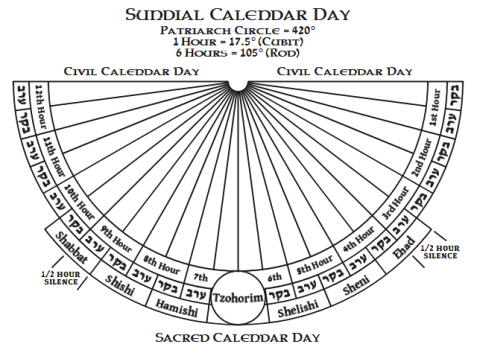
This text informs the observant reader of the exact time of day at this point in the narrative: it is the midday oblation, (hour of prayer), and this is when the Master sits down with them to break bread, and their eyes are opened, so that they finally knew who he was. This is the Tzohorim Hour, (the two lights), the midday hour of prayer, the sixth-to-seventh hour of the civil calendar day: it is the time when "the women go forth to draw water", (Gen 24:11, Jhn 4:6-7), wherein the sun reaches its apex in the sky at solar noon. And at this time the sun crosses over and begins its decline, (Luke 24:29), into the west.

From this time of day, the end of the Tzohorim Hour, the two decide they must return to Yerushalem to inform the others that the Master had appeared to them. Their trip is sixty Greek stadia from Emmaus according to the text. That is just about seven miles. 3 mph is the average walking pace, but at a more brisk pace, (probably to be assumed here), the pace would most likely be at about 3.5 mph. So then, assuming they were walking a brisk pace to get back to Yerushalem as soon as possible, (3.5 mph), their trip from Emmaus back to Yerushalem would have taken 2 hours. Now therefore we are somewhere near the bottom of the ninth hour when they arrive back at the place where the apostles and disciples were gathered. Understand the times? The Master appears this time, to the whole group, during the Shabbat hour of the sacred calendar day, which is from the bottom of the ninth hour to the bottom of the tenth hour of the civil calendar day.

Tzadok-Sundial.PNG

John 20:19 N/A-W/H
19 ουσης ουν οψιας τη ημερα εκεινη τη μια σαββατων και των θυρων κεκλεισμενων οπου ησαν οι μαθηται δια τον φοβον των ιουδαιων ηλθεν ο ιησους και εστη εις το μεσον και λεγει αυτοις ειρηνη υμιν

I have seen other posts of yours a while back in other threads, and have seen how proficient you appear to be in the Greek language, but especially concerning the Shabbat in a thread where you were debating/discussing the topic.

Learn therefore what this means:

ουσης ουν οψιας τη ημερα εκεινη τη μια σαββατων

The Luke and John passages under discussion are the same event, (companion passages).