Here @dak I'll help you to make a start....
Galatians 3:18 "For if the inheritance comes by the law, it no longer comes by promise; but God gave it to Abraham by a promise."
The Law, introduced 430 Years Later, Does Not Nullify the Covenant God Previously Established:
The promise to Abraham, also called the Abrahamic covenant was given 430 years before the covenant made with Moses and Israel, described in Exodus 24. Yet, curiously, the Mosaic covenant is often treated as the “older” covenant, while the Abrahamic covenant, spoken long before, is seen as the “newer” one. This distinction arises because the Mosaic covenant was immediately confirmed through the sprinkled blood of sacrifices and the fellowship meal, whereas the Abrahamic covenant was not confirmed at the outset.
To illustrate, imagine two contracts: one drawn up in 1950 but not signed or sealed, and another drawn up in 1960 and signed immediately. Though the first contract was written earlier, it remains legally incomplete until it is signed, say, in 1980. In that sense, it becomes the “later” contract, even though it was drafted first.
Similarly, the Mosaic covenant was confirmed at once, but the Abrahamic covenant required faith from Abraham and his descendants. Paul and other New Testament writers emphasize this: Abraham was justified by faith in God’s promises (Romans 4), even though he did not personally receive them, only seeing them from afar (Hebrews 11:13).
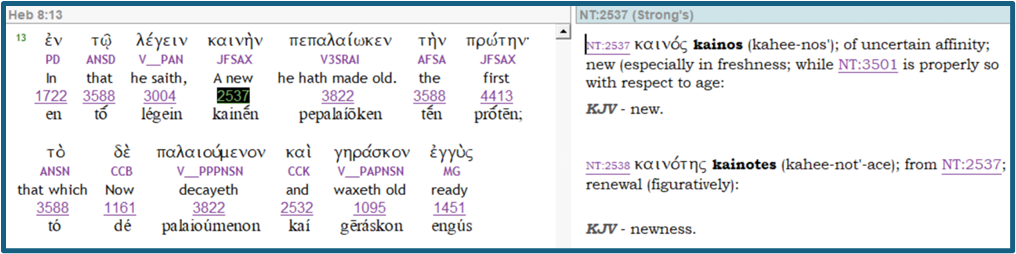
The Abrahamic covenant could only be fully confirmed, “signed, sealed, and delivered” through the shed blood of Christ, the covenant sacrifice (Galatians 3:1, 13, 16, 19–20). This is why Jesus declared, “This is the new covenant in My blood!” Once confirmed in Christ, the Abrahamic covenant becomes the eternal covenant, in contrast to the Mosaic covenant, which was temporary and destined to fade away (Hebrews 8:13)
Hebrews 8:13 "In speaking of a new covenant, he makes the first one obsolete. And what is becoming obsolete and growing old is ready to vanish away."
Galatians 3:18 "For if the inheritance comes by the law, it no longer comes by promise; but God gave it to Abraham by a promise."
The Law, introduced 430 Years Later, Does Not Nullify the Covenant God Previously Established:
The promise to Abraham, also called the Abrahamic covenant was given 430 years before the covenant made with Moses and Israel, described in Exodus 24. Yet, curiously, the Mosaic covenant is often treated as the “older” covenant, while the Abrahamic covenant, spoken long before, is seen as the “newer” one. This distinction arises because the Mosaic covenant was immediately confirmed through the sprinkled blood of sacrifices and the fellowship meal, whereas the Abrahamic covenant was not confirmed at the outset.
To illustrate, imagine two contracts: one drawn up in 1950 but not signed or sealed, and another drawn up in 1960 and signed immediately. Though the first contract was written earlier, it remains legally incomplete until it is signed, say, in 1980. In that sense, it becomes the “later” contract, even though it was drafted first.
Similarly, the Mosaic covenant was confirmed at once, but the Abrahamic covenant required faith from Abraham and his descendants. Paul and other New Testament writers emphasize this: Abraham was justified by faith in God’s promises (Romans 4), even though he did not personally receive them, only seeing them from afar (Hebrews 11:13).
The Abrahamic covenant could only be fully confirmed, “signed, sealed, and delivered” through the shed blood of Christ, the covenant sacrifice (Galatians 3:1, 13, 16, 19–20). This is why Jesus declared, “This is the new covenant in My blood!” Once confirmed in Christ, the Abrahamic covenant becomes the eternal covenant, in contrast to the Mosaic covenant, which was temporary and destined to fade away (Hebrews 8:13)
Hebrews 8:13 "In speaking of a new covenant, he makes the first one obsolete. And what is becoming obsolete and growing old is ready to vanish away."