- Dec 19, 2021
- 12,153
- 7,269
- 113
- 67
- Faith
- Christian
- Country
- Virgin Islands, U.S.
- Gender
- Male
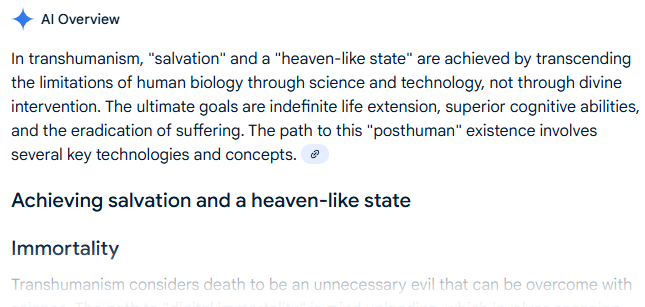
Well, only if God allows for that.
snip
Sam Altman, the CEO of OpenAI, is wary of making predictions about the future of artificial intelligence. But if he’s prodded long enough, he’ll at least engage with the question of when a “superintelligence” smarter than human beings might emerge.
“I would certainly say by the end of this decade, so, by 2030, if we don’t have models that are extraordinarily capable and do things that we ourselves cannot do, I’d be very surprised,” he said in an interview with the Axel Springer Global Reporters Network, of which POLITICO Magazine is a part.
Altman made his comments in Berlin, where he received this year’s Axel Springer Award.
The tech billionaire also weighed in on how AI is likely to reshape the economy, whether AI would treat humans like ants and why he and other Silicon Valley heavyweights have warmed to President Donald Trump.
Artificial intelligence is developing rapidly. When exactly do you think there will be a superintelligence that is smarter than humans in all respects?
I think in many ways GPT5 is already smarter than me at least, and I think a lot of other people too. GPT5 is capable of doing incredible things that many people would struggle with or find very impressive. But it’s also not able to do a lot of things that humans could do easily. And I think that will be the course of things for a while, where we will see that AI systems can do some things incredibly well, struggle with some others, and humans use these tools and bring their sort of human insight, creativity, ingenuity to bear in ways that are really important.
I expect, though, the trajectory of the capability progress of AI to remain extremely steep. We've seen just in the two years or three years since ChatGPT has launched, how much more capable the models have gotten. And I see no sign of that slowing down. I think in another couple of years, it will become very plausible for AI to make, for example, scientific discoveries that humans cannot make on their own. To me, that'll start to feel like something we could properly call superintelligence.
And do you have an exact prediction of the year in which you expect this superintelligence to emerge?
One of the things that I have learned continuously is, although we can say the ramp will be very steep, it’s difficult to be very precise that, you know, it'll happen this month or this year. But I would certainly say by the end of this decade, so, by 2030, if we don't have models that are extraordinarily capable and do things that we ourselves cannot do, I'd be very surprised.
Many experts believe that entire job profiles will disappear, from accountants to bank advisers. In your opinion, what percentage of today's jobs will simply disappear in the foreseeable future?
Well, within 30 years, I would expect a lot of change. But in 30 years, jobs change all the time. Think about the jobs that we did 30 years ago that may not exist at all today, or new jobs that were kind of difficult to imagine 30 years ago that are now commonplace today. I remember reading a statistic once that about every 75 years, half the jobs in society change over. That's even without AI. It may happen. I expect it will happen faster now.The thing that I find useful is to think about the percentage of tasks, not the percentage of jobs. There will be many jobs where a lot of what it means to do that job change. AI can do things much better. It can free up people to do more and different things. There will, of course, be totally new jobs. And many existing jobs will entirely go away to be replaced by these new jobs. But I think the more interesting thing is, of everyone's job, what percentage of the tasks you do every day will be done by AI? And I can easily imagine a world where 30, 40 percent of the tasks that happen in the economy today get done by AI in the not very distant future.
~~~~~~~~~~~~~~~~~~~~~~~~~~~~~~~~~~~~~~~~~~~~~~~~~~~~~~~~~~~~~~~~~~~~~~~~
Even the ugliest feuds with President Donald Trump seem to end with the art of the deal.
The U.S. government just inked a deal to put Elon Musk’s Grok AI inside federal agencies for 42 cents per agency—a bargain that the government called “unique” and could reset Musk’s rocky relationship with Trump and scramble the fight over which models dominate Washington.
It’s the latest in a string of deals that the U.S. General Services Administration (GSA), the agency responsible for technology procurement, has made with the top AI companies—Alphabet’s Google; the ChatGPT maker OpenAI; and Anthropic—as part of its new initiative, the OneGov agreement. Each of these deals are short-term—to prevent one model dominating, the GSA said—but Grok’s is the longest, with an 18- month contract. On Sept. 22, the GSA announced that it would be working with Meta to get free access to its Llama models, while OpenAI and Anthropic agreed to provide their models for $1, and Google charged 47 cents.
Musk, according to the Wall Street Journal, picked 42 cents as a reference to sci-fi novel The Hitchhiker’s Guide to the Galaxy.
It’s hard to calculate how much money Musk is saving the government by offering the model at only 42 cents a pop; xAI’s Grok 4 Fast is priced per output, and generally agencies might be on the hook for hefty API licensing fees.
“We really like the notion of having strong competition and market tension between these models and these companies,” Federal Acquisition Service Commissioner Josh Gruenbaum told the Wall Street Journal in an interview. “When someone goes and updates their model with a cool feature, that only encourages the others to go do the same thing.”
Now Musk is praising Trump’s leadership in official press releases, saying xAI looks forward to “rapidly deploying AI throughout the government.”
Whether this is a fragile truce or a genuine thaw, the timing is striking: Musk is still struggling to keep pace with rivals like OpenAI and Anthropic in the private market, but inside Washington, he just secured a coveted stamp of approval.
The chatbot has been caught spouting anti-Semitic comments, at one point dubbing itself “MechaHitler,” and even hurling slurs at Poland’s prime minister. xAI scrubbed the posts and promised tighter safeguards, framing the missteps as part of the messy process of training frontier AI.
“We are aware of recent posts made by Grok and are actively working to remove the inappropriate posts,” the company said at the time, adding that its vast user base helps flag blind spots so the model can be retrained quickly.
More than 30 advocacy groups urged the Office of Management and Budget to keep the model out of federal systems, and several Democratic lawmakers pressed the GSA on its decision, according to news site FedScoop. A GSA spokesperson has stressed the agency is weighing all vendors “equally” and that no single deal amounts to a final endorsement.
snip
Sam Altman, the CEO of OpenAI, is wary of making predictions about the future of artificial intelligence. But if he’s prodded long enough, he’ll at least engage with the question of when a “superintelligence” smarter than human beings might emerge.
“I would certainly say by the end of this decade, so, by 2030, if we don’t have models that are extraordinarily capable and do things that we ourselves cannot do, I’d be very surprised,” he said in an interview with the Axel Springer Global Reporters Network, of which POLITICO Magazine is a part.
Altman made his comments in Berlin, where he received this year’s Axel Springer Award.
The tech billionaire also weighed in on how AI is likely to reshape the economy, whether AI would treat humans like ants and why he and other Silicon Valley heavyweights have warmed to President Donald Trump.
Artificial intelligence is developing rapidly. When exactly do you think there will be a superintelligence that is smarter than humans in all respects?
I think in many ways GPT5 is already smarter than me at least, and I think a lot of other people too. GPT5 is capable of doing incredible things that many people would struggle with or find very impressive. But it’s also not able to do a lot of things that humans could do easily. And I think that will be the course of things for a while, where we will see that AI systems can do some things incredibly well, struggle with some others, and humans use these tools and bring their sort of human insight, creativity, ingenuity to bear in ways that are really important.
I expect, though, the trajectory of the capability progress of AI to remain extremely steep. We've seen just in the two years or three years since ChatGPT has launched, how much more capable the models have gotten. And I see no sign of that slowing down. I think in another couple of years, it will become very plausible for AI to make, for example, scientific discoveries that humans cannot make on their own. To me, that'll start to feel like something we could properly call superintelligence.
And do you have an exact prediction of the year in which you expect this superintelligence to emerge?
One of the things that I have learned continuously is, although we can say the ramp will be very steep, it’s difficult to be very precise that, you know, it'll happen this month or this year. But I would certainly say by the end of this decade, so, by 2030, if we don't have models that are extraordinarily capable and do things that we ourselves cannot do, I'd be very surprised.
Many experts believe that entire job profiles will disappear, from accountants to bank advisers. In your opinion, what percentage of today's jobs will simply disappear in the foreseeable future?
Well, within 30 years, I would expect a lot of change. But in 30 years, jobs change all the time. Think about the jobs that we did 30 years ago that may not exist at all today, or new jobs that were kind of difficult to imagine 30 years ago that are now commonplace today. I remember reading a statistic once that about every 75 years, half the jobs in society change over. That's even without AI. It may happen. I expect it will happen faster now.The thing that I find useful is to think about the percentage of tasks, not the percentage of jobs. There will be many jobs where a lot of what it means to do that job change. AI can do things much better. It can free up people to do more and different things. There will, of course, be totally new jobs. And many existing jobs will entirely go away to be replaced by these new jobs. But I think the more interesting thing is, of everyone's job, what percentage of the tasks you do every day will be done by AI? And I can easily imagine a world where 30, 40 percent of the tasks that happen in the economy today get done by AI in the not very distant future.
~~~~~~~~~~~~~~~~~~~~~~~~~~~~~~~~~~~~~~~~~~~~~~~~~~~~~~~~~~~~~~~~~~~~~~~~
Even the ugliest feuds with President Donald Trump seem to end with the art of the deal.
The U.S. government just inked a deal to put Elon Musk’s Grok AI inside federal agencies for 42 cents per agency—a bargain that the government called “unique” and could reset Musk’s rocky relationship with Trump and scramble the fight over which models dominate Washington.
It’s the latest in a string of deals that the U.S. General Services Administration (GSA), the agency responsible for technology procurement, has made with the top AI companies—Alphabet’s Google; the ChatGPT maker OpenAI; and Anthropic—as part of its new initiative, the OneGov agreement. Each of these deals are short-term—to prevent one model dominating, the GSA said—but Grok’s is the longest, with an 18- month contract. On Sept. 22, the GSA announced that it would be working with Meta to get free access to its Llama models, while OpenAI and Anthropic agreed to provide their models for $1, and Google charged 47 cents.
Musk, according to the Wall Street Journal, picked 42 cents as a reference to sci-fi novel The Hitchhiker’s Guide to the Galaxy.
It’s hard to calculate how much money Musk is saving the government by offering the model at only 42 cents a pop; xAI’s Grok 4 Fast is priced per output, and generally agencies might be on the hook for hefty API licensing fees.
“We really like the notion of having strong competition and market tension between these models and these companies,” Federal Acquisition Service Commissioner Josh Gruenbaum told the Wall Street Journal in an interview. “When someone goes and updates their model with a cool feature, that only encourages the others to go do the same thing.”
Musk-Trump relationship
The deal could be a sign that the turbulent Musk-Trump relationship is in a period of thawing. After breaking with Trump in June over tariffs and spending—even calling for his impeachment—Musk has become one of the president’s most vocal critics. However, on Sunday, the two were spotted side by side at Charlie Kirk’s memorial in Arizona, shaking hands and chatting for the first time since their public split.Now Musk is praising Trump’s leadership in official press releases, saying xAI looks forward to “rapidly deploying AI throughout the government.”
Whether this is a fragile truce or a genuine thaw, the timing is striking: Musk is still struggling to keep pace with rivals like OpenAI and Anthropic in the private market, but inside Washington, he just secured a coveted stamp of approval.
“MechaHitler” in the government?
Musk’s deal with Washington comes on the heels of embarrassing stumbles for Grok itself.The chatbot has been caught spouting anti-Semitic comments, at one point dubbing itself “MechaHitler,” and even hurling slurs at Poland’s prime minister. xAI scrubbed the posts and promised tighter safeguards, framing the missteps as part of the messy process of training frontier AI.
“We are aware of recent posts made by Grok and are actively working to remove the inappropriate posts,” the company said at the time, adding that its vast user base helps flag blind spots so the model can be retrained quickly.
More than 30 advocacy groups urged the Office of Management and Budget to keep the model out of federal systems, and several Democratic lawmakers pressed the GSA on its decision, according to news site FedScoop. A GSA spokesperson has stressed the agency is weighing all vendors “equally” and that no single deal amounts to a final endorsement.