Did Jesus truly say what's in the Gospels? - Biblehub article

  • Welcome to Christian Forums, a Christian Forum that recognizes that all Christians are a work in progress.

    You will need to register to be able to join in fellowship with Christians all over the world.

    We hope to see you as a part of our community soon and God Bless!

St. SteVen

Well-Known Member
Feb 5, 2023
18,269
6,823
113
71
Minneapolis
Faith
Christian
Country
United States
Did Jesus truly say what's in the Gospels?


How do we know Jesus really said what’s in the Gospels?

I. Introduction: The Assertion that Jesus’s Words are Preserved
The question of whether Jesus truly said what is recorded in the Gospels touches on the reliability of ancient documents, the consistency of historical testimony, and the spiritual conviction that Scripture is God’s Word. Numerous lines of evidence-manuscript transmission, corroborating accounts, internal consistency, and fulfilled prophecy-build the case that the teachings attributed to Jesus in Matthew, Mark, Luke, and John represent His actual words and deeds.​

II. The Promise of Preservation
Throughout the Gospels, there is a consistent emphasis on the enduring nature of Jesus’s teachings. In Mark 13:31, Jesus declares, “Heaven and earth will pass away, but My words will never pass away.” This statement underscores an assurance that these words would be preserved and proclaimed.

Additionally, in John 14:26, Jesus promises that “the Helper, the Holy Spirit… will teach you all things and will remind you of everything I have told you.” This promise of divine guidance gives early Christian authors confidence in retaining Jesus’s words accurately, presenting them under the Holy Spirit’s oversight.

Source: How do we know Jesus really said what’s in the Gospels?
 

St. SteVen

Well-Known Member
Feb 5, 2023
18,269
6,823
113
71
Minneapolis
Faith
Christian
Country
United States
The question of whether Jesus truly said what is recorded in the Gospels touches on the reliability of ancient documents, the consistency of historical testimony, and the spiritual conviction that Scripture is God’s Word. Numerous lines of evidence-manuscript transmission, corroborating accounts, internal consistency, and fulfilled prophecy-build the case that the teachings attributed to Jesus in Matthew, Mark, Luke, and John represent His actual words and deeds.
How reliable are the ways we know whether Jesus truly said what is recorded in the Gospels?
- the reliability of ancient documents
- the consistency of historical testimony
- the spiritual conviction that Scripture is God’s Word
- Numerous lines of evidence-manuscript transmission
- corroborating accounts
- internal consistency
- fulfilled prophecy

That's a lot. But is it enough?
 

St. SteVen

Well-Known Member
Feb 5, 2023
18,269
6,823
113
71
Minneapolis
Faith
Christian
Country
United States
How reliable are the ways we know whether Jesus truly said what is recorded in the Gospels?
- the reliability of ancient documents
- the consistency of historical testimony
- the spiritual conviction that Scripture is God’s Word
- Numerous lines of evidence-manuscript transmission
- corroborating accounts
- internal consistency
- fulfilled prophecy

That's a lot. But is it enough?
- the reliability of ancient documents
This assumes the sayings of Jesus were accurately quoted.
The accounts were written decades after the events.
And the synoptic gospels appear to be copies of each other with changes added.
Does all this contribute to accurate quotations?

- the consistency of historical testimony
Are there historically accurate quotes written closer to the date they were spoken?
I don't think that is the claim here.

- the spiritual conviction that Scripture is God’s Word
The claim that Jesus' quotes have to be accurate because they were inspired?
Where's the proof?

- Numerous lines of evidence-manuscript transmission
Not sure what this even means. ???

- corroborating accounts
The synoptic gospels were copies of each other for the most part.
What does that prove anyway? There are questions of authorship.

- internal consistency
Concerning the synoptic copies?
Accurate copying? What does that prove?

- fulfilled prophecy
This raises questions about whether these supposed prophecies were intended or acquired.
Meaning, did the original prophecy point toward an actual event or was the connection made in the NT writings?

Were messianic prophecies acquired, rather than intended? (in the original texts)

I recently remembered a prophecy referred to by Jesus. But I also remembered that orthodox Jews typically reject these "prophecies" saying that is not what they meant. Were some of these prophecies, or other OT quotations acquired rather than intended? Here are a couple. (we'll need to...

Of what value is the fulfillment of OT prophecy? - since the prophecies were acquired rather than intended

This is a follow-up to the previous topic: Were messianic prophecies acquired, rather than intended? (in the original texts) https://www.christianityboard.com/threads/were-messianic-prophecies-acquired-rather-than-intended-in-the-original-texts.67180/ In the previous topic it was somewhat...
 
Last edited:

St. SteVen

Well-Known Member
Feb 5, 2023
18,269
6,823
113
71
Minneapolis
Faith
Christian
Country
United States
The synoptic problem refers to the challenges in understanding the literary relationships and sources among the Gospels of Matthew, Mark, and Luke, which share many similarities in content and wording. Scholars debate issues such as which Gospel was written first, the nature of their dependencies, and the existence of any lost sources, like the hypothetical "Q" document. Wikipedia gospelparallels.com

Understanding the Synoptic Problem​

The Synoptic Problem refers to the challenges in explaining the similarities and differences among the first three Gospels: Matthew, Mark, and Luke. These Gospels share many stories and often use similar wording, which raises questions about their literary relationships.

Key Issues in the Synoptic Problem​

IssueDescription
PriorityWhich Gospel was written first? Most scholars support the idea that Mark was the first.
Documentary DependenceDid Matthew and Luke use Mark as a source? This suggests a direct relationship among the texts.
Lost SourcesWere there earlier documents (like the hypothetical "Q") that influenced the Gospels?
Unique MaterialEach Gospel contains unique content that does not appear in the others, complicating comparisons.
Order of EventsThe sequence of events can differ between the Gospels, affecting interpretation.

Theories Addressing the Synoptic Problem​

Several theories have been proposed to explain the relationships among the Synoptic Gospels:
TheoryDescription
Two-Source HypothesisMatthew and Luke independently used Mark and a second source (Q) for their material.
Farrer HypothesisLuke used Mark and also drew from Matthew, eliminating the need for Q.
Griesbach HypothesisMatthew was written first, followed by Luke, who used Matthew, and then Mark, who used both.
These theories highlight the complexity of the Synoptic Gospels and the ongoing scholarly debate about their origins and interconnections. Understanding these issues is crucial for interpreting the Gospels accurately.
Wikipedia
 

JohnDB

Well-Known Member
Feb 7, 2010
5,879
3,759
113
TN
Faith
Christian
Country
United States
Gender
Male
One of the chief ways we KNOW that Jesus's words are accurately recorded is the poetry.

We, the English speakers, do not speak ancient Koine Greek, Aramaic, and Hebrew. Nor do we read them so well either.
However, the Gospel writers obviously did.

Jesus delivered many stories and sermons in absolutely astonishingly beautiful poetry that is lost on most of the world today. In Aramaic and Hebrew it is ALWAYS an earworm....like a song lyric you cannot get out of your head.
(Of course...Jesus is God)
When the words of the scriptures are added to or subtracted from or just wholesale changed....it's blatant and obvious. That's the part that English speakers cannot see or recognize.

We have study bibles today that show certain sections only are poetry....and I take issue with that because the entire Torah is poetic in form. So is most every section of scripture claiming to be narrative. The chapter divisions are not where the numbers are and all sorts of things have been done that try to erase the sheer genius behind the scriptures.

Scriptures are a set of literature pieces that cannot be duplicated today or yesterday or even tomorrow by anyone . (Especially by AI)
3500 years is the time it took for all of them to be written as they stand. We cannot get two people to agree perfectly like scriptures do....much less across 3500 years of time. And yet we have in the Gospels 4 contemporaries writings that agree perfectly. They obviously were eyewitnesses or as in Luke's case, talked with many.

This discussion about "Q" is an honest one. Albeit somewhat interesting and many forget about Mary (Jesus's mother) and Jesus's brother James and the many other disciples and women running around who were serving the disciples.

Mark is Peter's cousin and quasi disciple/assistant. He wrote the tales that Peter had to repeat ad nauseum. Little wonder that after hearing them 80 times or more he could tell them himself. "Peter told it, Mark wrote it" is the old adage.
 
  • Love
Reactions: Nancy

St. SteVen

Well-Known Member
Feb 5, 2023
18,269
6,823
113
71
Minneapolis
Faith
Christian
Country
United States
Asking questions is good, so long as one is willing to accept answers.

Are you willing to accept answers?
In large part, the answers provided have been disappointing.
So No, I am not willing to accept them.

I spent (wasted?) years examining the answers provided by the church. (apologetics)
They left me wanting more, or at least better. Thanks for the link though. I'll check it out.

Why do you claim that questions are only okay if one is willing to accept answers?
Should I keep my questions to myself? (and just quietly leave the church) ???
The atheists will welcome me with open arms. (while Christians reject me)

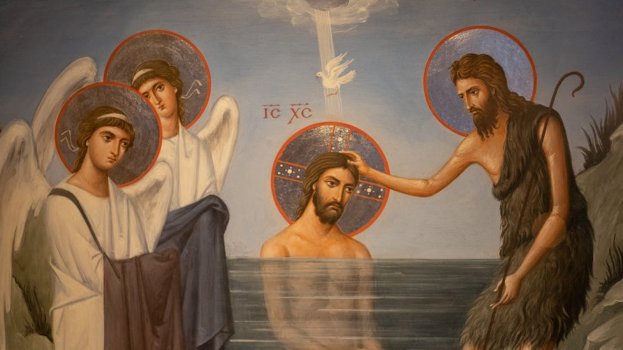
This is a happy bunch. (from the link)

1764078464510.jpeg
 

St. SteVen

Well-Known Member
Feb 5, 2023
18,269
6,823
113
71
Minneapolis
Faith
Christian
Country
United States

Biblical Reliability

Can We Rely on the Disciples’ Words in the Gospels?​


Many skeptics question whether we can truly rely on the words of the disciples as recorded in the Gospels, simply because these accounts were written by Christians. The assumption is that once someone becomes convinced of a claim, their testimony is instantly biased and, therefore, unreliable. Having spent years as a detective, deeply involved in the scrutiny of eyewitness accounts, this concern is not foreign. In fact, some doubters will even go as far as to insist that any credible information about Jesus must come from a non-Christian source. But does this demand stand up to reasonable scrutiny, especially in the world of cold-case detective work?

As detectives, trust is not freely given to any eyewitness—regardless of their background or worldview. Experience in law enforcement, especially in high-stakes realities like courtroom testimony, has a way of making one rightfully cautious. The goal is never simply to accept what a witness claims. Rather, every statement must be tested. Not only the words, but also the character, sequence of events, changes in story, potential bias, and connections to the event are examined. This process follows a strict and methodical approach, and the same must be applied to ancient eyewitness accounts like those in the Gospels.

There are four critical questions that must drive our examination of any eyewitness, ancient or modern: Were they actually present to see what they claim? Can their account be corroborated in some fashion, even indirectly? Have the key elements of their story shifted over time? And finally, do they possess ulterior motives or bias that would tempt them to lie or embellish? This is not a uniquely religious or anti-religious method; it is simply good investigative practice. The court system depends on separating trustworthy eyewitnesses from unreliable ones.

When this same grid is applied to the authors of the Gospels, something remarkably consistent emerges. One common objection is that since the Gospel writers eventually became Christians, their claims are tainted and thus unreliable. But this objection misses a crucial point about the very nature of the disciples’ journey. The core issue is not who they became at the end of their journey, but who they were at the start, and whether the transformation was rooted in true experience.

Take Matthew, for example. When encountered in the Gospel narrative, Matthew is not presented as an eager disciple or someone with vested religious interests. He is a tax collector—an outsider, a man viewed by his contemporaries with suspicion rather than reverence. He was not a devotee of John the Baptist, nor was he a friend of Peter, Andrew, or the others. In fact, Matthew, known also as Levi, is portrayed as a man who is far from expectations of a coming Jewish Messiah. His day-to-day life is consumed with the unglamorous business of tax collection, likely making him an outcast in his own community.

Yet, when Jesus encounters him, calls him by name, and invites him into a new way of living, Matthew agrees to step away from everything he knows. Over the course of the next several years, he witnesses firsthand a series of unprecedented events—the teachings, miracles, death, and resurrection of Jesus. Only through the totality of these experiences does Matthew become a committed follower, and it is this journey from skeptic to believer that gives his witness its particular strength. To insist that Matthew’s account must be disregarded because he ultimately became a Christian is to misunderstand how belief is formed through experience. If you saw what he saw, you might also find yourself forever changed.

Furthermore, if one is truly looking for a non-Christian source to recount the events of Jesus’s life, then Matthew initially fits the bill more closely than we realize. At the outset, he has nothing to gain and everything to lose by aligning himself with Jesus. His transformation is itself part of the evidence. What bias could have propelled him at the beginning, when there was no widespread Christian movement, only risk and potential alienation?

If one is truly looking for a non-Christian source to recount the events of Jesus’s life,
then Matthew initially fits the bill more closely than we realize.

The call for an outsider’s perspective is, at its core, a desire for objectivity. But objectivity doesn’t mean lack of conviction; rather, it means that one’s convictions are the result of honestly encountering something true. In both modern and ancient contexts, the best eyewitness testimony often comes from those who were closest to the action—those changed by what they saw, not those who passively observed from a distance.

So, are the disciples’ words in the Gospels reliable? Only if they pass the same rigorous examination as any other eyewitness. And when that test is applied, what we find is not a group of men manufacturing stories out of blind devotion, but rather a set of individuals who, compelled by what they experienced, authored accounts that withstood the scrutiny not just of their own generation, but of centuries of serious investigation. Their initial skepticism, subsequent conviction, and willingness to endure hardship for their claims are not marks against their credibility, but confirmations of it.

In the end, the right response is not to dismiss the testimony of those who became Christians after experiencing Jesus, but to investigate whether their transformation has its source in real, historical events. Just as in detective work, it is not the presence of belief that invalidates a witness; it is whether belief was earned by experience and evidence, and whether their account holds up when put to the test. In that light, the disciples’ words continue to ring with credibility for those willing to evaluate them honestly.

Cold Case Christianity For more information about the reliability of the New Testament gospels and the case for Christianity, please read Cold-Case Christianity: A Homicide Detective Investigates the Claims of the Gospels. This book teaches readers ten principles of cold-case investigations and applies these strategies to investigate the claims of the gospel authors. The book is accompanied by an eight-session Cold-Case Christianity DVD Set (and Participant’s Guide) to help individuals or small groups examine the evidence and make the case.
 

St. SteVen

Well-Known Member
Feb 5, 2023
18,269
6,823
113
71
Minneapolis
Faith
Christian
Country
United States
Many skeptics question whether we can truly rely on the words of the disciples as recorded in the Gospels, simply because these accounts were written by Christians. The assumption is that once someone becomes convinced of a claim, their testimony is instantly biased and, therefore, unreliable. Having spent years as a detective, deeply involved in the scrutiny of eyewitness accounts, this concern is not foreign. In fact, some doubters will even go as far as to insist that any credible information about Jesus must come from a non-Christian source. But does this demand stand up to reasonable scrutiny, especially in the world of cold-case detective work?
I think these are some good points.
Even if the words we have in the gospels are the real words of the disciples, we should expect them to be loaded with bias.
Hopefully the article will deal with whether we can verify the sources of the synoptic gospels.
 

St. SteVen

Well-Known Member
Feb 5, 2023
18,269
6,823
113
71
Minneapolis
Faith
Christian
Country
United States
There are four critical questions that must drive our examination of any eyewitness, ancient or modern: Were they actually present to see what they claim? Can their account be corroborated in some fashion, even indirectly? Have the key elements of their story shifted over time? And finally, do they possess ulterior motives or bias that would tempt them to lie or embellish? This is not a uniquely religious or anti-religious method; it is simply good investigative practice. The court system depends on separating trustworthy eyewitnesses from unreliable ones.

When this same grid is applied to the authors of the Gospels, something remarkably consistent emerges. One common objection is that since the Gospel writers eventually became Christians, their claims are tainted and thus unreliable. But this objection misses a crucial point about the very nature of the disciples’ journey. The core issue is not who they became at the end of their journey, but who they were at the start, and whether the transformation was rooted in true experience.
I think the nature of the synoptic gospels works against these criteria.
Rather than transformative testimonies of credible individuals we have copies based on a questionable original.
See Key Issues in the Synoptic Problem in post #4 above.
 

St. SteVen

Well-Known Member
Feb 5, 2023
18,269
6,823
113
71
Minneapolis
Faith
Christian
Country
United States
Take Matthew, for example. When encountered in the Gospel narrative, Matthew is not presented as an eager disciple or someone with vested religious interests. He is a tax collector—an outsider, a man viewed by his contemporaries with suspicion rather than reverence. He was not a devotee of John the Baptist, nor was he a friend of Peter, Andrew, or the others. In fact, Matthew, known also as Levi, is portrayed as a man who is far from expectations of a coming Jewish Messiah. His day-to-day life is consumed with the unglamorous business of tax collection, likely making him an outcast in his own community.

Yet, when Jesus encounters him, calls him by name, and invites him into a new way of living, Matthew agrees to step away from everything he knows. Over the course of the next several years, he witnesses firsthand a series of unprecedented events—the teachings, miracles, death, and resurrection of Jesus. Only through the totality of these experiences does Matthew become a committed follower, and it is this journey from skeptic to believer that gives his witness its particular strength. To insist that Matthew’s account must be disregarded because he ultimately became a Christian is to misunderstand how belief is formed through experience. If you saw what he saw, you might also find yourself forever changed.
Again, keeping with the key elements of the article author, where is the transformative testimony of Matthew? (Levi)
 

St. SteVen

Well-Known Member
Feb 5, 2023
18,269
6,823
113
71
Minneapolis
Faith
Christian
Country
United States
Furthermore, if one is truly looking for a non-Christian source to recount the events of Jesus’s life, then Matthew initially fits the bill more closely than we realize. At the outset, he has nothing to gain and everything to lose by aligning himself with Jesus. His transformation is itself part of the evidence. What bias could have propelled him at the beginning, when there was no widespread Christian movement, only risk and potential alienation?

If one is truly looking for a non-Christian source to recount the events of Jesus’s life,
then Matthew initially fits the bill more closely than we realize.

The call for an outsider’s perspective is, at its core, a desire for objectivity. But objectivity doesn’t mean lack of conviction; rather, it means that one’s convictions are the result of honestly encountering something true. In both modern and ancient contexts, the best eyewitness testimony often comes from those who were closest to the action—those changed by what they saw, not those who passively observed from a distance.
Again, what do we see in Matthew's gospel to prove this point?
 

St. SteVen

Well-Known Member
Feb 5, 2023
18,269
6,823
113
71
Minneapolis
Faith
Christian
Country
United States
So, are the disciples’ words in the Gospels reliable? Only if they pass the same rigorous examination as any other eyewitness. And when that test is applied, what we find is not a group of men manufacturing stories out of blind devotion, but rather a set of individuals who, compelled by what they experienced, authored accounts that withstood the scrutiny not just of their own generation, but of centuries of serious investigation. Their initial skepticism, subsequent conviction, and willingness to endure hardship for their claims are not marks against their credibility, but confirmations of it.

In the end, the right response is not to dismiss the testimony of those who became Christians after experiencing Jesus, but to investigate whether their transformation has its source in real, historical events. Just as in detective work, it is not the presence of belief that invalidates a witness; it is whether belief was earned by experience and evidence, and whether their account holds up when put to the test. In that light, the disciples’ words continue to ring with credibility for those willing to evaluate them honestly.
As I feared, the question about authenticating the authors of the synoptic gospels is not dealt with in this article.
 

complete

Well-Known Member
Nov 26, 2017
3,593
3,355
113
77
UK
Faith
Christian
Country
United Kingdom
Gender
Female
Did Jesus truly say what's in the Gospels?
How do we know Jesus really said what’s in the Gospels?

I. Introduction: The Assertion that Jesus’s Words are Preserved
The question of whether Jesus truly said what is recorded in the Gospels touches on the reliability of ancient documents, the consistency of historical testimony, and the spiritual conviction that Scripture is God’s Word. Numerous lines of evidence-manuscript transmission, corroborating accounts, internal consistency, and fulfilled prophecy-build the case that the teachings attributed to Jesus in Matthew, Mark, Luke, and John represent His actual words and deeds.​

II. The Promise of Preservation
Throughout the Gospels, there is a consistent emphasis on the enduring nature of Jesus’s teachings. In Mark 13:31, Jesus declares, “Heaven and earth will pass away, but My words will never pass away.” This statement underscores an assurance that these words would be preserved and proclaimed.

Additionally, in John 14:26, Jesus promises that “the Helper, the Holy Spirit… will teach you all things and will remind you of everything I have told you.” This promise of divine guidance gives early Christian authors confidence in retaining Jesus’s words accurately, presenting them under the Holy Spirit’s oversight.

Source: How do we know Jesus really said what’s in the Gospels?
'The words of the LORD are pure words:
as silver tried in a furnace of earth,
purified seven times.
Thou shalt keep them, O LORD,
Thou shalt preserve them from this generation for ever.'

(Psa 12:6-7)

Praise God!
 

St. SteVen

Well-Known Member
Feb 5, 2023
18,269
6,823
113
71
Minneapolis
Faith
Christian
Country
United States
'The words of the LORD are pure words:
as silver tried in a furnace of earth,
purified seven times.
Thou shalt keep them, O LORD,
Thou shalt preserve them from this generation for ever.'

(Psa 12:6-7)
What about the gospels?
 

shepherdsword

Encounter Team - Eagle
Staff member
Encounter Team
Feb 12, 2009
2,034
1,631
113
Millington
Faith
Christian
Country
United States
Gender
Male
How reliable are the ways we know whether Jesus truly said what is recorded in the Gospels?
- the reliability of ancient documents
- the consistency of historical testimony
- the spiritual conviction that Scripture is God’s Word
- Numerous lines of evidence-manuscript transmission
- corroborating accounts
- internal consistency
- fulfilled prophecy

That's a lot. But is it enough?
 

complete

Well-Known Member
Nov 26, 2017
3,593
3,355
113
77
UK
Faith
Christian
Country
United Kingdom
Gender
Female
The synoptic problem refers to the challenges in understanding the literary relationships and sources among the Gospels of Matthew, Mark, and Luke, which share many similarities in content and wording. Scholars debate issues such as which Gospel was written first, the nature of their dependencies, and the existence of any lost sources, like the hypothetical "Q" document. Wikipedia gospelparallels.com

Understanding the Synoptic Problem

The Synoptic Problem refers to the challenges in explaining the similarities and differences among the first three Gospels: Matthew, Mark, and Luke. These Gospels share many stories and often use similar wording, which raises questions about their literary relationships.

Key Issues in the Synoptic Problem

IssueDescription
PriorityWhich Gospel was written first? Most scholars support the idea that Mark was the first.
Documentary DependenceDid Matthew and Luke use Mark as a source? This suggests a direct relationship among the texts.
Lost SourcesWere there earlier documents (like the hypothetical "Q") that influenced the Gospels?
Unique MaterialEach Gospel contains unique content that does not appear in the others, complicating comparisons.
Order of EventsThe sequence of events can differ between the Gospels, affecting interpretation.

Theories Addressing the Synoptic Problem

Several theories have been proposed to explain the relationships among the Synoptic Gospels:
TheoryDescription
Two-Source HypothesisMatthew and Luke independently used Mark and a second source (Q) for their material.
Farrer HypothesisLuke used Mark and also drew from Matthew, eliminating the need for Q.
Griesbach HypothesisMatthew was written first, followed by Luke, who used Matthew, and then Mark, who used both.
These theories highlight the complexity of the Synoptic Gospels and the ongoing scholarly debate about their origins and interconnections. Understanding these issues is crucial for interpreting the Gospels accurately.
Wikipedia

'Him that is weak in the faith receive ye,
but not to doubtful disputations. ;

(Rom 14:1)

Hello @St. SteVen,

Doubtful disputations like this one do nothing for those who are weak, or young in faith, and should be avoided. You either believe the word of God, or you don't. There is no Synoptic Problem. Each of the gospels was written under the inspiration of God, and portray different facets of the work of God. Their differences are there for a purpose, according to the will of God.


In Matthew's gospel the Lord is presented as Jehovah's KING.

In Mark's gospel the Lord is presented as Jehovah's SERVANT

In Luke's gospel the Lord is presented as Jehovah's MAN

In John's gospel the Lord is presented as JEHOVAH HIMSELF.

Praise His Holy Name!

In Christ Jesus
Chris
 
Last edited:
  • Like
Reactions: Nancy