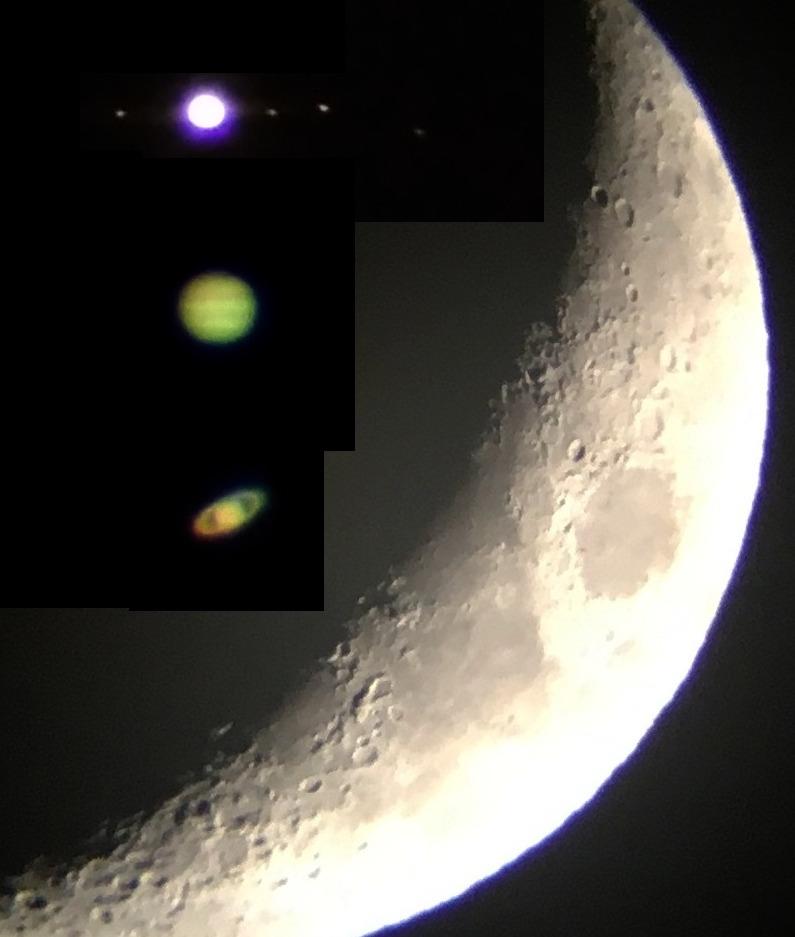
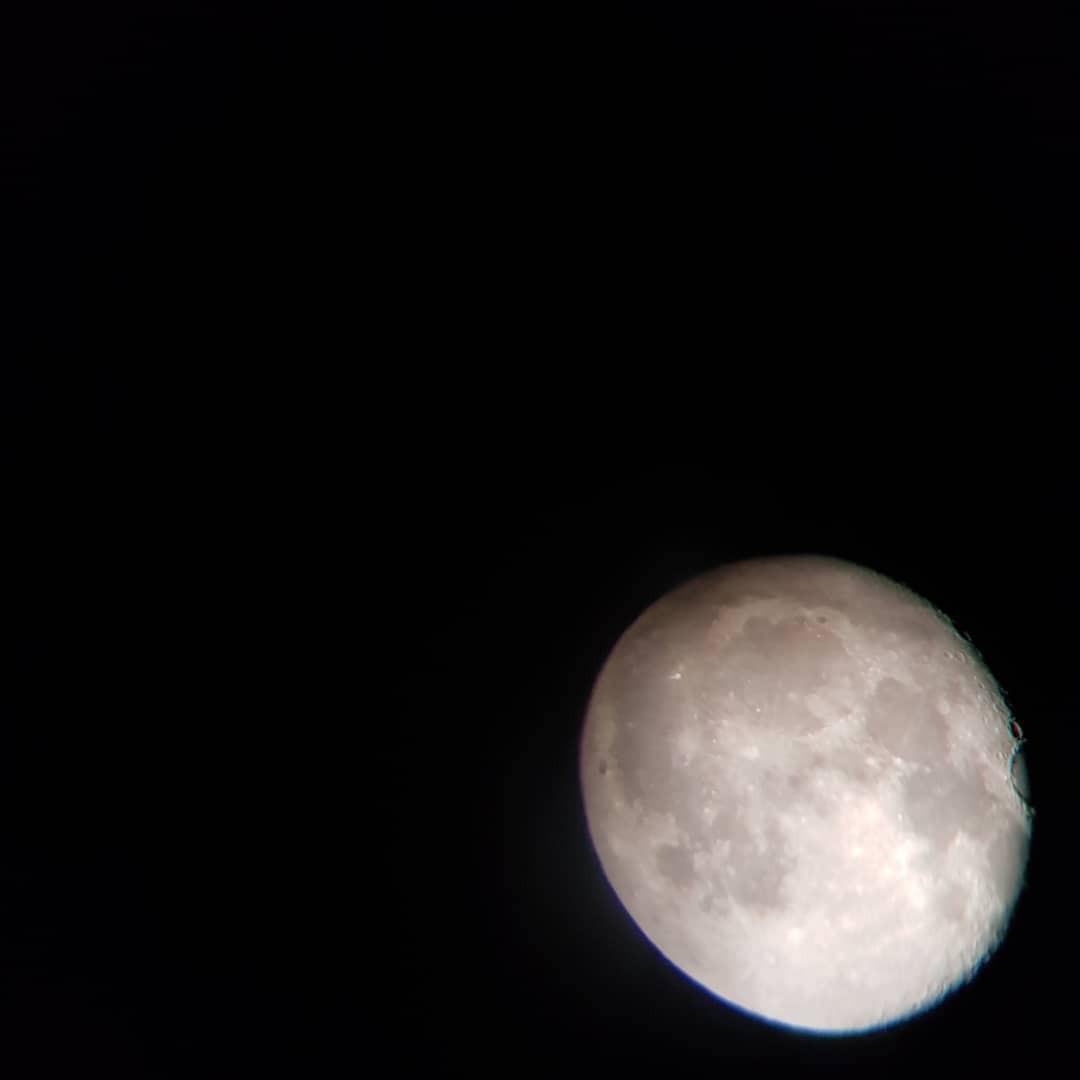
Which do you see during a full moon, even with using your telescope? (please excuse my Microsoft Paint quick job)
I don’t understand why this is relevant or exactly what you are asking, so let me be precise:
When seeing sharp craters on the moon, I usually have the moon as in the top, far above the horizon. But again, I don’t see how this is relevant to my question or concern, which is simply this: why am I able with the same telescope to see
both, with just a little adjustment, the moon and birds as sharp objects?
But furthermore, when I was on the beach on vacation in North-Africa 6 years ago, I saw the moon rising above the horizon of the ocean in the night. So at first you could only see the topside of the moon, then the middle, then the whole thing. So it’s definitely possible and true that the moon may be as in your picture, the below perspective I mean. But that’s possible on a flat and globe model, since this seems to be a thing of perspective, only.
I will later give you the details of my manual telescope, although again, I don’t see how this is relevant. You know, I can see
both birds and the moon sharply. That should not be, upon the supposition of a 380.000 kilometers distance, according to my understanding.
That is not to mention Polaris, the North star, remaining still according to our view.
That doesn’t really negate your argument, but be assured Polaris is not absolutely still. It also, as the rest of the stars in the sky, moves, from our view, in a circle. Only it’s a very small circle, since this star is closest to the actual North of the sky. Only this North actually never moves, but Polaris isn’t the North, but visibly the closest star to it.
I know that because, in astrophotography, you actually have to focus on Polaris with a so called Polar-Scope to catch Polaris in its little rotation that it does make. Polaris moves.
Where does sun light come from?
Well, if you by “sun light” actually mean “day light”, according to the Bible, it does explicitly not come from the sun.