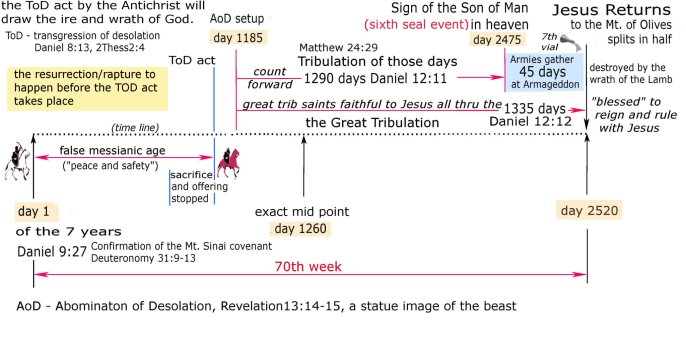
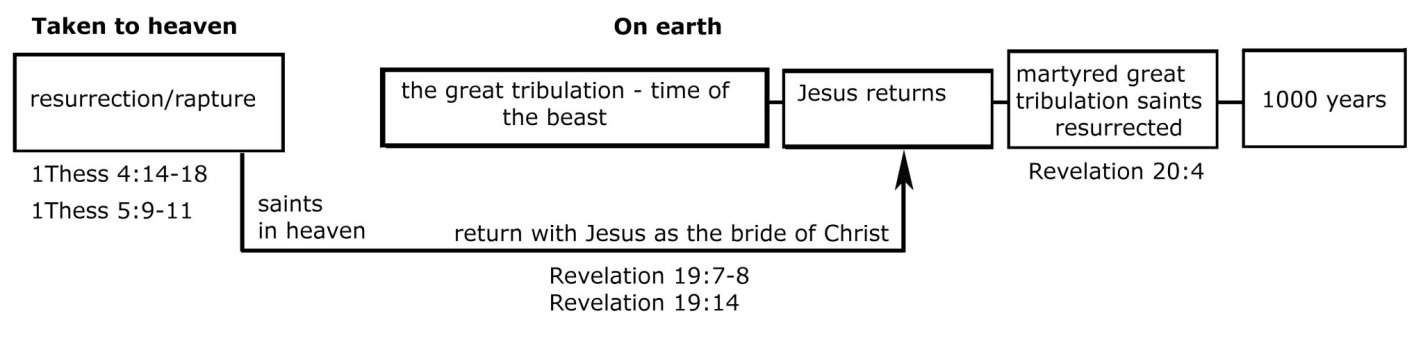
No offense, but I'm afraid you have made the wrong assumption. In John 13 Jesus wasn't talking about heaven, he was talking about death. Where did Christ go? Not heaven until after the ascension. 1 Pet. 3: 19-20 - "By which also he went and preached unto the spirits in prison;I don't know what you understand by the word "rapture" but IMO you are correct about the rest - and you will find many here who agree with you.
1. Jesus did not tell us that He will return to gather His elect by returning to the earth:
"They shall see the Son of man coming in the clouds of heaven with power and great glory. And he shall send his angels with a great sound of a trumpet, and they shall gather together his elect from the four winds, from one end of heaven to the other. (Matt 24:30b-31).
"For the Lord himself shall descend from heaven with a shout, with the voice of the archangel, and with the trump of God: and the dead in Christ shall rise first: Then we which are alive and remain shall be caught up together with them in the clouds, to meet the Lord in the air: and so shall we ever be with the Lord. Wherefore comfort one another with these words." (I Thessalonians 4:16-18 [RLT])
"Behold, he cometh with clouds; and every eye shall see him, and they also which pierced him: and all kindreds of the earth shall wail because of him. Even so, Amen." (Revelation 1:7).
You have not yet understood what this verse below implies:
You have misunderstood what Jesus was saying because you did not hear the rest of what He said at that very same time
- but no need to be embarrassed - just as we are all novice disciples, not hearing ALL He said, even the apostles were novice disciples at the time, not always hearing ALL He said:
John 13
33 Little children, yet a little while I am with you. Ye shall seek me: and as I said unto the Jews, Whither I go, ye cannot come; so now I say to you.
Still speaking in the same context, we read in John 14:4 that Jesus also said,
"And whither I go ye know, and the way ye know."
Jesus had already told them that wither He goes, they cannot come. Now He tells them that they nevertheless know where He is going, and the way to where He is going - and because it was before He had died, risen again, and before the Holy Spirit had come to the house of God, His disciples were still confused:
"Thomas saith unto him, Lord, we know not whither thou goest; and how can we know the way?" (John 14:5).
Compare:
(a) As I said unto the Jews, Whither I go, ye cannot come; so now I say to you.
(b) Whither I go ye know, and the way ye know.
(c) Lord, we know not whither thou goest; and how can we know the way?
To Thomas's question, Jesus replied:
"I am the way, the truth, and the life: no man cometh unto the Father, but by me." (John 14:6).
Keep comparing the verses, because further on down in the passage - and still in the same context of speaking to His disciples about His departure - Jesus tells those who believe in Him and belong to Him:
16 And I will pray the Father, and he shall give you another Comforter, that he may abide with you for ever;
17 Even the Spirit of truth; whom the world cannot receive, because it seeth him not, neither knoweth him: but ye know him; for he dwelleth with you, and shall be in you.
18 I will not leave you comfortless: I will come to you.
Take a look at the Greek word used in John 14:2, because the same word is used again further on down in the same passage - but has been translated using a different English word:
John 14
1 Let not your heart be troubled: ye believe in God, believe also in me.
2 In my Father’s house are many mansions [G3438 mone]: if it were not so, I would have told you. I go to prepare a place for you.
G3438: mone. from 3306; a staying, i.e. residence (the act or the place):--abode, mansion.
G3306: meno: a primary verb; to stay (in a given place, state, relation or expectancy):--abide, continue, dwell, endure, be present, remain, stand, tarry (for), X thine own.
John 14
19 Yet a little while, and the world seeth me no more; but ye see me: because I live [zao], ye shall live [zao] also.
20 At that day ye shall know that I am in my Father, and ye in me, and I in you.
21 He that hath my commandments, and keepeth them, he it is that loveth me: and he that loveth me shall be loved of my Father, and I will love him, and will manifest myself to him.
John 14
22 Judas saith unto him, not Iscariot, Lord, how is it that thou wilt manifest thyself unto us, and not unto the world?
23 Jesus answered and said unto him, If a man love me, he will keep my words: and my Father will love him, and we will come unto him, and make our abode [G3438 mone] with him.
G3438: mone. from 3306; a staying, i.e. residence (the act or the place):--abode, mansion.
G3306: meno: a primary verb; to stay (in a given place, state, relation or expectancy):--abide, continue, dwell, endure, be present, remain, stand, tarry (for), X thine own.
What Jesus was telling them was that THEY were to become His Father's house (in which there are many mansions) - because HE was going to be sending the Holy Spirit down on God's house - and it happened on the Day of Pentecost.
What Jesus had already said was:
"In my Father’s house are many mansions: if it were not so, I would have told you. I go to prepare a place for you."
"As I said unto the Jews, Whither I go, ye cannot come; so now I say to you."
"And whither I go ye know, and the way ye know."
"I am the way, the truth, and the life: no man cometh unto the Father, but by me."
"And if I go and prepare a place for you, I will come again, and receive you unto myself; that where I am, there ye may be also.
John 14
22 Judas saith unto him, not Iscariot, Lord, how is it that thou wilt manifest thyself unto us, and not unto the world?
23 Jesus answered and said unto him, If a man love me, he will keep my words: and my Father will love him, and we will come unto him, and make our abode [G3438 mone] with him.
Jesus is talking about the Temple (house) of God which Christ inhabits, by His Spirit:
As Paul tells those who BELIEVE Jesus and His words: each one who has the Spirit of Christ dwelling in Him is the Temple (house) of God (Ephesians 2:19-22); and Peter tells us that together we are the living stones who form the one Temple of God (1 Peter 2:5).
Indeed there are many mansions in the house of God, and there is room for each one who believes in Jesus and His gospel
- and in His Revelation Jesus allowed His apostle John to see what will also be - in a fuller and complete sense following the (bodily) return of Christ and the (bodily) resurrection of the dead in Christ:
"And I heard a great voice out of Heaven saying, Behold, the tabernacle of God is with men, and He will dwell with them, and they will be His people, and God Himself will be with them and be their God." (Revelation 21:3).
I will get to the rest of your post in my next post - because there you have made a wrong assumption too - not hearing all the words of scripture.
20 Which sometime were disobedient, when once the longsuffering of God waited in the days of Noah, while the ark was a preparing, wherein few, that is, eight souls were saved by water. What did Christ after his resurrection? John 20:17a - "Jesus saith unto her, Touch me not; for I am not yet ascended to my Father:" In John 14, Christ was talking about eternity and the rapture although their souls are already there. In the same context, (the Last Supper) Jesus was speaking of two different times, w/ two different destinations.