Paul's Gospel

  • Welcome to Christian Forums, a Christian Forum that recognizes that all Christians are a work in progress.

    You will need to register to be able to join in fellowship with Christians all over the world.

    We hope to see you as a part of our community soon and God Bless!

Hiddenthings

Well-Known Member
May 19, 2025
3,777
415
83
Leeton NSW
Faith
Christian
Country
Australia
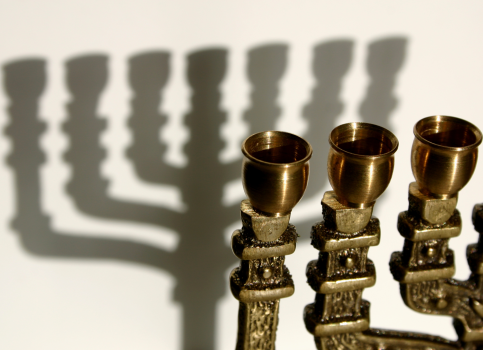
Hebrews 10:1:

"For since the law has but a shadow of the good things to come instead of the true form of these realities, it can never, by the same sacrifices that are continually offered every year, make perfect those who draw near." (ESV)

Shadow = Old Covenant (Mosaic)
True Form = New Covenant (Faith and Promises of Abraham fulfilled in the life, death and resurrection of the Lord Christ Jesus)

1755170273698.png
 

Behold

Well-Known Member
Apr 11, 2020
24,401
9,214
113
Netanya or Pensacola
Faith
Christian
Country
Israel
Gender
Male
So lets develop this idea of death reigning from Adam to Christ and from Christ to the end of the Millennial age.

Because of one man's sin, (1st Adam) sin entered humanity, and death ensued.
This is both spiritual and physical.


The Law of Sin and Death is found in this verse "the wages of sin is death" - God decreed if you sin you die!

When 1st Adam transgressed, there was no Moses Law.

What The Law does, is...it demands righteousness from you, and a sinner has none.
Sometimes a false teacher will show up on this forum and talk about "doing righteousness to be righteous".
That's impossible........so, what God does for us, is offer the "imputed righteousness of Christ" to the BELIEVER.
-------------------------------------------------------------------------------------------------------------------------------------------
So the curse of the Law., in that it judges you.

"""Christ came to redeeem us from the curse of the Law""" that is....."The law is the power of sin, and the power of sin is the law".

So, The Christian is "not under the Law, but under Grace" ...because we are "In Christ and """Christ is the END of the Law, for righteousness, to everyone who believes""".

This means the Christian, who is now in the KOG, exists here.

= "Where there is no law there is no sin (transgression).""
 
Last edited:
  • Like
Reactions: Hiddenthings

Hiddenthings

Well-Known Member
May 19, 2025
3,777
415
83
Leeton NSW
Faith
Christian
Country
Australia
@dak

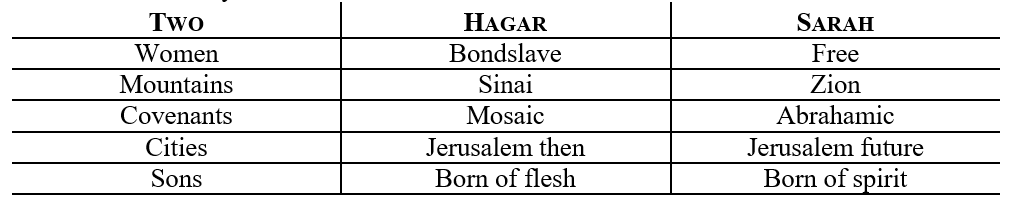
We fully proved that Sarah relates to Abraham but we did not explore Jerusalem then and New Jerusalem in the future.
1755389744259.png

Isaiah 65:17–19 “For behold, I create new heavens and a new earth... I create Jerusalem to be a joy, and her people to be a gladness. I will rejoice in Jerusalem and be glad in my people...”

There are three "Heaven & Earth" epocs.
  1. The Mosaic Age – The era of the Law given through Moses, centered on Israel’s national covenant and temple worship.
  2. The Millennial Reign of Christ – Christ’s future kingdom on earth, where He rules in righteousness and subdues all enemies under His feet.
  3. God All in All – The final state, when Christ delivers the kingdom to the Father, and God is fully manifest in everything and everyone (1 Corinthians 15:28).
Jerusalem will be made a new

Psalm 48:1–2, 8 “Beautiful in elevation, the joy of all the earth, is Mount Zion...”

Isaiah 60 (Entire Chapter) “Arise, shine, for your light has come, and the glory of the Lord has risen upon you...” (v.1)
“Your gates shall be open continually... they shall call you The City of the Lord, the Zion of the Holy One of Israel.” (vv.11, 14)

So many unfulfilled prophecies concerning New Jerusalem.
 

stevesonthebay

Active Member
Feb 4, 2026
175
126
43
66
Scarborough
Faith
Christian
Country
Australia
Gender
Male
I think believing and recieving Christ goes hand in hand with repentence. We are saved from what. From sin and death. Christ cannot live in a heart that sins.
 
  • Like
Reactions: dak

Behold

Well-Known Member
Apr 11, 2020
24,401
9,214
113
Netanya or Pensacola
Faith
Christian
Country
Israel
Gender
Male
I think believing and recieving Christ goes hand in hand with repentence. We are saved from what. From sin and death. Christ cannot live in a heart that sins.

God understands that being born again """while we were YET sinners"""...by The Holy God who "Justifies The UNGODLY"..(as Paul teaches us)....is exactly how a Christian went from "darkness to Light". from """sinner""" to literal Citizen of Heaven Saint.

So,
Reader..... If you can recall that time, that day, that moment in your past = when something in your Heart told you..."you need Eternal Forgiveness, ....you need God's Eternal Life..... """you need to Trust in Christ right now and God will supply it forever"""..

Do you remember that time in your past?> .....? That moment of spiritiual 'quickening" as the "new Birth" ... "in Christ"

So, if you only have "water baptism" and self effort, and confessing sin ,to try to gain and keep heaven, then stop now, come to Jesus, and start your """imputed righteous"""" eternal journey into God's Eternal Life.,.. = only Through Christ

= "All who call on the Name of Jeusu....shall be SAVED".

= "to as many as believed on Jesus, God gave unto them the Power TO BECOME A (Eternal) SON/DAUGHTER of GOD"..

A 'New Creation in Christ".........is to become "Born again"., and Jesus said....."you MUST be....born again"...spiritually.

And what better time to find God's Eternal Unconditional Love poured out on The Cross... Just after the remembrance of Christ's Crucifixion, and Just Before His Holy Resurrection ""


Reader, .... "come to Jesus".... "Trust in Christ"......"He is always waiting for you".
 
  • Like
Reactions: stevesonthebay

newnature

Member
Mar 24, 2011
563
96
28
@dak

We fully proved that Sarah relates to Abraham but we did not explore Jerusalem then and New Jerusalem in the future.
View attachment 68434

Isaiah 65:17–19 “For behold, I create new heavens and a new earth... I create Jerusalem to be a joy, and her people to be a gladness. I will rejoice in Jerusalem and be glad in my people...”

There are three "Heaven & Earth" epocs.
  1. The Mosaic Age – The era of the Law given through Moses, centered on Israel’s national covenant and temple worship.
  2. The Millennial Reign of Christ – Christ’s future kingdom on earth, where He rules in righteousness and subdues all enemies under His feet.
  3. God All in All – The final state, when Christ delivers the kingdom to the Father, and God is fully manifest in everything and everyone (1 Corinthians 15:28).
Jerusalem will be made a new

Psalm 48:1–2, 8 “Beautiful in elevation, the joy of all the earth, is Mount Zion...”

Isaiah 60 (Entire Chapter) “Arise, shine, for your light has come, and the glory of the Lord has risen upon you...” (v.1)
“Your gates shall be open continually... they shall call you The City of the Lord, the Zion of the Holy One of Israel.” (vv.11, 14)

So many unfulfilled prophecies concerning New Jerusalem.
Put on the new man, to abandon what you were and truly live what you now are in Christ, Ephesians 4:24. This figure of the new man represents a radical transformation, not merely moral, but ontological, it is a new identity that replaces the old corrupted nature.
 

Soyeong

Active Member
Jan 29, 2024
618
140
43
43
Hudson
Faith
Christian
Country
United States
In 1Cor 11:23 Paul says, "For I received of the Master that which I also delivered unto you", meaning that he delivered to them what he himself had received, and then he quotes directly word for word verbatim from the Gospel account which we know as Luke.

1 Corinthians 11:23-25 ASV
23 For I received of the Lord that which also I delivered unto you, that the Lord Jesus in the night in which he was betrayed took bread; [Luke 22:19a]
24 and when he had given thanks, he brake it, and said, This is my body, which is for you: this do in remembrance of me. [Luke 22:19]
25 In like manner also the cup, after supper, saying, This cup is the new covenant in my blood: [Luke 22:a-b] this do, as often as ye drink it, in remembrance of me.

Luke 22:19-20 ASV
19 And he took bread, [1Cor 11:23b] and when he had given thanks, he brake it, and gave to them, saying, This is my body which is given for you: this do in remembrance of me. [1Cor 11:24]
20 And the cup in like manner after supper, saying, This cup is the new covenant in my blood, [1Cor 11:25a-b] even that which is poured out for you.

This passage from Luke 22:19-20 was given to Paul, according to his own testimony, and he says he also delivered it to the Corinthians: that is surely speaking of a writing, and the writing is the Gospel account we now know as Luke, obviously, from the quote of Luke 22:19-20 found in this epistle to the Corinthians. Paul then says the same again, later in the same epistle.

1 Corinthians 14:36 ASV
36 What? was it from you that the word of God went forth? or came it unto you alone?

The Word of Elohim had come to them: the Gospel account we now know as Luke.

1 Corinthians 14:37-38
37 If any man thinketh himself to be a prophet, or spiritual, let him take knowledge of the things which I write unto you, that they are the commandment(s) of the Lord.
38 But if any man is ignorant, let him be ignorant.

The things Paul writes to them concern the commandments of the Master, and he is reminding them that he speaks of that which he had received, which he had also delivered unto them: the Gospel account we know as Luke. And the next chapter is still the same passage, and thus the same context, and he reminds them again therein that he had delivered unto them what he himself had also received: the Gospel account now known as Luke.

1 Corinthians 15:1-8 ASV
1 Now I make known unto you brethren, the gospel which I preached unto you, which also ye received, wherein also ye stand,
2 by which also ye are saved, if ye hold fast the word which I preached unto you, except ye believed in vain.
3 For I delivered unto you first of all that which also I received: that Christ died for our sins according to the scriptures; [(writings) Gospel of Luke]
4 and that he was buried; and that he hath been raised on the third day according to the scriptures; [(writings) Gospel of Luke]
5 and that he appeared to Cephas; [Luke 24:34] then to the twelve; ["the Eleven", Luke 24:33, proven at this link]
6 then he appeared to above five hundred brethren at once, of whom the greater part remain until now, but some are fallen asleep;
7 then he appeared to James; then to all the apostles;
8 and last of all, as to the child untimely born, he appeared to me also.

Therefore it is imperative that one understands where Paul, (Shaul at that point), did indeed receive what he had also delivered to his congregations, obviously including also the Galatians according to what he writes to them in Gal 3:1, (as will be shown below). Where did Paul receive his Gospel? He received it immediately upon his initial conversion, right after the appearance of the Master to him near Damascus, and it was given to him by Hananyah, (Ananias), when Hananyah was commanded by the Master to seek out Shaul, and go lay the Power upon him so that he might receive sight.

All one needs to be able to understand this is to understand that the word hand in Hebrew-Biblical thought represents power. Hananyah did not necessarily lay his own physical hands on Paul, and the Greek text does not say that, it rather says he laid the hands, not his hands, upon Shaul, (Acts 9:12, Acts 9:17). So Hananyah laid the Power upon Shaul, and the Power is the Word, and therefore surely the Testimony of the Master in the Gospel accounts in this case: for Shaul already knew the rest of the scripture found in the Hebrew scriptures, but was blind to what they truly teach and preach, and it is the Testimony of the Master which expounds all things of the Torah, Prophets, and Writings in the Hebrew scriptures.

Hananyah gave Shaul a record of what has now come to be known as the Gospel of Luke. And when Hananyah did so, what then was it which he admonished Shaul to do? Hananyah admonished Shaul to arise and be immersed, (Acts 22:16). Immerse in what? Immersion is not literal water immersion: Biblical immersion is immersion into the Word of Elohim. Thus Shaul went into Arabia, (for six months, but that is another line of discussion), and he immersed in the Gospel which Hananyah had laid upon him: the Power of Elohim, the Word of Elohim, and in this case it was the Gospel we now know as Luke by way of the quote we have from that Gospel account in 1Cor 11:23-25.

Now therefore the Galatians, according to Gal 3:1, had indeed begun in the Spirit, which is the Testimony of the Master, which is Spirit, (John 6:63), for Paul had delivered unto the Galatians that which he himself had also received, just as he says he did with the Corinthians.

The passage actually tells us that the Galatians had a Gospel account in their possession, no doubt given to them by Paul, which is assuredly the Gospel we now know as Luke, being quoted from and expounded in 1Cor 11:23-26, 1Cor 14:37-38, and on through 1Cor 15:1-6. This is why Paul says to the Galatians:

Galatians 3:1
1 ω ανοητοι γαλαται τις υμας εβασκανεν οις κατ οφθαλμους ιησους χριστος προεγραφη εσταυρωμενος

προεγραφη = written before(hand)

Mickelson's Enhanced Strong's Dictionaries
G4270 προγράφω prographo (pro-gra'-fō) v.
1. to write previously.
2. (figuratively) to announce, prescribe.
[from G4253 and G1125]
KJV: before ordain, evidently set forth, write (afore, aforetime)
Root(s): G4253, G1125

Paul is reminding the Galatians of a literal Gospel account which they had received from him. The Galatians were not at Golgotha to have seen the crucifixion for themselves, with their own eyes: that rather came by the message and the Gospel account which Paul had delivered unto them.

Galatians 3:1 LSV (Literal Standard Version)
1 O thoughtless Galatians, who bewitched you, not to obey the truth—before whose eyes [it] was previously written [about] Jesus Christ having been crucified?

They had received and had read/studied the writing, a Gospel account full of the Testimony of the Master, ("Paul's Gospel", a.k.a. "Luke"), and thus he says in the above statement, "before whose eyes it was previously written". And if testimony is spirit, and it is, (whether for the good or whether for the evil), then this is where they had received the Spirit because the Testimony of the Meshiah in the Gospel accounts, (John 6:63), is the new Spirit of the new-renewed covenant, (Eze 11:19-20, Eze 36:26-27).

In Matthew 4:15-23, Jesus began his ministry with the Gospel message to repent for the Kingdom of God is at hand, which was a light to the Gentiles, and the Law of God was how his audience knew what sin is (Romans 3:20), so repenting from our disobedience to it is a central part of the Gospel of the Kingdom/Grace, which Paul also taught based on the Law of God (Acts 14:21-22, 20:24-25, 28:23).
 
  • Like
Reactions: dak

dak

Well-Known Member
Feb 9, 2013
1,457
188
63
Messianica
sites.google.com
Faith
Other Faith
Country
United States
Gender
Male
In Matthew 4:15-23, Jesus began his ministry with the Gospel message to repent for the Kingdom of God is at hand, which was a light to the Gentiles, and the Law of God was how his audience knew what sin is (Romans 3:20), so repenting from our disobedience to it is a central part of the Gospel of the Kingdom/Grace, which Paul also taught based on the Law of God (Acts 14:21-22, 20:24-25, 28:23).

Amen. :)

However the main point of this thread was that when Paul says "my Gospel" he is very likely speaking of the Gospel now known as Luke: which he himself had received, and which he had delivered to the congregations which he had founded, (or the Master through him). Don't get me wrong: I don't mind your topic change, I just wanted to make that clear to everyone, and this thread is pretty old anyway.
 
Last edited:
Apr 7, 2026
371
50
28
74
Lexington KY
Faith
Christian
Country
United States
Gender
Male
Christians adhere to the gospel (Old English godspel = "good news"). The apostle Paul summed it up: "Christ Jesus came into the world to save sinners, of whom I am foremost." (1Timithy 1:15).

Our brother Paul persecuted Christian Jews, accusing them of blasphemy, since they regarded a man named Jesus to be God. Jesus subsequently engaged Paul on the road to Damascus (Acts 9:1-18), and Paul quickly changed his mind about Christianity. According to tradition he was executed by the Romans at the behest of the Jews. He was a Roman citizen (born in Tarsus, a Roman colony) so by law he could not be crucified, rather he was beheaded.
 

dak

Well-Known Member
Feb 9, 2013
1,457
188
63
Messianica
sites.google.com
Faith
Other Faith
Country
United States
Gender
Male
Our brother Paul persecuted Christian Jews, accusing them of blasphemy, since they regarded a man named Jesus to be God. Jesus subsequently engaged Paul on the road to Damascus (Acts 9:1-18), and Paul quickly changed his mind about Christianity.

Actually the sect you refer to as Christianity was called the Way, and the adherents were called Ναζωραιοι, (Hebrew נצורי, that is, Natzorei, Isaiah 49:6), or the masculine, Natzorim.

Acts 24:5-14 ASV
5 For we have found this man a pestilent fellow, and a mover of insurrections among all the Jews throughout the world, and a ringleader of the sect of the Nazarenes:
6 who moreover assayed to profane the temple: on whom also we laid hold:
7 - - -
8 from whom thou wilt be able, by examining him thyself, to take knowledge of all these things whereof we accuse him.
9 And the Jews also joined in the charge, affirming that these things were so.
10 And when the governor had beckoned unto him to speak, Paul answered, Forasmuch as I know that thou hast been of many years a judge unto this nation, I cheerfully make my defense:
11 seeing that thou canst take knowledge that it is not more than twelve days since I went up to worship at Jerusalem:
12 and neither in the temple did they find me disputing with any man or stirring up a crowd, nor in the synagogues, nor in the city.
13 Neither can they prove to thee the things whereof they now accuse me.
14 But this I confess unto thee, that after the Way which they call a sect, so serve I the God of our fathers, believing all things which are according to the law, and which are written in the prophets;

How long after Acts 11:26 do you suppose the above testimony occurred? Moreover the word for Christian, (or Chrestian), is entirely disputable in all three N/T occurrences: there are even texts where one may clearly see that the word Chrestian has been altered to instead read Christian because the letter eta, which was erased, left a gap because it is so much wider than the letter iota.

However to get down to the real issue with your assertion: where is it that you actually find Paul confirming what you have asserted? I cannot find it anywhere.

Acts 9:1-8 KJV
1 And Saul, yet breathing out threatenings and slaughter against the disciples of the Lord, went unto the high priest,
2 And desired of him letters to Damascus to the synagogues, that if he found any of this way, whether they were men or women, he might bring them bound unto Jerusalem.
3 And as he journeyed, he came near Damascus: and suddenly there shined round about him a light from heaven:
4 And he fell to the earth, and heard a voice saying unto him, Saul, Saul, why persecutest thou me?
5 And he said, Who art thou, Lord? And the Lord said, I am Jesus whom thou persecutest: it is hard for thee to kick against the pricks.
6 And he trembling and astonished said, Lord, what wilt thou have me to do? And the Lord said unto him, Arise, and go into the city, and it shall be told thee what thou must do.
7 And the men which journeyed with him stood speechless, hearing a voice, but seeing no man.
8 And Saul arose from the earth; and when his eyes were opened, he saw no man: but they led him by the hand, and brought him into Damascus.

Acts 9:1-8 ASV
1 But Saul, yet breathing threatening and slaughter against the disciples of the Lord, went unto the high priest,
2 and asked of him letters to Damascus unto the synagogues, that if he found any that were of the Way, whether men or women, he might bring them bound to Jerusalem.
3 And as he journeyed, it came to pass that he drew nigh unto Damascus: and suddenly there shone round about him a light out of heaven:
4 and he fell upon the earth, and heard a voice saying unto him, Saul, Saul, why persecutest thou me?
5 And he said, Who art thou, Lord? And he said, I am Jesus whom thou persecutest:
6 but rise, and enter into the city, and it shall be told thee what thou must do.
7 And the men that journeyed with him stood speechless, hearing the voice, but beholding no man.
8 And Saul arose from the earth; and when his eyes were opened, he saw nothing; and they led him by the hand, and brought him into Damascus.

Acts 26:9-13 KJV
9 I verily thought with myself, that I ought to do many things contrary to the name of Jesus of Nazareth.
10 Which thing I also did in Jerusalem: and many of the saints did I shut up in prison, having received authority from the chief priests; and when they were put to death, I gave my voice against them.
11 And I punished them oft in every synagogue, and compelled them to blaspheme; and being exceedingly mad against them, I persecuted them even unto strange cities.
12 Whereupon as I went to Damascus with authority and commission from the chief priests,
13 At midday, O king, I saw in the way a light from heaven, above the brightness of the sun, shining round about me and them which journeyed with me.

Acts 26:8-13 ASV
8 Why is it judged incredible with you, if God doth raise the dead?
9 I verily thought with myself that I ought to do many things contrary to the name of Jesus of Nazareth.
10 And this I also did in Jerusalem: and I both shut up many of the saints in prisons, having received authority from the chief priests, and when they were put to death I gave my vote against them.
11 And punishing them oftentimes in all the synagogues, I strove to make them blaspheme; and being exceedingly mad against them, I persecuted them even unto foreign cities.
12 Whereupon as I journeyed to Damascus with the authority and commission of the chief priests,
13 at midday, O king, I saw on the way a light from heaven, above the brightness of the sun, shining round about me and them that journeyed with me.

Is it somewhere else? What am I missing? Where does Paul say anything about persecuting the first century assemblies because "they regarded a man named Jesus to be God"?
 

Wick Stick

Well-Known Member
Sep 21, 2023
2,424
1,486
113
46
Phoenix
Faith
Christian
Country
United States
Where does Paul say anything about persecuting the first century assemblies because "they regarded a man named Jesus to be God"?
I can get that out of Acts 7 if I squint a little.

Paul didn't actually SAY anything there, but he did hold coats for some fellows who stoned St. Steven. If I squint, it seems he was party to some persecution.

That stoning happened after St Steven professed to seeing Jesus in heaven at the right hand of the Father. He didn't precisely say that Jesus was God, but when I squint, it sure seems he was making Jesus equal to God.

It's in there. Kinda
 

dak

Well-Known Member
Feb 9, 2013
1,457
188
63
Messianica
sites.google.com
Faith
Other Faith
Country
United States
Gender
Male
I can get that out of Acts 7 if I squint a little.

Paul didn't actually SAY anything there, but he did hold coats for some fellows who stoned St. Steven. If I squint, it seems he was party to some persecution.

That stoning happened after St Steven professed to seeing Jesus in heaven at the right hand of the Father. He didn't precisely say that Jesus was God, but when I squint, it sure seems he was making Jesus equal to God.

It's in there. Kinda

Exactly how much squinting are we talking about here? :)
Some can actually see the Trinity in the Shema, that is, if they squint hard enough.

Seriously though, the following nomen sacrum has two different meanings representing two different enties:

Ι̅Η

I'll offer the one that Paul teaches openly in Eph 4:1-24 — Yah El, (Ια Ηλ), or Yah Elohim.
 

Wick Stick

Well-Known Member
Sep 21, 2023
2,424
1,486
113
46
Phoenix
Faith
Christian
Country
United States
Exactly how much squinting are we talking about here? :)
Some can actually see the Trinity in the Shema, that is, if they squint hard enough.
Hmmm... not quite THAT hard. I like to think my squinting is closer to 'reasonable guesswork' than 'writing fiction.'
Seriously though, the following nomen sacrum has two different meanings representing two different enties:

Ι̅Η

I'll offer the one that Paul teaches openly in Eph 4:1-24 — Yah El, (Ια Ηλ), or Yah Elohim.
I've got an interlinear, but it doesn't have Uncials. Which verse(s) that in?

Pretty sure I know the other.
 

dak

Well-Known Member
Feb 9, 2013
1,457
188
63
Messianica
sites.google.com
Faith
Other Faith
Country
United States
Gender
Male
Hmmm... not quite THAT hard. I like to think my squinting is closer to 'reasonable guesswork' than 'writing fiction.'

:Thumbsup:

I've got an interlinear, but it doesn't have Uncials. Which verse(s) that in?

Pretty sure I know the other.

Initially it is simply logos-understanding, but one is required to go back and check the passage that Paul has quoted from, and was expounding from. Did you notice that Yah Elohim is actually a link in my previous post above?

Ephesians 4:4-21
[04] One body, and one Spirit, even as you also were called in one hope of your calling:
[05] One Master, one faith-belief, one immersion:
[06] One El and Father of all, who is over all, and through all, and in us all.
[07] But grace was given to each one of us according to the measure of the gift of the Χ̅Ρ.
[08] Therefore He says that When He ascended on high, He led captivity captive, and gave gifts unto men. [Psa 68:18]
[09] Now this, "He ascended," what is it but that He also first descended into the lower parts of the earth?
[10] He who descended is the One who also ascended far above all the heavens, that He might fill all things.
[11] And He gave some to be emissaries, [apostles] and some, prophets, and some, evangelists, and some, shepherds and teachers:
[12] For the perfecting of the holy ones, toward the work of serving, to the building up of the body of the Χ̅Ρ,
[13] Until we all attain to the unity of the faith-belief, and of the knowledge of the Son of Elohim, into a fully grown man, to the measure of the stature of the fullness of the Χ̅Ρ,
[14] That we may no longer be children, tossed back and forth and carried about with every wind of doctrine, by the trickery of men, in craftiness, after the wiles of error:
[15] But speaking truth in love, that we may grow up in all things into Him, He who is the head, the Χ̅Ρ,
[16] From whom all the body, being fitted and knit together through that which every joint supplies, according to the working in measure of each individual part, makes the body increase to the building up of itself in love.
[17] This I say therefore, and testify in the Master, that you no longer walk as the rest of the Gentiles also walk, in the futility of their mind:
[18] Being darkened in their understanding, alienated from the life of Elohim, by reason of the ignorance that is in them, because of the hardening of their hearts:
[19] Who, having become callous, gave themselves over to lust, to work all uncleanness with greediness.
[20] But you did not learn the Χ̅Ρ that way:
[21] If indeed you have heard Him, and were taught in Him, even as truth is in Ι̅Η,

Psalm 68:18
[18] You have ascended on high, You have led captivity captive, You have brought gifts among men, [Eph 4:8] and wrath upon the rebellious, that Yah Elohim the Blessed might dwell therein.

Χ̅Ρ also has two meanings: Christos, and Chrestos, and neither are they the same entities. Taste and see that Yah is Chrestos: and He is the yoke on the neck/shoulder of the Meshiah/Christos, (Mat 11:30, re: Isa 9:6).

More detailed explanation/exegesis here: Logos Logic #15
.
 

Wick Stick

Well-Known Member
Sep 21, 2023
2,424
1,486
113
46
Phoenix
Faith
Christian
Country
United States
Initially it is simply logos-understanding, but one is required to go back and check the passage that Paul has quoted from, and was expounding from. Did you notice that Yah Elohim is actually a link in my previous post above?
I did not! That makes it much clearer.
Χ̅Ρ also has two meanings: Christos, and Chrestos, and neither are they the same entities. Taste and see that Yah is Chrestos: and He is the yoke on the neck/shoulder of the Meshiah/Christos, (Mat 11:30, re: Isa 9:6).

More detailed explanation/exegesis here: Logos Logic #15
Controversial... not sure I agree. Every nomina sacra is a name... but Chrestos appears to be more of an adjective. Convince me?

Also, since we're talking about nomina sacra, I've been looking at them in the OT. Hebrew has a number of them... and several belong to pagan gods... oops. The two in Genesis 1:2 change the meaning quite a bit...
 

shepherdsword

Encounter Team - Eagle
Staff member
Encounter Team
Feb 12, 2009
2,034
1,631
113
Millington
Faith
Christian
Country
United States
Gender
Male
Here is the easy way to understand Paul's Gospel..

Or as Paul explains it......"we preach Christ Crucified".......not water baptism or repenting from sin or keeping commandments.
-

New International Version
For I resolved to know nothing while I was with you except Jesus Christ and him crucified.

New Living Translation
For I decided that while I was with you I would forget everything except Jesus Christ, the one who was crucified.

English Standard Version
For I decided to know nothing among you except Jesus Christ and him crucified.

Berean Standard Bible
For I resolved to know nothing while I was with you except Jesus Christ and Him crucified.

Berean Literal Bible
For I decided to know nothing among you except Jesus Christ and Him having been crucified.

King James Bible
For I determined not to know any thing among you, save Jesus Christ, and him crucified.

New King James Version
For I determined not to know anything among you except Jesus Christ and Him crucified.

New American Standard Bible
For I determined to know nothing among you except Jesus Christ, and Him crucified.

NASB 1995
For I determined to know nothing among you except Jesus Christ, and Him crucified.

NASB 1977
For I determined to know nothing among you except Jesus Christ, and Him crucified.

Legacy Standard Bible
For I determined to know nothing among you except Jesus Christ, and Him crucified.

Amplified Bible
for I made the decision to know nothing [that is, to forego philosophical or theological discussions regarding inconsequential things and opinions while] among you except Jesus Christ, and Him crucified [and the meaning of His redemptive, substitutionary death and His resurrection].

Christian Standard Bible
I decided to know nothing among you except Jesus Christ and him crucified.

Holman Christian Standard Bible
For I didn’t think it was a good idea to know anything among you except Jesus Christ and Him crucified.

American Standard Version
For I determined not to know anything among you, save Jesus Christ, and him crucified.

Contemporary English Version
In fact, while I was with you, I made up my mind to speak only about Jesus Christ, who had been nailed to a cross.

English Revised Version
For I determined not to know anything among you, save Jesus Christ, and him crucified.

GOD'S WORD® Translation
While I was with you, I decided to deal with only one subject-Jesus Christ, who was crucified.

Good News Translation
For while I was with you, I made up my mind to forget everything except Jesus Christ and especially his death on the cross.

International Standard Version
For while I was with you I resolved to know nothing except Jesus the Messiah, and him crucified.

NET Bible
For I decided to be concerned about nothing among you except Jesus Christ, and him crucified.

New Heart English Bible
For I determined not to know anything among you, except Jesus Christ, and him crucified.

Webster's Bible Translation
For I determined not to know any thing among you, save Jesus Christ, and him crucified.

Weymouth New Testament
For I determined to be utterly ignorant, when among you, of everything except of Jesus Christ, and of Him as having been crucified.
Majority Text Translations
Majority Standard Bible
For I resolved to know nothing while I was with you except Jesus Christ and Him crucified.

World English Bible
For I determined not to know anything among you except Jesus Christ and him crucified.
Literal Translations
Literal Standard Version
for I decided not to know anything among you, except Jesus Christ, and Him crucified;

Berean Literal Bible
For I decided to know nothing among you except Jesus Christ and Him having been crucified.

Young's Literal Translation
for I decided not to know any thing among you, except Jesus Christ, and him crucified;

Smith's Literal Translation
For I judged not to know any thing among you, except Jesus Christ, and him crucified.
Cutting and pasting a single verse out to prove the gospel doesn't require repentance is not wise:

Ac 11:18
When they heard these things, they held their peace, and glorified God, saying, Then hath God also to the Gentiles granted repentance unto life.

Ac 17:30
And the times of this ignorance God winked at; but now commandeth all men every where to repent:

2 Co 7:10

For godly sorrow worketh repentance to salvation not to be repented of: but the sorrow of the world worketh death.

2 Ti 2:25
In meekness instructing those that oppose themselves; if God peradventure will give them repentance to the acknowledging of the truth;

Heb 6:1

Therefore leaving the principles of the doctrine of Christ, let us go on unto perfection; not laying again the foundation of repentance from dead works, and of faith toward God,

2 Pe 3:9

The Lord is not slack concerning his promise, as some men count slackness; but is longsuffering to us-ward, not willing that any should perish, but that all should come to repentance.

It's pretty clear that repentance is necessary for salvation.
 
Last edited:
  • Like
Reactions: dak

dak

Well-Known Member
Feb 9, 2013
1,457
188
63
Messianica
sites.google.com
Faith
Other Faith
Country
United States
Gender
Male
I did not! That makes it much clearer.

Controversial... not sure I agree. Every nomina sacra is a name... but Chrestos appears to be more of an adjective. Convince me?

As far as convincing arguments there is quite a bit of information strongly suggesting that the original Christians were actually called Chrestians, from ancient tombstones and letters, even to ancient and critically important uncial texts.

CHRESTIAN in Antiquity

Also, since we're talking about nomina sacra, I've been looking at them in the OT. Hebrew has a number of them... and several belong to pagan gods... oops. The two in Genesis 1:2 change the meaning quite a bit...

Do tell. :)
 

Wick Stick

Well-Known Member
Sep 21, 2023
2,424
1,486
113
46
Phoenix
Faith
Christian
Country
United States
As far as convincing arguments there is quite a bit of information strongly suggesting that the original Christians were actually called Chrestians, from ancient tombstones and letters, even to ancient and critically important uncial texts.

CHRESTIAN in Antiquity
Let's say I accept that it was originally Xrhstianos rather than Xristianos. How does that change theology through the rest of the New Testament? Christianos dovetails pretty well into Peter's "holy priesthood" with the idea of anointing.

Xrhstos is "good" but it doesn't seem to be the Platonic "form of the Good," which was my first thought.
Do tell. :)
In Genesis 1:2...
והארץ היתה תהוּ ובהוּ
wa ha eretz haytah THw wa BHw
And the earth was without form, and void


TH appears to be an abbreviation for Tehowm, usually translated "the deep" in the Bible, but a titan of the Amorites and Canaanites.
BH appears to denote Behemoth, another Amorite deity that shows up in the book of Job, where God subjugates the beast as part of is creation of the earth

If we read it this way, instead of the usual translation above, we get
And the earth was TH's and BH's
and the rest of the chapter becomes about how God defeated two foreign gods/titans, taking the earth from the powers of chaos and making it obey order

That fits very well with Job's version of the creation of the earth, were God defeats Leviathan and Behemoth. It also fits the Babylonian creation epic (the Enuma Elish) where Ea defeats Tiamat and Absu and creates the world from Tiamat's body. That same creation myth of God defeating the dragon to create earth is repeated across the Ancient Near East, in Hurrian literature (the Illuyanka encyclical), Greek (Hesiod's Titanomachy and the gods subduing Typhon), and others.
 

dak

Well-Known Member
Feb 9, 2013
1,457
188
63
Messianica
sites.google.com
Faith
Other Faith
Country
United States
Gender
Male
Let's say I accept that it was originally Xrhstianos rather than Xristianos. How does that change theology through the rest of the New Testament? Christianos dovetails pretty well into Peter's "holy priesthood" with the idea of anointing.
Xrhstos is "good" but it doesn't seem to be the Platonic "form of the Good," which was my first thought.

Chrestos may also be rendered as gracious, as in 1Pet 2:3.

1 Peter 2:3 ASV
3 if ye have tasted that the Lord is gracious:

1 Peter 2:3 N/A-W/H
3 ει εγευσασθε οτι χρηστος ο κυριος

And this contains a partial quote from Psalms 34:8 in the LXX:

Psalms 34:8 OG LXX-Septuagint
8 (33:9) γευσασθε και ιδετε οτι χρηστος ο κυριος μακαριος ανηρ ος ελπιζει επ αυτον

γευσασθε και ιδετε οτι χρηστος ο κυριος
Taste and see that ο κυριος is good/gracious

ο κυριος is not the Tetragrammaton because the Tetragrammaton is always anarthrous Kurios in the LXX, (without the article, and the only exceptions are likely mistakes that have crept into the text). In this instance ο κυριος is either Yah, which is indeed sometimes rendered as Kurios, (with the article), or "the Master", (or "the Lord").

The author of the Psalm is not separating the text as the Masoretes do: he is not reading the Tetragrammaton anywhere in this statement.

And how might Christianos -vs- Chrestianos change N/T theology? The Christos is the Anointed One, the Chosen One, a mortal man: the Chrestos is Yah Elohim, the one and only one-of-a-kind Son of the Father. Yah Elohim is the Dove brooding over the waters in the very beginning, Ruach Elohim, (Gen 1:2, anarthrous in both the Hebrew and the Greek LXX, Pneuma Theou, Mat 3:16 N/A, W/H, anarthous, from Gen 1:2), and Ruach Elohim is the Testimony-Word-Spirit of the Father, even the Logos in John 1:1. This is one of the major differences between Christian Trinitarianism and Chrestian Adoptionism, (at least in my understanding of Adoptionism by way of the holy scriptures).

In Genesis 1:2...
והארץ היתה תהוּ ובהוּ
wa ha eretz haytah THw wa BHw
And the earth was without form, and void


TH appears to be an abbreviation for Tehowm, usually translated "the deep" in the Bible, but a titan of the Amorites and Canaanites.
BH appears to denote Behemoth, another Amorite deity that shows up in the book of Job, where God subjugates the beast as part of is creation of the earth

If we read it this way, instead of the usual translation above, we get
And the earth was TH's and BH's
and the rest of the chapter becomes about how God defeated two foreign gods/titans, taking the earth from the powers of chaos and making it obey order

That fits very well with Job's version of the creation of the earth, were God defeats Leviathan and Behemoth. It also fits the Babylonian creation epic (the Enuma Elish) where Ea defeats Tiamat and Absu and creates the world from Tiamat's body. That same creation myth of God defeating the dragon to create earth is repeated across the Ancient Near East, in Hurrian literature (the Illuyanka encyclical), Greek (Hesiod's Titanomachy and the gods subduing Typhon), and others.

I don't view those as actual nomina sacra. What I mean when using that term is those places in the N/T where we find them in the Greek text, where they are clearly designated to be such because of the over-lines or over-strikes above all of them. Moreover the terms nomen sacrum, (singular), and nomina sacra, (plural), are the Latin terms given to them by scholars meaning "sacred name", (nomen sacrum), or "sacred names", (nomina sacra). There are none in the OG LXX-Septuagint and certainly not in the Hebrew text, so then, without debating, agreeing, or disagreeing with your hypothesis, it simply is not what I was speaking about. Scrolling down the following Wiki page you may find a fairly good list of the nomina sacra in some of the better known codices, manuscripts, etc.