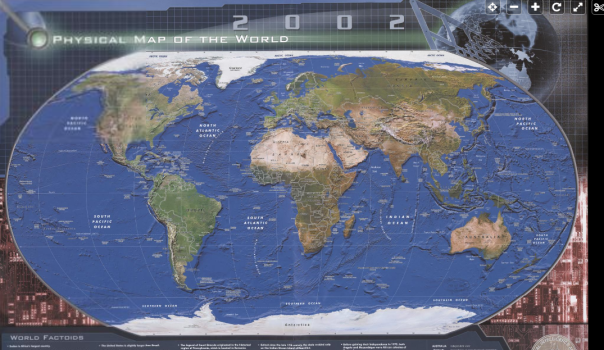
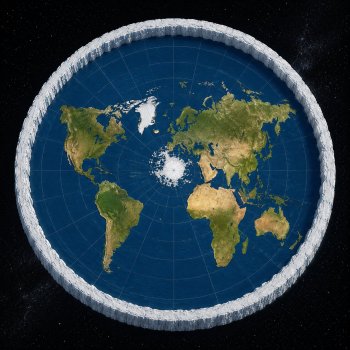
As explained and demonstrated, the parsing is all NASA's; the chuckling is the programmed response.
Back a few pages at
post #2014, this vid was posted:
Due to the pressure NASA's been receiving, Dave mentions that NASA has recently published its one and only so-called 'official' "photograph" (because "NASA doesn't like to lie"); listen at the 13-min. mark.
As was explained to you, when NASA makes statements such as, "This is the first time the Apollo trajectory made it possible to photograph the south polar ice cap", you need to be wise as to how you are being manipulated with mere grammar. You would assume NASA photographed the ice cap; but that is not what NASA said.
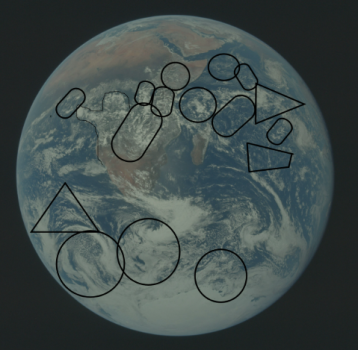
Ya gotta luv the fake clouds. BTW, I took a quick look at NASA's infamous "Blue Marble" and noted the countless subliminal embeds. Below are just a few; I got bored and stopped early on. Perhaps you recognize some of the embeds:
View attachment 87813
This is the mind control programming; it's lifelong and starts with a globe on the kindergarten teacher's desk. There is simply no polite way to tell people they've dedicated their lives to an illusion. In other words, it's as good as saying that people don't wish to be told that they're totally wrong, and will go to any length to cling to their belief, no matter what.
Planar earth is easily provable with the preponderance of the Holy Bible (over 200 scriptures). But again, the programmed aren't interested in the truth.
View attachment 87812
When the ad hominems and name-calling start, you know right away where their head is at. Forgive them for they know not what they do. They are not truth lovers; they, at some point, must
will to know the truth. And ye shall know the truth, and the truth shall make you free.
There is no "outer space" or "space exploration" and there are no "satellites" as we've been programmed to believe. There is, however, CGI and balloons.
EARTH PHOTOGRAPHY FROM HIGH-ALTITUDE BALLOONS - NASA 1971
There may very well be objects in the atmosphere that perform the functions of what are today called satellites. But these satellites are not in outer space; they are actually tethered beneath massive helium balloons, floating very high in the atmosphere. Indeed, a little-known fact is that NASA annually consumes millions of cubic feet of gaseous helium that it uses to fill balloons to carry satellites into the upper atmosphere.
High altitude balloons,
under the firmament, are floating the satellite psyop:
View attachment 87814
NASA consumes more than twice the helium consumption of the entire U.S. Military.
There is no mention from NASA of using helium for balloon projects. But in the 2015 report to Congress, the Secretary of the Interior explained in detail one of the reasons NASA needed helium. It was a reason that NASA did not mention in its public notice of the helium contract. The 2015 Congressional report states that “Helium is used at all NASA Field Centers, as well as at NASA’s Columbia Scientific Balloon Facility (CSBF) for their balloon campaigns in Antarctica and in the United States.” The real reason NASA needs helium is to fill balloons for floating objects in the upper atmosphere that they falsely portray as satellites located in outer space.
Who knew that NASA had such an extensive balloon program? NASA seems to be keeping the wraps on its balloon program. No doubt, they are concerned that people will add 2+2 together and realize that the NASA balloon program is actually the NASA satellite launch program, which is why they did not mention it in their publicly posted helium contract. All of the gee-whiz rocket launches of alleged satellites are just theater to be shown on the nightly news to convince the public that satellites are being launched into space. There have been hundreds of NASA rocket launches of satellites reported in the news. But there is never any mention of NASA balloon launches.
Google, which is a company with a market capitalization of more than 700 billion dollars, with deep ties to the CIA, is certainly capable of launching space satellites, if space were real. Google has, instead, decided to forgo the facade of launching space satellites. Instead, Google has embarked on a program to launch atmospheric satellites tethered to helium balloons to provide worldwide internet service. Google explains its balloon strategy, which it calls
Project Loon:
"We aim to launch and maintain a fleet of balloons to provide Internet coverage to users on the ground, with our Autolaunchers capable of safely and consistently launching a new balloon every 30 minutes. We have flown over 25 million km of test flights to date since the project began – with one of our record-breaking balloons surviving for 190 days aloft in the stratosphere."
According to Google, “transceivers transmit connectivity from ground stations, across balloons, and back down to users’ LTE phones.” And just like the satellites that are supposed to be traveling in mythical outer space, “solar panels power the equipment during the day and charge an onboard battery to allow for nighttime operation.” The technology for the Loon balloon satellites is essentially that of cell towers. Google explains that “Project Loon has taken the most essential components of a cell tower and redesigned them to be light enough and durable enough to be carried by a balloon 20 km up in the stratosphere.”
Notice that there would be a regular need for balloon assisted satellites, as each atmospheric satellite could only, at most, last 190 days. Under that program, there would be a constant need for replacement balloon satellites. Google is one of the few companies to publicly announce a balloon satellite program, but it is not the only player in the balloon satellite game. Satellite company OneWeb has entered into a joint venture with Airbus to construct the manufacturing capacity to build up to 15 satellites per week. “The initial production of 900 satellites is planned for launch into low Earth orbit beginning in 2018, to deliver affordable Internet access globally.” OneWeb portrays the satellites as being placed in low Earth orbit in space; but it is incredible to suggest that they would have 900 rocket launches in 2018. It is quite clear that OneWeb’s planned manufacturing capacity is for low atmospheric satellites tethered on helium balloons.




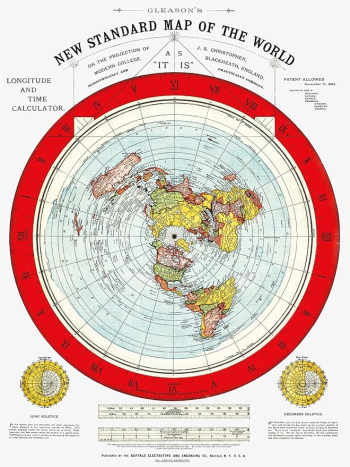


![NASA is the largest consumer of helium [satellite].jpg](https://www.christianityboard.com/data/attachments/111/111811-d5727dd5e145a584ab16148d7ccc688d.jpg "NASA is the largest consumer of helium [satellite].jpg")