Well said.
@Debp, pasting a vid is no substitute for discussion. CyB is blessed to have degrees engineers, literal experts in the field, myself included. Other than appeal to the authority of the vid, is there anything to dispute the points
@Ronald David Bruno made, starting with the fact that jet fuel doesn’t burn hot enough to melt the steel used?
This is a foundational fact of the analysis. Its implications are enormous as it begs the question of what then caused the collapse?
While it's true that the jet fuel would not melt the steel into molten liquid, it would still get steel hot enough for it to warp very easily. Steel melts at around 1500c. Jet fuel burns at about 1000c. Steel starts to weaken at about 500c
But the steel columns are encased in concrete to protect it from fire. So it would take a very long time for an intense fire to get the concrete and the steel to 500c.
Now the impact of the plane would of damaged some of that concrete, exposing some raw steel to the fire. And it could of caused columns to buckle on those floors.
But below that, all the steel is not being effected at all by any fire and should not crumble so easily like a twig.
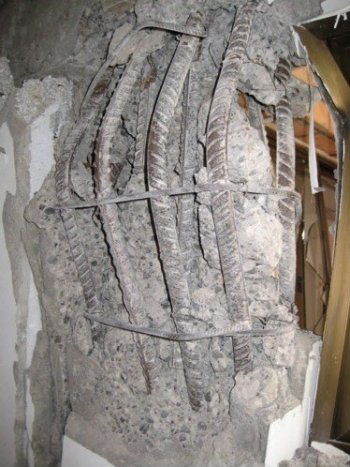
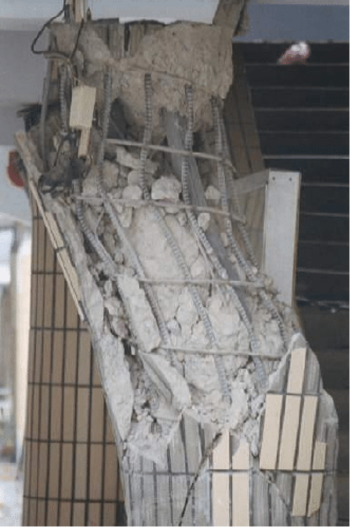
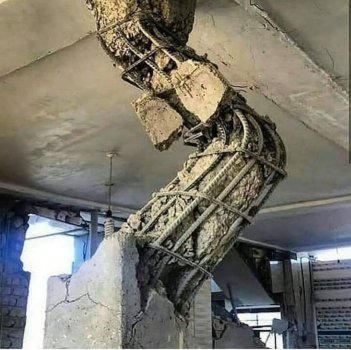
The colums are what's holding up the building. For it to come down at the same rate as gravity they have to be sheared very fast. But columns don't just shear when an excessive load is applied to them. Colums buckle first. This buckling of columns acts as resistance and decelerates the collapse.
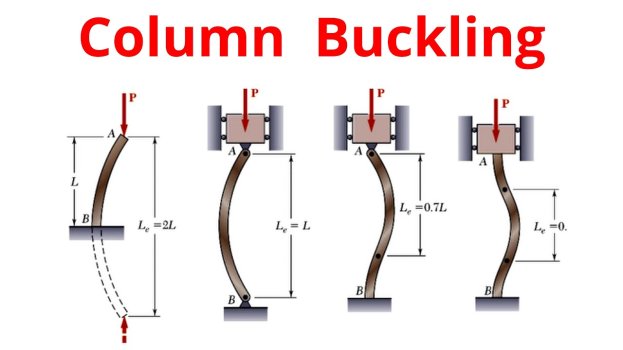
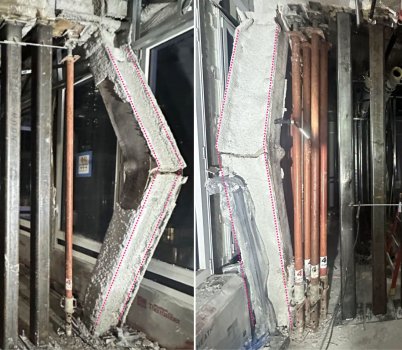
So the floors that got hit by the plane could of collapsed. Even several floors below could of got crushed. But as each floor got crushed it should have decelerated and stopped.
But what we saw was an acceleration equal to gravity all the way to the floor. This means that colums were all shearing in a split second before the excessive load even reached them. Only possible with the use of explosives.
Also, only one side of the building was damaged so how did colums on the other side of the building give way. One side of the building could have dropped, leaving the top part on an angle and the top part could of even fallen off to the side eventually. That's another way it could of happened.
But columns don't just snap. They buckle. And while the energy could of buckled the first few floors. It shouldn't have done it to every single floor. Especially not at that speed.
Here are some more examples of columns buckling.