How are
these embeds inserted?
1- The embeds are printed on a photoengraving plate with asphaltum. The plate is then immersed in acid. The embeds are lightly etched on the plate's surface.
2- The embeds are airbrushed into a drawing or photograph very lightly or painted into hair, creases in clothing, facial lines, or rough background surfaces.
3- The embeds are written on a transparent overlay for a photograph or drawing The overlay is photographed alone at high speed, approximately 1/2,000 of a second, and the overlay is double-exposed over an art layout at 1/100 of a second. By varying speed and light, the embeds can be superimposed into any photograph at any intensity level desired.
4- Wire a rheostat into the light cord of a slide projector. Once a slide is projected over a motion picture, light can be reduced to a level just below where the slide image is consciously apparent. (Coca Cola invented this.)
5- Subliminally embedded paper stock has been available to printers for many years. They texture, weave, or emboss words into the paper stock. Virtually any high quality business card or sales brochure held up to the light for 10 seconds or so and viewed in a relaxed manner will reveal a mosaic of “s e x”.
6- Doctored film emulsions.
7- Stripped in fine dot screen used on one or more of the color separations in film emulsions or engraved plates.
8- Metacontrast (Repeated flashes of very dark then very bright screen images). Puts viewer in a state of light hypnosis. Used in most TV advertising and music videos today. Increases suggestibility.
9- Figure-ground reversal. (Danish psychologist Edgar Rubis reversible profiles and vase appear in most encyclopedias.)
10- Anamorphic forms (dissonance grabs attention).
11- Double Entendre.
12- Using the principles of Gestalt psychology, artists know that:
a. People simplify shapes, therefore only an abstracted, simplified representation of the image they wish to bring to mind needs to be given. This includes both letters and images.
b. People will fill in an incomplete or partial form or letter to make it match what is already in their mind. So it is not necessary to draw much more than a hint of what you want to embed. Scrambled or partial letters work just as well as complete words and are less likely to be “found.” Have you ever noticed all the products that are SE or EX or XE (N
exus,
Exxon,
ad nauseum)?
A Pupilometer or Mackworth camera is a machine that tracks where the eye travels when looking at a picture or person and records at what points the pupil enlarges to see that particular point better. The elements
most looked at are drawn into the ad, packaging, video image etc. where ever they can be.
When a camera tracks a woman in a grocery store, it shows that her eye blink rate is 14 blinks per minute, the rate of someone in a state of light hypnosis. (See Num. 24:4 “...falling into a trance, but having his eyes open”). The rate does not go back to normal until the check out person tells her the total. (To explain
how this hypnotic state has been produced would go beyond the scope of this post.)
What are they embedding?
The three most emotion laden human experiences:
- Birth
- Reproduction
- Death
The
words most often embedded are foul language related to the second item. The
images most often embedded relate to item two also. The next most often depicted word is 'death' (Pro. 8:36); horror pictures which depict a violet death or dismemberment are popular (Psa. 11:5). Embedding the words '...you...want...you...need...you...get...' is very popular.
Why do they embed these images?
Through market research, they have determined that these embeds increase viewer attention to and interest in the product, thereby increasing $ales. (They will introduce a TV commercial or packaging design in the Cleveland area
with the embeds; they will introduce it in the Dallas area
without them. Sales are tracked and embeds always win - hands down.)
The unconscious memory system appears to retain emotionalized information indefinitely. We remember the things (products or ideas) which are introduced to us wrapped in an emotion generating experience.
This is how trauma bonding takes place. TLHKAJ and I have both posted about this previously. For example, if you had met a stranger for the first time, and rather than offering a handshake, he punched you in the face, then your memory of that person would be much stronger. Granted, it's a negative memory, but the level of emotion associated with the experience is much greater.
This is why virtually all subliminal embeds are of a wicked, vile or horrific nature. There are no “nice” embeds.
Likewise, those of you here who have trotted out NASA's infamous Blue Marble CGI image as some kind of Holy Grail “photograph” are flummoxed when shown the large number and wicked nature of subliminal embeds it contains (as per a
previous post).
Blue Marble proponents have been trauma bonded to NASA's deception.
If I cannot see them, how can it be determined that they are affecting me?
Mechanical devices that register the autonomic nervous system clearly indicate that they
are having an effect as indicated on the following tests:
1- GSR (galvanic skin response) (sweat on skin)
2- EEG (electroencephalograph) (brainwaves)
3- EKG (electrocardiogram) (heart rate)
4- Blood Pressure
5- Increased respiration
6- Blood oxygen levels
7- Retinal and foveal activity
8- Adrenal gland production of epinephrine and norepinephrine.
All advertising agencies have an MR (Motivational Research) Department (e.g. the William Morris Agency). It offers incentives (e.g. free movie tickets) to two groups of volunteers. In both groups, the viewers are outfitted with what is essentially a glorified polygraph machine, which performs all the measurements indicated above. The first group is shown a movie with the embeds; the second group is shown the same movie without the embeds. Data is compared and embeds always win - hands down.
Scientists have documented that subliminally perceived information affects:
1- Dreams (Do you have crazy bizzare dreams that are totally unreflective of your conscious waking thoughts???) REM sleep appears solely to be comprised of subliminal perceptions. Eccl. 5:3 says “For a dream cometh through the multitude of business.” If your dreams are not reflective of
your business, they are reflecting '$omeone' else's.
2- Speech (The embedded words will find their way into your thoughts and conversation. How often do we hear the word “sex” spoken, even in Christian circles? This would have been unheard of in the pre-advertising age of our grandparents.)
3- Purchasing behavior (When you think of doing something 'fun,' do you think of going on a picnic or going to Walmart?)
Further questions that we can explore if there is an interest:
What should I do to avoid subliminally embedded ideas?
What should I substitute in its place?
Why, after hearing the
facts about subliminal embeds, does the average individual ignore and repress the facts?
Did God not warn us about such men?
Why is God exposing this?
nāšā' (H5377) = to beguile, deceive - Blue Letter Bible



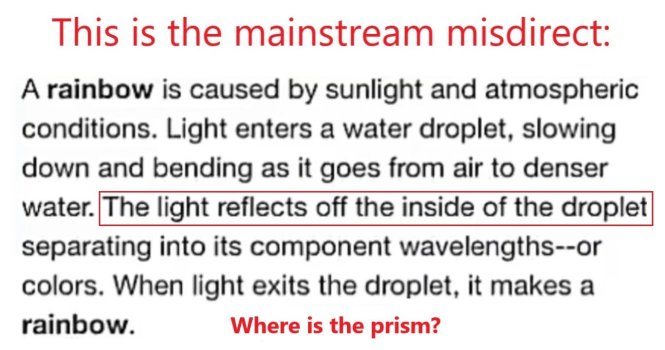
![POST CB 1 Where is the prism [rainbow, flat earth].jpg](https://www.christianityboard.com/data/attachments/115/115255-0f832b88b9dca61c00c3b7ac089d80d8.jpg "POST CB 1 Where is the prism [rainbow, flat earth].jpg")
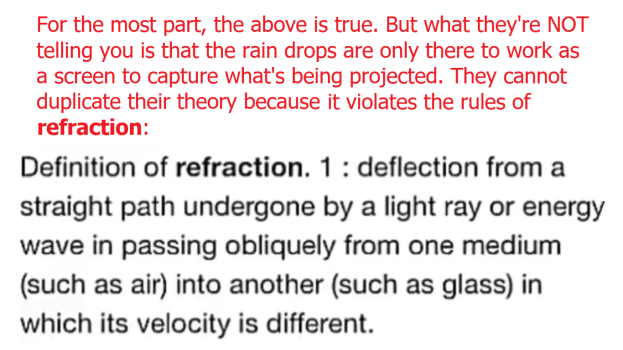

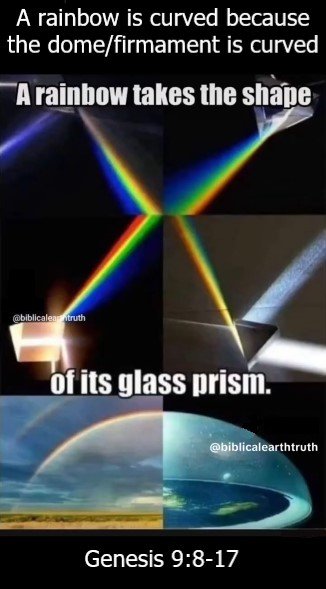
![POST CB 9 rainbows are 100% proof that we live under a dome [flat earth].jpg](https://www.christianityboard.com/data/attachments/115/115260-4b9329cdb18dd14355fb4a5fcf0726c6.jpg "POST CB 9 rainbows are 100% proof that we live under a dome [flat earth].jpg")
![POST CB 11 The Firmament Has Windows [Enoch].jpg](https://www.christianityboard.com/data/attachments/115/115262-bc0ac70d2fd0a95a629be5cc0722b78c.jpg "POST CB 11 The Firmament Has Windows [Enoch].jpg")