

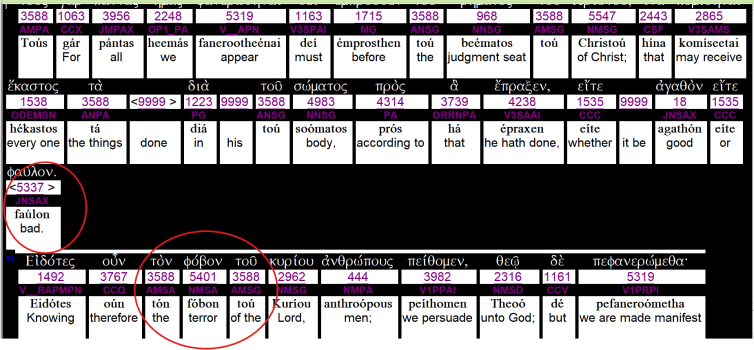
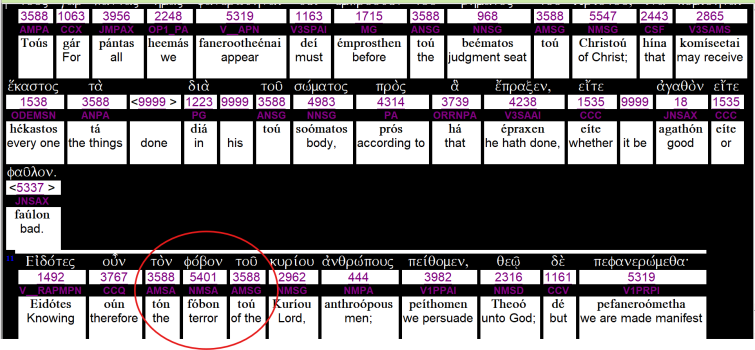
The Greek word φαυλον means morally substandard, base. Also it can mean inferior in quality. The word φαυλον has a strong moral sense to it. We will have to give an account of our moral actions whether or not they are GOOD (the believer will receive a reward) or his actions are worthless (loss of reward).
Poll. Will we be judged when we die?
- Thread starter Armour of God
- Start date
-
Welcome to Christian Forums, a Christian Forum that recognizes that all Christians are a work in progress.
You will need to register to be able to join in fellowship with Christians all over the world.
We hope to see you as a part of our community soon and God Bless!
You are using an out of date browser. It may not display this or other websites correctly.
You should upgrade or use an alternative browser.
You should upgrade or use an alternative browser.


I'd say yes but in different ways. The unsaved are judged and condemned. The saved are judged by their works, but not condemned (our salvation is already assured). I suspect we will judge ourselves in that we will be our own worst critic in the areas where we came up short.
William Barton
Well-Known Member

I voted "yes" because we shall all stand before the judgement seat of Christ
2 Co 5:10-11
For we must all appear before the judgment seat of Christ; that every one may receive the things done in his body, according to that he hath done, whether it be good or bad. Knowing therefore the terror of the Lord, we persuade men; but we are made manifest unto God; and I trust also are made manifest in your consciences.
The awards at the Judgment seat of Christ isI voted "yes" because we shall all stand before the judgement seat of Christ
2 Co 5:10-11
For we must all appear before the judgment seat of Christ; that every one may receive the things done in his body, according to that he hath done, whether it be good or bad. Knowing therefore the terror of the Lord, we persuade men; but we are made manifest unto God; and I trust also are made manifest in your consciences.
First, the word for Judgment Seat, BHMA, is better translated "Rewards Ceremony." It has been said in here that Christ paid for all our sins, but not just for believers, also for unbelievers. Unbelievers will not give account for their sins either. That is the good news (Gospel). So, at the time of the evaluation for unbelievers (at the Great White Throne!), sins will already been paid for. Notice that sins are never an issue at any judgment of both the believers and unbelievers. More to follow..........
Read the verse again...focus on the TERROR part. It's much more than a "rewards" ceremony.The awards at the Judgment seat of Christ is
First, the word for Judgment Seat, BHMA, is better translated "Rewards Ceremony." It has been said in here that Christ paid for all our sins, but not just for believers, also for unbelievers. Unbelievers will not give account for their sins either. That is the good news (Gospel). So, at the time of the evaluation for unbelievers (at the Great White Throne!), sins will already been paid for. Notice that sins are never an issue at any judgment of both the believers and unbelievers. More to follow..........
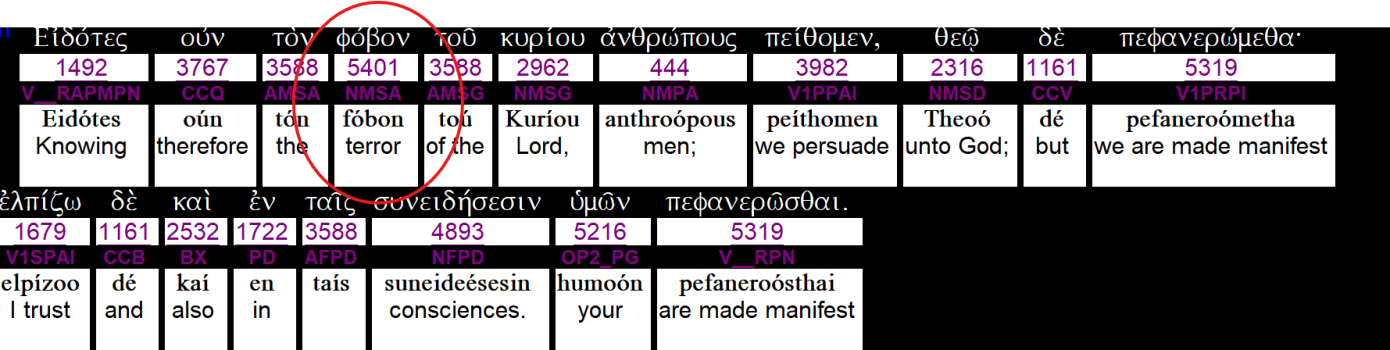
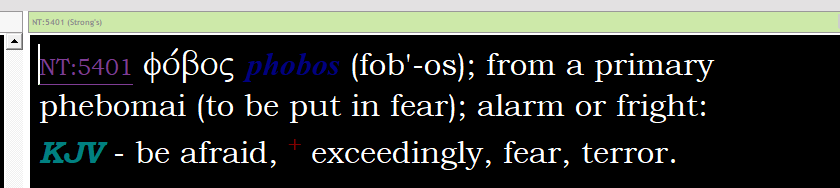
The Greek word for what you are translating as Terror, should be and more times than not is translated Divine reverence. Do a word study on FOBOS, it invariably means reverence. There is no terror, the FOBOS is to be translated godly reverence. Also, we must give account for what we have done, whether good or "bad." This word "bad" is better translated "worthless." It is not the main word for evil (KJV)Read the verse again...focus on the TERROR part. It's much more than a "rewards" ceremony.
Remember, both believers and unbelievers have had their sins paid for. As such, there will be no judgment on mankind. They will be judged by their works (human good). God will review the unbelievers righteous acts and will come up short of salvation.
What do you say about unbelievers being redeemed as unbelievers? But their redemption will come up short again. This is not the kind of study you do by looking at an English translation of one word. Word studies are easy for those who don't have a degree in Greek. I can walk you through the process so you can know with certainty the meaning of these NT words. First thing you want to do is to take an online class on Greek 101. That's as far as you have to go in studying Greek. Your whole world will change after understanding word studies.
I think I have studied the word sufficiently . AI agrees with my study tools. In the context of judgement as well as that entire passage phobos means TERROR.The Greek word for what you are translating as Terror, should be and more times than not is translated Divine reverence. Do a word study on FOBOS, it invariably means reverence. There is no terror, the FOBOS is to be translated godly reverence. Also, we must give account for what we have done, whether good or "bad." This word "bad" is better translated "worthless." It is not the main word for evil (KJV)
Remember, both believers and unbelievers have had their sins paid for. As such, there will be no judgment on mankind. They will be judged by their works (human good). God will review the unbelievers righteous acts and will come up short of salvation.
What do you say about unbelievers being redeemed as unbelievers? But their redemption will come up short again. This is not the kind of study you do by looking at an English translation of one word. Word studies are easy for those who don't have a degree in Greek. I can walk you through the process so you can know with certainty the meaning of these NT words. First thing you want to do is to take an online class on Greek 101. That's as far as you have to go in studying Greek. Your whole world will change after understanding word studies.
The Greek word φόβος (phobos) means fear, terror, fright, or alarm.
Greek word details
- Greek: φόβος
- Transliteration: phobos
- Strong’s number: G5401
- Part of speech: Noun, masculine
- Related verb: φοβέομαι (phobeomai, G5399) — to fear, be afraid, or reverence.
Examples in the New Testament
| Scripture | Meaning in context |
|---|---|
| Matthew 14:26 | The disciples were afraid when they saw Jesus walking on the sea. |
| Acts 2:43 | Fear or awe came upon everyone. |
| Romans 13:7 | “Fear” is distinguished from “honour” in the duties owed to authorities. |
| 2 Corinthians 7:1 | Paul speaks of perfecting holiness in the fear of God. |
| 1 John 4:18 | “Perfect love casteth out fear.” |
Last edited:
"Will we be judged when we die?"
Revelation 20:12-15
12 And I saw the dead, small and great, standing before God, and books were opened. And another book was opened, which is the Book of Life. And the dead were judged according to their works, by the things which were written in the books. 13 The sea gave up the dead who were in it, and Death and Hades delivered up the dead who were in them. And they were judged, each one according to his works.
14 Then Death and Hades were cast into the lake of fire. This is the second death. 15 And anyone not found written in the Book of Life was cast into the lake of fire.
I voted "yes" because we shall all stand before the judgement seat of Christ
2 Co 5:10-11
For we must all appear before the judgment seat of Christ; that every one may receive the things done in his body, according to that he hath done, whether it be good or bad. Knowing therefore the terror of the Lord, we persuade men; but we are made manifest unto God; and I trust also are made manifest in your consciences.
The all Paul is speaking to, who stand before the judgment seat of Christ are the body of Christ, those who profess to belong to Christ. It is in life, before we die that believers stand before the judgment seat of Christ, judged according to that we have done in the body of Christ, whether good or bad. Character matters, how we treat our brothers and sisters in the body of Christ is known not only to God but also known through our own consciences. If, in life we are judged good, we are accepted by Christ. Even those who are born again can act against our own conscience, and when we do, we are judged bad, and consequences in this life will follow. For remember, God chastens whom He loves.
2Co 5:9 Wherefore we labour, that, whether present or absent, we may be accepted of him.
2Co 5:10 For we must all appear before the judgment seat of Christ; that every one may receive the things done in his body, according to that he hath done, whether it be good or bad.
2Co 5:11 Knowing therefore the terror of the Lord, we persuade men; but we are made manifest unto God; and I trust also are made manifest in your consciences.
2Co 5:12 ¶ For we commend not ourselves again unto you, but give you occasion to glory on our behalf, that ye may have somewhat to answer them which glory in appearance, and not in heart.
2Co 5:13 For whether we be beside ourselves, it is to God: or whether we be sober, it is for your cause.
2Co 5:14 For the love of Christ constraineth us; because we thus judge, that if one died for all, then were all dead:
2Co 5:15 And that he died for all, that they which live should not henceforth live unto themselves, but unto him which died for them, and rose again.
2Co 5:16 ¶ Wherefore henceforth know we no man after the flesh: yea, though we have known Christ after the flesh, yet now henceforth know we him no more.
2Co 5:17 Therefore if any man be in Christ, he is a new creature: old things are passed away; behold, all things are become new.
When we've stood before the judgment seat of Christ to be chastened by Him according to the good or bad that we do, we count it a blessing, knowing that we are being chastened out of God's love for us. Receiving chastening of the Lord now before we die, gives us blessed assurance that we will not be judged with the DEAD (unbelievers) before the great white throne judgment seat of God.
Heb 12:4 ¶ Ye have not yet resisted unto blood, striving against sin.
Heb 12:5 And ye have forgotten the exhortation which speaketh unto you as unto children, My son, despise not thou the chastening of the Lord, nor faint when thou art rebuked of him:
Heb 12:6 For whom the Lord loveth he chasteneth, and scourgeth every son whom he receiveth.
Heb 12:7 If ye endure chastening, God dealeth with you as with sons; for what son is he whom the father chasteneth not?
Heb 12:8 But if ye be without chastisement, whereof all are partakers, then are ye bastards, and not sons.
Heb 12:9 Furthermore we have had fathers of our flesh which corrected us, and we gave them reverence: shall we not much rather be in subjection unto the Father of spirits, and live?
Heb 12:10 For they verily for a few days chastened us after their own pleasure; but he for our profit, that we might be partakers of his holiness.
Heb 12:11 Now no chastening for the present seemeth to be joyous, but grievous: nevertheless afterward it yieldeth the peaceable fruit of righteousness unto them which are exercised thereby.
In this life, as the body of Christ we count all things as blessings from the Lord. When we do good, through the power of the Spirit of Christ within we are promised blessings in this life and the reward of everlasting life with Christ in the age to come. If in this life, as the body of Christ, when we do bad, we are chastened by God, and have no fear of being judged with the DEAD according to what is found written in the books and the book of life.
William Barton
Well-Known Member
IMO:"Will we be judged when we die?"
Revelation 20:12-15
12 And I saw the dead, small and great, standing before God, and books were opened. And another book was opened, which is the Book of Life. And the dead were judged according to their works, by the things which were written in the books. 13 The sea gave up the dead who were in it, and Death and Hades delivered up the dead who were in them. And they were judged, each one according to his works.
14 Then Death and Hades were cast into the lake of fire. This is the second death. 15 And anyone not found written in the Book of Life was cast into the lake of fire.
The Bible says that all must give an account (Romans 14:12).
Believers enter heaven when they die, and receive rewards
(Matthew 25:21-23).
Unbelievers enter hell when they die, and they receive condemnation after the millennial reign of Jesus on earth (John 3:18, Revelation 20:11-15 ).
Last edited:
This is a pretty convoluted presentation of the concept of judgment/evaluation in the NT. The correct translation of "bad" is not morally bad, but is a work for the Lord that is better translated "worthless." This basic Greek 101 has already been shown by some others out here who have made the correction in their bibles. The Judgment Seat of Christ takes place shortly after the Rapture. The Judgment Seat is actually better translated Rewards Ceremony. The evaluation for the believer at the Rewards Ceremony is whether or not he receives a reward or he loses his reward (1 Cor 4). No sin is brought against the believer at the Rewards Ceremony. The reason no sin will be judged at the Rewards Ceremony is because all the sins of mankind have been paid for by Christ. This payment for sins is also true for the unbelievers. No sin will be brought up at the GWT. Once you understand that the unbeliever has been redeemed (as an unbeliever) and will not be judged for sins.The all Paul is speaking to, who stand before the judgment seat of Christ are the body of Christ, those who profess to belong to Christ. It is in life, before we die that believers stand before the judgment seat of Christ, judged according to that we have done in the body of Christ, whether good or bad. Character matters, how we treat our brothers and sisters in the body of Christ is known not only to God but also known through our own consciences. If, in life we are judged good, we are accepted by Christ. Even those who are born again can act against our own conscience, and when we do, we are judged bad, and consequences in this life will follow. For remember, God chastens whom He loves.
2Co 5:9 Wherefore we labour, that, whether present or absent, we may be accepted of him.
2Co 5:10 For we must all appear before the judgment seat of Christ; that every one may receive the things done in his body, according to that he hath done, whether it be good or bad.
2Co 5:11 Knowing therefore the terror of the Lord, we persuade men; but we are made manifest unto God; and I trust also are made manifest in your consciences.
2Co 5:12 ¶ For we commend not ourselves again unto you, but give you occasion to glory on our behalf, that ye may have somewhat to answer them which glory in appearance, and not in heart.
2Co 5:13 For whether we be beside ourselves, it is to God: or whether we be sober, it is for your cause.
2Co 5:14 For the love of Christ constraineth us; because we thus judge, that if one died for all, then were all dead:
2Co 5:15 And that he died for all, that they which live should not henceforth live unto themselves, but unto him which died for them, and rose again.
2Co 5:16 ¶ Wherefore henceforth know we no man after the flesh: yea, though we have known Christ after the flesh, yet now henceforth know we him no more.
2Co 5:17 Therefore if any man be in Christ, he is a new creature: old things are passed away; behold, all things are become new.
When we've stood before the judgment seat of Christ to be chastened by Him according to the good or bad that we do, we count it a blessing, knowing that we are being chastened out of God's love for us. Receiving chastening of the Lord now before we die, gives us blessed assurance that we will not be judged with the DEAD (unbelievers) before the great white throne judgment seat of God.
Heb 12:4 ¶ Ye have not yet resisted unto blood, striving against sin.
Heb 12:5 And ye have forgotten the exhortation which speaketh unto you as unto children, My son, despise not thou the chastening of the Lord, nor faint when thou art rebuked of him:
Heb 12:6 For whom the Lord loveth he chasteneth, and scourgeth every son whom he receiveth.
Heb 12:7 If ye endure chastening, God dealeth with you as with sons; for what son is he whom the father chasteneth not?
Heb 12:8 But if ye be without chastisement, whereof all are partakers, then are ye bastards, and not sons.
Heb 12:9 Furthermore we have had fathers of our flesh which corrected us, and we gave them reverence: shall we not much rather be in subjection unto the Father of spirits, and live?
Heb 12:10 For they verily for a few days chastened us after their own pleasure; but he for our profit, that we might be partakers of his holiness.
Heb 12:11 Now no chastening for the present seemeth to be joyous, but grievous: nevertheless afterward it yieldeth the peaceable fruit of righteousness unto them which are exercised thereby.
In this life, as the body of Christ we count all things as blessings from the Lord. When we do good, through the power of the Spirit of Christ within we are promised blessings in this life and the reward of everlasting life with Christ in the age to come. If in this life, as the body of Christ, when we do bad, we are chastened by God, and have no fear of being judged with the DEAD according to what is found written in the books and the book of life.
This is a pretty convoluted presentation of the concept of judgment/evaluation in the NT. The correct translation of "bad" is not morally bad, but is a work for the Lord that is better translated "worthless."
Man has no ability to bring moral judgment against another. Only God can judge according to what is morally good or bad by judging man's heart.
The Judgment Seat of Christ takes place shortly after the Rapture.
I don't believe that is true! And just because you might think the judgment seat of Christ and the great white throne judgment are the same thing, does not prove what you believe is biblical. Prove from the Word of God if you want your opinions to be taken seriously.
The Judgment Seat is actually better translated Rewards Ceremony
This too is not proven from the Word of God and remains your unproven opinion. You say the judgment seat is a "Reward(s) Ceremony", but I find no verse in the Bible where born again believers will receive reward(s) (plural), rather we are promised only A (single) REWARD, at the end of this life, and that REWARD is eternal/everlasting life with Christ FOREVER. In this life faithful Christians receive blessings (many) from the Lord for our faithfulness to do whatever the Spirit of Christ within leads us to do. Because it is God working in us to both will and do of His good pleasure. When we are obedient in this life doing good for the body of Christ (church), we will receive blessings in this life, and the reward (ONE) of everlasting life in the age to come.
Genesis 15:1 (KJV) After these things the word of the LORD came unto Abram in a vision, saying, Fear not, Abram: I am thy shield, and thy exceeding great reward.
Lu 18:28 Then Peter said, Lo, we have left all, and followed thee.
Lu 18:29 And he said unto them, Verily I say unto you, There is no man that hath left house, or parents, or brethren, or wife, or children, for the kingdom of God's sake,
Lu 18:30 Who shall not receive manifold more in this present time, and in the world to come life everlasting.
Php 2:12 ¶ Wherefore, my beloved, as ye have always obeyed, not as in my presence only, but now much more in my absence, work out your own salvation with fear and trembling.
Php 2:13 For it is God which worketh in you both to will and to do of his good pleasure.
Php 2:14 ¶ Do all things without murmurings and disputings:
Php 2:15 That ye may be blameless and harmless, the sons of God, without rebuke, in the midst of a crooked and perverse nation, among whom ye shine as lights in the world;
Php 2:16 Holding forth the word of life; that I may rejoice in the day of Christ, that I have not run in vain, neither laboured in vain.
Blessings from God in this life are many when we are faithful unto Him. Remaining faithful unto death we have His solemn promise to receive THE GREAT REWARD of eternal life.
Matthew 5:12 (KJV) Rejoice, and be exceeding glad: for great is your reward in heaven: for so persecuted they the prophets which were before you.
Luke 6:23 (KJV) Rejoice ye in that day, and leap for joy, for behold, your reward is great in heaven: for in the like manner did their fathers unto the prophets.
Hebrews 10:35 (KJV) Cast not away therefore your confidence, which hath great recompence of reward.
Revelation 11:18 (KJV) And the nations were angry, and thy wrath is come, and the time of the dead, that they should be judged, and that thou shouldest give reward unto thy servants the prophets, and to the saints, and them that fear thy name, small and great; and shouldest destroy them which destroy the earth.
The reason no sin will be judged at the Rewards Ceremony is because all the sins of mankind have been paid for by Christ.
The reason for the great white throne judgment after Christ comes again is for judging the DEAD (unbelievers). They must give account for what they have done while clothed in bodies of mortal flesh, according to what is written in the book(s) and the book of life. Since none of them in life were called to stand before the judgment seat of Christ, they shall all be cast into the lake of fire that is the second death. Those who are born again shall not be judged with the DEAD because Christ has already been judged for us. Believers will already be clothed in resurrected righteous immortal/incorruptible body fit for everlasting life with Christ on the new earth forever. (1Cor 15:51-58)
I think we could say, the judgment seat of Christ judges' righteousness done in this life of our works for the body of Christ, while the great white throne judgment shall be judgment for the DEAD (unbelievers) for all they have done while clothed in mortal/corrupt body resurrected to be condemned by the eternal flames.
Last edited:
related to the above comments you made about my assertions:
BHMA, a raised platform which was where the judges sat at the Olympics (this is a Ancient Greek word, not a biblical word). The winners of the competitions were called up to the judges' BHMA. This raised platform (BHMA) where the judges rewarded the athletes is the word that Paul uses when he discusses the rewards of the believers. It is strictly used for a Rewards Ceremony (it gains this meaning from the Olympics).
Some people out here use Strong's English (KJV) Concordance. This is a source that is used for those who have no Biblical Greek education. All they get from this is a simple English gloss that is not a dictionary. but just a list of English words that appear in the KJV. It has no adequate Greek purpose. You need to get the newest of the Greek English Lexicon of the New Testament (BDAG). This edition has been going through revisions because we keep finding more and more Greek secular manuscripts that give us a clear idea of what some words mean. BHMA is one such word. It is in the Ancient Greek (not the biblical Greek NT) and means a Rewards Ceremony (based on its use in the Olympic Games)
related to the above comments you made about my assertions:
BHMA, a raised platform which was where the judges sat at the Olympics (this is a Ancient Greek word, not a biblical word). The winners of the competitions were called up to the judges' BHMA. This raised platform (BHMA) where the judges rewarded the athletes is the word that Paul uses when he discusses the rewards of the believers. It is strictly used for a Rewards Ceremony (it gains this meaning from the Olympics).
Some people out here use Strong's English (KJV) Concordance. This is a source that is used for those who have no Biblical Greek education. All they get from this is a simple English gloss that is not a dictionary. but just a list of English words that appear in the KJV. It has no adequate Greek purpose. You need to get the newest of the Greek English Lexicon of the New Testament (BDAG). This edition has been going through revisions because we keep finding more and more Greek secular manuscripts that give us a clear idea of what some words mean. BHMA is one such word. It is in the Ancient Greek (not the biblical Greek NT) and means a Rewards Ceremony (based on its use in the Olympic Games)
You're adding "rewards ceremony" where the Bible says "judgment seat of Christ". Whether it's the place where Christ, through His Spirit judges born again believers in this age or the great white throne judgment for the DEAD at the end of this age is not relevant. Calling the judgement seat of Christ a rewards ceremony is to fit your belief the two judgments are the same, simply so you can continue to cling to the belief that faithful saints will be rewarded for our many good deeds done while clothed in flesh, with some Christians receiving greater and some lesser reward(s). The Bible never says faithful Christians will receive various reward(s) for doing that which is our duty.
Luke 17:10 (KJV) So likewise ye, when ye shall have done all those things which are commanded you, say, We are unprofitable servants: we have done that which was our duty to do.
Romans 15:27 (KJV) It hath pleased them verily; and their debtors they are. For if the Gentiles have been made partakers of their spiritual things, their duty is also to minister unto them in carnal things.
At the end of this life every born-again Christian is promised a single reward that is eternal, never ending immortal life with Christ on the new earth in the age that shall come when Christ comes again. Because in life we have been judged IN CHRIST! He only is our Great, and Sufficient REWARD!
My friend you have a long way to go.You're adding "rewards ceremony" where the Bible says "judgment seat of Christ". Whether it's the place where Christ, through His Spirit judges born again believers in this age or the great white throne judgment for the DEAD at the end of this age is not relevant. Calling the judgement seat of Christ a rewards ceremony is to fit your belief the two judgments are the same, simply so you can continue to cling to the belief that faithful saints will be rewarded for our many good deeds done while clothed in flesh, with some Christians receiving greater and some lesser reward(s). The Bible never says faithful Christians will receive various reward(s) for doing that which is our duty.
Luke 17:10 (KJV) So likewise ye, when ye shall have done all those things which are commanded you, say, We are unprofitable servants: we have done that which was our duty to do.
Romans 15:27 (KJV) It hath pleased them verily; and their debtors they are. For if the Gentiles have been made partakers of their spiritual things, their duty is also to minister unto them in carnal things.
At the end of this life every born-again Christian is promised a single reward that is eternal, never ending immortal life with Christ on the new earth in the age that shall come when Christ comes again. Because in life we have been judged IN CHRIST! He only is our Great, and Sufficient REWARD!
The early KJV translators translated this as Judgment Seat of Christ. when it was first translated (1611), the only known use of BHMA in 1611 that didn't even fit the context was Tribunal (Judgment Seat). Later, more and more Greek works were being discovered, Ancient Greek used BHMA of the Judges place to give out rewards to the winners of the competition. This is how we get Rewards Ceremony. I am not sure why you don't accept the ancient word BHMA which meant Rewards Ceremony.
This is also why the translations are updated every so many years. We are understanding more and more of the Greek language as more and more Greek manuscripts are discovered.
Can we just agree to not see eye to eye on the phrase Judgment Seat of Christ. I think it would be best if we ended discussions here.
Just one last observation. I do not see the Rewards Ceremony and the Second Coming of Christ as the same comings.
Oh, to be more like Him!!
This denies the context that this judgment is a terrifying event (fobon) and covers both good and bad:related to the above comments you made about my assertions:
BHMA, a raised platform which was where the judges sat at the Olympics (this is a Ancient Greek word, not a biblical word). The winners of the competitions were called up to the judges' BHMA. This raised platform (BHMA) where the judges rewarded the athletes is the word that Paul uses when he discusses the rewards of the believers. It is strictly used for a Rewards Ceremony (it gains this meaning from the Olympics).
Some people out here use Strong's English (KJV) Concordance. This is a source that is used for those who have no Biblical Greek education. All they get from this is a simple English gloss that is not a dictionary. but just a list of English words that appear in the KJV. It has no adequate Greek purpose. You need to get the newest of the Greek English Lexicon of the New Testament (BDAG). This edition has been going through revisions because we keep finding more and more Greek secular manuscripts that give us a clear idea of what some words mean. BHMA is one such word. It is in the Ancient Greek (not the biblical Greek NT) and means a Rewards Ceremony (based on its use in the Olympic Games)
Attachments
Last edited:
My friend you have a long way to go.
The early KJV translators translated this as Judgment Seat of Christ. when it was first translated (1611), the only known use of BHMA in 1611 that didn't even fit the context was Tribunal (Judgment Seat). Later, more and more Greek works were being discovered, Ancient Greek used BHMA of the Judges place to give out rewards to the winners of the competition. This is how we get Rewards Ceremony. I am not sure why you don't accept the ancient word BHMA which meant Rewards Ceremony.
This is also why the translations are updated every so many years. We are understanding more and more of the Greek language as more and more Greek manuscripts are discovered.
Can we just agree to not see eye to eye on the phrase Judgment Seat of Christ. I think it would be best if we ended discussions here.
Just one last observation. I do not see the Rewards Ceremony and the Second Coming of Christ as the same comings.
Oh, to be more like Him!!
Well, my friend if you wish to be taken seriously prove from the Bible what you allege! Because I am not interested in your opinion.
If all you have to offer is your opinion, then yes, you are right it is best to end this discussion with you.
It really doesn't matter that you don't see what you call rewards ceremony and the GWTJ in the same light. The fact remains that you think Christians shall receive reward(s) for doing that which is our duty. The Bible is clear; Christ is our GREAT REWARD! That's why nowhere in Scripture will you find reward(s) for being obedient to God. What we do find in Scripture is the promise of BLESSINGS in this life for doing good, and chastisement from God in this life when Christians fall into temptation through disobedience and that leads them to sin.
This is why I do not accept it as referring soley to a rewards ceremony.My friend you have a long way to go.
The early KJV translators translated this as Judgment Seat of Christ. when it was first translated (1611), the only known use of BHMA in 1611 that didn't even fit the context was Tribunal (Judgment Seat). Later, more and more Greek works were being discovered, Ancient Greek used BHMA of the Judges place to give out rewards to the winners of the competition. This is how we get Rewards Ceremony. I am not sure why you don't accept the ancient word BHMA which meant Rewards Ceremony.
NT usage:
The classical meaning helps explain the New Testament usage, but the historical setting matters.
- John 19:13: Pilate sits on the bēma during Jesus' trial. (not a rewards ceremony)
- Acts 18:12: Paul is brought before Gallio's bēma in Corinth.(not a rewards ceremony)
- Acts 25:10: Paul refers to Caesar's bēma. (not a rewards ceremony)
Doesn't that mean these can't be exclusively a rewards ceremony as well?
- Romans 14:10: Believers stand before God's judgment seat in the critical Greek text underlying this translation.
- 2 Corinthians 5:10: All must appear before the judgment seat of Christ.
Classical (Attic) usage
βῆμα
Short Definition
- βῆμα, a step, pace; a platform
Frequency
- βῆμα is the 2461st most frequent word
βῆμα, Aeol. and Dor. βᾶμα, ατος, τό, (βαίνω)- step, pace, h.Merc. 222, 345, Pi. P. 3.43, A. Ch. 799 (lyr.); σπουδῇ . . βημάτων πορεύεται E. Andr. 880; τοσόνδε β. διαβεβηκώς Ar. Eq. 73; walk, gait ἐρατὸν βᾶμα Sapph. 16.17 L.-P. [updated ref.]; Διὸς εὔφρονι βήματι μολεῖν to journey under the kindly guidance of Zeus, S. El. 163 (lyr.); gait, β. οὐκ ὀρθόν Hippiatr. 27.
- step, as a measure of length, = 10 παλαισταί, about 2 1/2 feet, Hero *Deff. 131.
- metaph., step, ‘moment’, πρόοδος ἐν τρισὶ β. διισταμένη Dam. Pr. 258.
- = βάθρον, step, seat, S. OC 193 (lyr.).
- raised place or tribune to speak from in a public assembly, etc., Th. 2.34, LXX Ne. 8.4, etc.; in the Pnyx at Athens, ἐπὶ τὸ β. ἀναβῆναι enter public life, D. 18.66; αἱ ἀπὸ τοῦ β. ἐλπίδες Id. 4.45; also in the lawcourts, Id. 48.31, Aeschin. 3.207; of a suppliant, ἐπὶ τοῦ β. καθεδούμενον Ar. Pl. 382; in the βουλευτήριον, Antipho 6.40.
- tribunal of a magistrate, τοῦ ἡγεμόνος β. PTeb. 434 (ii A. D.).
- = θυμέλη, Poll. 4.123; β. θεήτρου IG 3.239.
- base, pedestal, OGI 219.36 (Ilium, iii B. C.), 299.15 (Pergam., ii B. C.).
βῆμα· πρόβατα, Hsch.This is why I do not accept it as referring soley to a rewards ceremony.
NT usage:
The classical meaning helps explain the New Testament usage, but the historical setting matters.
The first three examples refer to earthly judicial authority; the last two apply the term to divine judgment.
- John 19:13: Pilate sits on the bēma during Jesus' trial. (not a rewards ceremony).
- Acts 18:12: Paul is brought before Gallio's bēma in Corinth.(not a rewards ceremony)
- Acts 25:10: Paul refers to Caesar's bēma. (not a rewards ceremony)
Doesn't that mean these can't be exclusively a rewards ceremony as well?
- Romans 14:10: Believers stand before God's judgment seat in the critical Greek text underlying this translation.
- 2 Corinthians 5:10: All must appear before the judgment seat of Christ.
Classical (Attic) usage
βῆμα
Short Definition
- βῆμα, a step, pace; a platform (Notice no reference to judging here)
Frequency
LSJDGEBailly 2024Grieks NederlandsPapeAbbott-Smith NTMiddle LiddellExamples from the corpusLSJDGEBailly 2024Grieks NederlandsPapeAbbott-Smith NTMiddle LiddellExamples from the corpus
- βῆμα is the 2461st most frequent word
βῆμα, Aeol. and Dor. βᾶμα, ατος, τό, (βαίνω)
- step, pace, h.Merc. 222, 345, Pi. P. 3.43, A. Ch. 799 (lyr.); σπουδῇ . . βημάτων πορεύεται E. Andr. 880; τοσόνδε β. διαβεβηκώς Ar. Eq. 73; walk, gait ἐρατὸν βᾶμα Sapph. 16.17 L.-P. [updated ref.]; Διὸς εὔφρονι βήματι μολεῖν to journey under the kindly guidance of Zeus, S. El. 163 (lyr.); gait, β. οὐκ ὀρθόν Hippiatr. 27.
- step, as a measure of length, = 10 παλαισταί, about 2 1/2 feet, Hero *Deff. 131.
- metaph., step, ‘moment’, πρόοδος ἐν τρισὶ β. διισταμένη Dam. Pr. 258.
- = βάθρον, step, seat, S. OC 193 (lyr.).
- raised place or tribune to speak from in a public assembly, etc., Th. 2.34, LXX Ne. 8.4, etc.; in the Pnyx at Athens, ἐπὶ τὸ β. ἀναβῆναι enter public life, D. 18.66; αἱ ἀπὸ τοῦ β. ἐλπίδες Id. 4.45; also in the lawcourts, Id. 48.31, Aeschin. 3.207; of a suppliant, ἐπὶ τοῦ β. καθεδούμενον Ar. Pl. 382; in the βουλευτήριον, Antipho 6.40.
- tribunal of a magistrate, τοῦ ἡγεμόνος β. PTeb. 434 (ii A. D.).
- = θυμέλη, Poll. 4.123; β. θεήτρου IG 3.239.
- base, pedestal, OGI 219.36 (Ilium, iii B. C.), 299.15 (Pergam., ii B. C.).
βῆμα· πρόβατα, Hsch.
The evidence you brought to bear on this is good information, but it only goes to prove my statement that...
The early KJV translators translated this as Judgment Seat of Christ. when it was first translated (1611), the only known use of BHMA in 1611 that didn't even fit the context was Tribunal (Judgment Seat), also Platform, Step.
You cited as the usage of BHMA:
- βῆμα, a step, pace; a platform (emphasis added)
The judges of the Olympics would sit on a raised platform so they could see the competition and ultimately reward the winners. The raised platform was called the BHMA. FYI, the BHMA is still seen in Corinth today.
Also, your very first sentence above says, "This is why I do not accept it as referring sole(l)y to a rewards ceremony."
This is what I have argued also. One use of BHMA is the raised platform found in the middle of the city where various trials were held by city magistrates. You can see that both uses of BHMA have judges and raised platforms.
Similar threads

- Replies
- 1
- Views
- 72


- Replies
- 21
- Views
- 772
- Replies
- 7
- Views
- 279

- Replies
- 75
- Views
- 2K