EXODUS 1:1-6:1
We enter into a new era, Jacob/Israel and Joseph are now in the past, yet their legacy continues, in “Am Yisrael” (The People of Israel).
”70 souls” entered Mitzraim (Egypt). It is interesting that the Hebrew word “Nefesh” is used for “souls,” yet the word is in the singular, but why? Is there a symbolism here? If we are to read this in English, we would read: “70 soul entered Egypt”.
One could say that the word “Nefesh” (Soul) could refer to the whole “Family” of Israel as ONE (Echad) family unit, as we are ONE with Elohim, then all of Israel was ONE as well. We must also realize that these "70" were the immediate family of Jacob; this is not to mention the hundreds of widows and children of Shechem that became part of the Tribes when Simeon and Levi murdered the males of that city in reprisal for the raping of their sister, Dinah. So, we might imagine many hundreds entering Egypt.
Hundreds of years later, we have a few million Hebrews. There is a list at the beginning of Exodus of the “b'nei Israel” (the sons of Israel), and they had their children, and their children had children, etc. They remained in the area of “Goshen” along the Nile Delta, farming, raising cattle, making clay-bricks to build their houses, and probably a few became merchants. They adapted to life in Egypt, got used to seeing Egyptian deities, and probably understood spoken Egyptian. Who knows if many became “Egyptianized”? Did they bow down to the deities? Or did they remain faithful to the invisible God of Abraham, Isaac, and Jacob?
How much did they retain about Adonai? ¿El Shaddai? We don't know, but I am sure that the story of Joseph and how he brought his family to Egypt from Canaan was passed down from family to family. The story of the famine and how Yosef preserved life in the midst of the famine. So "The children of Israel” multiplied, and the land was filled with the “b'nei Israel”, and now the Egyptians start to get nervous. In verse 8, problems start.
” And there arose a new king over Egypt who knew not Joseph.” This new king had overthrown the Hyksos rulers, and did not personally know Yosef nor knew of his accomplishments to save Egypt. Perhaps the Egyptians were reminded of how Joseph had "enslaved" the Egyptians by taking their money, land, and cattle, in exchange for grain during the famine. Now, the Egyptians want revenge, time to get even.
There are a few ideas of who it might have been. Some believe it might have been “Pharaoh Ahmose”(begotten of the moon); the title “Pharaoh” is not the name, it is only a title which means “ruler”. It might have been “Ahmose” or even “Rameses II”. A little on Egyptian words and etymology, the Egyptian word “meses” or “mose” means “born of” so the name “Moshe” or “Moses” is similar to “meses” (born of) or "begotten" or "Taken from."
Since Moses was “Taken from the water, or from the river (The Nile). We ask what might have been the Egyptian name Moses used? The Egyptian word for “river” is “iteru” so, his name might have been “Iterumose” or “Iterumeses” (given ancient Egyptian entomology) There were many “Rameses” it means “Born of the god RA” “Ahmose” probably (born of the moon god) “Thutmose” (born of the god Thut) and so on. So many pharaohs took on those names.
Also, the title “Pharaoh” is exactly that, a title, not a name. It comes from two Egyptian words: “per” and “o”. “Per” = house, and “O” = great. So the title “pharaoh” means “of the Great House.”
The pharaoh of verse 8 is paranoid and thinks that the Israelites will join, perhaps with the Hittites, to overthrow Egypt. The Hyksos kings and the Hebrews were descendants of Noah's son "Shem," while the Egyptians were from"Ham." In Goshen, the Hebrews were geographically separated from the Egyptians, yet Goshen was their home, so why would they want to join an enemy to destroy their homes? But this pharaoh thought otherwise. He made slaves out of them and even sought to destroy them. (Then, who would do the work?)
This could be considered the first "Shoah" or "Holocaust". 2000 years later. Hitler wanted to rid Europe of the Jews, so he sent them to forced labor camps, and that led to the "Final Solution." The "work camps" became "Death Camps" (Auschwitz, Treblinka, etc.) It all started between the 9th and 10th of Nov, 1938, called "Kristallnacht" (night of the broken glass)
Yet Elohim hears the cries of his people, and has selected the tribe of Levi, through a couple, Amram (a unified people) and Jochebed, (Glory of Yah) to bring into the world, “Moshe” (taken out of) who would be a sort of “Mashiach” (like Yosef) to take Israel OUT of Egypt, in God's appointed time. YHVH has a time for ALL THINGS., We cannot rush God's clock; it ticks slowly for us, yet it ticks out second by second and includes us all in the plan of things.
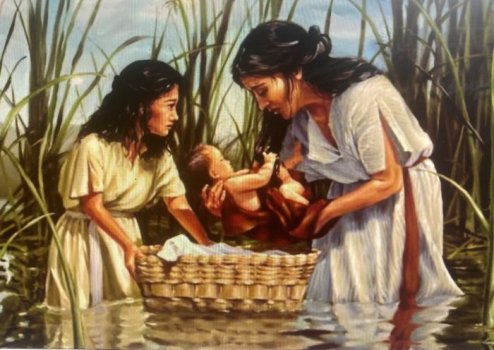
Moses is placed in a "Teivah" (ark) made of papyrus reeds and made waterproof by Yochebed and Miriam, and placed by the palace steps that led to the Nile River. This is the same word used for Noah's ark. Noah's ark was to save "Mankind" through the family of Noah (large scale). This small "ark" was used to save the leader and representative of the Nation of Israel. (a small piece of mankind) Some movies portray Moses being floated down the Nile and "just happens" to land near the palace steps. That would have been dangerous since the Nile was inhabited by crocodiles and Hippos. Yochebed and Miriam knew that. They knew that the princess, daughter of Pharaoh (BatYah) would come to bathe by the river on a regular basis.
We enter into a new era, Jacob/Israel and Joseph are now in the past, yet their legacy continues, in “Am Yisrael” (The People of Israel).
”70 souls” entered Mitzraim (Egypt). It is interesting that the Hebrew word “Nefesh” is used for “souls,” yet the word is in the singular, but why? Is there a symbolism here? If we are to read this in English, we would read: “70 soul entered Egypt”.
One could say that the word “Nefesh” (Soul) could refer to the whole “Family” of Israel as ONE (Echad) family unit, as we are ONE with Elohim, then all of Israel was ONE as well. We must also realize that these "70" were the immediate family of Jacob; this is not to mention the hundreds of widows and children of Shechem that became part of the Tribes when Simeon and Levi murdered the males of that city in reprisal for the raping of their sister, Dinah. So, we might imagine many hundreds entering Egypt.
Hundreds of years later, we have a few million Hebrews. There is a list at the beginning of Exodus of the “b'nei Israel” (the sons of Israel), and they had their children, and their children had children, etc. They remained in the area of “Goshen” along the Nile Delta, farming, raising cattle, making clay-bricks to build their houses, and probably a few became merchants. They adapted to life in Egypt, got used to seeing Egyptian deities, and probably understood spoken Egyptian. Who knows if many became “Egyptianized”? Did they bow down to the deities? Or did they remain faithful to the invisible God of Abraham, Isaac, and Jacob?
How much did they retain about Adonai? ¿El Shaddai? We don't know, but I am sure that the story of Joseph and how he brought his family to Egypt from Canaan was passed down from family to family. The story of the famine and how Yosef preserved life in the midst of the famine. So "The children of Israel” multiplied, and the land was filled with the “b'nei Israel”, and now the Egyptians start to get nervous. In verse 8, problems start.
” And there arose a new king over Egypt who knew not Joseph.” This new king had overthrown the Hyksos rulers, and did not personally know Yosef nor knew of his accomplishments to save Egypt. Perhaps the Egyptians were reminded of how Joseph had "enslaved" the Egyptians by taking their money, land, and cattle, in exchange for grain during the famine. Now, the Egyptians want revenge, time to get even.
There are a few ideas of who it might have been. Some believe it might have been “Pharaoh Ahmose”(begotten of the moon); the title “Pharaoh” is not the name, it is only a title which means “ruler”. It might have been “Ahmose” or even “Rameses II”. A little on Egyptian words and etymology, the Egyptian word “meses” or “mose” means “born of” so the name “Moshe” or “Moses” is similar to “meses” (born of) or "begotten" or "Taken from."
Since Moses was “Taken from the water, or from the river (The Nile). We ask what might have been the Egyptian name Moses used? The Egyptian word for “river” is “iteru” so, his name might have been “Iterumose” or “Iterumeses” (given ancient Egyptian entomology) There were many “Rameses” it means “Born of the god RA” “Ahmose” probably (born of the moon god) “Thutmose” (born of the god Thut) and so on. So many pharaohs took on those names.
Also, the title “Pharaoh” is exactly that, a title, not a name. It comes from two Egyptian words: “per” and “o”. “Per” = house, and “O” = great. So the title “pharaoh” means “of the Great House.”
The pharaoh of verse 8 is paranoid and thinks that the Israelites will join, perhaps with the Hittites, to overthrow Egypt. The Hyksos kings and the Hebrews were descendants of Noah's son "Shem," while the Egyptians were from"Ham." In Goshen, the Hebrews were geographically separated from the Egyptians, yet Goshen was their home, so why would they want to join an enemy to destroy their homes? But this pharaoh thought otherwise. He made slaves out of them and even sought to destroy them. (Then, who would do the work?)
This could be considered the first "Shoah" or "Holocaust". 2000 years later. Hitler wanted to rid Europe of the Jews, so he sent them to forced labor camps, and that led to the "Final Solution." The "work camps" became "Death Camps" (Auschwitz, Treblinka, etc.) It all started between the 9th and 10th of Nov, 1938, called "Kristallnacht" (night of the broken glass)
Yet Elohim hears the cries of his people, and has selected the tribe of Levi, through a couple, Amram (a unified people) and Jochebed, (Glory of Yah) to bring into the world, “Moshe” (taken out of) who would be a sort of “Mashiach” (like Yosef) to take Israel OUT of Egypt, in God's appointed time. YHVH has a time for ALL THINGS., We cannot rush God's clock; it ticks slowly for us, yet it ticks out second by second and includes us all in the plan of things.
Moses is placed in a "Teivah" (ark) made of papyrus reeds and made waterproof by Yochebed and Miriam, and placed by the palace steps that led to the Nile River. This is the same word used for Noah's ark. Noah's ark was to save "Mankind" through the family of Noah (large scale). This small "ark" was used to save the leader and representative of the Nation of Israel. (a small piece of mankind) Some movies portray Moses being floated down the Nile and "just happens" to land near the palace steps. That would have been dangerous since the Nile was inhabited by crocodiles and Hippos. Yochebed and Miriam knew that. They knew that the princess, daughter of Pharaoh (BatYah) would come to bathe by the river on a regular basis.