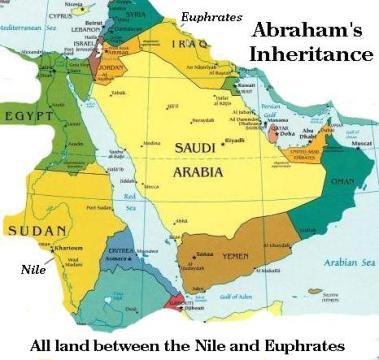
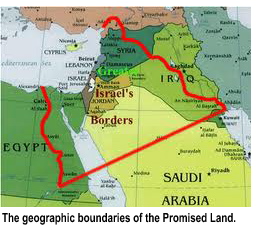
If "haa'aarets" has the contextual meaning of "earth" for the 67 times it is found in the first 11 chapters of Genesis, then why does the contextual meaning all of a sudden become "land" on the whim of the translators in Gen_12:1 & 7? The translators flip flop between "earth" and "land" to suit their theological understanding of the Abrahamic Covenant. Why?
This is the question you are not addressing. Why all of a sudden does the meaning and understanding of "haa'aarets" change from "earth" to "land?"
Hello Jay,
With respect, I have not sought to answer that question, because I have not been asked it? :)
* Earlier this evening, before receiving notice of your response, I had been looking through the list of verses in which H776 is used by the Holy Spirit: and the context of each one determined it's intended use. Firstly, in Genesis 1:1 the words, 'heaven' and 'earth', with the Hebrew article, 'eth' before each, i.e., the word, 'the': intends that the emphasis should be on the word, 'The', for it is THE heaven and THE earth, the word 'earth' used in order to differentiate between the two spheres of creativity. Genesis 1 & 2 are linked by a figure of speech called 'anadiplosis' (
or like sentence endings and beginnings), In Latin it is called, 'Reversio' or '
a turning back'. The object of this figure of speech is to emphasise the words repeated, in this case it being the word,
'Earth'.
'In the beginning God created the heaven and the earth.
And the earth was without form, and void;
and darkness was upon the face of the deep.
And the Spirit of God moved upon the face of the waters.'
(Gen 1:1-2)
* This figure is the very first figure employed in the Bible, and it is used to call our attention to, and emphasise, the fact that, while the first statement refers to two things,
'the heaven and the earth'; the following statement proceeds to speak of only one of them, leaving the other entirely out of consideration.
* Both were created
'in the beginning.' But the earth, at some time and by some means, and from some cause (not stated) became a ruin:- empty, waste, and desolate. For it was not created so (Isaiah 45:18).
* In the next verse listed under H776, (Genesis 1:10) the dry land is named:-
'And God called the dry land - Earth; (no Heb. article here)
and the gathering together of the waters called He Seas:
and God saw that it was good.'
(Gen 1:10)
* So here the word '
earth' is used to differentiate it from the
water.
'And God said, 'Let the earth bring forth grass, the herb yielding seed,
and the fruit tree yielding fruit after his kind,
whose seed is in itself, upon the earth:
and it was so.'
(Gen 1:11)
* Here
the earth (
that is the dry land) is referred to.
* You see, Jay, each usage and it's meaning is determined by the context. Nothing comes to a complete stop at Genesis 12, for this word continues to be used all the way through the Old and New Testament.
* I can't continue now, but will do so If you wish.
In Christ Jesus
Chris