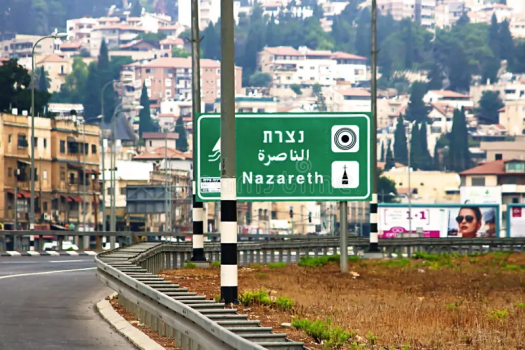
Nazareth during Jesus’ time likely had a population of around 1,000 people, based on recent archaeological studies. Excavations confirm it was a small but active village with homes, a synagogue, and even underground hideouts.
Archaeological Evidence of Nazareth’s Size and Existence
For years, skeptics questioned whether Nazareth even existed in the early first century. But archaeological digs have decisively confirmed its presence and offered insight into its scale:
• Population Estimates: Earlier estimates placed Nazareth’s population between 100–500 people, but newer research suggests it was closer to 1,000.
• Residential Structures: In 2009, archaeologist Yardenna Alexandre uncovered a first-century house near the Church of the Annunciation. It had small rooms and a courtyard, typical of modest village homes from the late Hellenistic to early Roman periods.
• Underground Tunnels: A major excavation revealed a network of underground hiding places, likely used by anti-Roman rebels. These tunnels could shelter at least 100 people, indicating a community with political and religious tensions.
• Artifacts: Finds include a coin minted in 50–51 CE in Akko-Ptolemais, discovered in a corridor leading to a pit complex, helping date the site precisely.
• Synagogue Presence: Luke 4:16 mentions Jesus reading in a synagogue in Nazareth, implying a structured community with religious life.
Historical and Scriptural Support
• Biblical References: Nazareth is repeatedly mentioned in the Gospels as Jesus’ hometown (e.g., Matthew 2:23, Luke 4:16), and early Christians referred to him as “Jesus of Nazareth,” reinforcing its historical reality.
• Pilgrimage and Tradition: Early church writings and pilgrim accounts consistently locate Nazareth as a real, inhabited place during and after Jesus’ lifetime.
Nazareth wasn’t a bustling city—it was a humble village tucked into the Galilean hills. But it was very much alive, with homes, worship, and resistance.
Archaeological Evidence of Nazareth’s Size and Existence
For years, skeptics questioned whether Nazareth even existed in the early first century. But archaeological digs have decisively confirmed its presence and offered insight into its scale:
• Population Estimates: Earlier estimates placed Nazareth’s population between 100–500 people, but newer research suggests it was closer to 1,000.
• Residential Structures: In 2009, archaeologist Yardenna Alexandre uncovered a first-century house near the Church of the Annunciation. It had small rooms and a courtyard, typical of modest village homes from the late Hellenistic to early Roman periods.
• Underground Tunnels: A major excavation revealed a network of underground hiding places, likely used by anti-Roman rebels. These tunnels could shelter at least 100 people, indicating a community with political and religious tensions.
• Artifacts: Finds include a coin minted in 50–51 CE in Akko-Ptolemais, discovered in a corridor leading to a pit complex, helping date the site precisely.
• Synagogue Presence: Luke 4:16 mentions Jesus reading in a synagogue in Nazareth, implying a structured community with religious life.
Historical and Scriptural Support
• Biblical References: Nazareth is repeatedly mentioned in the Gospels as Jesus’ hometown (e.g., Matthew 2:23, Luke 4:16), and early Christians referred to him as “Jesus of Nazareth,” reinforcing its historical reality.
• Pilgrimage and Tradition: Early church writings and pilgrim accounts consistently locate Nazareth as a real, inhabited place during and after Jesus’ lifetime.
Nazareth wasn’t a bustling city—it was a humble village tucked into the Galilean hills. But it was very much alive, with homes, worship, and resistance.