


Dont remember if this got posted anywhere around here.. put your seatbelts on for the repost. 
It's raw Word of God time.
"Computer, were going to do an experiment today using THE RAW WORD OF GOD ONLY; completely ignoring every artistic, historical, rabbinic, archaeological, racial, cultural, Hollywood, and religious tradition ever imposed on the text.
Read the biblical description of the Nazirites in Lamentations 4:7 exactly as God gives it:
“Her Nazirites were purer than snow,
they were whiter than milk,
they were more ruddy in body than rubies,
their polishing was of sapphire.”
Now take those words seriously and literally as the controlling visual description.
Do not begin with a traditional picture of what an ancient Israelite, Hebrew, Egyptian, Middle Easterner, European, African, or modern Jew is “supposed” to look like and then force the verse to conform to it.
Do the opposite.
Begin with God's description and let only God's words determine the appearance.
Methodically determine what a human on this planet being described as:
Do not begin with inherited human expectations and then reinterpret God’s words to fit them. Do the opposite. Begin with God’s words and let human expectations shatter if they must.
Prepare to create photorealistic reconstructions of Moses rendered according to the Nazirite appearance as described in Lamentations 4:7 by God, using that description as the only controlling physical reference for this experiment."
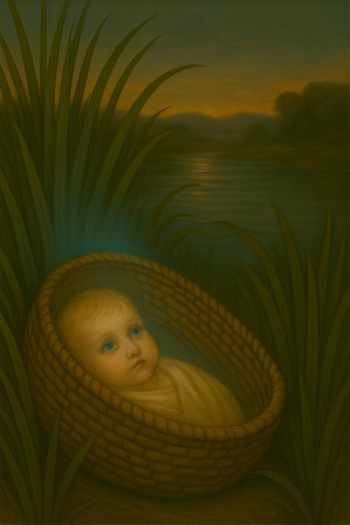
"Now show me Moses with a Nazirite appearance, if he were a Nazirite, floating on the Nile in his basket"
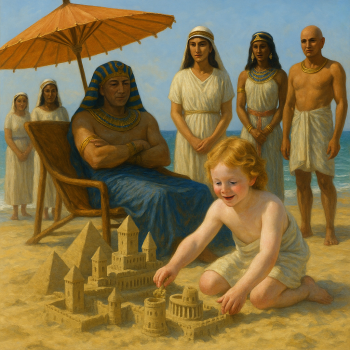
"Show me Moses as a Nazirite; if he were a Nazirite, as a toddler playing on the beach with his new family"
"Show me Moses as a Nazirite; if he were a Nazirite, as a young adult having fun at the beach with his family"

"Computer, show me an example of Moses as a Nazirite; if he were a Nazirite, with his family as a real photograph picture simulation"
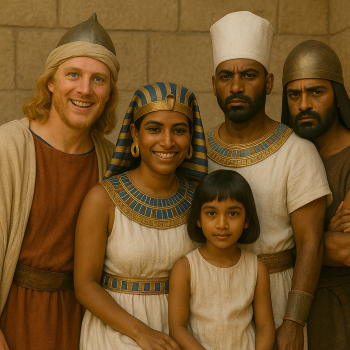
"Computer, show me a Nazirite female according to God's raw Word in Lamentations 4:7"
“Her Nazirites were purer than snow,
they were whiter than milk,
they were more ruddy in body than rubies,
their polishing was of sapphire.”

"Computer, in modern high resolution cinematic fashion, show me your depiction of a Nazirite princess according to Lamentations 4:7."

"Computer, show me a theoretical picture of a Nazirite royal family in ancient times."
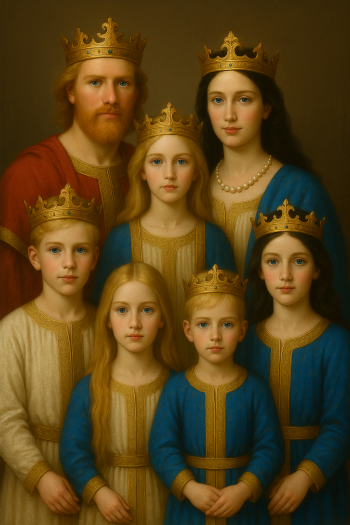
"Computer, show me the Nazirite children older and before the war according to God's raw Word in Lamentations 4:7"
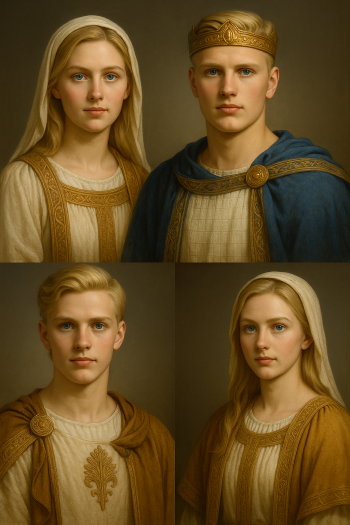
"Computer, reconstruct those same children now as Lamentations 4:8–9 describes them after the devastation of war and famine: once radiant, now unrecognizable in the streets; their faces darkened, their bodies wasted away, their skin clinging to their bones, withered by starvation.”
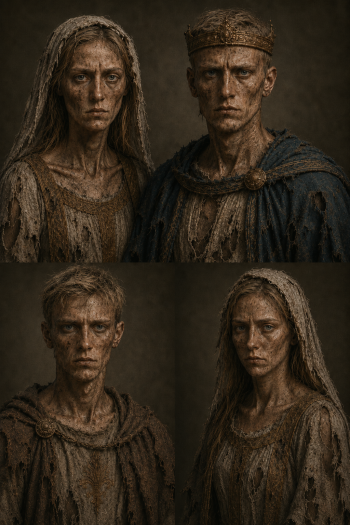
“It’s only poetry.”
Save it.
Being poetry does not give you the authority to declare the language non-descriptive the instant the description becomes inconvenient.
“Whiter than milk” describes appearance.
“Ruddy” describes visible redness of complexion.
“Sapphire” supplies another visual comparison."
Spare us the claim that “sapphire” is some meaningless poetic ornament. It's another visual comparison, and when the same passage has already described skin as “whiter than milk,” the image becomes perfectly intelligible: extremely light flesh shows underlying blue and blue-violet veins with striking clarity, producing exactly the kind of cool sapphire-like cast and hue the poet is invoking.
You do not get to call every inconvenient adjective “symbolic” until the description says absolutely nothing at all.
White. Ruddy. Sapphire. Those are visual words. Deal with them as visual words.
You cannot suddenly decide that “ruddy” really means “happy” because the people in your preferred reconstruction could not visibly display the rosy, blood-rich complexion the text actually describes.
That is not interpretation.
That's rewriting the description to rescue the reconstruction.
And “poetry” does not magically turn physical adjectives into psychological states. If the poet says a man is pale, you cannot answer, “Well, pale actually means peaceful.” If he says ruddy, you do not get to transform redness into happiness because redness causes trouble for your assumptions.
Then Lamentations itself closes the escape route. In the very next verse their appearance changes under famine: they become unrecognizable, their faces darken, their skin clings to their bones, and their bodies wither.
The poet gives you a physical before and after.
So yes, its poetry.
Poetry describing something.
And Ignatius does not hand you permission to drag the prophets underneath later racial, rabbinic, artistic, or cultural assumptions whenever their actual words become uncomfortable. His center is Christ. His prophets belong to Christ. His entire interpretive world runs toward Christ.
So I'm not interested in hearing that God's words suddenly stop describing anything because somebody yelled “POETRY!”
Deal with what the poetry says."
It's raw Word of God time.
"Computer, were going to do an experiment today using THE RAW WORD OF GOD ONLY; completely ignoring every artistic, historical, rabbinic, archaeological, racial, cultural, Hollywood, and religious tradition ever imposed on the text.
Read the biblical description of the Nazirites in Lamentations 4:7 exactly as God gives it:
“Her Nazirites were purer than snow,
they were whiter than milk,
they were more ruddy in body than rubies,
their polishing was of sapphire.”
Now take those words seriously and literally as the controlling visual description.
Do not begin with a traditional picture of what an ancient Israelite, Hebrew, Egyptian, Middle Easterner, European, African, or modern Jew is “supposed” to look like and then force the verse to conform to it.
Do the opposite.
Begin with God's description and let only God's words determine the appearance.
Methodically determine what a human on this planet being described as:
- purer than snow
- whiter than milk
- ruddy in body like rubies
- bearing the sapphire-like appearance or “polishing” described in the text
Do not begin with inherited human expectations and then reinterpret God’s words to fit them. Do the opposite. Begin with God’s words and let human expectations shatter if they must.
Prepare to create photorealistic reconstructions of Moses rendered according to the Nazirite appearance as described in Lamentations 4:7 by God, using that description as the only controlling physical reference for this experiment."
"Now show me Moses with a Nazirite appearance, if he were a Nazirite, floating on the Nile in his basket"
"Show me Moses as a Nazirite; if he were a Nazirite, as a toddler playing on the beach with his new family"
"Show me Moses as a Nazirite; if he were a Nazirite, as a young adult having fun at the beach with his family"
"Computer, show me an example of Moses as a Nazirite; if he were a Nazirite, with his family as a real photograph picture simulation"
"Computer, show me a Nazirite female according to God's raw Word in Lamentations 4:7"
“Her Nazirites were purer than snow,
they were whiter than milk,
they were more ruddy in body than rubies,
their polishing was of sapphire.”
"Computer, in modern high resolution cinematic fashion, show me your depiction of a Nazirite princess according to Lamentations 4:7."
"Computer, show me a theoretical picture of a Nazirite royal family in ancient times."
"Computer, show me the Nazirite children older and before the war according to God's raw Word in Lamentations 4:7"
"Computer, reconstruct those same children now as Lamentations 4:8–9 describes them after the devastation of war and famine: once radiant, now unrecognizable in the streets; their faces darkened, their bodies wasted away, their skin clinging to their bones, withered by starvation.”
“It’s only poetry.”
Save it.
Being poetry does not give you the authority to declare the language non-descriptive the instant the description becomes inconvenient.
“Whiter than milk” describes appearance.
“Ruddy” describes visible redness of complexion.
“Sapphire” supplies another visual comparison."
Spare us the claim that “sapphire” is some meaningless poetic ornament. It's another visual comparison, and when the same passage has already described skin as “whiter than milk,” the image becomes perfectly intelligible: extremely light flesh shows underlying blue and blue-violet veins with striking clarity, producing exactly the kind of cool sapphire-like cast and hue the poet is invoking.
You do not get to call every inconvenient adjective “symbolic” until the description says absolutely nothing at all.
White. Ruddy. Sapphire. Those are visual words. Deal with them as visual words.
You cannot suddenly decide that “ruddy” really means “happy” because the people in your preferred reconstruction could not visibly display the rosy, blood-rich complexion the text actually describes.
That is not interpretation.
That's rewriting the description to rescue the reconstruction.
And “poetry” does not magically turn physical adjectives into psychological states. If the poet says a man is pale, you cannot answer, “Well, pale actually means peaceful.” If he says ruddy, you do not get to transform redness into happiness because redness causes trouble for your assumptions.
Then Lamentations itself closes the escape route. In the very next verse their appearance changes under famine: they become unrecognizable, their faces darken, their skin clings to their bones, and their bodies wither.
The poet gives you a physical before and after.
So yes, its poetry.
Poetry describing something.
And Ignatius does not hand you permission to drag the prophets underneath later racial, rabbinic, artistic, or cultural assumptions whenever their actual words become uncomfortable. His center is Christ. His prophets belong to Christ. His entire interpretive world runs toward Christ.
So I'm not interested in hearing that God's words suddenly stop describing anything because somebody yelled “POETRY!”
Deal with what the poetry says."


