MARK 6:3 DID JESUS HAVE BROTHERS AND SISTERS ?

  • Welcome to Christian Forums, a Christian Forum that recognizes that all Christians are a work in progress.

    You will need to register to be able to join in fellowship with Christians all over the world.

    We hope to see you as a part of our community soon and God Bless!

Doug

Well-Known Member
Apr 29, 2018
6,819
1,175
113
south
Faith
Christian
Country
United States
Gender
Male
Mark 6:3 Is not this the carpenter, the son of Mary, the brother of James, and Joses, and of Juda, and Simon? and are not his sisters here with us? And they were offended at him.

Jesus had siblings, brothers and sisters.

Genesis 4:1 And Adam knew Eve his wife; and she conceived, and bare Cain, and said, I have gotten a man from the LORD.
4:2 And she again bare his brother Abel. And Abel was a keeper of sheep, but Cain was a tiller of the ground.

There is no dispute that in this passage brother means a sibling.

Galatians 1:19 But other of the apostles saw I none, save James the Lord's brother.

Paul clearly speaks of James as being the Lord's brother.

1 Corinthians 9:5 Have we not power to lead about a sister, a wife, as well as other apostles, and as the brethren of the Lord, and Cephas?

Paul speaks of being able to have a sister as a wife; not a sibling sister, but rather a believer. This differentiation is derived strictly from an unbiased and natural common sense consideration of the text and context. By utilizing the same common sense, it can be also determined that the brethren of the Lord are siblings rather than believers.

1 Corinthians 1:1 Paul called to be an apostle of Jesus Christ through the will of God, and Sosthenes our brother,

Here Paul is speaking of Sosthenes as being a brother in the sense of being a fellow believer.

Mark 3:31 There came then his brethren and his mother, and, standing without, sent unto him, calling him.
3:32 And the multitude sat about him, and they said unto him, Behold, thy mother and thy brethren without seek for thee.
3:33 And he answered them, saying, Who is my mother, or my brethren
3:34 And he looked round about on them which sat about him, and said, Behold my mother and my brethren!
3:35 For whosoever shall do the will of God, the same is my brother, and my sister, and mother.

In this scriptural passage, is one last example of the ready distinction between family and fellow believers. If viewed honestly, it is apparent that in Mark 3:31-32 Jesus's brethren and mother is his family; in Mark 3:34-35 Jesus is speaking of those who believe.
 

Toro55

Well-Known Member
Jun 7, 2011
556
255
63
Toronto
Faith
Christian
Country
Canada
Gender
Male
Well as long as you remember they were not teenagers in love it was a arranged marriage and that he rejected her.Only because an angel visited in a dream did he agree.He would of been an older man who had the means to take care of her.They could easily be his children from a previous marriage. It was not uncommon.There is always a separation when they are spoke about them separately and then the mother of Jesus
 

Sabé

Active Member
Dec 25, 2024
509
83
43
Pacific Northwest
Faith
Christian
Country
United States
Gender
Female

MARK 6:3 DID JESUS HAVE BROTHERS AND SISTERS?​


Key points to consider:

  • Only Jesus is called the son of Joseph and Mary. (Matt. 13:55, Mk. 6:3)

  • The Koine Greek word "ἀδελφός'' (sing. adelphos;pl. ἀδελφοί/adelphoi), translated "brothers" in English, has the following definitions: "fellow-countryman," "disciple/follower," "one of the same faith," and "kinsman/kinswoman, or relative," e.g., sibling, cousin, nephew, niece, uncle, aunt, etc.

  • In Matt. 13:55 and Mk. 6:3, Joseph, Simon, James, and Judas (Jude/Thaddeus) are called Jesus's “ἀδελφοί” (adelphoi/brothers). The context shows that its applicable definition is "kinsman/kinswoman, or relative." In Gal. 1:19, Paul refers to one of the two Jameses of the twelve apostles, and calls him Jesus's "ἀδελφός" (adelphos/brother), and the context shows that its applicable definition is "kinsman/kinswoman, or relative" as well. Therefore, we can deduce that the James in Matt. 13:55 and Mk. 6:3, and James in Gal. 1:19, were the same person. And, only the apostle James of Alphaeus of the Twelve, and his brother, apostle Judas (Jude/Thaddeus) of Alphaeus, correspond with Matt. 13:55 and Mk. 6:3. (Matt. 10:3, Mk. 3:18;15:40, Lk. 6:15-16, Ac. 1:13)

Keeping in mind the key points above, now compare the following scriptural and early Church Father writing excerpts:​

Two scenes surrounding the same event:
"When the Sabbath was past, Mary Magdalene, and Mary the mother of James, and Salome (the mother of the sons of Zebedee), bought spices, that they might come and anoint him." (Mk. 16:1)

Now they were Mary Magdalene, Joanna, and Mary the mother of James. The other women with them told these things to the apostles." (Lk. 24:10)

Three accounts of the same scene:
"Mary Magdalene, Mary (Mary of Clopas/Cleophas) the mother of James (the Less) and Joseph, and the mother of the sons of Zebedee [Salome]" (Matt. 27:56)

"Mary Magdalene, Mary (Mary of Clopas/Cleophas) the mother of James the Less and Joseph, and Salome (the mother of the sons of Zebedee)" (Mk. 15:40)

"His Mother (Mary of Joseph), His Mother's sister Mary, the wife of Clopas/Cleophas (the mother of James the Less and Joseph), and Mary Magdalene" (Jn. 19:25)

__________________________________________​

I. "Mary the wife of Cleophas or Alphaeus [Clopas], who was the mother of James the bishop and apostle, and of Simon and Thaddeus (Jude/Judas), and of one Joseph." (Papias of Hierapolis [c. 60–130 AD], Fragments of Papias, Frag. 10, cf. Jn. 19:25)

II. "[...] James, who is called the brother of the Lord [...] as appears to me, the son of Mary sister of the mother of our Lord [...] after ordained by the apostles bishop of Jerusalem, wrote a single epistle, which is reckoned among the seven Catholic epistles" (cf. Jud. 1:1) and "[...] Mary who is described as the mother of James the Less was the wife of Alphaeus and sister of Mary the Lord's mother" (Jerome of Stridon [c. 347–420 CE], De Viris Illustribus, De Perpetua Uirginitate Beatae Mariae, cf. Jn. 19:25)

III. Eusebius of Caesarea [c. 260–340 AD] relates the following in his Historia Ecclesiastica:

James, the brother of the Lord, was "[...] the author of the first of the so-called catholic epistles" and that while it is disputed, "as is the case likewise with the epistle that bears the name of Jude, which is also one of the seven so-called catholic epistles," it is known they have been "[...] read publicly in very many churches." (Bk. I, ch. 23, cf. Jud. 1:1)

"James […] surnamed the Just [...] bishop of the church of Jerusalem. This James was called the brother of the Lord" and "Paul also makes mention of the same James the Just, where he writes, 'Other of the apostles saw I none, save James the Lord's brother.'" (Bk. II, ch. 1)

"[...] those of the apostles and disciples of the Lord [...] with those that were related to the Lord according to the flesh ... pronounced Symeon [Simon], the son of Clopas [...] to be worthy of the episcopal throne of that parish. He was a cousin, as they say, of the Saviour. For Hegesippus records that Clopas was a brother of Joseph." (Bk. III, ch. 11)

"Josephus, at least, has not hesitated to testify this in his writings, where he says, 'These things happened to the Jews to avenge James the Just, who was a brother of Jesus, that is called the Christ.'" (Bk. II, ch. 23)

"[...] the brother of Jesus, who was called Christ, whose name was James" (Flavius Josephus [c. 37-100 CE], Antiquitates Iudaicae, Bk. XX, ch. 9)

"[...] James the Just bishop of Jerusalem" and "[...] but there were two Jameses: one called the Just [...] thrown from the pinnacle of the temple [...] and beaten to death with a club by a fuller, and another who was beheaded." (Bk. II, ch. 1) (Clement of Alexandria [c. 150–215 AD], Hypotyposes, Bk. VII, cf. Ac. 12:1-2)

"[...] James the brother of the Lord, succeeded to the government of the Church [...] called the Just [...]" (Bk. II, ch. 23) and "after James the Just had suffered martyrdom [...] Symeon [Simon], the son of the Lord's uncle, Clopas, was appointed the next bishop [...] because he was a cousin of the Lord." (Bk. III, ch. 22) (Hegesippus [c. 110-180 AD], Hypomnemata)

__________________________________________

Summary

The scriptural verses and crossover agreement between all my sources (early Christian Church Fathers) collectively prove the following:​

  • Jesus's brothers (kinsmen/relatives) Joseph, Simon, James, and Judas (Jude/Thaddeus) in Matt. 13:55 and Mk.6:3 were the sons of His Mother's Spouse's brother, Alphaeus (Clopas/Cleophas), and his wife Mary of Clopas (Cleophas/Alphaeus), the sister [in-law] of Mary of Joseph, and thus His cousins.

  • Jesus's cousins James and Judas (Jude/Thaddeus) and the apostles James and Judas (Jude/Thaddeus) of Alphaeus (Clopas/Cleophas) of the Twelve were the same people.

  • Jesus's cousin-apostle James of the Twelve, "James the Less", "James the brother of the Lord", "James the Just", "James the first bishop of Jerusalem", and the author of the Epistle of James were the same person.

  • Jesus's cousin-apostle Judas (Jude/Thaddeus) of the Twelve authored the Epistle of Jude.
 

Doug

Well-Known Member
Apr 29, 2018
6,819
1,175
113
south
Faith
Christian
Country
United States
Gender
Male
Key points to consider:

  • Only Jesus is called the son of Joseph and Mary. (Matt. 13:55, Mk. 6:3)

  • The Koine Greek word "ἀδελφός'' (sing. adelphos;pl. ἀδελφοί/adelphoi), translated "brothers" in English, has the following definitions: "fellow-countryman," "disciple/follower," "one of the same faith," and "kinsman/kinswoman, or relative," e.g., sibling, cousin, nephew, niece, uncle, aunt, etc.

  • In Matt. 13:55 and Mk. 6:3, Joseph, Simon, James, and Judas (Jude/Thaddeus) are called Jesus's “ἀδελφοί” (adelphoi/brothers). The context shows that its applicable definition is "kinsman/kinswoman, or relative." In Gal. 1:19, Paul refers to one of the two Jameses of the twelve apostles, and calls him Jesus's "ἀδελφός" (adelphos/brother), and the context shows that its applicable definition is "kinsman/kinswoman, or relative" as well. Therefore, we can deduce that the James in Matt. 13:55 and Mk. 6:3, and James in Gal. 1:19, were the same person. And, only the apostle James of Alphaeus of the Twelve, and his brother, apostle Judas (Jude/Thaddeus) of Alphaeus, correspond with Matt. 13:55 and Mk. 6:3. (Matt. 10:3, Mk. 3:18;15:40, Lk. 6:15-16, Ac. 1:13)

Keeping in mind the key points above, now compare the following scriptural and early Church Father writing excerpts:​

Two scenes surrounding the same event:
"When the Sabbath was past, Mary Magdalene, and Mary the mother of James, and Salome (the mother of the sons of Zebedee), bought spices, that they might come and anoint him." (Mk. 16:1)

Now they were Mary Magdalene, Joanna, and Mary the mother of James. The other women with them told these things to the apostles." (Lk. 24:10)

Three accounts of the same scene:
"Mary Magdalene, Mary (Mary of Clopas/Cleophas) the mother of James (the Less) and Joseph, and the mother of the sons of Zebedee [Salome]" (Matt. 27:56)

"Mary Magdalene, Mary (Mary of Clopas/Cleophas) the mother of James the Less and Joseph, and Salome (the mother of the sons of Zebedee)" (Mk. 15:40)

"His Mother (Mary of Joseph), His Mother's sister Mary, the wife of Clopas/Cleophas (the mother of James the Less and Joseph), and Mary Magdalene" (Jn. 19:25)

__________________________________________​

I. "Mary the wife of Cleophas or Alphaeus [Clopas], who was the mother of James the bishop and apostle, and of Simon and Thaddeus (Jude/Judas), and of one Joseph." (Papias of Hierapolis [c. 60–130 AD], Fragments of Papias, Frag. 10, cf. Jn. 19:25)

II. "[...] James, who is called the brother of the Lord [...] as appears to me, the son of Mary sister of the mother of our Lord [...] after ordained by the apostles bishop of Jerusalem, wrote a single epistle, which is reckoned among the seven Catholic epistles" (cf. Jud. 1:1) and "[...] Mary who is described as the mother of James the Less was the wife of Alphaeus and sister of Mary the Lord's mother" (Jerome of Stridon [c. 347–420 CE], De Viris Illustribus, De Perpetua Uirginitate Beatae Mariae, cf. Jn. 19:25)

III. Eusebius of Caesarea [c. 260–340 AD] relates the following in his Historia Ecclesiastica:

James, the brother of the Lord, was "[...] the author of the first of the so-called catholic epistles" and that while it is disputed, "as is the case likewise with the epistle that bears the name of Jude, which is also one of the seven so-called catholic epistles," it is known they have been "[...] read publicly in very many churches." (Bk. I, ch. 23, cf. Jud. 1:1)

"James […] surnamed the Just [...] bishop of the church of Jerusalem. This James was called the brother of the Lord" and "Paul also makes mention of the same James the Just, where he writes, 'Other of the apostles saw I none, save James the Lord's brother.'" (Bk. II, ch. 1)

"[...] those of the apostles and disciples of the Lord [...] with those that were related to the Lord according to the flesh ... pronounced Symeon [Simon], the son of Clopas [...] to be worthy of the episcopal throne of that parish. He was a cousin, as they say, of the Saviour. For Hegesippus records that Clopas was a brother of Joseph." (Bk. III, ch. 11)

"Josephus, at least, has not hesitated to testify this in his writings, where he says, 'These things happened to the Jews to avenge James the Just, who was a brother of Jesus, that is called the Christ.'" (Bk. II, ch. 23)

"[...] the brother of Jesus, who was called Christ, whose name was James" (Flavius Josephus [c. 37-100 CE], Antiquitates Iudaicae, Bk. XX, ch. 9)

"[...] James the Just bishop of Jerusalem" and "[...] but there were two Jameses: one called the Just [...] thrown from the pinnacle of the temple [...] and beaten to death with a club by a fuller, and another who was beheaded." (Bk. II, ch. 1) (Clement of Alexandria [c. 150–215 AD], Hypotyposes, Bk. VII, cf. Ac. 12:1-2)

"[...] James the brother of the Lord, succeeded to the government of the Church [...] called the Just [...]" (Bk. II, ch. 23) and "after James the Just had suffered martyrdom [...] Symeon [Simon], the son of the Lord's uncle, Clopas, was appointed the next bishop [...] because he was a cousin of the Lord." (Bk. III, ch. 22) (Hegesippus [c. 110-180 AD], Hypomnemata)

__________________________________________

Summary

The scriptural verses and crossover agreement between all my sources (early Christian Church Fathers) collectively prove the following:​

  • Jesus's brothers (kinsmen/relatives) Joseph, Simon, James, and Judas (Jude/Thaddeus) in Matt. 13:55 and Mk.6:3 were the sons of His Mother's Spouse's brother, Alphaeus (Clopas/Cleophas), and his wife Mary of Clopas (Cleophas/Alphaeus), the sister [in-law] of Mary of Joseph, and thus His cousins.

  • Jesus's cousins James and Judas (Jude/Thaddeus) and the apostles James and Judas (Jude/Thaddeus) of Alphaeus (Clopas/Cleophas) of the Twelve were the same people.

  • Jesus's cousin-apostle James of the Twelve, "James the Less", "James the brother of the Lord", "James the Just", "James the first bishop of Jerusalem", and the author of the Epistle of James were the same person.

  • Jesus's cousin-apostle Judas (Jude/Thaddeus) of the Twelve authored the Epistle of Jude.
very impressive
 

Aunty Jane

Well-Known Member
Sep 16, 2021
8,936
5,047
113
Sydney
Faith
Christian
Country
Australia
Gender
Female
Key points to consider:

  • Only Jesus is called the son of Joseph and Mary. (Matt. 13:55, Mk. 6:3)
In context Mark 6:2-4 brings out some interesting points....

“When it was the Sabbath, he started teaching in the synagogue, and most who heard him were astounded and said: “Where did this man get these things? And why should this wisdom have been given to him, and such powerful works be performed through his hands?3  This is the carpenter, the son of Mary and the brother of James, Joseph, Judas, and Simon, is it not? And his sisters are here with us, are they not?” So they began to stumble because of him. 4  But Jesus said to them: “A prophet is not without honor except in his home territory and among his relatives and in his own house.”

So we have Jesus as “the carpenter” a son who followed his father’s profession and was no doubt taught that trade by him. By the time of Jesus’ ministry, Mary his mother was a widow. This is confirmed by the fact that Jesus entrusted his mother’s care to his disciple John.....something he would not have done if his “brothers” were also his disciples at that time, but the Scriptures indicate that none of Jesus’ siblings became believers until after his resurrection. This is why he could say to his former hometown people....
“A prophet is not without honor except in his home territory and among his relatives and in his own house.”

They had seen this boy grow up and had known that he was the assumed “firstborn” of Mary and Joseph.
The fact that they were a typical Jewish couple with a typically large Jewish family meant that there was no reason for Mary and Joseph to become celibate housemates after Jesus was born as indicated in Matt 1:24-25....
After being told in a dream not to hesitate to take Mary as a wife, Matthew relates.....

“When Joseph rose from sleep, he did what the angel of the Lord had commanded him. He took Mary into his home as his wife, but he engaged in no marital relations with her until she gave birth to a son, whom he named Jesus.” (New Catholic Bible) Mary did not remain a virgin and therefore could well have borne more children.

Only the Catholic church has a reason to suggest that Mary and Joseph, were not a normal married couple that went on to have a normal sized family in the Jewish community.....and that Mary had to remain “ever virgin”.....nowhere in the Bible is Mary ever said to have remained a virgin as Matthew proves......why would she? Children in Israel were a blessing from God!

She was chosen as the mother of Jesus....no doubt because of her spiritual qualities....but once that role was fulfilled, she and Joseph raised him and the rest of their children to be worshippers of their God, knowing that he had an important part to play in the salvation of his people.

Because only the Catholic church elevates Mary to a status that the Bible never does, she fills a role played by the ancient pagan mother goddesses, and has even assumed their titles.....”mother of God” being one of them. “Our Lady”, being another.

Sorry.....but the RCC does not have a leg to stand on in this argument.
 
Last edited:
  • Like
Reactions: Muna

Sabé

Active Member
Dec 25, 2024
509
83
43
Pacific Northwest
Faith
Christian
Country
United States
Gender
Female
[...] but the Scriptures indicate that none of Jesus’ siblings [...]

Jesus's "siblings"? Hold your horses now. Nowhere in all of the four Gospels are Joseph, Simon, James, and Judas (Thaddeus) also called a "son of Mary" like Jesus was. And, their being indentified as Jesus's brothers doesn't automatically mean they were His siblings, because the Koine Greek word "ἀδελφός'' (sing. adelphos;pl. ἀδελφοί/adelphoi), translated "brothers" in English, has the following definitions: "fellow-countryman," "disciple/follower," "one of the same faith," and "kinsman/kinswoman, or relative," e.g., sibling, cousin, nephew, niece, uncle, aunt, etc.

Now quote and address the rest of my post (#3).
 

Aunty Jane

Well-Known Member
Sep 16, 2021
8,936
5,047
113
Sydney
Faith
Christian
Country
Australia
Gender
Female
You do realize that you are assuming things based on your own church’s teachings about the relationship of Mary and Joseph. They were a married couple, and hence had sexual relations as Matthew states, fully sanctioned by God in marriage, with every right to have a family. Nowhere in Scripture is Mary said to be “ever virgin” and with the birth of Jesus she would have lost her virginity anyway.

The only reason for assuming that Jesus had no siblings is to promote your Virgin Mother worship.
Mary does not have the status in Scripture that your church gives to her.
 

Ronald Nolette

Well-Known Member
Aug 24, 2020
16,516
4,794
113
71
South Carolina
Faith
Christian
Country
United States
Gender
Male
Well as long as you remember they were not teenagers in love it was a arranged marriage and that he rejected her.Only because an angel visited in a dream did he agree.He would of been an older man who had the means to take care of her.They could easily be his children from a previous marriage. It was not uncommon.There is always a separation when they are spoke about them separately and then the mother of Jesus
That is all pure speculation. You cannot even know if there is even a grain of truth in it on the relationship of Mary and Joseph. That myth was created to protect the fable of the perpetual virginity of Mary.

As it says in Matthew, After Jesus was born, Jospeh and Mary had sex as was what was required in Jewish culture.
 

indentured servant

New Member
Aug 28, 2025
28
14
3
Midwest
Faith
Christian
Country
United States
Gender
Male
Greek word "ἀδελφός'' (sing. adelphos;pl. ἀδελφοί/adelphoi), translated "brothers" in English, has the following definitions: "fellow-countryman," "disciple/follower," "one of the same faith," and "kinsman/kinswoman, or relative," e.g., sibling, cousin, nephew, niece, uncle, aunt, etc.
The "definitions" that you provided are from an "Outline of Biblical Usage," and should not be considered definitions.

These are interpretations that have been gleaned from the varying narratives that exist, not from a dictionary.

To further the point, those words are not actually used in Scripture.

In 346 uses of this word, all 346 are translated as "brother(s)." ("of the same womb")

As well, adelphós has only one meaning, because it literally means 'from the same womb.'

Greek has another, very specific, word for cousin.

There simply are no cultural or grammatical nuances that allow these words to be interchangeable.
 
  • Like
Reactions: Aunty Jane

Sabé

Active Member
Dec 25, 2024
509
83
43
Pacific Northwest
Faith
Christian
Country
United States
Gender
Female
The "definitions" that you provided are from an "Outline of Biblical Usage," and should not be considered definitions.

Do you have a coherent reason why the definitions in Bill Mounce's Greek Dictionary should not be considered definitions?

In 346 uses of this word, all 346 are translated as "brother(s)." ("of the same womb")

As well, adelphós has only one meaning, because it literally means 'from the same womb.'

False, because if that were true, then Jesus had over 500 siblings: "ἔπειτα ὤφθη ἐπάνω πεντακοσίοις ἀδελφοῖς (adelphois) ἐφάπαξ," ("Then he appeared to over five hundred brothers at once"). (1 Cor. 15:6)

Greek has another, very specific, word for cousin.

The Koine Greek language has multiple words that can be used to refer to a cousin:

· "ἀνεψιός" (anepsios)
Definition: a nephew, cousin, Col. 4:10*

· "συγγενίς" (syngenis)
Definition: a kinswoman, female relative, Lk. 1:36*


· "συγγενής" (syngenēs)
Definition: kindred, akin;, as a subst. a kinsman or kinswoman, relative; Mk. 6:4; Lk. 1:58; 2:44; 14:12; 21:16; Jn. 18:26; Acts 10:24; one nationally akin, a fellow countryman, Rom. 9:3; 16:7, 11, 21*


· "ἀδελφός" (adelphos)
Definition: a brother, near kinsman, or relative; one of the same nation or nature; one of equal rank and dignity; an associate, a member of the Christian community

· "ἀδελφή" (adelphē)
Definition: a sister; near kinswoman, or female relative, a female member of the Christian community

While the word "ἀνεψιός" (anepsios) has a specific kinship term definition "nephew, cousin", and the others have a broad kinship term definition, all of the words can be used to refer to a cousin.

There simply are no cultural or grammatical nuances that allow these words to be interchangeable.

False, because if only the word "ἀνεψιός" (anepsios) is allowed to be used to refer to a cousin, then, for example, regarding Elizabeth, who is believed to have been Mary's cousin, Luke would've used that word (Lk. 1:36). But, he didn't. Rather, he used the word "συγγενίς" (syngenis), which, like the word "ἀδελφός", has a broad kinship term definition that can refer to various types of family members, including cousins.
 
Last edited:

Aunty Jane

Well-Known Member
Sep 16, 2021
8,936
5,047
113
Sydney
Faith
Christian
Country
Australia
Gender
Female
@Sabé…I believe that the only reason your church has to so vehemently defend its position on Mary’s perpetual virginity is ante to all that Jewish custom and tradition upheld. Family and children were a blessing from God, so why would he withhold this blessing from Mary and Joseph, and deprive Jesus of a family upbringing?
Mary has no place in our worship. She is not to be revered, honored or adored as we see is carried to an extreme in Roman Catholicism.

This is something that God forbade….it is blatant idolatry. (Ex 20:4-6)
You shall not make idols or any image of things that are in the heavens above or that are upon the earth or that are in the waters under the earth. You shall not bow before them nor shall you serve them. I, the Lord, am your God, a jealous God, who punishes the sins of fathers upon their sons until the third and fourth generations of those who hate me, but I will show my favor for a thousand generations of those who love me and observe my commandments.” (New Catholic Bible)

You are breaking God’s law and pretending that you are not doing what God forbids…..

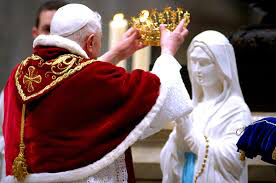
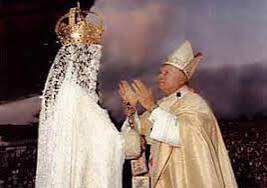
1756520783359.png 1756520812333.png 1756520881250.png 1756521074379.png

Can you not see what is happening here….?
it isn’t just the ”bowing” before these images….but “making” them in the first place that breaks God’s Law.
 

Aunty Jane

Well-Known Member
Sep 16, 2021
8,936
5,047
113
Sydney
Faith
Christian
Country
Australia
Gender
Female
Refer back to post #9.
Why? The points I have raised proves that the RCC cannot defend its doctrines scripturally….. and yet you still cling to the excuses offered by your church….again I ask why?
 

indentured servant

New Member
Aug 28, 2025
28
14
3
Midwest
Faith
Christian
Country
United States
Gender
Male
As it says in Matthew, After Jesus was born, Jospeh and Mary had sex as was what was required in Jewish culture.
Correct.
Do you have a coherent reason why the definitions in Bill Mounce's Greek Dictionary should not be considered definitions?


False, because if that were true, then Jesus had over 500 siblings: "ἔπειτα ὤφθη ἐπάνω πεντακοσίοις ἀδελφοῖς (adelphois) ἐφάπαξ," ("Then he appeared to over five hundred brothers at once"). (1. Cor. 15:6)


The Koine Greek language has multiple words that can be used to refer to a cousin:

· "ἀνεψιός" (anepsios)
Definition: a nephew, cousin, Col. 4:10*

· "συγγενίς" (syngenis)
Definition: a kinswoman, female relative, Lk. 1:36*


· "συγγενής" (syngenēs)
Definition: kindred, akin;, as a subst. a kinsman or kinswoman, relative; Mk. 6:4; Lk. 1:58; 2:44; 14:12; 21:16; Jn. 18:26; Acts 10:24; one nationally akin, a fellow countryman, Rom. 9:3; 16:7, 11, 21*


· "ἀδελφός" (adelphos)
Definition: a brother, near kinsman, or relative; one of the same nation or nature; one of equal rank and dignity; an associate, a member of the Christian community

· "ἀδελφή" (adelphē)
Definition: a sister; near kinswoman, or female relative, a female member of the Christian community

While the word "ἀνεψιός" (anepsios) has the specific kinship term definition "nephew, cousin", and the others have a broad kinship term definition, all of the words can be used to refer to a cousin.


False, because if only the word "ἀνεψιός" (anepsios) is allowed to be used to refer to a cousin, then, for example, regarding Elizabeth, who is believed to have been Mary's cousin, Luke would've used that word (Lk. 1:36). But, he didn't. Rather, he used the word "συγγενίς" (syngenis), which, like the word "ἀδελφός", has a broad kinship term definition that can refer to various types of family members, e.g., siblings, cousins, nieces, or aunts, etc.
You appear to have an
Do you have a coherent reason why the definitions in Bill Mounce's Greek Dictionary should not be considered definitions?


False, because if that were true, then Jesus had over 500 siblings: "ἔπειτα ὤφθη ἐπάνω πεντακοσίοις ἀδελφοῖς (adelphois) ἐφάπαξ," ("Then he appeared to over five hundred brothers at once"). (1. Cor. 15:6)


The Koine Greek language has multiple words that can be used to refer to a cousin:

· "ἀνεψιός" (anepsios)
Definition: a nephew, cousin, Col. 4:10*

· "συγγενίς" (syngenis)
Definition: a kinswoman, female relative, Lk. 1:36*


· "συγγενής" (syngenēs)
Definition: kindred, akin;, as a subst. a kinsman or kinswoman, relative; Mk. 6:4; Lk. 1:58; 2:44; 14:12; 21:16; Jn. 18:26; Acts 10:24; one nationally akin, a fellow countryman, Rom. 9:3; 16:7, 11, 21*


· "ἀδελφός" (adelphos)
Definition: a brother, near kinsman, or relative; one of the same nation or nature; one of equal rank and dignity; an associate, a member of the Christian community

· "ἀδελφή" (adelphē)
Definition: a sister; near kinswoman, or female relative, a female member of the Christian community

While the word "ἀνεψιός" (anepsios) has the specific kinship term definition "nephew, cousin", and the others have a broad kinship term definition, all of the words can be used to refer to a cousin.


False, because if only the word "ἀνεψιός" (anepsios) is allowed to be used to refer to a cousin, then, for example, regarding Elizabeth, who is believed to have been Mary's cousin, Luke would've used that word (Lk. 1:36). But, he didn't. Rather, he used the word "συγγενίς" (syngenis), which, like the word "ἀδελφός", has a broad kinship term definition that can refer to various types of family members, e.g., siblings, cousins, nieces, or aunts, etc.
With reading your response to my comment, I see, very obviously, that you are not interested in mutually respectful dialogue...

I don't bow to arrogance.

Perhaps, you should try another approach.
 

Aunty Jane

Well-Known Member
Sep 16, 2021
8,936
5,047
113
Sydney
Faith
Christian
Country
Australia
Gender
Female
Because you still haven't done what I asked you to do in post #9.
What on earth do you expect me to address when there are so many roadblocks in your entire belief system that basically renders it anti-Christian. It masquerades as a Christian faith, even the true Christian faith, when it bears no resemblance to the original and carries none of its teachings or traits. (Matt 15:7-9)
If Jesus came back tomorrow, he would not recognize the RCC as even a Christian religion…..it is entirely man made.

No matter what you offer by way of excuses, nothing will support your church’s doctrines to prove that they are remotely related to what Christ or his apostles taught.
If you are convinced of its authenticity then nothing I say will be of interest to you. That is entirely your choice, but you won’t ever be able to say, no one told you…..I really hope you can see what is so obvious to others….before it’s too late. weepy
 

Sabé

Active Member
Dec 25, 2024
509
83
43
Pacific Northwest
Faith
Christian
Country
United States
Gender
Female
With reading your response to my comment, I see, very obviously, that you are not interested in mutually respectful dialogue...

I don't bow to arrogance.

Perhaps, you should try another approach.

What you're seeing are corrections of falsehoods in your post, and no matter how I was to approach doing that again, the result would be the same: showing that you're wrong. It has nothing to do with arrogance and not being interested in mutually respectful dialogue, but rather the fact that there's a right and a wrong, and we both can't be right.