John 1:1 and Jesus’ Sonship in Adoptionist thought

  • Welcome to Christian Forums, a Christian Forum that recognizes that all Christians are a work in progress.

    You will need to register to be able to join in fellowship with Christians all over the world.

    We hope to see you as a part of our community soon and God Bless!

Wick Stick

Well-Known Member
Sep 21, 2023
2,424
1,486
113
46
Phoenix
Faith
Christian
Country
United States
What do we do with the accounts of the virgin birth in Matthew and Luke? Neither appears to be a late addition to those books. If they were "corrected" after the fact, it isn't obvious.
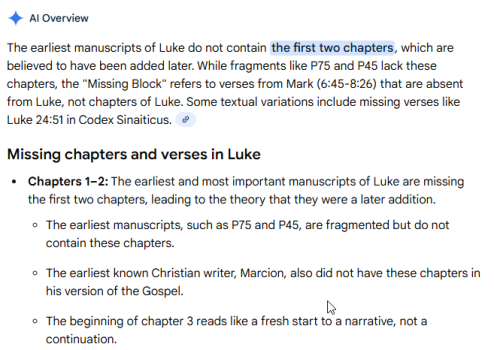
Correction - quick research shows that the 1st two chapters of Luke are absent from the oldest manuscripts.

@dak
 
  • Like
Reactions: dak

Wick Stick

Well-Known Member
Sep 21, 2023
2,424
1,486
113
46
Phoenix
Faith
Christian
Country
United States
@Wick Stick can you make any sense of this?

He seems completely unable to clearly define what he believes, and when he tries, he ends up making contradictory statements, for example, saying “the Lord Jesus Christ is not the Eternal Son” without offering any qualifiers or explanation.

I’ve informed him several times how difficult he is to understand, but instead of speaking plainly, he insists on pontificating in overly elaborate, lexicon-style language.

Maybe you can shed some light on what he believes.
@dak has put a differentiation between the pre-existing Logos, and the man Jesus who was anointed Christ. I await clarification myself as to the relationship between the two, and the theological implications of such.

I have some ideas how/why that might be possible. I'm not sure at all that they're similar to Dak's beliefs, so I'll wait for him to clarify.
 
  • Like
Reactions: Hiddenthings

dak

Well-Known Member
Feb 9, 2013
1,457
188
63
Messianica
sites.google.com
Faith
Other Faith
Country
United States
Gender
Male
I think we're basically on the same page here.

I hope it turns out that way. :Thumbsup:

If this is so, what do we do with the accounts of the virgin birth in Matthew and Luke? Neither appears to be a late addition to those books. If they were "corrected" after the fact, it isn't obvious.

I see you have just found some of the evidence for Luke in the earliest manuscripts having been missing the first two chapters but I uphold those two chapters and think it is a result of "Mattew" having been missing the first two chapters. Once you do the research in the patristic writings it becomes fairly clear that it was the Gospel account now known as Matthew that originally did not contain the first two chapters which are found in the supposed canonical text we now have.

Is there a way that we can retain both the virgin birth, and the adoption at Jesus' baptism? The scissor-men apparently didn't think so... shall I get my own scissors and cut out the opposing passage instead?

Remember what I posted earlier in this thread, here:

@Wick Stick, have you ever read the "Protoevangelium of James", (aka Yakob), text concerning the same subject matter?

View attachment 71889

Protoevangelium of James (aka Apocalypse-Revelation of Yakob) 11:2-3
2 And behold, an angel of YHWH stood before her, saying, Fear not, Maryah, for you have found favor before the Absolute Master of all, you shall retain [seed] from His Logos: but having heard this, Maryah disputed within herself, saying, Shall I conceive by YHWH Elohim the Living and bring forth the same as every woman brings forth?
3 And the Angel of YHWH said to her, Not in that manner, Maryah, for the Power of Elohim shall cast shadow over you: therefore also the holy one being generated from you shall be called "Son of the Highest" [or "Son of the Most High"?].

Uh-oh, time to restudy the parable of the sower: this one cannot be the same as the physical son born in the days of the census of Quirinus, (6-7AD, after Archelaus was deposed and banished).

I have a question for you:
Do you believe "Jesus" spoke the Ten Commandments in Exodus 20?
 

Hiddenthings

Well-Known Member
May 19, 2025
3,777
415
83
Leeton NSW
Faith
Christian
Country
Australia
Do you believe "Jesus" spoke the Ten Commandments in Exodus 20?
@Wick Stick all dak's ranting and raving and he ask's this question :IDK:

The New Testament is silent on the concept of hypostasis, a point on which most intelligent persons agree. If Christ pre-existed in any form, one must then accept a duality of natures; otherwise, the Apostles would have been mistaken in claiming that he shared fully in our human nature (every respect! Heb 2).

For example, if death held dominion over Christ’s nature (Rom 6:9), how could he at the same time be truly divine? Countless theologians have struggled with this issue, as it is not explicitly presented or explained anywhere in the biblical text.

Without this duality, you end up with a divine being who somehow becomes a mortal (fully), dies, and then is raised again as an immortal, an idea that creates significant theological tension.

So, whether you’re like dak, who seems to believe in an eternal Son, though by what means this Son becomes Christ is unclear, the central question remains:

If the Son or Christ did not pre-exist, what effect would that have on the Gospel message / Atonement?

From the Apostles’ perspective, I would suggest that this view clarifies all the passages that speak of Christ becoming or being made. It also brings coherence to the prophecies describing what he would experience and accomplish in becoming the Son of God with power.

None of these ideas make sense if one believes he always existed, how, then, could he be a promised Son?
 

Wick Stick

Well-Known Member
Sep 21, 2023
2,424
1,486
113
46
Phoenix
Faith
Christian
Country
United States
I see you have just found some of the evidence for Luke in the earliest manuscripts having been missing the first two chapters but I uphold those two chapters and think it is a result of "Mattew" having been missing the first two chapters. Once you do the research in the patristic writings it becomes fairly clear that it was the Gospel account now known as Matthew that originally did not contain the first two chapters which are found in the supposed canonical text we now have.
I wonder where you found that?

The conflicting genealogies of Matt and Luke are interesting to me, given the hostility that the rest of the NT shows for genealogies (cf Titus 3:9).

I have generally found Matthew's to have a non-genealogical meaning (its purpose is to count generations, showing fulfillment of prophecy in 1Enoch). The purpose for Luke's has evaded me til now... but if it's a pious forgery that explains it.
Remember what I posted earlier in this thread, here:
Mary being a woman "dedicated" to the temple and engaged in the weaving of veils reconciles Isaiah marvelously. If that wasn't what you meant, say so.
I have a question for you:
Do you believe "Jesus" spoke the Ten Commandments in Exodus 20?
My relationship with Moses is complicated. I see the Mosaic covenant as being punitory... the Israelites worshiped Hathor at the base of Mt Sinai, and as a result God gave them a (temporary) covenant meant to PUNISH them. By the time of Jeremiah, the punishment had already been accomplished, and God was ready to revert to the terms of His covenant with Abraham. Moses presides over a temporary period of PUNISHMENT on Israel.

But, to answer your question... not per se. "Jesus" is anachronistic for the Decalogue. There IS a differentiation to be made between the Logos and Christos.

Perhaps the question might better be posed as, "is 'Logos' is the same as 'Logios?'
 

dak

Well-Known Member
Feb 9, 2013
1,457
188
63
Messianica
sites.google.com
Faith
Other Faith
Country
United States
Gender
Male
I wonder where you found that?

This is a difficult question to answer without offering a plethora of links to be studied, (and a lot of study and reading time). The so-called church fathers, those with firsthand involvement concerning this matter, (Jerome, Eusebius, and two or three others), made a mess of this whole thing by coming up with at least four different Gospel accounts that are intermingled, mistaken by name or incorrectly named by them, and so on, to the point that we now have evidence for a Hebrew "Gospel of Matthew", a "Gospel of the Hebrews", a "Gospel of the Nazoreans", and a "Gospel of the Ebionites", and possibly one more unknown account mixed in among these four that are either known or at least mentioned in the patristic writings, (though which one is which is now in a state of confusion, and there is probably a reason for the confusion, that is, whenever subterfuge is at play).

For starters I offer the following commentary on the so-called Gospel of the Hebrews:


Note also where it begins: Matthew 3:13.

The conflicting genealogies of Matt and Luke are interesting to me, given the hostility that the rest of the NT shows for genealogies (cf Titus 3:9).

Paul also warns against "old wives' tales", (1 Tim 4:7a), which would obviously include the literal-physical birth of a child born from a virgin according to the flesh. They knew that this was not possible in the first century, no doubt, and even further back, Yeshayah the Prophet also no doubt knew that was not physically possible, (let's be honest here).

However that does not mean that the scripture narrative is wrong, it's just that the narrative is not meant to be taken according the physical: the scripture narrative is of a supernal and-or spiritual nature and significance, and the virgin birth story is indeed true, but Trinitarianism, as well as Mr. Christadelphian, have taken the narrative as literal and physical in meaning because they walk not according to the Spirit but according to the flesh.

I have generally found Matthew's to have a non-genealogical meaning (its purpose is to count generations, showing fulfillment of prophecy in 1Enoch). The purpose for Luke's has evaded me til now... but if it's a pious forgery that explains it.

The genealogy in Matthew appears to have been concocted from the genealogy of Zerubbabel written in 1Chr 3:19-24, for example, near the end of that genealogy we see one named Akkub, (עקוב), and you probably know how close this name is to Ya`aqob, (add a yod/yud to the beginning of the word and you have Ya`aqob, re: the father of Yoseph, Matthew 1:16a).

Mary being a woman "dedicated" to the temple and engaged in the weaving of veils reconciles Isaiah marvelously. If that wasn't what you meant, say so.

In that passage from the Protoevangelium Maryah is informed by the Malak of YHWH that she will retain seed from the Logos of the Most High, the Logos-Word of YHWH, the Logos-Word the Father.

Pay close attention to what she disputes in her heart/mind within herself about this statement, and how the Malak of YHWH responds to her internal questioning:

Fear not, Maryah, for you have found favor before the Absolute Master of all, you shall retain [seed] from His Logos: but having heard this, Maryah disputed within herself, saying, Shall I conceive by YHWH Elohim the Living and bring forth the same as every woman brings forth?
3 And the Angel of YHWH said to her, Not in that manner, Maryah, (G3779 ουτως "in this/that way/manner).


The birth being spoken of here is clearly not intended to be understood as a physical birth: it is expounded and is understood according to the teaching of the Meshiah in the parable of the sower. This One born of the virgin is spiritual, and is inward, and cannot be the physical son who is the opener of the matrix.

The one who physically opens the matrix is the Meshiah, born of the seed of David according to the flesh, (Rom 1:3), who is the offspring of the union of Yoseph and Maryah, born in the days of the census of Quirinius, in the year 6-7AD, (Luke 2:1-7). This is why the Luke infancy narrative is so different from the Protoevengelium/Matthew infancy narrative: they are literally two different births. In the first birth both Yoseph and Maryah are born from above, in the same manner as it is taught even for us in the Gospel accounts.

But, to answer your question... not per se. "Jesus" is anachronistic for the Decalogue. There IS a differentiation to be made between the Logos and Christos.

Good, we are therefore on the same page regarding this also, (I just wanted to make sure).
The point now, which I wish to make, is this:

Immediately following the tenth commandment we read the following statement.

Exodus 20:18-19 KJV
18 And all the people saw the thunderings, and the lightnings, and the noise of the trumpet, and the mountain smoking: and when the people saw it, they removed, and stood afar off.
19 And they said unto Moses, Speak thou with us, and we will hear: but let not God speak with us, lest we die.

The underlined portion above is the true origin for the name Immanuel, which Yeshayah the Prophet no doubt received from the passage with an understanding by way of the Spirit of the Father upon him, so he was given the name Immanuel from both the Word of the Father, (the Torah), and the Logos-Word of the Father, (the Son, Immanuel).

The underlined portion from the Hebrew text:

ואל־ידבר עמנו אלהים

But let not speak immanu Elohim = But let not speak with us Elohim.

This therefore could not have been "Jesus", (as a lot of Trinitarians say).

Moreover Elohim spoke the Ten Commandments through Mosheh because the Spirit of the Father was upon him. All that is necessary is to follow the text from the end of Exodus 19 into the beginning of Exodus 20 without regard to the chapter break now having been inserted into modern Bibles.

Exodus 19:24-20:1
24 And the LORD said unto him, Away, get thee down, and thou shalt come up, thou, and Aaron with thee: but let not the priests and the people break through to come up unto the LORD, lest he break forth upon them.
25 So Moses went down unto the people, and spake unto them.
01 And God spake all these words, saying,

Elohim, the Son and the Spirit of the Father, spoke through Mosheh the man of Elohim, and gave the Ten Commandments: and apparently the voice of Mosheh was altered, and thundered with the power of Elohim as the Spirit spoke through him, and the people feared greatly, so much so that they thought they were about to die.

This cannot have been "Jesus", but it was indeed the eternal Logos-Son who is ever in the bosom of the Father, even at His right hand side.
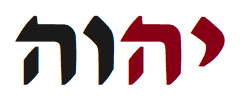

Tetragrammaton.png
 

Wick Stick

Well-Known Member
Sep 21, 2023
2,424
1,486
113
46
Phoenix
Faith
Christian
Country
United States
The New Testament is silent on the concept of hypostasis, a point on which most intelligent persons agree.
It's a word in the Bible: Hypostatis

Only the book of Hebrews seems to use it for its metaphysical sense (x3).
If Christ pre-existed in any form, one must then accept a duality of natures; otherwise, the Apostles would have been mistaken in claiming that he shared fully in our human nature (every respect! Heb 2).
Logos pre-exists, not necessarily Christ.

Christ can mean a couple different things. The Biblical meaning seems to be 'anointed,' in the sense of being consecrated as a priest or a king. If that's true, then one doesn't start out that way... they would be consecrated/anointed at some point mid-life.

The idea of a pre-existent Christ uses the word in a different sense - as a Platonic form or an Emanation from the Godhead. Those are both Greek/Gnostic ideas.

The Bible doesn't talk much about that. Paul has a few words to refute the idea that Jesus was indwelt by an Emanation of only one aspect of the Godhead, insisting that ALL the FULNESS of the Godhead dwelt in Him (Colossians). This may have been prompted by...

Simon Magus, who claimed to be indwelt by an Emanation of God (exousia=power), while Jesus was indwelt by another Emanation (christos). This paragraph isn't supported Biblically, but is attested historically. Archaeology has Simon's grave, which attests the first half, at least.
For example, if death held dominion over Christ’s nature (Rom 6:9), how could he at the same time be truly divine? Countless theologians have struggled with this issue, as it is not explicitly presented or explained anywhere in the biblical text.

Without this duality, you end up with a divine being who somehow becomes a mortal (fully), dies, and then is raised again as an immortal, an idea that creates significant theological tension.
By "nature" do you mean ousia or psyche? I'm having a hard time understanding the meaning of your first sentence.

Adoptionism sees this more as 'a divine being possesses a mortal, and after his death raises him to immortality.' I'm not sure that creates the same theological tension.
So, whether you’re like dak, who seems to believe in an eternal Son, though by what means this Son becomes Christ is unclear, the central question remains:

If the Son or Christ did not pre-exist, what effect would that have on the Gospel message / Atonement?
The vocabulary makes this hard. I am pretty sure at this point that Dak and I use a few words differently.

I have suggested twice here that differentiation between the Logos and the Lord Jesus Christ, while it is a thing in Scripture, doesn't seem to have a theological point to it. I don't know that it really changes anything. If a Christian cannot split that hair (and most don't), it doesn't seem to have any deleterious effects.

One doesn't need to understand the metaphysics of adoption between God and man, to actually be adopted.
 

Hiddenthings

Well-Known Member
May 19, 2025
3,777
415
83
Leeton NSW
Faith
Christian
Country
Australia
It's a word in the Bible: Hypostatis
But never in relation to duality of natures - Heb 1:3 is possibly the only instance where it could be forced but they have no context.
Only the book of Hebrews seems to use it for its metaphysical sense (x3).
Correct - the other two instances have nothing to do with duality of nature.
Logos pre-exists, not necessarily Christ.
Correct.
Christ can mean a couple different things. The Biblical meaning seems to be 'anointed,' in the sense of being consecrated as a priest or a king. If that's true, then one doesn't start out that way... they would be consecrated/anointed at some point mid-life.
Agree
The idea of a pre-existent Christ uses the word in a different sense - as a Platonic form or an Emanation from the Godhead. Those are both Greek/Gnostic ideas.
Agree.
The Bible doesn't talk much about that. Paul has a few words to refute the idea that Jesus was indwelt by an Emanation of only one aspect of the Godhead, insisting that ALL the FULNESS of the Godhead dwelt in Him (Colossians). This may have been prompted by...
Colossians 2:9 - context is speaking to the raised Christ (New Creation) who had put on immortality and passed through his rent flesh into the Heavens.
Simon Magus, who claimed to be indwelt by an Emanation of God (exousia=power), while Jesus was indwelt by another Emanation (christos). This paragraph isn't supported Biblically, but is attested historically. Archaeology has Simon's grave, which attests the first half, at least.
Though having power does not relate to nature. The change in nature we are discussing is that which Romans 1 clearly defines.

1:3 concerning his Son who was a descendant of David with reference to the flesh (condemned!), 1:4 who was appointed the Son-of-God-in-power according to the Holy Spirit by the resurrection from the dead, Jesus Christ our Lord. Ro 1:3–4.

This opening creates discomfort for many theologians because it directly ties Christ's Sonship to his resurrection. The language appointed, according to, and by, places the emphasis squarely on the resurrection, not on his birth, baptism, or any other stage of his mortal life.

The reason Christ could not be the Son of God - with Power is due to 1 Corinthians 1:29 "That no flesh should glory in his presence."

At no time could the Lord ascend heaven until his change in nature.

By "nature" do you mean ousia or psyche? I'm having a hard time understanding the meaning of your first sentence.

Neither.

Hebrews 2:14 teaches that “the children share in flesh and blood”, that’s us, human beings. The text continues by saying that Jesus likewise shared fully in that same humanity, so that through death He could destroy the one who held the power of death.

The “devil” in this context is the power of sin, for the wages of sin is death (Rom 6:23) Only sin has power to bring death, and sin is rooted in our mortal nature. Christ therefore shared the same nature we possess, subject to mortality, temptation, and death.

God broke the power of sin not by bypassing human nature, but by raising a Son who, through perfect obedience even to death, revealed God’s righteousness. In doing so, He conquered sin and death exactly what Paul proclaims in 1 Corinthians 15:57.

“…and set free all those who were held in slavery by their fear of death” (Heb 2:15).

Death comes through inherited mortality and personal sin. Christ entered that same human condition so he could liberate us from it.

Verse 16 reminds us that his mission was not to save angels (who possess a divine nature and are not subject to mortality), but Abraham’s descendants, those bound by death (by fear).

Thus Hebrews 2:17 says he had to be made like His brothers and sisters in every way, in order to be a faithful and merciful High Priest and to make atonement for our sins. Anything less than full participation in our nature would undermine the entire argument of the passage.

To say Christ had two natures would contradict the text’s emphasis. The power of salvation rests precisely on the fact that Christ fully entered our mortal condition and overcame sin within it.

“For since he himself suffered when He was tempted, He is able to help those who are tempted” (Heb 2:18; cf. Rom 8:1–3).

Christ’s victory was not contrived, it was won in the very same nature we possess.

Adoptionism sees this more as 'a divine being possesses a mortal, and after his death raises him to immortality.' I'm not sure that creates the same theological tension.

It's a false teaching which is why I am yet to receive answers from almost all of my questions to dak. The inheritance is a biggy! I know he has no answer for duality of nature as in the past 30 years I've never seen a person prove this doctrine with a shred of Biblical evidence.

The vocabulary makes this hard. I am pretty sure at this point that Dak and I use a few words differently.

I have suggested twice here that differentiation between the Logos and the Lord Jesus Christ, while it is a thing in Scripture, doesn't seem to have a theological point to it. I don't know that it really changes anything. If a Christian cannot split that hair (and most don't), it doesn't seem to have any deleterious effects.

One doesn't need to understand the metaphysics of adoption between God and man, to actually be adopted.
Logos belongs to Yahweh alone. The Victory of Sin's Flesh required the full manifestation of God's character within a condemned person.

This is why we read of the Master's pleading for deliverance from death (i,e Sin's flesh)

"In the days of his flesh, Jesus offered up prayers and supplications, with loud cries and tears, to him who was able to save him from death, and he was heard because of his reverence" Hebrews 5:7

In all my years on forums, I have rarely, if ever seen a Christian seriously engage with this verse. When Hebrews 5:7 is considered together with Hebrews 2, there is simply no space left for the hypostasis doctrine. What the Logos of God accomplished in and through Christ resulted in the Son of God being raised in immortality and granted life. The text presents the Son as one who truly depended on God, who prayed to be saved from death, and who received life as a gift (reward / inheritance), not as someone possessing inherent immortality from eternity.

@dak cannot refute this and has no tools in his bag of tricks to explain away Hebrews 2, 5, 6 & Romans 8.

If Romans 1 and Hebrews 1 are interpreted to support the idea of His eternal Sonship in the bosom of God, then the remaining chapters in this books provide no additional evidence for that claim.

As you can see it speaks to the opposite.

Jesus being fully man qualified for his atoning work.

“For we do not have a high priest who is unable to sympathize with our weaknesses, but one who in every respect has been tempted as we are, yet without sin.”

He wasn't tempted in a dual nature but in yours!

The Victory was real.
 
Last edited:

Hiddenthings

Well-Known Member
May 19, 2025
3,777
415
83
Leeton NSW
Faith
Christian
Country
Australia
@Wick Stick, I’m beginning to think Dak hasn’t fully worked through his eternal Son doctrine. Much of the past confusion and tension between us seems to stem from his inability to clearly articulate how he understands it.

You would understand my position and see how easy it is to assume that dak holds some form of Trinitarian theology regarding the nature of Christ.

If he cannot express his beliefs clearly and I make assumptions, it can only lead to misunderstandings. The same issue arose when he discussed the Torah, showing an inability to grasp how the Abrahamic covenant serves as the foundation for the Gospel and salvation (by promise).

I spent many weeks trying to get him to discuss the Promises to the Forefathers, but without success. I wonder if his reluctance to explain how his Eternal Son became the Anointed Christ will lead to a similar outcome.

I'm sure time will tell.
 

dak

Well-Known Member
Feb 9, 2013
1,457
188
63
Messianica
sites.google.com
Faith
Other Faith
Country
United States
Gender
Male
@Wick Stick, more resources to add to my previous post:

Gospel of the Ebionites, a Gospel harmony including Matthew and Luke: it begins with the immersion account, (missing first two chapters).


Gospel of the Nazoreans


A lengthy article concerning the Psalm 2:7 decree originally having been in Matthew and Luke using critically important patristic evidence from their own testimonies and arguments.

 
  • Like
Reactions: Wick Stick

Hiddenthings

Well-Known Member
May 19, 2025
3,777
415
83
Leeton NSW
Faith
Christian
Country
Australia
A lengthy article concerning the Psalm 2:7 decree originally having been in Matthew and Luke using critically important patristic evidence from their own testimonies and arguments.

@Wick Stick

To understand the act of baptism versus the reality it signifies (death and resurrection, as outlined in Romans 6), we must grasp what baptism points toward: how the Anointed One was spiritually born through his resurrection and raised to immortality.

Here is the significance of his baptism in relation to him being saved from the condemnation of death.
  • “Water” – symbolizes cleansing. God was well-pleased at his baptism (Matt 3:13–16), which ultimately points forward to the shedding of his blood, of which baptism was a type (Luke 12:50).
  • “Water and Blood” – used in the Old Testament to ratify covenants (Heb 9:19) and for ceremonial cleansing, such as the leper (Lev 14:5–7).
  • Adam’s bride came from his pierced side; similarly, Christ died (blood) for his bride and cleanses her (water) by the Word (Eph 5:25–26).
  • Spirit, water, and blood serve as witnesses to his priesthood (1 John 5:8; cf. Lev 8:6, 12, 23–24).
  • Note the order in 1 John 5:6: He came by “water and blood”, the perfect sacrifice for us.
  • “Blood and water” signifies salvation through him, as reflected in baptism (Rom 6:4).
Where dak emphasizes the Master’s demonstration of a good conscience, the Apostles understood that his death and resurrection were the true fulfillment of what baptism foreshadowed. It is at this point through resurrection that his Sonship is fully confirmed, as the Holy Spirit raises him to immortality.

If dak believes that the Living God would be satisfied with a Son who remained under condemnation and destined for death, then he has misunderstood the nature of the Living God.

This is why the Master’s words prior to his baptism are essential—they reveal this understanding before the act itself.

He said “It becometh us”; note how both he and John are identified (Hebrews 2:10–11) @wick - read those verses again!

“All righteousness” Emphasize “all”: the Lord had fulfilled every moral requirement up to this point.

Another aspect: the acknowledgment that “all flesh is grass” (Isaiah 40:6) contrasts with the positive declaration of “His righteousness” (Romans 3:24).

Wick, its all there though its hidden from many!
 
Last edited:

Hiddenthings

Well-Known Member
May 19, 2025
3,777
415
83
Leeton NSW
Faith
Christian
Country
Australia
@Wick Stick, regarding the Baptism of Jesus and the words Yahweh spoke about him, we also have the account of the Transfiguration, which provides a clear affirmation of his Sonship, divine approval, and the command to listen to him.

Matt 17:5 “…in whom I am well pleased” (also 2 Pet. 1:17)

This cannot be applied to a pre-existent Divine Son, as the passage emphasizes obedience and implies the existence of two wills: “not my will, but Thy will be done.” Christ choose his Fathers Will over his own fleshly will every time and this is the basis of “…in whom I am well pleased”

The words draw from key Scriptures: Isa. 5:1; Ps. 2:7; Isa. 42:1 (cf. Mark 12:6)

Greek: “My Son, the Beloved”

“Hear Him” The fullness of God’s revelation comes not through the Law and the Prophets, but through the Son. “God… has spoken to us by His Son” Heb. 1:1

The probationary life of Christ, tasked with overcoming sin in the flesh, is met with the Father’s approval, strengthening him for the fulfillment of his purpose.
 
Last edited:

Hiddenthings

Well-Known Member
May 19, 2025
3,777
415
83
Leeton NSW
Faith
Christian
Country
Australia
@Wick Stick have you ever looked at the foreshadowing of Christ in Exodus 21:6?

Exodus 21:6 “Then his master shall bring him to God, and he shall bring him to the door or the doorpost. And his master shall bore his ear through with an awl, and he shall serve him forever.”
 
Last edited:

Hiddenthings

Well-Known Member
May 19, 2025
3,777
415
83
Leeton NSW
Faith
Christian
Country
Australia
@Wick Stick

Hebrews 5:5 So also Christ did not glorify himself in becoming high priest, but the one who glorified him was God, who said to him, “You are my Son! Today I have fathered you,” 5:6 as also in another place God says, “You are a priest forever in the order of Melchizedek.” Heb 5:5–6.

When was Jesus glorified?

Psalm 2:7 is applied in Hebrews 1:5 to Christ in connection with his glorification and appointment as High Priest. The “today” of Psalm 2:7 therefore refers to his resurrection, not his birth (or baptism). This is supported by Romans 1:3–4, Isaiah 55:3, and Acts 13:33–34.

The apostles consistently show that Christ’s Sonship in power and his High-Priesthood originate from his resurrection. This is entirely fitting, since Jesus truly died, his life fully ceased and God, his Father, raised him from the dead and exalted him, declaring him to be the Son of God with power, clothed with glorified nature.
 

Wick Stick

Well-Known Member
Sep 21, 2023
2,424
1,486
113
46
Phoenix
Faith
Christian
Country
United States
@Wick Stick have you ever looked at the foreshadowing of Christ in Exodus 21:6?

Exodus 21:6 “Then his master shall bring him to God, and he shall bring him to the door or the doorpost. And his master shall bore his ear through with an awl, and he shall serve him forever.”
No - how does that foreshadow Christ?
 

Wick Stick

Well-Known Member
Sep 21, 2023
2,424
1,486
113
46
Phoenix
Faith
Christian
Country
United States
@Wick Stick

Hebrews 5:5 So also Christ did not glorify himself in becoming high priest, but the one who glorified him was God, who said to him, “You are my Son! Today I have fathered you,” 5:6 as also in another place God says, “You are a priest forever in the order of Melchizedek.” Heb 5:5–6.

When was Jesus glorified?

Psalm 2:7 is applied in Hebrews 1:5 to Christ in connection with his glorification and appointment as High Priest. The “today” of Psalm 2:7 therefore refers to his resurrection, not his birth (or baptism). This is supported by Romans 1:3–4, Isaiah 55:3, and Acts 13:33–34.

The apostles consistently show that Christ’s Sonship in power and his High-Priesthood originate from his resurrection. This is entirely fitting, since Jesus truly died, his life fully ceased and God, his Father, raised him from the dead and exalted him, declaring him to be the Son of God with power, clothed with glorified nature.
All that is clear from Hebrews is that the priesthood follows with the office of king. The timing is not specific here.

Acts 13 provides a stronger argument.

But let me repeat myself, as neither you nor @dak seems to have heard what I said. The Bible can say that Jesus glorification, adoption... whatever-you-want-to-call-it... was at His resurrection... or His baptism... and that doesn't negate the other position. Both can be true simultaneously. Hebrew thought allows for it.
 

dak

Well-Known Member
Feb 9, 2013
1,457
188
63
Messianica
sites.google.com
Faith
Other Faith
Country
United States
Gender
Male
All that is clear from Hebrews is that the priesthood follows with the office of king. The timing is not specific here.

Acts 13 provides a stronger argument.

But let me repeat myself, as neither you nor @dak seems to have heard what I said. The Bible can say that Jesus glorification, adoption... whatever-you-want-to-call-it... was at His resurrection... or His baptism... and that doesn't negate the other position. Both can be true simultaneously. Hebrew thought allows for it.

I heard what you said but I disagree in the case of Acts 13 because the author specifically lays it out as a line of sequential events by using δε in a critically important place, and δε is also a particle of continuance, but, translators render it here as and, though it should more commonly be rendered as but, (things that are different are different for a reason, (δε -vs- και).

Acts 13:34
34 οτι δε ανεστησεν αυτον εκ νεκρων μηκετι μελλοντα υποστρεφειν εις διαφθοραν ουτως ειρηκεν οτι δωσω υμιν τα οσια δαυιδ τα πιστα

My previous rendering of the passage easily shows the more impactful meaning of this little semi-break that was intended in the passage, for it is clear that the author goes from speaking of the raising up "that Prophet" to be sent unto Yisrael, (where he quotes the decree), and after δε he goes straight into the raising up of "that Prophet" from the dead. The particle δε makes that point quite obvious but the translators, for fairly obvious reasons, render it as and instead of but. Why would they do this when it obfuscates what is clearly intended? They do it because they no longer feel they have any evidence for the decree occurring at his immersion because it has been deleted from two of the Gospel accounts by their own predecessors and because it also destroys their Trinity version of the eternal Son doctrine.

As for the ongoing discussion since I last replied, that concerning the immersion: it is seven steps, that is, seven plunges according to the scripture, (2Kngs 5:14), and remember also what was said about the seven steps in the Bezae version of Acts, (now also deleted from the modern version of Acts), concerning the spiritual death of Peter, foretold by the Master in John 21:18-19, which was fulfilled in Acts 12:3-11. The miqweh, (mikveh) is always supposed to have seven steps.

However the immersion of Yohannei was only six plunges divided into two parts: the first three plunges, (then comes the trial and testing in the desert by the Tempter), and then the second three plunges if the one immersed returns to Yohannei with the Spirit yet abiding and remaining upon him, (John 1:32-33, meaning the one immersed has overcome, having passed through the time of trial and testing). The seventh plunge is later, and is the immersion into death, (the crucifixion at Golgotha, in the physical, concerning the Meshiah), and this immersion is not witnessed by the same immerser, (it was obviously not Yohannei the Immerser because he had been beheaded). These seven plunges are the one complete immersion: therefore our immersion into Meshiah is an immersion into his death, (Rom 6:3-4), not physical but spiritual because his Testimony is Spirit and Life, (John 6:63).