Daniel Wallace, in
Greek Grammar Beyond the Basics (pp. 334-335), says the following about
Ephesians 2:8:
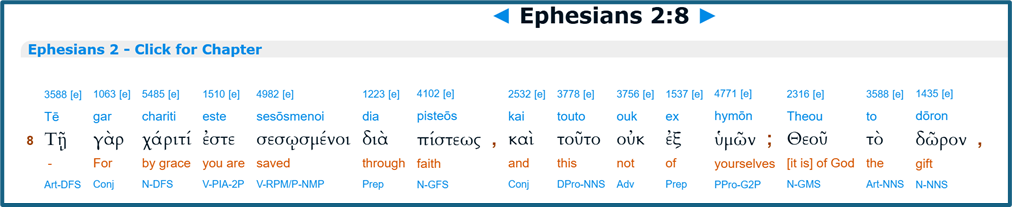
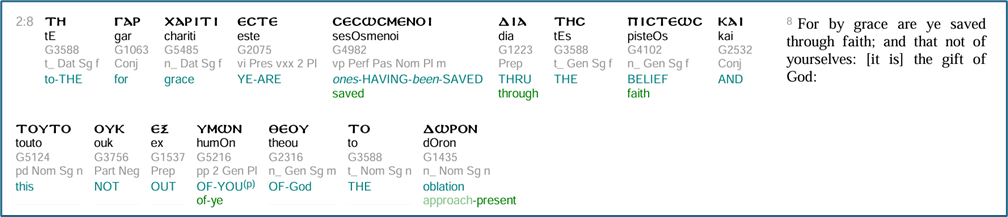
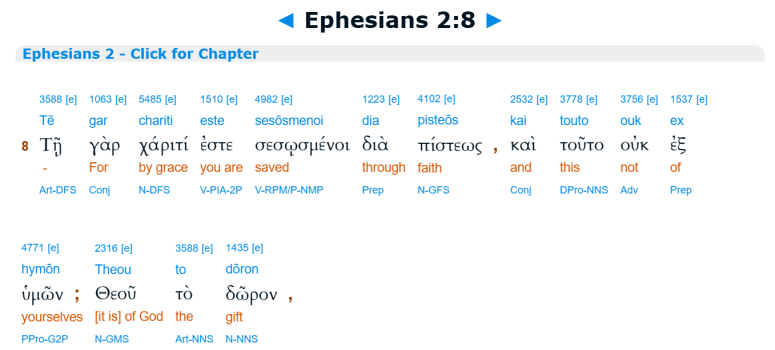
This is the most debated text in terms of the antecedent of
the demonstrative pronoun, touto [this]. The standard interpretations include: (1) "grace" as antecedent, (2) "faith" as antecedent; (3) the concept of a grace-by-faith salvation as antecedent, and (4) kai touto [and this] having an adverbial force with no antecedent ("and especially").
The first and second options suffer from the fact that
touto is neuter while
chariti [grace] and pistews [faith] are feminine. ... More plausible is the third view, viz., that touto refers to the concept of a grace-by-faith salvation. As we have seen,
touto regularly takes a conceptual antecedent. Whether faith is seen as a gift here or anywhere else in the NT is not addressed by this.
A fourth view is that kai touto is adverbial, though this view has surprisingly made little impact on the exegetical literature. If adverbial, kai touto is intensive, meaning "and at that, and especially," without having any antecedent. It focuses on the
verb rather than any noun [Wallace then references
3 John 5 as an example of this usage]. ... The issues here are complex and cannot be solved by grammar alone. Nevertheless, syntactical considerations do tend toward one of the the latter two views.