Where precisely are these "socialist countries" you decry as equally collapsing in silence today? Libya—the one true exemplar of a resource-driven, family-centric socialism under Gaddafi—lies in ruins, its Jamahiriya shattered by NATO's "humanitarian" thunderbolts in 2011.However,
Population collapse is happening just the same in Socialist countries....the difference between socialists and capitalists?
The socialists/communists are lying about the collapse.
No one dares tell the truth that the party has not approved to be told. And news that the Party is failing the people? That's never going to get out. The socialist/communist nations are struggling to keep up their demographics and also have liberal immigration policies with financial incentives....they are just not as loud about it....but the population is much more prejudiced....and the immigrants more subdued than in Capitalist nations.
However, you bring up a great point about war.
During wartime, nobody has babies. People wait, men die, and people wait for peacetime to have children due to economic uncertainty.
When people have to change jobs regularly to simply not starve or be homeless, or are starving, feel they have insufficient resources or whatever....they are under the same exact economic uncertainty as a nation in war time. Zero difference whatsoever. Nobody engages in dating or romance.
It all has to do with surplus income.
When the population at large has surplus income and resources they will procreate willingly.
When only men went to work and women generally did not before WW2 and careers were fairly stable. Birth rates of 3-4 per woman were had. We need to return to that if we want to keep our cultures alive. And communism or socialism are the worst answers.
UNRESTRAINED Capitalism is also not the answer as it has evolved into today's problem as well.
We need to put the restrictions back.
No more Blair Mountain situations allowed.....which means many many of the Anti-trust regulations need to be restored. Business permits/ licenses need to be more restricted. Some corporations dissolved. Painful but necessary.
The remnants—nations like Cuba, Venezuela, or North Korea—are not laboratories of pure socialism but embattled fortresses under siege from every quarter: sanctions that strangle trade, blockade supply lines, and inflate misery. Even so, consider North Korea, the hermit kingdom battered by isolation and famine: its total fertility rate (TFR)
1970-s ~3.5–4.0 / 1980-s~2.5–3.0 / 1990-s~2.0–2.5 / 2000-s 1.9–2.1 / 2010-s ~1.8–1.9 / hovers at approximately 1.8 children per woman as of 2023 (UN Population Division estimates), perilously low yet still edging above the United States' dismal 1.62 in 2023—a 3% plunge from 2022's 1.66, and a 21% nosedive since the 2007 peak of 2.12 (CDC National Vital Statistics). Pyongyang's woes are real, but they whisper a truth: even under duress, socialism's emphasis on communal support yields a demographic resilience that raw capitalism often lacks.
Now, cast your gaze to the Soviet Union, that colossus of industrial socialism, unmolested by external hammers until its engineered implosion in 1991. Far from concealing a collapse, the USSR's demographics were a triumph of deliberate policy amid the forge of modernity. Throughout the 1970s and nearly all the 1980s, its TFR held steadfast above the replacement level of 2.1—averaging a healthy 2.4–2.5 children per woman. Peaks included 2.46 in 1978–1979 and a remarkable 2.58 in 1986–1987, spurred by Gorbachev's maternal capital incentives. This was no fluke of faith or flood of foreigners; it was one of the few industrialized powers—sans religious fervor or mass immigration—sustaining above-replacement fertility in an era when the West faltered: the U.S. at 1.7, West Germany at 1.3–1.5, Italy scraping 1.3–1.6 (UN and Goskomstat data). The Party did not lie; it invested—in free crèches, paid leaves, and a cultural chorus extolling the worker-mother. Collapse? Hardly. It was a model, until the West's invisible hand dismantled it.
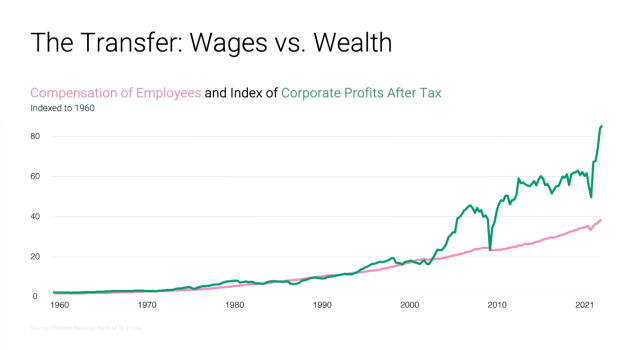
You are spot on: the proletariat—be they janitors or surgeons, teachers or coders—endures a perpetual siege against owners and investors, a cold war of attrition where the foot soldiers bleed resources while the generals feast. In this theater, the worker is not a citizen but a consumable: a cog to be spun until it snaps. The tragedy deepens because this "resource" is finite, self-replenishing only through the miracle of birth—and no one, neither state nor corporation, deigns to foot the bill. Parents cannot afford the extravagance of progeny; a single child devours wages like a black hole, from cradle to campus. Neither the faceless bureaucrat nor the boardroom titan will subsidize the next generation's dawn. The result? A demographic abyss, a civilizational suicide where empty nurseries echo the silence of unspoken surrenders.
We stand at a precipice: not between socialism and capitalism as absolutes, but between systems that nurture the family and those that devour it. Restraints on capital are a start, but without restoring the communal sinews—affordable homes, secured leaves, a surplus born of solidarity—we court the very extinction we decry.