Okay thanks and no I don't mind
I do see the little horn differently than you do though
Marty, I apologize, I promised I would sent you a cut / paste for trhe 4 riders... here are the last two....
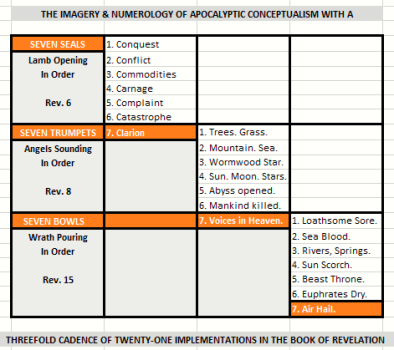
Revelation 6:5-6 (Third seal)
5 When He opened the third seal, I heard the third living creature say, “Come and see.” So I looked, and behold, a black horse, and he who sat on it had a pair of scales in his hand. 6 And I heard a voice in the midst of the four living creatures saying, “A quart of wheat for a denarius, and three quarts of barley for a denarius; and do not harm the oil and the wine.”
The black horse of the third seal in Revelation 6:5–6 paints a vivid picture of spiritual and institutional corruption during the papacy’s reign. Its rider holds a pair of scales, representing the weighing and transactional treatment of spiritual truths and leadership. The proclamation of "a quart of wheat for a denarius, and three quarts of barley for a denarius" highlights the exploitation and manipulation within the medieval church, where sacred matters were often monetized for power and profit. While some interpret this metaphor as referencing famine or economic hardship, it might be understood as reflecting the practice of
simony—the buying and selling of church positions. High-ranking roles, symbolized by wheat, required a significant price, while lesser positions, represented by barley, were more affordable. This system corrupted the church’s mission, turning sacred offices into commodities that prioritized wealth and influence over spiritual integrity.
The living creature’s role in calling John to "come and see" aligns with their testimony that could expose the depth of corruption within the church and call for a return to genuine faith and leadership. The scales held by the rider emphasize the church’s deviation from truth, as spiritual matters were weighed and sold rather than freely shared according to God’s Word. The voice calling out during this seal appears to serve as an alert to draw attention to the depth of the church’s corruption. It likely indicts the church leadership for their failure to uphold their spiritual calling and highlights the disparity between their actions and the gospel they were entrusted to preach. This period precedes the Protestant Reformation (1517 AD onward), and the alert could be seen as a precursor to the prophetic voices of reformers like Martin Luther, John Wycliffe, and others who would rise to challenge these abuses.
The audience for this alert may have been multifaceted. It likely included the faithful remnant within the church who were unaware of the full extent of the corruption, encouraging them to resist and take action. It may also have been aimed at future reformers, serving as an early call to those who would later confront the church’s failings. Additionally, the oppressed and exploited, who suffered under the church’s corrupt systems, might have found solace in hearing that their plight had not gone unnoticed by God. This voice is significant not only for its message but for the fact that it is spoken by a living creature, suggesting the importance of this moment in the prophetic timeline. The alert serves as both an exposure of corruption and a preparatory call for the reform and upheaval that would come. This moment aligns with God’s historical pattern of raising voices to call out injustice, as seen with the prophets in the Old Testament, and sets the stage for the eventual Protestant Reformation, when these abuses would be directly confronted and challenged.
The command not to harm the oil and wine is a significant counterpoint, symbolizing God’s preservation of true spiritual anointing (oil) and the purity of Christ’s redemptive work (wine). Despite the church’s corruption, God ensures that His Spirit and salvation remain untouched, providing hope and truth for those who genuinely seek Him. In the broader context of the seals, the black horse follows the red horse’s depiction of violence and persecution. Together, they show the progression from the church’s outward aggression to its inward corruption. Yet, even amid this decline, God’s Spirit and the message of salvation remain steadfast, reminding believers of the unshakable foundation of His truth.
Revelation 6:7-8 (fourth seal)
7 When He opened the fourth seal, I heard the voice of the fourth living creature saying, “Come and see.” 8 So I looked, and behold, a pale horse. And the name of him who sat on it was Death, and Hades followed with him. And power was given to them over a fourth of the earth, to kill with sword, with hunger, with death, and by the beasts of the earth.
The pale horse of the fourth seal in Revelation 6:7–8 is a powerful symbol of both spiritual and perhaps even physical devastation. If the seals reflect the progression of the papacy through history, this horse likely represents the later Middle Ages and the Reformation era—a time marked by widespread suffering, including plagues like the Black Death, famines, unrelenting wars, and the persecution of those who resisted the church’s authority. These catastrophic events paralleled a period of profound spiritual desolation, as the church’s increasing corruption and misuse of power led many away from the true gospel.
The rider of the pale horse is named "Death," with "Hades" following closely behind. This pairing might underscore the dual nature of the devastation: physical death and spiritual loss. Death claims lives in the material world, while Hades symbolizes the spiritual consequences—eternal separation from God for those led astray. This grim reality aligns with the church’s suppression of spiritual truth during this era. Through persecution, doctrinal errors, and the withholding of God’s Word, the papacy contributed to spiritual and eternal desolation for countless souls.
Alternatively, the destruction through the four means could be entirely symbolic: the sword, hunger, death, and the beasts of the earth. The sword represents the distortion and misuse of the Word of God, wielded to enforce corrupted doctrines and suppress dissent. Hunger signifies a famine of spiritual truth, where the faithful are deprived of access to God’s untainted Word, leaving them vulnerable to manipulation. Death symbolizes the spiritual desolation that arises from a departure from true faith, leading many away from the hope of salvation. Finally, the beasts of the earth represent the persecutors of the faith—those (little horn) who actively seek to undermine the Word of God and oppress believers through false teachings and authoritarian control. Together, these forces portray a period of intense spiritual conflict and decline, underscoring the catastrophic impact of departing from God’s truth.
The rider's dominion over a fourth of the earth symbolizes significant but not total influence, reflecting the papacy’s reach during this period. While its authority spanned much of Europe, it was not global. The tools of destruction mentioned—sword, hunger, death, and beasts—illustrate the multifaceted suffering of this time. The pale horse embodies the ultimate consequences of the previous seals. The white horse symbolized a false savior, the red horse represented violence and persecution, and the black horse highlighted corruption and spiritual famine. The pale horse brings all these elements together, culminating in widespread devastation and spiritual desolation. This reflects the compounding effects of the church’s departure from true faith and its devastating impact on individuals and societies. The fourfold destruction of sword, famine, death, and beasts mirrors the judgments described in Ezekiel 14:21, where God speaks of “four severe judgments” upon Jerusalem. This parallel reinforces the idea that these judgments are both divine warnings and the natural consequences of spiritual rebellion. The imagery reminds us of the seriousness of straying from God’s truth.