So Joseph married Mary but didn’t have sex?

  • Welcome to Christian Forums, a Christian Forum that recognizes that all Christians are a work in progress.

    You will need to register to be able to join in fellowship with Christians all over the world.

    We hope to see you as a part of our community soon and God Bless!

Moonwood

Member
Aug 24, 2026
121
42
28
Pacific Northwest
Faith
Christian
Country
United States
Gender
Female
Inherent implication isn't the point. How do people fluent in a language use it to communicate?

If heos does not inherently imply resumed normal behavior after the terminus, neither does it imply the continuance of the exceptional behavior afterwards. If you are going to rigidly follow dictionary meanings and grammatical rules, then you have to say, "We don't know whether or not Mary and Joseph enjoyed normal marital relations."

Matthew isn’t indicating Joseph and Mary had marital relations after Jesus’s birth but the status of Jesus’s origin and Joseph’s role. Heos marks the period before the birth because that is where the paternity issue is relevant. As you’ve acknowledged, heos does not inherently imply either reversal or continuation, which means Matthew 1:25 does not speak to what happened afterward. Any conclusion about later intercourse is supplied by the reader, not by the Greek text.
 

Lambano

Well-Known Member
Jul 13, 2021
10,576
13,225
113
Island of Misfit Toys
Faith
Christian
Country
United States
Gender
Male
As you’ve acknowledged, heos does not inherently imply either reversal or continuation, which means Matthew 1:25 does not speak to what happened afterward. Any conclusion about later intercourse is supplied by the reader, not by the Greek text.
Then with any communication channel, when you have uncertainty in the message, you have to apply probabilistic methods.
 

Moonwood

Member
Aug 24, 2026
121
42
28
Pacific Northwest
Faith
Christian
Country
United States
Gender
Female
Then with any communication channel, when you have uncertainty in the message, you have to apply probabilistic methods.

Matthew isn’t indicating Joseph and Mary had marital relations after Jesus’s birth but the status of Jesus’s origin and Joseph’s role. Heos marks the period before the birth because that is where the paternity issue is relevant. As you’ve acknowledged, heos does not inherently imply either reversal or continuation, which means Matthew 1:25 does not speak to what happened afterward. Probabilistic inference isn’t a substitute for what the text actually says. Any conclusion about later intercourse is supplied by the reader, not by the Greek text.
 
Last edited:

Lambano

Well-Known Member
Jul 13, 2021
10,576
13,225
113
Island of Misfit Toys
Faith
Christian
Country
United States
Gender
Male
Probabilistic inference isn’t a substitute for what the text actually says.
Probabilistic inference is necessary when certainty is not possible.

In this case, the largest denomination in Christendom has established a major doctrine that cannot be supported by "what the text actually says".

If you argue that the doctrine of Mary's perpetual virginity is supported by the testimony of the Early Church Fathers, then I'll have to echo your phrase, "the testimony of the Early Church Fathers isn't a substitute for what the Biblical text actually says".
 

Moonwood

Member
Aug 24, 2026
121
42
28
Pacific Northwest
Faith
Christian
Country
United States
Gender
Female
Probabilistic inference is necessary when certainty is not possible.

In this case, the largest denomination in Christendom has established a major doctrine that cannot be supported by "what the text actually says".

If you argue that the doctrine of Mary's perpetual virginity is supported by the testimony of the Early Church Fathers, then I'll have to echo your phrase, "the testimony of the Early Church Fathers isn't a substitute for what the Biblical text actually says".

Probabilistic inference isn’t relevant here because Matthew isn’t communicating uncertainty. He isn’t indicating anything about Joseph and Mary’s later relations; he’s underlining Jesus’s origin and Joseph’s role. Heos marks the period before the birth because that is where the paternity issue is relevant. As you’ve acknowledged, heos does not inherently imply either reversal or continuation, which means Matthew 1:25 is not indicating that they did or did not have intercourse afterward. Any conclusion about later intercourse is supplied by the reader, not by the Greek text.
 

Lambano

Well-Known Member
Jul 13, 2021
10,576
13,225
113
Island of Misfit Toys
Faith
Christian
Country
United States
Gender
Male
He isn’t indicating anything about Joseph and Mary’s later relations; he’s underlining Jesus’s origin and Joseph’s role.
He may or may not be indicating something about Joseph and Mary's later relations. You have already conceded that you cannot state that he is not with certainty for the very reasons that you say I cannot state with certainty that he is. Either way, the form would be the same in Greek.
 
Last edited:

Moonwood

Member
Aug 24, 2026
121
42
28
Pacific Northwest
Faith
Christian
Country
United States
Gender
Female
He may or may not be indicating something about Joseph and Mary's later relations. You have already conceded that you cannot state that he is not with certainty for the very reasons that you say I cannot state with certainty that he is. Either way, the form would be the same in Greek.

The Greek form is the same precisely because Matthew isn’t indicating either outcome. Heos marks the period before the birth because that is where Jesus’s origin and Joseph’s role are relevant. Matthew 1:25 is not signaling that they did or did not have intercourse afterward; it is simply not addressing that question. Silence in the text isn’t uncertainty to be filled with probability. It’s silence because Matthew is not talking about that. Any conclusion about later relations comes from the reader, not from the Greek.
 
  • Like
Reactions: Grailhunter

Armour of God

Well-Known Member
Mar 6, 2026
1,704
1,121
113
47
Adelaide
Faith
Christian
Country
Australia
Gender
Male
The Greek word for "brothers" and "sisters" (adelphous and adelphai) can also refer to cousins, so that isn't definitive.

Yea that's what the Catholics say to protect their perpetual virginity dogma. But what they don't tell you is that there is another word for cousin in classical Greek, anepsios, and it appears elsewhere in the new testement

I'm not 100% sure but I tend to believe that they would of used that word if they meant to say cousin, that Jesus did have siblings and that Mary did love her husband and allowed him to love her.

But no one knows for sure I guess
 
  • Like
Reactions: Lambano

Lambano

Well-Known Member
Jul 13, 2021
10,576
13,225
113
Island of Misfit Toys
Faith
Christian
Country
United States
Gender
Male
The Greek form is the same precisely because Matthew isn’t indicating either outcome. Heos marks the period before the birth because that is where Jesus’s origin and Joseph’s role are relevant. Matthew 1:25 is not signaling that they did or did not have intercourse afterward; it is simply not addressing that question.
You cannot state with certainty that he is or is not signaling whether or not Mary and Joseph had normal marital relations.

I stand by my assessment that it is highly probable that Matthew knows that that they did and has no issue with implying such. It would not affect his main point anyway.
 
Last edited:

Armour of God

Well-Known Member
Mar 6, 2026
1,704
1,121
113
47
Adelaide
Faith
Christian
Country
Australia
Gender
Male
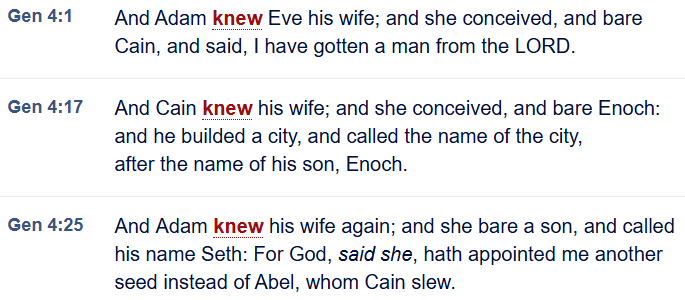
I don't see any confusion.
We all know what KNEW does :)

View attachment 89922
View attachment 89923

That's a good point Pete
Thanks for sharing

Matthew 1:25 NIV says
But he did not consummate their marriage until she gave birth to a son. And he gave him the name Jesus.

In ERV it's says
But Joseph did not have sexual relations with her until her son was born. And he named him Jesus.

What do you think of this @Lambano ?
Brother Pete makes a good point.
It looks pretty certain to me now.
 

Moonwood

Member
Aug 24, 2026
121
42
28
Pacific Northwest
Faith
Christian
Country
United States
Gender
Female
You cannot state with certainty that he is or is not signaling whether or not Mary and Joseph had normal marital relations.

I stand by my assessment that it is highly probable that Matthew knows that that they did and has no issue with implying such. It would not affect his main point anyway.

Matthew’s silence on Joseph and Mary’s later relations is not a signal; it’s simply silence because Matthew is not addressing that topic. Heos marks the period before the birth because that is where Jesus’s origin and Joseph’s role are relevant. As you’ve acknowledged, heos does not inherently imply either reversal or continuation, which means Matthew 1:25 is not indicating that they did or did not have intercourse afterward. Treating narrative silence as probabilistic evidence is not exegesis; it’s supplying a conclusion the Greek text does not provide.
 

Armour of God

Well-Known Member
Mar 6, 2026
1,704
1,121
113
47
Adelaide
Faith
Christian
Country
Australia
Gender
Male
Matthew’s silence on Joseph and Mary’s later relations is not a signal; it’s simply silence because Matthew is not addressing that topic. Heos marks the period before the birth because that is where Jesus’s origin and Joseph’s role are relevant. As you’ve acknowledged, heos does not inherently imply either reversal or continuation, which means Matthew 1:25 is not indicating that they did or did not have intercourse afterward. Treating narrative silence as probabilistic evidence is not exegesis; it’s supplying a conclusion the Greek text does not provide.

But Joseph did not have sexual relations with her until her son was born. And he named him Jesus. - Matthew 1:25 ERV

Looks pretty clear to me.
Also refer to Peter's post above
 

Lambano

Well-Known Member
Jul 13, 2021
10,576
13,225
113
Island of Misfit Toys
Faith
Christian
Country
United States
Gender
Male
Treating narrative silence as probabilistic evidence is not exegesis; it’s supplying a conclusion the Greek text does not provide.
No.

As we have seen, a heos ("until") statement may or may not have an implied state after the terminus condition. The interpreter must use other methods to exegete the author's intent.

In the Michal case, what was the author's understanding of her child-bearing capabilities after death? On what basis did you come to that conclusion?
 
Last edited:

Fred J

Well-Known Member
Nov 26, 2023
1,789
406
83
58
W.P.
Faith
Christian
Country
Malaysia
The earth moves at it's 'axis', and goes around the moon, it's a lie to you??
Sorry brethren, a correction in regrds the post above.

The earth moves in it's axis, and goes around the Sun for 365 days, and the moon goes around the earth, thank you.
 

Fred J

Well-Known Member
Nov 26, 2023
1,789
406
83
58
W.P.
Faith
Christian
Country
Malaysia
Wrong thread

After the birth of JESUS, Joseph and Mary fulfilled their GOD-Given sexual relations = as Commanded by GOD

Idolatry and man-made religious teachings that undermine God's words will not increase our faith in Christ.
Noted thanks, my bad.

After Jesus, Joseph and Mary in marriage went on to have sons and daughters, is it the right answer?
 
  • Like
Reactions: David in NJ

Moonwood

Member
Aug 24, 2026
121
42
28
Pacific Northwest
Faith
Christian
Country
United States
Gender
Female
No.

As we have seen, a heos ("until") statement may or may not have an implied state after the terminus condition. The interpreter must use other methods to exegete the author's intent.

In the Michal case, what was the author's understanding of her child-bearing capabilities after death? On what basis did you come to that conclusion?

In 2 Samuel 6:23, the author’s understanding of Michal’s condition after death is obvious: childbearing is impossible. That’s why no reader infers a reversal. The heos clause simply marks the boundary. In Matthew 1:25, the boundary is likewise determined by context — the period before the birth, where Jesus’s origin and Joseph’s role are relevant. Matthew is not signaling either outcome afterward; he is not addressing that topic. Silence in the text is not uncertainty to be filled with probability. It is silence because Matthew is not talking about that. Any conclusion about later relations comes from the reader, not from the Greek.
 

Lambano

Well-Known Member
Jul 13, 2021
10,576
13,225
113
Island of Misfit Toys
Faith
Christian
Country
United States
Gender
Male
In 2 Samuel 6:23, the author’s understanding of Michal’s condition after death is obvious: childbearing is impossible
And Matthew's understanding of a married couple's relationship should be equally obvious.

Phew! I'm glad we cleared that up!
 

Moonwood

Member
Aug 24, 2026
121
42
28
Pacific Northwest
Faith
Christian
Country
United States
Gender
Female
And Matthew's understanding of a married couple's relationship should be equally obvious.

Phew! I'm glad we cleared that up!

Michal’s case involves an impossible state, which is why no reader infers a reversal; the heos clause simply marks the boundary. Matthew 1:25 is different: intercourse after birth is possible, but Matthew is not addressing that topic. His focus is Jesus’s origin and Joseph’s role, and heos marks the period where the paternity issue is relevant. Treating narrative silence as a signal based on “normal marriage patterns” is not exegesis; it’s supplying a conclusion the Greek text does not provide.
 
Last edited:

Moonwood

Member
Aug 24, 2026
121
42
28
Pacific Northwest
Faith
Christian
Country
United States
Gender
Female
But Joseph did not have sexual relations with her until her son was born. And he named him Jesus. - Matthew 1:25 ERV

Looks pretty clear to me.
Also refer to Peter's post above

I agree that ginosko ("knew") is a standard idiom for sexual relations—Matthew is using it that way. But heos (“until”) does not, in Koine Greek or in Scripture, inherently imply that the opposite happened afterward. Scripture itself disproves that assumption. For example, 2 Samuel 6:23 says, “Michal the daughter of Saul had no child until the day of her death." No one concludes she began bearing children after she died. In such cases, heos marks a boundary, not a change of state.

Matthew 1:25 works the same way: “but he did not know Her until She had given birth to a Son.” Matthew is not describing Joseph and Mary’s later marital life. He is reinforcing what he has just narrated in 1:20-24 — the fulfillment of Isaiah 7:14 through the virginal conception by the Holy Spirit. Verse 25 simply secures the point: Joseph had no sexual involvement that could cast doubt on the divine origin of Jesus or the virginity of Mary at His birth.

Matthew makes no claim whatsoever—positive or negative—about what happened after the nativity. His concern is theological, not biographical. The verse establishes the Virgin Birth; it does not address post‑birth relations. Reading it as a statement about later intercourse imports a conclusion the text never makes.
 
Last edited: