A BLATANT ERROR IN THE NEW BIBLES

  • Welcome to Christian Forums, a Christian Forum that recognizes that all Christians are a work in progress.

    You will need to register to be able to join in fellowship with Christians all over the world.

    We hope to see you as a part of our community soon and God Bless!

David Lamb

Well-Known Member
Feb 21, 2025
826
499
63
77
Paignton
Faith
Christian
Country
United Kingdom
The Holy Spirit told me that any bible made or was revised after 2020-2021, was no good. Jesus does not like gender neutral or the changing of His words. Many thought for thought bibles like the NLT were good in 1996 but changed in 2015. The NIV was good in 1984, but in 2011 it changed. The NASB was fine until 1995 but the last one became gender neutral also. And the same on many bibles.
I agree that changing, rather than translating, the meanings of the Greek and Hebrew words is wrong, but surely that happened in some less faithful translations before 2020-2021.

Regarding gender neutrality, I would say that the only places where it should be permitted are where the Hebrew or Greek word used includes both male and female. For example:

(Mat 4:4) But He answered and said, It is written, "Man shall not live by bread alone, but by every word that proceeds out of the mouth of God."

The Greek word translated "man" there apparently means "human being." Jesus wasn't saying that men cannot live by bread alone but women can.
 
  • Like
Reactions: Anchorite

Rockerduck

Well-Known Member
Nov 7, 2022
4,246
3,389
113
71
Marietta, Georgia.
Faith
Christian
Country
United States
Gender
Male
I agree that changing, rather than translating, the meanings of the Greek and Hebrew words is wrong, but surely that happened in some less faithful translations before 2020-2021.

Regarding gender neutrality, I would say that the only places where it should be permitted are where the Hebrew or Greek word used includes both male and female. For example:

(Mat 4:4) But He answered and said, It is written, "Man shall not live by bread alone, but by every word that proceeds out of the mouth of God."

The Greek word translated "man" there apparently means "human being." Jesus wasn't saying that men cannot live by bread alone but women can.
In Genesis Adam is translated as both man and mankind. God does not change, Malachi 3:6. Jesus always referred to man and mankind also. Do not forget, Christ is the head of man, man the head of women. That was put forth in the garden of Eden. God does not change. It is a male dominated society and always has been until the last 75 yrs, when women rights started and divorces started and society has suffered greatly as a result.
 

David Lamb

Well-Known Member
Feb 21, 2025
826
499
63
77
Paignton
Faith
Christian
Country
United Kingdom
In Genesis Adam is translated as both man and mankind. God does not change, Malachi 3:6. Jesus always referred to man and mankind also. Do not forget, Christ is the head of man, man the head of women. That was put forth in the garden of Eden. God does not change. It is a male dominated society and always has been until the last 75 yrs, when women rights started and divorces started and society has suffered greatly as a result.
The verse where Paul says that Christ is the head of man, and man is the head of the woman, uses the Greek word "aner" for man, and that means "male human being.":

(1Co 11:3) But I would have you know, that the head of every man is Christ; and the head of the woman is the man; and the head of Christ is God.

It would be completely wrong to translate "aner" as "person", or some other neutral word.

However, there are plenty of other verses where the Greek word "anthropos" is translated "man." "Anthropos" means "human being." So in such verses it would not be wrong to use a neutral word like "person." As I said before, Jesus said, "Man shall not live by bread alone," but He didn't mean that only male human beings shall not live by bread alone, but women can.
 

Rockerduck

Well-Known Member
Nov 7, 2022
4,246
3,389
113
71
Marietta, Georgia.
Faith
Christian
Country
United States
Gender
Male
The verse where Paul says that Christ is the head of man, and man is the head of the woman, uses the Greek word "aner" for man, and that means "male human being.":

(1Co 11:3) But I would have you know, that the head of every man is Christ; and the head of the woman is the man; and the head of Christ is God.

It would be completely wrong to translate "aner" as "person", or some other neutral word.

However, there are plenty of other verses where the Greek word "anthropos" is translated "man." "Anthropos" means "human being." So in such verses it would not be wrong to use a neutral word like "person." As I said before, Jesus said, "Man shall not live by bread alone," but He didn't mean that only male human beings shall not live by bread alone, but women can.
Think of it this way, "Mankind shall not live by bread alone" The reference is to Mankind. OF course it doesn't exclude women.
 

David Lamb

Well-Known Member
Feb 21, 2025
826
499
63
77
Paignton
Faith
Christian
Country
United Kingdom
Think of it this way, "Mankind shall not live by bread alone" The reference is to Mankind. OF course it doesn't exclude women.
Yes, I agree. It seems we agree that if the original Greek or Hebrew word included both men and women, then it is quite correct to translate it into English using a gender-neutral English word, such as "mankind" or "person", but if the original word in Greek or Hebrew was gender-specific, then it is wrong to translate it by a gender-neutral English word.
 

Luther7

Active Member
Dec 20, 2025
335
125
43
60
Vineland
Faith
Christian
Country
United States
Gender
Male
View attachment 82903

View attachment 82904

View attachment 82906

With respect to the verse Mark 1:2 both Mal 1:3 and Isaiah 40:3 have been partly quoted without the full context of what follows in both cases. The context of what follows both referenced verses spans more than just Jesus first Advent but the prophecies in which these short inferences were distilled from speak of a much broader timespan than the three and a half years that Jesus spent preaching before His death on the cross.

Both the KJV and the NIV present a different way of considering Mark 1:2 and to claim that one is more wrong than the other is not a fair comparison on your part. Both translations present a different insight into what is being said.
Um, there should be only one insight.... God's.
 
  • Love
Reactions: GRACE ambassador

Jay Ross

Well-Known Member
Jun 20, 2011
9,361
3,484
113
QLD
Faith
Christian
Country
Australia
Gender
Male
Um, there should be only one insight.... God's.

Yes, you are right that there should be only one insight which is God's intended understanding, however different people will see slight variations in what God intended.

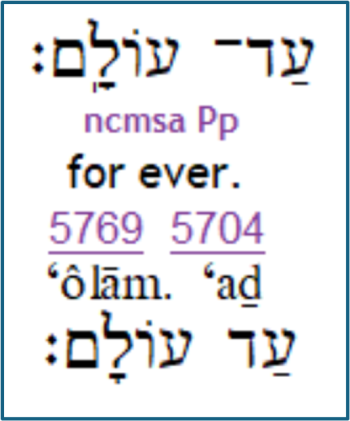
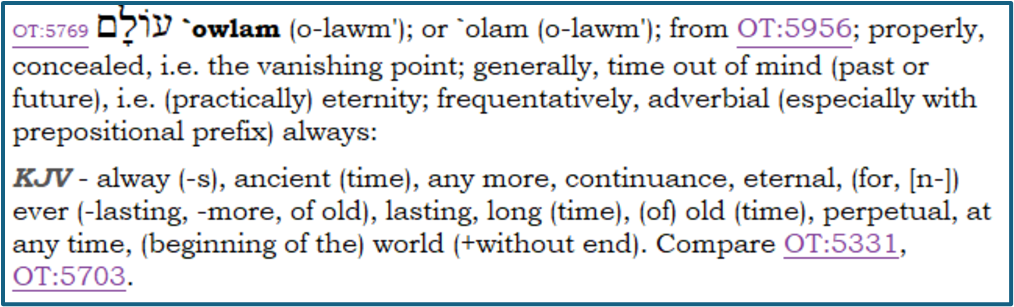
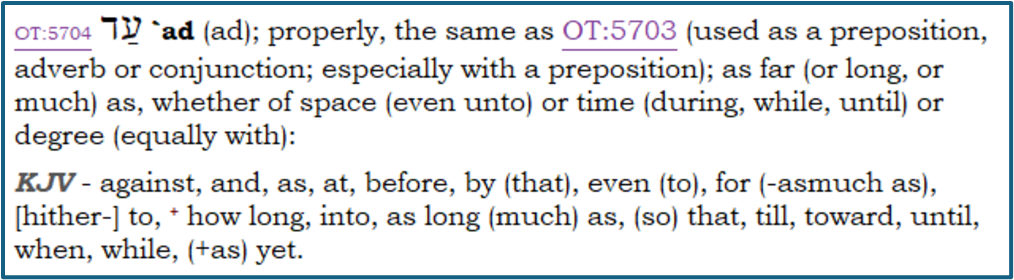
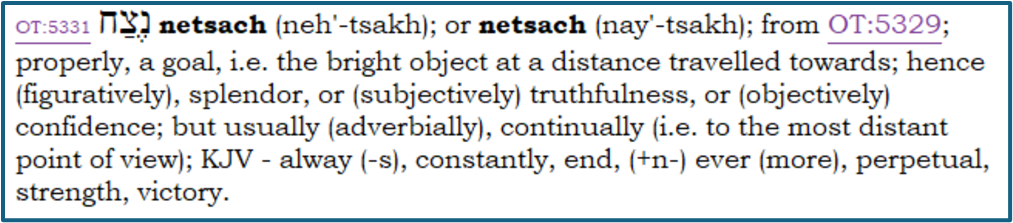
From my understanding of studying the scriptures, generally a change in just the meaning of one Hebrew or Greek word within the respective text can have a very large divergence in our respective understanding. Most translations place an emphasis on the Hebrew word "‘ō·w·lām" as having the meaning of "forever" yet when we dig a little deeper, my understanding is that this phrase has a meaning of "for a period of time where the end point of this period will be beyond their ability to comprehend."

And this is why: -


1777933082851.png

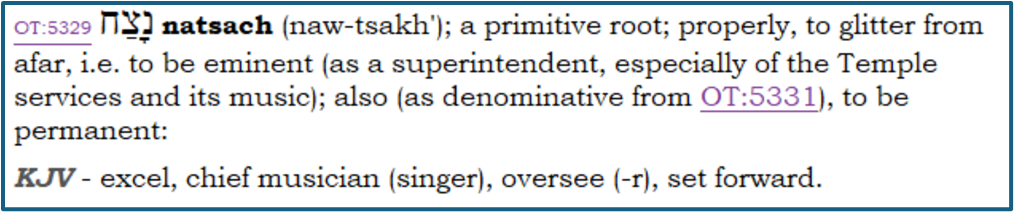
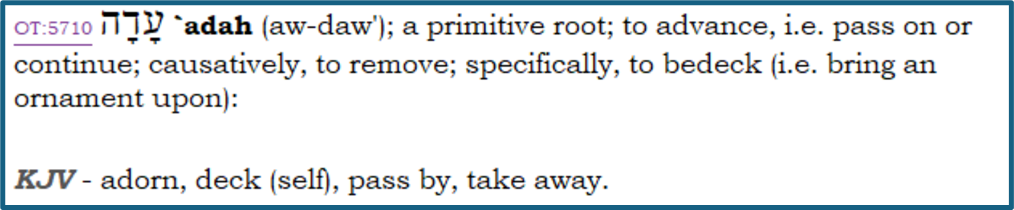
Where the Hebrew Root words have the meaning of:-

1777933293742.png
1777933311115.png
1777933328530.png
1777933340562.png
1777933358424.png
1777933378515.png
1777933396514.png

If we consider this possession of Land by God lasted for only around 1160 years before it was forcibly taken from the Nation of Israel except for the Land of Canaan which was not taken from them until another 980 or so years later when the nation of Israel was completely scattered to the four corners of the earth.

Perhaps people may like to contemplate as to whether or not the suggested understanding is correct or not.

Shalom
 
Apr 7, 2026
371
50
28
74
Lexington KY
Faith
Christian
Country
United States
Gender
Male
IMO:

The KJV is correct in saying "as it is written in the prophets" because Mark 1:2 is taken from Malachi 3:1 and Mark 1:3 is taken from Isaiah 40:3.
 
Last edited:
  • Love
Reactions: GRACE ambassador

Lambano

Well-Known Member
Jul 13, 2021
10,000
12,771
113
Island of Misfit Toys
Faith
Christian
Country
United States
Gender
Male
IMO:

The KJV is correct in saying "as it is written in the prophets" because Mark 1:2 is taken from Malachi 3:1 and Mark 1:3 is taken from Isaiah 40:3
It may be "correct", but the question is, "What did Mark actually write?" According to the oldest manuscripts we have, and according to Irenaeus of Smyrna back in 177 AD, he wrote "in Isaiah the prophet".

It is not proper to "correct" Mark, even if he made a mistake. If you're going to esteem the Bible, you have to accept it as-is, even where it's "wrong".
 
Apr 7, 2026
371
50
28
74
Lexington KY
Faith
Christian
Country
United States
Gender
Male
IMO:

The KJV is correct in saying "as it is written in the prophets" because Mark 1:2 is taken from Malachi 4:5 and Mark 1:3 is taken from from Isaiah chapters 3 and 4.
 

shepherdsword

Encounter Team - Eagle
Staff member
Encounter Team
Feb 12, 2009
2,034
1,631
113
Millington
Faith
Christian
Country
United States
Gender
Male
I agree that changing, rather than translating, the meanings of the Greek and Hebrew words is wrong, but surely that happened in some less faithful translations before 2020-2021.

Regarding gender neutrality, I would say that the only places where it should be permitted are where the Hebrew or Greek word used includes both male and female. For example:

(Mat 4:4) But He answered and said, It is written, "Man shall not live by bread alone, but by every word that proceeds out of the mouth of God."

The Greek word translated "man" there apparently means "human being." Jesus wasn't saying that men cannot live by bread alone but women can.
Both Greek and Hebrew nouns have gender. If the translation stays true to the gender in the original text then it's safe
 

David Lamb

Well-Known Member
Feb 21, 2025
826
499
63
77
Paignton
Faith
Christian
Country
United Kingdom
Both Greek and Hebrew nouns have gender. If the translation stays true to the gender in the original text then it's safe
Do you mean that, like French, nouns in Greek and Hebrew have grammatical gender? (To give examples of what I mean, the French for "the table" is "la table," a grammatically feminine noun. However, English does not use grammatical gender, so we just translate "la table" as "the table."

My point was not about grammatical gender, but about meaning. I don't know Greek, but I do know that there are two words in Greek that can be translated into English as "man." One means "man" as in "mankind", and includes men and women, and the other means "man" as in "male human being."
 

shepherdsword

Encounter Team - Eagle
Staff member
Encounter Team
Feb 12, 2009
2,034
1,631
113
Millington
Faith
Christian
Country
United States
Gender
Male
Do you mean that, like French, nouns in Greek and Hebrew have grammatical gender? (To give examples of what I mean, the French for "the table" is "la table," a grammatically feminine noun. However, English does not use grammatical gender, so we just translate "la table" as "the table."

My point was not about grammatical gender, but about meaning. I don't know Greek, but I do know that there are two words in Greek that can be translated into English as "man." One means "man" as in "mankind", and includes men and women, and the other means "man" as in "male human being."
Staying true to the grammatical gender in the original text is the proper way to translate. Every noun, in both Hebrew and Greek, have three possible aspects "male" female" or "neutral"
 

David Lamb

Well-Known Member
Feb 21, 2025
826
499
63
77
Paignton
Faith
Christian
Country
United Kingdom
Staying true to the grammatical gender in the original text is the proper way to translate. Every noun, in both Hebrew and Greek, have three possible aspects "male" female" or "neutral"
I don't agree. Grammatical gender has little to do with actual meaning.

I do agree that if the actual meaning of a Hebrew or Greek word specifies actual male or female, then it is wrong to translate it to include both male and female, but if it's merely grammatical gender, there is no way of reflecting that in English, because English doesn't have grammatical genders.
 

shepherdsword

Encounter Team - Eagle
Staff member
Encounter Team
Feb 12, 2009
2,034
1,631
113
Millington
Faith
Christian
Country
United States
Gender
Male
I don't agree. Grammatical gender has little to do with actual meaning.
It has everything to do with meaning. Translate "Elohim" as feminine, for example, and see what that implies.
I do agree that if the actual meaning of a Hebrew or Greek word specifies actual male or female, then it is wrong to translate it to include both male and female, but if it's merely grammatical gender, there is no way of reflecting that in English, because English doesn't have grammatical genders.
English has well defined ways to indicate gender. They are easily translatable. Claiming that there is no way to reflect the grammatical genders is inaccurate.
 

Justified

Active Member
Mar 11, 2025
405
168
43
Canada
Faith
Christian
Country
Canada
It has everything to do with meaning. Translate "Elohim" as feminine, for example, and see what that implies.

English has well defined ways to indicate gender. They are easily translatable. Claiming that there is no way to reflect the grammatical genders is inaccurate.
According to Mounce, the gender of nouns, for the most part, don't indicate the gender of the object. That is, grammatical gender doesn't necessarily indicate personal gender.

"In some cases, the grammatical gender of a particular noun reflects the actual gender of a person or animal. In other cases, the gender of a noun is simply grammatical. This is perhaps clearest with the gender of nouns that are inanimate objects, but there are also nouns that possess an unanticipated grammatical gender. For example, ἀνδρεία, manliness, is a grammatically FEMININE noun."

https://pressbooks.pub/ancientgreek/chapter/7/


'Gender, as it relates to nouns and other substantives in the Greek language, does not necessarily refer to "male" and "female". It refers to grammatical gender, which is determined purely by grammatical usage and must be learned by observation. Although nouns referring to people or animals that are obviously "male" or "female" would normally (but not always) be classified as masculine or feminine accordingly, the gender of most nouns seems to be somewhat arbitrary. Every noun must fall into one of three categories of gender: masculine, feminine, or neuter. The fact of gender, when considering a word in isolation, is of little importance to the student of the Greek New Testament.'

Greek Nouns (Shorter Definitions)

See also:

Mussies (1971) on Greek gender

Gender as classification
 
  • Like
Reactions: Janie23

David Lamb

Well-Known Member
Feb 21, 2025
826
499
63
77
Paignton
Faith
Christian
Country
United Kingdom
It has everything to do with meaning. Translate "Elohim" as feminine, for example, and see what that implies.

English has well defined ways to indicate gender. They are easily translatable. Claiming that there is no way to reflect the grammatical genders is inaccurate.
But (s I understand it, (and I don't claim to know biblical Greek or Hebrew) "Elohim" is not just grammatically masculine. Its meaning is masculine too - it refers to a male Being. By "grammatical gender" I meant Hebrew words like "erets" which although grammatically feminine, means "land", which is neither male nor female. Similarly "yam" ("sea") is grammatically masculine, but the sea is neither male nor female. Because English doesn't have grammatical genders, there is no way a translator from Hebrew to English can show in their translation that the Hebrew word for "land" was grammatically feminine, or the word for "sea" was grammatically masculine. I would emphasise again, that I am not talking about words such as "man," "girl", "king", "widow," etc. where the actually meaning of the word refers specifically either to a male or to a female person.