Bible Study For Our Times

  • Welcome to Christian Forums, a Christian Forum that recognizes that all Christians are a work in progress.

    You will need to register to be able to join in fellowship with Christians all over the world.

    We hope to see you as a part of our community soon and God Bless!

Davy

Well-Known Member
Feb 11, 2018
15,974
3,379
113
Southeastern U.S.
Faith
Christian
Country
United States
Gender
Male
Ever wonder why they keep putting out newer Bible translations in these latter days?

One of the major problems since the school of Textual Criticism got started is leaving the actual revelation and inspiration of The Bible Scriptures. The modern translators leave the idea of translating word for word literal translation. Scholarly linguistics experts today claim to do a proper Bible translation where the Bible scholar doesn't even need to be a believer. Reason that false idea is supported is because they have tried to turn Bible translation into man's science.

The documentary Bridge To Babylon is a good documented proof of what I just stated.


There is one particular old Christian denomination, that I won't name, which does not believe in the concept of Sola Scriptura, which means Scripture Alone, i.e., that The Scriptures of The Word of God is the main Authority. They do not believe that. Thus that denomination for centuries has added all sorts of men's doctrines and traditions which simply are not written in The Bible. And likewise, many Protestant denominations have followed suit.

Then with modern Bible translations, with scholar groups like United Bible Society, etc., they have left direct translation of the actual word in the Bible manuscripts, but instead rely more on interpretation of the 'concept' behind God's Words, and then translating based on their concept interpretation. What kind of problems can that create? Many, simply because there can be many different interpretations based on the Bible reader. It's simply not a valid way to be certain that God's Word is what is being kept through translation.

Thus a word-for-word literal translation from the original Bible languages is... the way to go. Then it is up to the Bible student's understanding and God's influence of that believer to understand what God has actually revealed in His written Word. The older Bible translations tried to stay with this method. But the modern translations have pretty much left it. So the old saying, 'new and improved' is meaningless when it comes to God's written Word.
 
  • Like
Reactions: ScottA and Fred J

SavedInHim

Well-Known Member
Jan 10, 2023
600
586
93
Oklahoma
Faith
Christian
Country
United States
Gender
Male
There will never be a word-for-word Bible that makes any sense, no matter how much God helps. That's because English is an entirely different language than the originals. Even the ones that claim to be word-for-word aren't word-for-word in a strict sense; they change word order and insert words to make it more understandable in English. To me, something in the middle is best, neither word-for-word, nor thought-for-thought, but a hybrid of the two.
 

soberxp

Well-Known Member
Mar 6, 2025
2,631
907
113
43
Xi'an
m.youtube.com
Faith
Christian
Country
China
Gender
Male
This kind of thing is not strange. China's Hong Xiuquan, who initiated the Taiping Rebellion, rationalized the war by modifying a passage in God's words within the Chinese version of the Bible, and this error has remained uncorrected to this day.

In the kjv
10:34
Think not that I am come to send peace on earth: I came not to send peace, but a sword.

In Chinese version,
Think not that I am come to send peace on earth: I came not to send peace, but start wars.

This is clearly not the same meaning.
 
  • Like
Reactions: ScottA

David Lamb

Well-Known Member
Feb 21, 2025
833
503
93
77
Paignton
Faith
Christian
Country
United Kingdom
Ever wonder why they keep putting out newer Bible translations in these latter days?

One of the major problems since the school of Textual Criticism got started is leaving the actual revelation and inspiration of The Bible Scriptures. The modern translators leave the idea of translating word for word literal translation. Scholarly linguistics experts today claim to do a proper Bible translation where the Bible scholar doesn't even need to be a believer. Reason that false idea is supported is because they have tried to turn Bible translation into man's science.

The documentary Bridge To Babylon is a good documented proof of what I just stated.


There is one particular old Christian denomination, that I won't name, which does not believe in the concept of Sola Scriptura, which means Scripture Alone, i.e., that The Scriptures of The Word of God is the main Authority. They do not believe that. Thus that denomination for centuries has added all sorts of men's doctrines and traditions which simply are not written in The Bible. And likewise, many Protestant denominations have followed suit.

Then with modern Bible translations, with scholar groups like United Bible Society, etc., they have left direct translation of the actual word in the Bible manuscripts, but instead rely more on interpretation of the 'concept' behind God's Words, and then translating based on their concept interpretation. What kind of problems can that create? Many, simply because there can be many different interpretations based on the Bible reader. It's simply not a valid way to be certain that God's Word is what is being kept through translation.

Thus a word-for-word literal translation from the original Bible languages is... the way to go. Then it is up to the Bible student's understanding and God's influence of that believer to understand what God has actually revealed in His written Word. The older Bible translations tried to stay with this method. But the modern translations have pretty much left it. So the old saying, 'new and improved' is meaningless when it comes to God's written Word.
I would say that some modern translations of the bible are made because the language into which they are being translated doesn't yet have the bible. Organisations such as the Wycliffe Bible Translators are involved in such vital work. As far as modern translations of the bible into English are concerned, some may indeed be the result of textual criticism, but some are made to take account of changes in the English language since 1611. Many words in regular use then are no longer used today. Also, some that are still used have totally different meanings to what they had in 1611. Here are some examples: "prevent" (1611- "go before"; today -"stop something from happening), "carriages" (1611 - "equipment"; today - "a wheeled vehicle"), "science" (1611 -"knowledge"; today - such things as chemistry, physics and biology.)
 
Last edited:

Davy

Well-Known Member
Feb 11, 2018
15,974
3,379
113
Southeastern U.S.
Faith
Christian
Country
United States
Gender
Male
I would say that some modern translations of the bible are made because the language into which they are being translated doesn't yet have the bible. Organisations such as the Wycliffe Bible Translators are involved in such vital work.

The Wycliffe Bible translators have the problem I mention too, as that documentary Bridge to Babylon does document.

As far as modern translations of the bible into English are concerned, so may indeed be the result of textual criticism, but some are made to take account of changes in the English language since 1611. Many words in regular use then are no longer used today. Also, some that are still used have totally different meanings to what they had in 1611.

That idea is from the old excuse that the King James Version is in Old English and too hard to read. But in reality, later KJV versions left the Old English a long time ago, only leaving a few words like thee, thou, ye, etc., which some Protestant denominations actually still use today among their brethren. Plus, there's been a King James Version dictionary available that one can look up the meanings of how Old English words were used during that 1611 era.

Here's a pretty good source:


David Lamb

Well-Known Member
Feb 21, 2025
833
503
93
77
Paignton
Faith
Christian
Country
United Kingdom
The Wycliffe Bible translators have the problem I mention too, as that documentary Bridge to Babylon does document.
I don't have access to that document, so I cannot comment on it. I do recognise the importance of providing the bible in languages of the world that don't have it yet.
translka

That idea is from the old excuse that the King James Version is in Old English and too hard to read. But in reality, later KJV versions left the Old English a long time ago, only leaving a few words like thee, thou, ye, etc., which some Protestant denominations actually still use today among their brethren. Plus, there's been a King James Version dictionary available that one can look up the meanings of how Old English words were used during that 1611 era.

Here's a pretty good source:

If it were just a few words like "thee", "thou" and "ye" there would be little or no problem. But it isn't. There are many words that are no longer used today. Here are just some examples: "chambering" (sexual immorality), "bewray" (to reveal a secret), "confectionaries" (makers of perfume and fragrant oils), "neesings" (sneezing or snorting), "trow" (to believe).

Then there are the words which are still used today, but with different meanings to what they had when used by the 1611 translators. Here are some examples, with their 1611 meaning followed by their current meaning: conversation (manner of life/talk between two or more people), prevent (go before/stop something happening), reins (kidneys/part of the leather equipment used on a horse), carriages (luggage or equipment/wheeled vehicle).
 
Last edited:

Davy

Well-Known Member
Feb 11, 2018
15,974
3,379
113
Southeastern U.S.
Faith
Christian
Country
United States
Gender
Male
I don't have access to that document, so I cannot comment on it. I do recognise the importance of providing the bible in languages of the world that don't have it yet.

If it were just a few words like "thee", "thou" and "ye" there would be little or no problem. But it isn't. There are many words that are no longer used today. Here are just some examples: "chambering" (sexual immorality), "bewray" (to reveal a secret), "confectionaries" (makers of perfume and fragrant oils), "neesings" (sneeing or snorting), "trow" (to believe).

Then there are the words which are still used today, but with different meanings to what they had when used by the 1611 translators. Here are some examples, with their 1611 meaning followed by their current meaning: conversation (manner of life/talk between two or more people), prevent (go before/stop something happening), reins (kidneys/part of the leather equipment used on a horse), carriages (luggage or equipment/wheeled vehicle).

There's something around 500 words, but so what, it's still the most accurate English Bible version to date. And the context of a Scripture isn't dependent upon a single word, plus there is always at least one or two more written Bible witnesses of a matter for confirmation. The KJV is just not that difficult to get around in.
 

Davy

Well-Known Member
Feb 11, 2018
15,974
3,379
113
Southeastern U.S.
Faith
Christian
Country
United States
Gender
Male
Something else folks...

There is only one 1611 KJV Bible version on the market that is on a true scholarly Bible study level, compiled by 19th century British Bible scholar E.W. Bullinger. It is called The Companion Bible.

It is NOT still in Old English, but does still contain English words used back in 1611 which one can look up the definitions in a Bible dictionary, even one that was specifically compiled of those 1611 era meanings. Nor are the characters in Old English.

The 198 Appendixes in the back of The Companion Bible alone is worth having a copy:

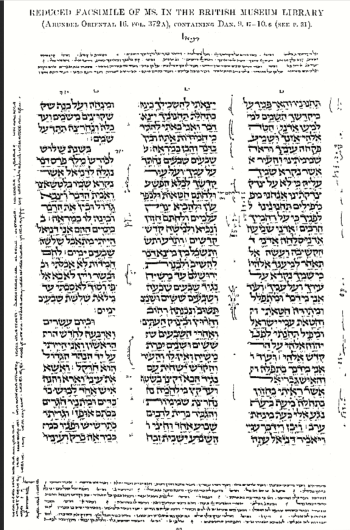
One of the major differences in this KJV study Bible is the inclusions of many Old Testament Massorah notes which Christian David Ginsberg (a Jew that converted to Christ at 15 years old), complied in his 19th century work Masssoretico-critical edition of the Hebrew Bible (1894). Ginsberg compiled from the best Hebrew Old Testament manuscripts existing in his day, which included Massorah scribe notes written around the Hebrew letters as a fence to the Scriptures. Those notes involved the scribe system for veifying an accurate copy was made, and also some notes on interpretation of the Scripture. These notes were not included by the KJV translators in their translation of the KJV Old Testament version.

Here is a view of one page out of an Old Testament Book showing the Massorah notes surrounding the Hebrew text:

1754505743498.png


The Companion Bible has the 1611 KJV text in the left margins of the page, with Bible study notes in a right-hand margin of the page, including relevant Massorah notes (Old Testament only). Bullinger also included in the note margin cross references to other relevant Bible Scriptures linked to the subject, and archaeological discoveries, etc.

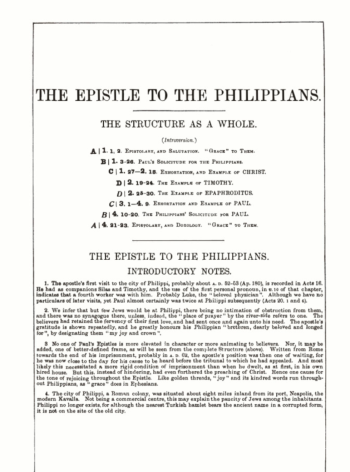
A major item Bullinger included comes from the actual subject flow of the Bible text, what he called structures, Holy Spirit markings. They are an immediate indication of God's Hand in the flow order of subject within the Bible Scriptures. Bullinger supplied them as outlines, at the beginning of each Bible Book, and with each Bible Chapter. Here is an example...

1754506375391.png
 

bdavidc

Well-Known Member
Mar 31, 2025
1,133
1,106
113
67
Charlestown, IN
know-the-bible.com
Faith
Christian
Country
United States
Gender
Male
There will never be a word-for-word Bible that makes any sense, no matter how much God helps. That's because English is an entirely different language than the originals. Even the ones that claim to be word-for-word aren't word-for-word in a strict sense; they change word order and insert words to make it more understandable in English. To me, something in the middle is best, neither word-for-word, nor thought-for-thought, but a hybrid of the two.
Yes, English is another language than Hebrew and Greek. And yes, strict word-for-word translation is not always linguistically possible. But the solution is not to give up the goal of accuracy. The problem is not whether the English must have exactly the same grammar as Greek. The question is whether the English conveys the exact meaning of the original words or smoothes it over.

A faithful translation does not mean word-for-word rigid word order. It does mean the words of God are to be preserved, not exchanged. Jesus said, “Man shall not live by bread alone, but by every word that proceedeth out of the mouth of God” (Matt. 4:4). He didn’t say “a word” and He didn’t say “some words.” That doesn’t leave room for a paraphrase or smoothing out meaning for the sake of word flow. That’s why the best translations are as close to formal equivalence (word-for-word) as the language will allow, not because English must match Greek syntax but because we must know exactly what God said, not what some human thinks He meant.

The problem with so-called “balanced” or “hybrid” translations is this: the moment you give up the goal of word-for-word accuracy, you have given the translators the permission to replace translation with interpretation. That’s where false doctrine creeps in. You stop reading what God said and start reading what some translation committee thinks God meant.

God promised to preserve His Word (Psalm 12:6–7). And He’s more than capable to do that in English. The problem is not whether He can help, but whether translators will obey the command to “rightly handle the Word of God” (2 Tim. 2:15) without inserting human interpretation.

We don’t need a middle-ground compromise. We need truth. We need translations that stick to the text, fear God, and don’t try to make His Word more palatable for modern readers.

“Every word of God is pure: he is a shield unto them that put their trust in him. Add thou not unto his words, lest he reprove thee, and thou be found a liar” (Prov. 30:5–6).
 

IndianaRob

Well-Known Member
Aug 7, 2023
1,937
694
113
55
Louisville
Faith
Christian
Country
United States
Yes, English is another language than Hebrew and Greek. And yes, strict word-for-word translation is not always linguistically possible. But the solution is not to give up the goal of accuracy. The problem is not whether the English must have exactly the same grammar as Greek. The question is whether the English conveys the exact meaning of the original words or smoothes it over.

A faithful translation does not mean word-for-word rigid word order. It does mean the words of God are to be preserved, not exchanged. Jesus said, “Man shall not live by bread alone, but by every word that proceedeth out of the mouth of God” (Matt. 4:4). He didn’t say “a word” and He didn’t say “some words.” That doesn’t leave room for a paraphrase or smoothing out meaning for the sake of word flow. That’s why the best translations are as close to formal equivalence (word-for-word) as the language will allow, not because English must match Greek syntax but because we must know exactly what God said, not what some human thinks He meant.

The problem with so-called “balanced” or “hybrid” translations is this: the moment you give up the goal of word-for-word accuracy, you have given the translators the permission to replace translation with interpretation. That’s where false doctrine creeps in. You stop reading what God said and start reading what some translation committee thinks God meant.

God promised to preserve His Word (Psalm 12:6–7). And He’s more than capable to do that in English. The problem is not whether He can help, but whether translators will obey the command to “rightly handle the Word of God” (2 Tim. 2:15) without inserting human interpretation.

We don’t need a middle-ground compromise. We need truth. We need translations that stick to the text, fear God, and don’t try to make His Word more palatable for modern readers.

“Every word of God is pure: he is a shield unto them that put their trust in him. Add thou not unto his words, lest he reprove thee, and thou be found a liar” (Prov. 30:5–6).
Very well put sir!
 
  • Like
Reactions: bdavidc

Fred J

Well-Known Member
Nov 26, 2023
1,664
367
83
58
W.P.
Faith
Christian
Country
Malaysia
This kind of thing is not strange. China's Hong Xiuquan, who initiated the Taiping Rebellion, rationalized the war by modifying a passage in God's words within the Chinese version of the Bible, and this error has remained uncorrected to this day.

In the kjv
10:34
Think not that I am come to send peace on earth: I came not to send peace, but a sword.

In Chinese version,
Think not that I am come to send peace on earth: I came not to send peace, but start wars.

This is clearly not the same meaning.
Definitely not the same meaning, did he do this modification on purpose to start a war?

Or is it just a mistake in translation that led to war?

Thanks
 

David Lamb

Well-Known Member
Feb 21, 2025
833
503
93
77
Paignton
Faith
Christian
Country
United Kingdom
There's something around 500 words, but so what, it's still the most accurate English Bible version to date. And the context of a Scripture isn't dependent upon a single word, plus there is always at least one or two more written Bible witnesses of a matter for confirmation. The KJV is just not that difficult to get around in.
Let me assure you that I have never said the KJV is a bad translation. All I am saying is that it is not wrong to translate the Hebrew and Greek Scriptures into contemporary English, just as it was not wrong for the 1611 translators to translated Scripture into the English of their time.
 

soberxp

Well-Known Member
Mar 6, 2025
2,631
907
113
43
Xi'an
m.youtube.com
Faith
Christian
Country
China
Gender
Male
Definitely not the same meaning, did he do this modification on purpose to start a war?

Or is it just a mistake in translation that led to war?

Thanks
Hong Xiuquan was a peasant rebellion leader who, at the time Late Ming Dynasty, adhered to Catholicism and even engaged in theological debates with the Pope in Europe. He claimed to be the younger brother of Jesus and the second son of God, seeking to establish a theocratic "Heavenly Kingdom" on Chinese soil. His followers were predominantly Bible-believing "Christians", so he needed a justifiable reason to wage war—and biblical scripture provided the perfect justification.

His campaign nearly succeeded, but in the end, his own corruption and moral decay turned his victory into his grave.

I do not believe that mistranslations in the Bible led him to launch his war; rather, he distorted the meaning of Scripture to serve his own purposes.

Because there is no second person in Chinese history to do so.
 
Last edited:

Davy

Well-Known Member
Feb 11, 2018
15,974
3,379
113
Southeastern U.S.
Faith
Christian
Country
United States
Gender
Male
The question is whether the English conveys the exact meaning of the original words or smoothes it over.

But that's the modern... concept-driven translation model that is NOT a word-for-word translation allowing God to speak and interpret in the believer by The Holy Spirit.

A concept-driven Bible translation means the Bible scholar's OWN PERSONAL INTERPRETATION enters the translation.

A word for word translation means keeping to the actual word flow in the Bible manuscripts REGARDLESS whether the Bible scholar properly understands God's Message in it or not.

In reality, it is vanity to think to treat God's written Word like it is just like any other type of literature. No, God's written Word is UNLIKE any other known literature. It was given through God's chosen via The Holy Spirit, and by The Holy Spirit can it only be properly interpreted and understood.
 

Davy

Well-Known Member
Feb 11, 2018
15,974
3,379
113
Southeastern U.S.
Faith
Christian
Country
United States
Gender
Male
Let me assure you that I have never said the KJV is a bad translation. All I am saying is that it is not wrong to translate the Hebrew and Greek Scriptures into contemporary English, just as it was not wrong for the 1611 translators to translated Scripture into the English of their time.

Your last statement infers... that the 1611 KJV translators were doing the same types of translation as modern Bible translators; not so.
 

bdavidc

Well-Known Member
Mar 31, 2025
1,133
1,106
113
67
Charlestown, IN
know-the-bible.com
Faith
Christian
Country
United States
Gender
Male
But that's the modern... concept-driven translation model that is NOT a word-for-word translation allowing God to speak and interpret in the believer by The Holy Spirit.

A concept-driven Bible translation means the Bible scholar's OWN PERSONAL INTERPRETATION enters the translation.

A word for word translation means keeping to the actual word flow in the Bible manuscripts REGARDLESS whether the Bible scholar properly understands God's Message in it or not.

In reality, it is vanity to think to treat God's written Word like it is just like any other type of literature. No, God's written Word is UNLIKE any other known literature. It was given through God's chosen via The Holy Spirit, and by The Holy Spirit can it only be properly interpreted and understood.
It is not fully biblical what you have written about “word-for-word” vs. “concept-driven” because the Scriptures themselves do not teach that inspiration is connected to one particular way of translating. “All scripture is given by inspiration of God” (2 Timothy 3: 16) the original text says pasa graphē theopneustos, “all Scripture is God-breathed” (Acts 1:16) all the original writings, not a specific translation philosophy.

God’s Word is superior to all other human writings. However, a translation is not “accurate” because it adheres to the identical word order as in the manuscripts but it is “accurate” when it gives a true picture of the meaning of the God-breathed Word in another language.

In Hebrew and Greek word order is quite flexible. For instance, in Greek it is possible to emphasize words by putting them first in the sentence but it still remains exactly the same meaning. Thus, a very literal “word-for-word” English translation often makes understanding more difficult because the two languages work differently. The biblical test of a good translation is to reproduce what God actually said and not how the translators arrange the English words to go from one part of the sentence to another. In Nehemiah 8: 8, when Ezra read the Law to the people, the text says they “gave the sense, and caused them to understand the reading.” It was not the exact word order of foreign words that were needed to be heard; it was the understanding of what God was saying that was required.

You are correct that it is the Holy Spirit Who is the One who enlightens the believers to understand the Word of God (1 Corinthians 2: 12–14), but the Spirit is not interested in whether the translation is done according to the precise word order. What is important is that the Word of God be correctly translated and explained in such a way that the message God gave would remain intact in truth (Proverbs 30: 5–6), even if that means following the original syntax or perhaps, in order to be clearer in the new language, changing it. The important thing is to be faithful to the God-breathed text, not to a human preference for one school of translation philosophy or another.
 

Davy

Well-Known Member
Feb 11, 2018
15,974
3,379
113
Southeastern U.S.
Faith
Christian
Country
United States
Gender
Male
It is not fully biblical what you have written about “word-for-word” vs. “concept-driven” because the Scriptures themselves do not teach that inspiration is connected to one particular way of translating. “All scripture is given by inspiration of God” (2 Timothy 3: 16) the original text says pasa graphē theopneustos, “all Scripture is God-breathed” (Acts 1:16) all the original writings, not a specific translation philosophy.

Your statement defies reasoning, simply because a word-for-word Bible translation means translating what is 'already'... written in one language into another language.

But a concept-driven interpretation is like a 'paraphrase' translation. What's that you say? A paraphrase is like you tell me a story, and then I put your story into my 'own' words. With that kind of concept there is no guarantee the translation would keep to the original writing.
 

Davy

Well-Known Member
Feb 11, 2018
15,974
3,379
113
Southeastern U.S.
Faith
Christian
Country
United States
Gender
Male
There will never be a word-for-word Bible that makes any sense, no matter how much God helps. That's because English is an entirely different language than the originals. Even the ones that claim to be word-for-word aren't word-for-word in a strict sense; they change word order and insert words to make it more understandable in English. To me, something in the middle is best, neither word-for-word, nor thought-for-thought, but a hybrid of the two.
I agree, and after years of referring to different English Bible translations, I deem the 1611 KJV still the most accurate. Yet I realize it is still just a translation, and not the original.

However, because of translation to English is not a great problem, because God has provided the English speaking people with some excellent Bible scholars in the past that were given the gift of the Biblical languages like Hebrew, Aramaic, and Greek, and put together Lexicons which help the Bible student go into the original manuscript words and usages.

And even though that also is not a perfect work, God's Word is written in such a manner where there exists at least two or more witnesses of every Truth so as to help confirm the meaning. And then ultimately, God gives The Holy Spirit to help align everything in His written Word. Without The Holy Spirit, the reader of The Bible will not be in alignment with His Word, that's how important The Holy Spirit requirement is, which is the actual source of 'inspiration' and 'revelation' of Truth in God's Word.
 

bdavidc

Well-Known Member
Mar 31, 2025
1,133
1,106
113
67
Charlestown, IN
know-the-bible.com
Faith
Christian
Country
United States
Gender
Male
Your statement defies reasoning, simply because a word-for-word Bible translation means translating what is 'already'... written in one language into another language.

But a concept-driven interpretation is like a 'paraphrase' translation. What's that you say? A paraphrase is like you tell me a story, and then I put your story into my 'own' words. With that kind of concept there is no guarantee the translation would keep to the original writing.
You are conflating two distinct issues. The Bible never tells us that inspiration is a function of how a translation is done. Inspiration is related to the original documents, not to a methodology for transferring the message from one language to another. Paul said, “All Scripture is given by inspiration of God” (2 Timothy 3: 16), and the Greek, pasa graphē theopneustos, is speaking of the God-breathed originals.

This means a translation can be accurate whether it is more literal and word-for-word, or whether it is a thought-for-thought method, so long as it represents what God actually said. The danger is not in the style of the translation, but in adding, subtracting, or perverting the meaning (Proverbs 30:5–6, Revelation 22:18–19).

A paraphrase that misstates the original message is in error because it changes God’s Word. But this is equally true for a “literal” translation that also misstates the meaning because the translator shoehorned a verbatim structure into another language where it does not carry the same meaning. The authority is in the text God gave, not in man’s pet translation philosophy.