Crusades Began with Reconquista

  • Welcome to Christian Forums, a Christian Forum that recognizes that all Christians are a work in progress.

    You will need to register to be able to join in fellowship with Christians all over the world.

    We hope to see you as a part of our community soon and God Bless!

Matthias

Well-Known Member
May 3, 2022
32,735
24,442
113
Kentucky
Faith
Other Faith
Country
United States
Gender
Male
“Constantine is one of my favorite people.” - @rockytopva

Let’s set Nero off to the side - we can’t completely ignore him though - and go to Constantine. (Substituting an emperor who is one of your favorite people for an emperor whom I can’t even imagine you thinking is one of your favorite people. We now have a “good guy” in your eyes to talk about.)

Constantine ruled over the Roman Empire from 306 to 324 AD as a co-Emperor and from 324 to 337 AD as sole Emperor. We should be able to agree on that.

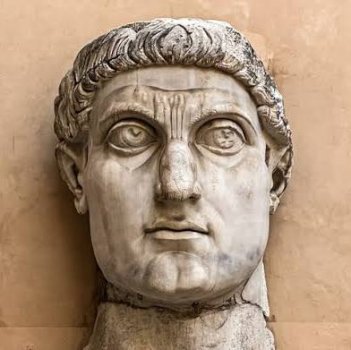
Constantine the Great.

1782188777629.jpeg

There he is. There’s no possibility that we’re not talking about the person whom you say is one of your favorite persons.

What did you expect him to do? Defend his land / his citizens. Right? Did he do it?
 

rockytopva

Mod
Staff member
Dec 31, 2010
6,616
3,452
113
Faith
Christian
Country
United States
Gender
Male
“Constantine is one of my favorite people.” - @rockytopva

Let’s set Nero off to the side - we can’t completely ignore him though - and go to Constantine. (Substituting an emperor who is one of your favorite people for an emperor whom I can’t even imagine you thinking is one of your favorite people. We now have a “good guy” in your eyes to talk about.)

Constantine ruled over the Roman Empire from 306 to 324 AD as a co-Emperor and from 324 to 337 AD as sole Emperor. We should be able to agree on that.

Constantine the Great.

View attachment 86088

There he is. There’s no possibility that we’re not talking about the person whom you say is one of your favorite persons.

What did you expect him to do? Defend his land / his citizens. Right? Did he do it?
Constantine tried escaping the evils of the time. How he did is debatable but he did his best. The world was about to be plagued by barbarians, The Huns, and The Mongols. 300 AD... Look out! Evil is on its way! Defend yourself or die!
 
  • Like
Reactions: Armour of God

Matthias

Well-Known Member
May 3, 2022
32,735
24,442
113
Kentucky
Faith
Other Faith
Country
United States
Gender
Male
Constantine tried escaping the evils of the time. How he did is debatable but he did his best.

So then a mixed review of Constantine. I can agree with you about that. History bears that out.

The world was about to be plagued by barbarians, The Huns, and The Mongols. 300 AD... Look out! Evil is on its way! Defend yourself or die!

Evil has been “on its way” since the Garden of Eden. Look out! indeed. Evil always comes for good. It always will until there is no evil no more.

Did Jesus, the apostles, the Christians living in the first three centuries of Christian history, defend themselves against evil? If they did - I maintain that they did - how did they do it?
 
  • Like
Reactions: Anchorite

rockytopva

Mod
Staff member
Dec 31, 2010
6,616
3,452
113
Faith
Christian
Country
United States
Gender
Male
So then a mixed review of Constantine. I can agree with you about that. History bears that out.

Mixed reviews on the entire church... I believe the church movements as seven and I believe outlined in Revelation...

1. Messianic - Original church started by Peter
2. Martyr - Ten Roman persecutions as outlined in Foxes Book of Martyrs
3, Orthodox - Basically an Eastern movement
4. Catholic - An Italian based church
5, Protestant - Sardis is a Gem, elegant yet not much there spiritually
6. Brotherly Love - Did this include Spurgeon?
7. Loadicea - Rich and increased with goods and have need of nothing?

300 AD... The time of the Pergamean Church, or the third age.... In which in time other churches would arise...

2. The Smyrnaean Candlestick: The Martyr Church Age

The Smyrnaean Church age began with the Roman Emperor Nero burning down Rome and accusing the Christians of doing it. Smyrna in the Greek means “Myrrh,” in which the Smyrnaean martyrs represented the most pure form of Christianity of all the church ages. The martyred crowns were many as the Smyrnaean church age progressed.

Ye Shall Have Tribulation Ten Days…
Time Persecutor Description
67 AD Nero The Smyrna Church Age begins with Nero setting fire to Rome, and then blaming the Christians
81 AD Domitian Declaration that no Christian should be exempt from punishment, Paul’s Timothy died in 97 AD.
108 AD Trajan and Adrian Severe persecution against Christians from 108 to 138 AD during the time of the Bishop Ignatius
162 AD Marcos Aurelius Marcos Aurelius, commendable in study of philosophy, sharp and fierce towards Christians.
192 AD Severus This persecution was carried out by the will and prejudice of the people and extended into Africa.
235 AD Maximus Numberless Christians were slain without trial and burned indiscriminately in heaps
249 AD Decius Began because of the amazing increase in Christianity, and with the heathen temples forsaken.
257 AD Valerian The martyrs that fell during this persecution were innumerable, their tortures and deaths painful.
274 AD Aurelian A brief persecution that ended with the emperor’s assassination.
303 AD Diocletian The last persecution ended with Constantine’s triumph against Rome in 313 AD

If you ever feel unthankful in life just look into the lives of the folks in the church of Smyrna. During this time many gave their lives for the Christian faith by cruel and barbaric means. There were many stars in Smyrna such as Valentinus, whose acts of kindness is still

3. The Pergamean Candlestick: The Towers (purgos) Church Age

The Pergamean Church Age began with Constantine’s triumph against pagan Rome at the Milvian Bridge. The liberation of Rome from the pagan powers reigned in the third church age. Because of the barbarian onslaught during this church age it was necessary for it to move into castles or towers, which is purgos in the Greek. It is recorded that half the human population would die from the barbarian onslaught, the church therefore would need to dwell in fortified structures.

It was thought that Balaam, a prophet to his people, took a bribe from Balak to curse the people of Israel. So it was with the Nicolaitanes, who taught the people that fornication was ok, cursing the lives of others. This was true in the early life of St. Augustine, who as a young man went from sexual partner to sexual partner until being converted. As St. Augustine was traveling the Roman Empire he noted in his log that “In every man lieth a serpent,” indicating that the doctrine of the Nicolaitanes spanned the entire empire before the barbarians destroyed it. This Pergamean church then withstood the onslaught of the barbarians during the time of the Goths, Huns, Vandals, on up to the time of the Vikings. This was a very barbaric age in which the church moved out of the fields and into the castles such as we had in Constantinople.

"Therefore I say, He ordained that we should undergo death for the faith, which each man should do for the communion of the Church. For Christianity makes progress by the deaths of its followers. For if death were feared by the faithful, no man would be found to live with perfect faith. For the Lord Christ says, 'Except a corn of wheat fall into the ground and die, it abideth alone: but if it die, it bringeth forth much fruit.'" (John 12:24) –Petilian’s discussions with St. Augustine. Note: “even in the days of wherein Antipas was my faithful martyr” refers to the previous church age. As the Bishop Pelitian and Augustine were hashing away at what direction the church should go, Pelitian made the comment that we should not fear dying as Christians, knowing that the state of the seed is better in the afterlife than in the former. A star in Pergamos was the good old St. Nicholas, who would ride into town with a switch and presents for the children, depending on how good they were.

4. The Thyatirean Candlestick: Catholic Church Age (Charlemagne)

It would be as an estimate that the Thyatirean Church age began with Charlemagne, who was a champion for the cause of Christianity. Appalled by the illiteracy of his time, Charlemagne imported scholars from Ireland, Britain, and Italy. Out of these schools were to arise the universities of Europe. In 787, Charlemagne issued to all the bishops and abbots of France a historic Capitulare de litteris colendis, or directive on the study of letters. It reproached ecclesiastics for “uncouth language” and exhorted every cathedral and monastery to establish schools where clergy and laity alike might learn to read and write. A further capitulary of 789 urged the directors of these schools to “take care to make no difference between the sons of serfs and of freemen, so that they might come and sit on the same benches to study grammar, music, and arithmetic.” Upon this foundation was the Thyatira church built. It was too bad we would not see any more Charlemagne’s during this church age.

Charlemagne gave the church so much power with the edicts of his lifetime that the church age became corrupt to the point that it was compared to the evil woman Jezebel. The church began persecutions from denying folks communion to setting up great inquisitions. “Which have not known the depths of Satan” may refer to Dante Alighieri, who terrified Europe with his writings. The church became just as ruthless as the pagans before them in the arts of death and torture. The spirit of Jezebel is to control and to dominate, in which the people of that time were relentless. The great tribulation came about in 1347, in which the Black Death killed an estimated 25% of the European population. Thyatira means to “blow smoke” in the Greek, possibly because of the darkness the Thyatireans would bring into the lives of others.

5. The Sardisean Candlestick: The Reformed Church Age (John Wycliff)

The beginnings of the Sardisean Church age can be traced in 1392, when John Wycliff translated the bible into English. Because of the strong influence of the Thyatireans, Wycliff’s books were burned and his remains exhumed. Nonetheless he started a flame that would lead to the reformation of the church. It was in 1517 that Luther would nail his 95 thesis and thus begin the Sardisean Church age. The Sardisean Church age was an age most adventurous! With the discovery of the new world in 1492, the rise of the English and Spanish empires, and the German reformation, would shed in a whole new era in discovery and adventure. There was also renewed religious fervor with John Bunyan, George Fox, Puritans, Moravians, non-conformists, Shakers, Quakers, Lutherans, Presbyterians, Baptists, Huguenots, and a whole new era of religious thinking.

A regrettable fault in the Sardisean church age was in their ability to become just as evil as the Church they rebelled from. An example was the Anglican Church, who would persecute people for not acknowledging their book of prayer. There were also many regrettable wars in which Christians would fight against Christians, it seems that the only place Christian sects could dwell in unity was in the new world. The Lord here in scripture sought to strengthen the true light of reformation, which things were ready to die with the Sardisean Church age. The reason for this spiritual death was Europe’s unwillingness to accept a variety of faiths, to take over a faith, and to persecute those who would resist the faith. It seemed the desire of the Europeans to have a single faith within their country, and often times that faith would become just as evil as the faith they rebelled from. At the end of the Sardisean Church many of the good things died. The exceptions were the German Moravians, French Huguenots and the English Non-conformists, who were persecuted in their own countries. The Sardisean Church began in adventure and ended in violence. So the need of a new church age was imminent.

Out of Sardis also came many Baptist denominations, which believe in a single born again experience, unlike the Methodist which believe in many experiences such as sanctification and the witness of the spirit. Nonetheless much good fruit came out of Baptist doctrine in which there are still many good bible colleges and churches today. From the Primitive Baptist to the Southern Baptist, we see a wide array of church age influences, from the Sardisean age to the Laodicean. Note also that Sardis is a gem, or a hard rock, therefore the Sardiseans are very rigid and unchangeable in their beliefs.

In time much evil would rise and fall as the ages progressed.

 
  • Like
Reactions: Armour of God

Matthias

Well-Known Member
May 3, 2022
32,735
24,442
113
Kentucky
Faith
Other Faith
Country
United States
Gender
Male
Mixed reviews on the entire church... I believe the church movements as seven and I believe outlined in Revelation...

1. Messianic - Original church started by Peter
2. Martyr - Ten Roman persecutions as outlined in Foxes Book of Martyrs
3, Orthodox - Basically an Eastern movement
4. Catholic - An Italian based church
5, Protestant - Sardis is a Gem, elegant yet not much there spiritually
6. Brotherly Love - Did this include Spurgeon?
7. Loadicea - Rich and increased with goods and have need of nothing?

300 AD... The time of the Pergamean Church, or the third age.... In which in time other churches would arise...

2. The Smyrnaean Candlestick: The Martyr Church Age

The Smyrnaean Church age began with the Roman Emperor Nero burning down Rome and accusing the Christians of doing it. Smyrna in the Greek means “Myrrh,” in which the Smyrnaean martyrs represented the most pure form of Christianity of all the church ages. The martyred crowns were many as the Smyrnaean church age progressed.

Ye Shall Have Tribulation Ten Days…
Time Persecutor Description
67 AD Nero The Smyrna Church Age begins with Nero setting fire to Rome, and then blaming the Christians
81 AD Domitian Declaration that no Christian should be exempt from punishment, Paul’s Timothy died in 97 AD.
108 AD Trajan and Adrian Severe persecution against Christians from 108 to 138 AD during the time of the Bishop Ignatius
162 AD Marcos Aurelius Marcos Aurelius, commendable in study of philosophy, sharp and fierce towards Christians.
192 AD Severus This persecution was carried out by the will and prejudice of the people and extended into Africa.
235 AD Maximus Numberless Christians were slain without trial and burned indiscriminately in heaps
249 AD Decius Began because of the amazing increase in Christianity, and with the heathen temples forsaken.
257 AD Valerian The martyrs that fell during this persecution were innumerable, their tortures and deaths painful.
274 AD Aurelian A brief persecution that ended with the emperor’s assassination.
303 AD Diocletian The last persecution ended with Constantine’s triumph against Rome in 313 AD

If you ever feel unthankful in life just look into the lives of the folks in the church of Smyrna. During this time many gave their lives for the Christian faith by cruel and barbaric means. There were many stars in Smyrna such as Valentinus, whose acts of kindness is still

3. The Pergamean Candlestick: The Towers (purgos) Church Age

The Pergamean Church Age began with Constantine’s triumph against pagan Rome at the Milvian Bridge. The liberation of Rome from the pagan powers reigned in the third church age. Because of the barbarian onslaught during this church age it was necessary for it to move into castles or towers, which is purgos in the Greek. It is recorded that half the human population would die from the barbarian onslaught, the church therefore would need to dwell in fortified structures.

It was thought that Balaam, a prophet to his people, took a bribe from Balak to curse the people of Israel. So it was with the Nicolaitanes, who taught the people that fornication was ok, cursing the lives of others. This was true in the early life of St. Augustine, who as a young man went from sexual partner to sexual partner until being converted. As St. Augustine was traveling the Roman Empire he noted in his log that “In every man lieth a serpent,” indicating that the doctrine of the Nicolaitanes spanned the entire empire before the barbarians destroyed it. This Pergamean church then withstood the onslaught of the barbarians during the time of the Goths, Huns, Vandals, on up to the time of the Vikings. This was a very barbaric age in which the church moved out of the fields and into the castles such as we had in Constantinople.

"Therefore I say, He ordained that we should undergo death for the faith, which each man should do for the communion of the Church. For Christianity makes progress by the deaths of its followers. For if death were feared by the faithful, no man would be found to live with perfect faith. For the Lord Christ says, 'Except a corn of wheat fall into the ground and die, it abideth alone: but if it die, it bringeth forth much fruit.'" (John 12:24) –Petilian’s discussions with St. Augustine. Note: “even in the days of wherein Antipas was my faithful martyr” refers to the previous church age. As the Bishop Pelitian and Augustine were hashing away at what direction the church should go, Pelitian made the comment that we should not fear dying as Christians, knowing that the state of the seed is better in the afterlife than in the former. A star in Pergamos was the good old St. Nicholas, who would ride into town with a switch and presents for the children, depending on how good they were.

4. The Thyatirean Candlestick: Catholic Church Age (Charlemagne)

It would be as an estimate that the Thyatirean Church age began with Charlemagne, who was a champion for the cause of Christianity. Appalled by the illiteracy of his time, Charlemagne imported scholars from Ireland, Britain, and Italy. Out of these schools were to arise the universities of Europe. In 787, Charlemagne issued to all the bishops and abbots of France a historic Capitulare de litteris colendis, or directive on the study of letters. It reproached ecclesiastics for “uncouth language” and exhorted every cathedral and monastery to establish schools where clergy and laity alike might learn to read and write. A further capitulary of 789 urged the directors of these schools to “take care to make no difference between the sons of serfs and of freemen, so that they might come and sit on the same benches to study grammar, music, and arithmetic.” Upon this foundation was the Thyatira church built. It was too bad we would not see any more Charlemagne’s during this church age.

Charlemagne gave the church so much power with the edicts of his lifetime that the church age became corrupt to the point that it was compared to the evil woman Jezebel. The church began persecutions from denying folks communion to setting up great inquisitions. “Which have not known the depths of Satan” may refer to Dante Alighieri, who terrified Europe with his writings. The church became just as ruthless as the pagans before them in the arts of death and torture. The spirit of Jezebel is to control and to dominate, in which the people of that time were relentless. The great tribulation came about in 1347, in which the Black Death killed an estimated 25% of the European population. Thyatira means to “blow smoke” in the Greek, possibly because of the darkness the Thyatireans would bring into the lives of others.

5. The Sardisean Candlestick: The Reformed Church Age (John Wycliff)

The beginnings of the Sardisean Church age can be traced in 1392, when John Wycliff translated the bible into English. Because of the strong influence of the Thyatireans, Wycliff’s books were burned and his remains exhumed. Nonetheless he started a flame that would lead to the reformation of the church. It was in 1517 that Luther would nail his 95 thesis and thus begin the Sardisean Church age. The Sardisean Church age was an age most adventurous! With the discovery of the new world in 1492, the rise of the English and Spanish empires, and the German reformation, would shed in a whole new era in discovery and adventure. There was also renewed religious fervor with John Bunyan, George Fox, Puritans, Moravians, non-conformists, Shakers, Quakers, Lutherans, Presbyterians, Baptists, Huguenots, and a whole new era of religious thinking.

A regrettable fault in the Sardisean church age was in their ability to become just as evil as the Church they rebelled from. An example was the Anglican Church, who would persecute people for not acknowledging their book of prayer. There were also many regrettable wars in which Christians would fight against Christians, it seems that the only place Christian sects could dwell in unity was in the new world. The Lord here in scripture sought to strengthen the true light of reformation, which things were ready to die with the Sardisean Church age. The reason for this spiritual death was Europe’s unwillingness to accept a variety of faiths, to take over a faith, and to persecute those who would resist the faith. It seemed the desire of the Europeans to have a single faith within their country, and often times that faith would become just as evil as the faith they rebelled from. At the end of the Sardisean Church many of the good things died. The exceptions were the German Moravians, French Huguenots and the English Non-conformists, who were persecuted in their own countries. The Sardisean Church began in adventure and ended in violence. So the need of a new church age was imminent.

Out of Sardis also came many Baptist denominations, which believe in a single born again experience, unlike the Methodist which believe in many experiences such as sanctification and the witness of the spirit. Nonetheless much good fruit came out of Baptist doctrine in which there are still many good bible colleges and churches today. From the Primitive Baptist to the Southern Baptist, we see a wide array of church age influences, from the Sardisean age to the Laodicean. Note also that Sardis is a gem, or a hard rock, therefore the Sardiseans are very rigid and unchangeable in their beliefs.

In time much evil would rise and fall as the ages progressed.

Thanks. I’ll go slower. Did Jesus defend himself against evil?
 
  • Like
Reactions: Anchorite

rockytopva

Mod
Staff member
Dec 31, 2010
6,616
3,452
113
Faith
Christian
Country
United States
Gender
Male
Thanks. I’ll go slower. Did Jesus defend himself against evil?

You are not taking the whole church picture into account. You need to learn to do this as each church age faced its own unique issues. Otherwise you can take one set of church issues from another age and imply the whole church as guilty.
 
  • Like
Reactions: Armour of God

rockytopva

Mod
Staff member
Dec 31, 2010
6,616
3,452
113
Faith
Christian
Country
United States
Gender
Male
Thanks. I’ll go slower. Did Jesus defend himself against evil?

Newsflash... The entire church is not a bunch of murderous thugs. However if a murderous bunch of thugs breaks into a mans house and threatens his family... I would not blame that householder for protecting that which is his by shooting every one of them.
 

Matthias

Well-Known Member
May 3, 2022
32,735
24,442
113
Kentucky
Faith
Other Faith
Country
United States
Gender
Male
You are not taking the whole church picture into account.

I am. I’m backing up with my question to the time of Jesus. Tiberius was the Roman Emperor in the days of his ministry. Did Jesus defend himself against evil?

You need to learn to do this as each church age faced its own unique issues. Otherwise you can take one set of church issues from another age and imply the whole church as guilty.
 
  • Like
Reactions: David Lamb

Matthias

Well-Known Member
May 3, 2022
32,735
24,442
113
Kentucky
Faith
Other Faith
Country
United States
Gender
Male
Newsflash... The entire church is not a bunch of murderous thugs.

What part of the church is a bunch of murderous thugs?

However if a murderous bunch of thugs breaks into a mans house and threatens his family... I would not blame that householder for protecting that which is his by shooting every one of them.

You’ve already made that abundantly clear. I don’t dispute that that is what you believe.
 
  • Like
Reactions: Anchorite

rockytopva

Mod
Staff member
Dec 31, 2010
6,616
3,452
113
Faith
Christian
Country
United States
Gender
Male
Okay, but I’m adamantly opposed to lawlessness.

Lawlessness...

But let him that glorieth glory in this, that he understandeth and knoweth me, that I am the Lord which exercise lovingkindness, judgment, and righteousness, in the earth: for in these things I delight, saith the Lord. - Jeremiah 9:24

An old testament example of this was Job in which balanced compassion with strength when needed...

15 I was eyes to the blind, and feet was I to the lame.
16 I was a father to the poor: and the cause which I knew not I searched out.
17 And I brake the jaws of the wicked, and plucked the spoil out of his teeth. - Job 29

Are you going to fault Job for braking the jaws of the wicked?
 
  • Like
Reactions: Armour of God

Matthias

Well-Known Member
May 3, 2022
32,735
24,442
113
Kentucky
Faith
Other Faith
Country
United States
Gender
Male
Lawlessness...

But let him that glorieth glory in this, that he understandeth and knoweth me, that I am the Lord which exercise lovingkindness, judgment, and righteousness, in the earth: for in these things I delight, saith the Lord. - Jeremiah 9:24

An old testament example of this was Job in which balanced compassion with strength when needed...

15 I was eyes to the blind, and feet was I to the lame.
16 I was a father to the poor: and the cause which I knew not I searched out.
17 And I brake the jaws of the wicked, and plucked the spoil out of his teeth. - Job 29

Are you going to fault Job for braking the jaws of the wicked?

I fault Job only where God himself faults Job.

Lawlessness is never a good thing in the Bible.

I utterly and unequivocally condemn lawlessness. You‘re free to believe that my statement confirms your belief that I support it, though I don’t have any idea how you arrive at that conclusion.

Thank you for the conversation. Good night.
 
Last edited:
  • Like
Reactions: Anchorite

Armour of God

Well-Known Member
Mar 6, 2026
1,086
703
113
47
Adelaide
Faith
Christian
Country
Australia
Gender
Male
As far as I am concerned you support lawlessness...

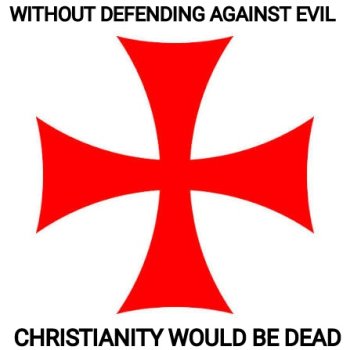
Lawlessness. That's exactly what these pacifists and muslim symps want. They would rather see evil reign and Christianity die. I've had these discussions with them on other threads. That's why I don't even bother with them now, their pathetic.

At the end of the day, history is history.
It cannot be changed.
The evil Muslims invaded the Iberian peninsula and put an end to the Christian Visigoth kingdom.

Confined to a small pocket in the north, the Christians fought back and against all odds were successful in driving out the evil Muslim invaders.

It took almost 800 years, lives and battles were lost and blood was shed, but in the end the war was won, the reconquista was a success.

VICTORY TO CHRISTIANITY

2026-06-22_16-16-17-694.jpg

VIVA A RECONQUISTA
 
Last edited:
  • Like
Reactions: Ziggy

Matthias

Well-Known Member
May 3, 2022
32,735
24,442
113
Kentucky
Faith
Other Faith
Country
United States
Gender
Male
Lawlessness.

“Sin is lawlessness.”

(1 John 3:4)

“We do not use the weapons of the world.”

(2 Corinthians 10:4)

The followers of Jesus and the apostles do not support lawlessness and do not use the weapons of the world.

It is the God-given role and responsibility of world governments, not the followers of Jesus, to use the weapons of the world to protect and defend its land / citizens (Romans 13:1-6).

What did the Christians in the 1st century do in regard to the government and their enemies?

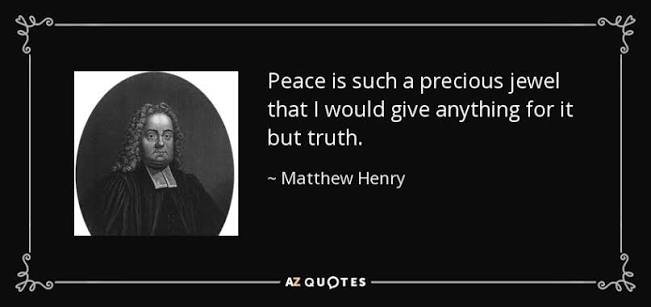
1782216438059.jpeg

What did the Christians in the 2nd, 3rd and early 4th centuries do in regard to the government and their enemies?

1782216338544.jpeg

I’m a follower of Jesus. That’s what I teach, preach and practice on the issue. That’s what I support.
 
Last edited:
  • Like
Reactions: Anchorite

Matthias

Well-Known Member
May 3, 2022
32,735
24,442
113
Kentucky
Faith
Other Faith
Country
United States
Gender
Male
They [pacifists] would rather see evil reign and Christianity die.

See the history of the early church.

VICTORY TO CHRISTIANITY

Victory to the followers of Jesus is guaranteed in scripture. Believing and following the teaching and practice of Jesus and the apostles is the Christian‘s pathway to victory.
 
  • Like
Reactions: Anchorite