Does "Until" Mean What You Think It Means? (Matthew 1:25)

  • Welcome to Christian Forums, a Christian Forum that recognizes that all Christians are a work in progress.

    You will need to register to be able to join in fellowship with Christians all over the world.

    We hope to see you as a part of our community soon and God Bless!

Moonwood

Member
Aug 24, 2026
482
61
28
Washington
Faith
Christian
Country
United States
Gender
Female
A common claim is that Matthew 1:25 proves Joseph and Mary had marital relations after Jesus' birth because Joseph "did not know Her until She had given birth to a son."

But that argument assumes something the text itself never says.

In Matthew 1:25, "knew" (ginosko) is a standard biblical idiom for sexual relations. The question is not the meaning of "knew," but the meaning of "until" (heos).

In Koine Greek and throughout Scripture, heos does not inherently imply that the opposite condition began afterward. Sometimes a change follows the stated boundary; sometimes it does not. The word itself does not determine the outcome.

For example, before the flood Noah remained in the ark until the waters receded, after which he left the ark. The change comes from the context, not from the word "until" itself.

Consider also 2 Samuel 6:23:

"Michal the daughter of Saul had no child until the day of her death."

No one concludes that Michal began bearing children after she died. Here, "until" marks a boundary, not a reversal of the previous condition.

Matthew uses the same construction. His concern is not Joseph and Mary's later married life. His concern is the Virgin Birth.

The surrounding context makes this clear. Matthew has just explained that Mary's child was conceived by the Holy Spirit (Matthew 1:20-23). Then he adds:

"He did not know Her until She had given birth to a Son."

The purpose is to exclude Joseph as the source of the conception and reinforce the fulfillment of Isaiah 7:14. Matthew is safeguarding the truth of Christ's divine origin, not making a statement about what happened after the Nativity.

Matthew 1:25 tells us what did not happen before Jesus' birth. It tells us nothing about what did or did not happen afterward.

Matthew does not tell us what happened after Jesus' birth. Therefore, the verse itself cannot be used as proof that marital relations did occur afterward. That conclusion must come from somewhere other than Matthew 1:25.

The verse establishes the Virgin Birth. It does not tell us whether Joseph and Mary later had marital relations. Reading that conclusion into the text goes beyond what Matthew actually says.
 
Last edited:

Moonwood

Member
Aug 24, 2026
482
61
28
Washington
Faith
Christian
Country
United States
Gender
Female
But, the text tells us that Joseph did not have sex with Mary until Jesus was born! That is what it say in plain simple unreinterpreted language.

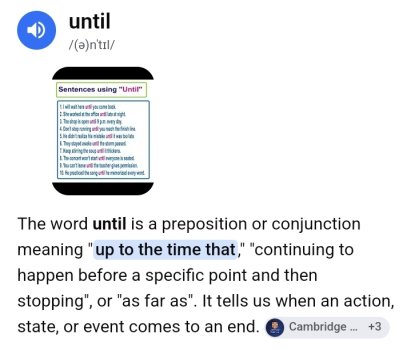
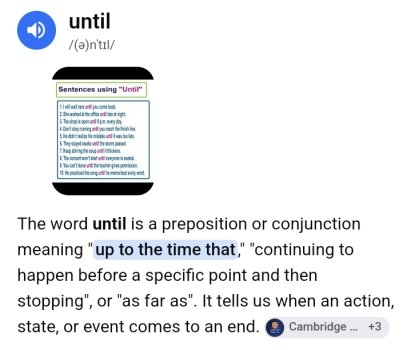
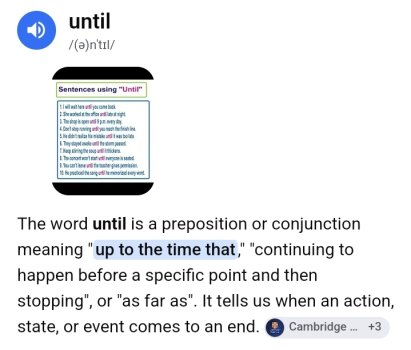
un·til

/ ˌənˈtil, ənˈtil /
preposition
  1. up to (the point in time or the event mentioned):
    "the kidnappers have given us until October 11th to deliver the documents" · "he held the office until his death" · "we didn't find that out until recently"
    Synonyms
    till
    up to
    pending
    through
    before
    prior to
    Antonyms
    beyond
    after
conjunction
  1. up to the point in time or the event mentioned:
    "you don't know what you can achieve until you try"

  2. The point of reference that until lspeaks of is sex and waiting to after Jesus was born.

The problem with your argument is that you're assuming the word "until" automatically means the opposite happened afterward. But that's not how "until" works in either ordinary language or Scripture.

Matthew 1:25 says Joseph "did not know her until she had given birth to a son." The verse clearly tells us what did not happen before Jesus' birth. It does not explicitly tell us what happened afterward.

We can see this from other biblical examples. In 2 Samuel 6:23, "Michal the daughter of Saul had no child until the day of her death." Nobody concludes she started having children after she died. The word "until" marks a point in time, but it does not by itself require a reversal afterward.

The context of Matthew 1 is also important. Matthew's purpose is to establish the Virgin Birth, not to discuss Joseph and Mary's later married life. The whole passage focuses on showing that Jesus was conceived by the Holy Spirit and not by Joseph (Matthew 1:20-23). Verse 25 continues that point by emphasizing that Joseph had no marital relations with Mary before Jesus was born.

So the question is not whether "until" can sometimes be followed by a change. Of course it can. The question is whether Matthew 1:25 states that such a change occurred. It does not.

Therefore, Matthew 1:25 proves the Virgin Birth. It does not prove that Joseph and Mary had marital relations afterward. To reach that conclusion, you must appeal to evidence outside of this verse, because the verse itself is silent on what happened after Jesus' birth.
 

Ronald Nolette

Well-Known Member
Aug 24, 2020
16,901
4,994
113
71
South Carolina
Faith
Christian
Country
United States
Gender
Male
The problem with your argument is that you're assuming the word "until" automatically means the opposite happened afterward. But that's not how "until" works in either ordinary language or Scripture.
Yes it does mean that! You are just so inculcated in your Catholic tradition that you have unconsciously redefined the word until.

Example: we did not go outside until it stopped raining. Based on that sentence- they did go outside. There is not modifier saying they changed their mind or action, so the statement stands- Once it stopped raining they went outside!

Same with Jospeh, there is no modifier found anywhere in Scripture thjat says Joseph never had sex with Mary. but that natural, normal, common and completely understood meaning of this passage is that Joseph did not do someothing until another thing happened, then he did that thing.

It is contingent upon you to show that the normal meaning of this passage (which BTW God inspired to be written) is different from the completely understood meaning.
 

Moonwood

Member
Aug 24, 2026
482
61
28
Washington
Faith
Christian
Country
United States
Gender
Female
Yes it does mean that! You are just so inculcated in your Catholic tradition that you have unconsciously redefined the word until.

Example: we did not go outside until it stopped raining. Based on that sentence- they did go outside. There is not modifier saying they changed their mind or action, so the statement stands- Once it stopped raining they went outside!

Same with Jospeh, there is no modifier found anywhere in Scripture thjat says Joseph never had sex with Mary. but that natural, normal, common and completely understood meaning of this passage is that Joseph did not do someothing until another thing happened, then he did that thing.

It is contingent upon you to show that the normal meaning of this passage (which BTW God inspired to be written) is different from the completely understood meaning.

You're actually proving my point. No one denies that "until" can imply a change afterward in many contexts. The question is whether the word itself requires that conclusion in every case. It does not.

Your rain example works because the context supplies the conclusion. "We did not go outside until it stopped raining" naturally suggests they later went outside because the action is both possible and expected after the obstacle is removed. The conclusion comes from the context, not from the word "until" alone.

But if "until" always required the opposite condition afterward, then you would have to apply that rule consistently everywhere in Scripture. For example:

"Michal the daughter of Saul had no child until the day of her death" (2 Sam. 6:23).

If your rule is correct, then Michal must have had children after her death. Of course that's absurd. Therefore, "until" cannot, by itself, prove that the opposite condition occurred afterward.

The burden is not on me to prove an exception. The burden is on you to prove that Matthew intended to say something he never actually said.

Matthew says Joseph did not know Mary until She gave birth to Jesus. The text explicitly tells us what happened before the birth. It never states, "and afterward Joseph knew Her." Those words simply are not there.

More importantly, the entire context is about establishing that Joseph was not the father of Jesus. Matthew has already told us that the Child was conceived through the Holy Spirit (Matthew 1:18, 20-23). The purpose of verse 25 is to reinforce that fact by excluding Joseph from the conception. Matthew's concern is the Virgin Birth, not a discussion of Joseph and Mary's later married life.

That's why your rain analogy doesn't fit the situation. In the rain example, the purpose of the sentence is to tell us when people went outside. In Matthew 1:25, the purpose of the sentence is to tell us that Joseph had no role in the conception of Jesus. Once Jesus is born, Matthew's point has been made.

So the issue is simple: can Matthew 1:25 be used as proof that Joseph and Mary had sexual relations after Jesus' birth? No, because that is not what Matthew is addressing. The verse establishes that Joseph was not the source of Mary's pregnancy and therefore safeguards the doctrine of the Virgin Birth. It does not make a statement about what happened later.

You're reading a later event into the word "until." I'm simply asking you to point to where Matthew actually states that event occurred. The verse tells us what did not happen before Jesus' birth because that is the only period relevant to the point Matthew is making. It says nothing about what happened afterward. Silence is not proof.
 

Armour of God

Well-Known Member
Mar 6, 2026
1,842
1,201
113
47
Adelaide
Faith
Christian
Country
Australia
Gender
Male
This is total nonsense.
Until means exactly what it means.
It has no other possible meaning.
Screenshot_20261022-134000_Samsung Internet.jpg

Matthew 1:25 tells us that Mary and Joseph had sex after Jesus was born. Thats the only reason why he said that because he knew that Mary and Joseph had a family.

If Mary remained a virgin then the bible would of told is that explicitly but it never does, instead it tells us that Mary and Joseph had sex and that Jesus had siblings.

This example simply tells us that Michal had a child on the day she died.
"Michal the daughter of Saul had no child until the day of her death" (2 Sam. 6:23).
Until still means until. Michal had a baby then died on that same day.

But let's assume that Mary did remain a virgin.
What does that make her, holy, great, not at all.
That would make Mary a very bad wife for refusing to submit to her husband, for no man gets married to remain celibate, that would be absurd. No where does the bible say that Joseph and Mary remained celibate. It's a claim that's highly unbiblical
 
Last edited:

Moonwood

Member
Aug 24, 2026
482
61
28
Washington
Faith
Christian
Country
United States
Gender
Female
This is total nonsense.
Until means exactly what it means.
It has no other possible meaning.
View attachment 92047

Matthew 1:25 obviously tells us that Mary and Joseph had sex after Jesus was born. If Mary remained a virgin then the bible would of told is that explicitly but never does, instead it tells us that Mary and Joseph had sex and that Jesus had siblings.

This example simply tells us that Michal had a child on the day she died.
"Michal the daughter of Saul had no child until the day of her death" (2 Sam. 6:23).

But let's assume that Mary did remain a virgin.
What does that make her, holy, great, not at all. That would make Mary a very bad wife for refusing to submit to her husband for no man gets married to remain celibate, that would be absurd.

You're now making two contradictory claims.

First, you said:

"Until means exactly what it means. It has no other possible meaning."

But when presented with 2 Samuel 6:23:

"Michal the daughter of Saul had no child until the day of her death."

you suddenly redefine the sentence to mean:

"Michal had a child on the day she died."

The problem is that the text never says that. You've added that to rescue your interpretation of "until."

Read the verse carefully. It does not say Michal had a child on the day of her death. It says she had no child until the day of her death. The point is simply that she remained childless throughout her life.

If "until" necessarily means the opposite condition followed afterward, then the verse creates an absurdity, because death is the final boundary beyond which childbearing is impossible.

The existence of passages like 2 Samuel 6:23 proves that "until" does not, by itself, tell us what happened after the stated point. Context does that.

The same principle applies to Matthew 1:25.

Matthew's concern is not Joseph and Mary's later marital life. His concern is establishing that Joseph was not the father of Jesus. Matthew has just explained that Jesus was conceived by the Holy Spirit (Matthew 1:18-23), and verse 25 reinforces that Joseph had no role in the conception.

In other words, the verse answers the question:

"Who fathered Jesus?"

not:

"What was the complete nature of Joseph and Mary's marital relationship for the rest of their lives?"

You say:

"If Mary remained a virgin then the Bible would have told us that explicitly."

But that's an argument from silence. Matthew 1:25 isn't trying to settle that question one way or the other. Its purpose is to establish the Virgin Birth by excluding Joseph from Jesus' conception.

As for Jesus' "siblings," that is a separate discussion entirely. Even if one believes those references prove Mary had other children, that argument does not come from the word "until" in Matthew 1:25.
The real issue is this: can you point to a verse that explicitly says:

"After Jesus was born, Joseph had sexual relations with Mary"?

Matthew 1:25 does not say that. It says Joseph did not know Her until She bore a son, because Matthew is ruling out Joseph as the father of Jesus. Everything beyond that is being read into the text, not read from it.

But let's assume that Mary did remain a virgin.
What does that make her, holy, great, not at all. That would make Mary a very bad wife for refusing to submit to her husband for no man gets married to remain celibate, that would be absurd.

Let's test that theory.

Consider a few facts:
  1. Joseph remained married to Mary for at least twelve years (Luke 2:41-43).
  2. Joseph is described as a righteous man (Matthew 1:19).
  3. When Joseph discovered Mary was pregnant, he did not accuse Her or condemn Her. Instead, he sought to protect Her from public shame (Matthew 1:19).
  4. God sent an angel specifically to tell Joseph not to fear taking Mary as his wife, and Joseph obeyed (Matthew 1:20-24).
  5. Nothing in Scripture portrays Joseph as resentful, deprived, mistreated, or trapped in an unwanted marriage.
So here's the question: if lifelong virginity would have made Mary a "bad wife," why does Scripture never hint at that? Why does God intervene to keep Joseph in the marriage? Why is Joseph praised as righteous for remaining with Her? Why is there no rebuke of Mary anywhere in Scripture?

Your argument assumes that a wife must provide sexual relations or she is failing in her vocation as a wife. But that assumption does not fit every biblical situation. Scripture recognizes that some people are set apart by God for special purposes, and that unique callings can involve sacrifices that would not be expected in ordinary circumstances.

More importantly, once the Incarnation occurred, this was not an ordinary marriage. Joseph was the guardian of the Mother of the Messiah and the putative father of the Son of God. If God had called Mary to lifelong virginity, and Joseph knowingly accepted that divine calling, then Mary's faithfulness to that vocation would not make Her a bad wife. It would make Her obedient to God.

In fact, the real difficulty for your position is that God Himself tells Joseph to remain in the marriage (Matthew 1:20-24). If Mary's conduct would have constituted a serious violation of marital duty, why would God affirm the marriage rather than correct it?

Calling Mary a "bad wife" is therefore not something derived from the text. It is a conclusion imposed on the text. Scripture portrays Mary as faithful and Joseph as righteous. The burden is on you to show where Scripture says otherwise.

More fundamentally, your argument assumes that Joseph desired a conventional marriage and was somehow deprived of it. But Scripture never says that. What Scripture does tell us is that God chose Joseph, revealed His plan to him through an angel, and Joseph willingly accepted the role God gave him. The text presents Joseph as a faithful participant in God's plan, not as a victim of it.
 

Armour of God

Well-Known Member
Mar 6, 2026
1,842
1,201
113
47
Adelaide
Faith
Christian
Country
Australia
Gender
Male
You're now making two contradictory claims.

First, you said:


But when presented with 2 Samuel 6:23:


you suddenly redefine the sentence to mean:


The problem is that the text never says that. You've added that to rescue your interpretation of "until."

Read the verse carefully. It does not say Michal had a child on the day of her death. It says she had no child until the day of her death. The point is simply that she remained childless throughout her life.

If "until" necessarily means the opposite condition followed afterward, then the verse creates an absurdity, because death is the final boundary beyond which childbearing is impossible.

The existence of passages like 2 Samuel 6:23 proves that "until" does not, by itself, tell us what happened after the stated point. Context does that.

The same principle applies to Matthew 1:25.

Matthew's concern is not Joseph and Mary's later marital life. His concern is establishing that Joseph was not the father of Jesus. Matthew has just explained that Jesus was conceived by the Holy Spirit (Matthew 1:18-23), and verse 25 reinforces that Joseph had no role in the conception.

In other words, the verse answers the question:


not:


You say:


But that's an argument from silence. Matthew 1:25 isn't trying to settle that question one way or the other. Its purpose is to establish the Virgin Birth by excluding Joseph from Jesus' conception.

As for Jesus' "siblings," that is a separate discussion entirely. Even if one believes those references prove Mary had other children, that argument does not come from the word "until" in Matthew 1:25.
The real issue is this: can you point to a verse that explicitly says:


Matthew 1:25 does not say that. It says Joseph did not know Her until She bore a son, because Matthew is ruling out Joseph as the father of Jesus. Everything beyond that is being read into the text, not read from it.


Let's test that theory.

Consider a few facts:
  1. Joseph remained married to Mary for at least twelve years (Luke 2:41-43).
  2. Joseph is described as a righteous man (Matthew 1:19).
  3. When Joseph discovered Mary was pregnant, he did not accuse Her or condemn Her. Instead, he sought to protect Her from public shame (Matthew 1:19).
  4. God sent an angel specifically to tell Joseph not to fear taking Mary as his wife, and Joseph obeyed (Matthew 1:20-24).
  5. Nothing in Scripture portrays Joseph as resentful, deprived, mistreated, or trapped in an unwanted marriage.
So here's the question: if lifelong virginity would have made Mary a "bad wife," why does Scripture never hint at that? Why does God intervene to keep Joseph in the marriage? Why is Joseph praised as righteous for remaining with Her? Why is there no rebuke of Mary anywhere in Scripture?

Your argument assumes that a wife must provide sexual relations or she is failing in her vocation as a wife. But that assumption does not fit every biblical situation. Scripture recognizes that some people are set apart by God for special purposes, and that unique callings can involve sacrifices that would not be expected in ordinary circumstances.

More importantly, once the Incarnation occurred, this was not an ordinary marriage. Joseph was the guardian of the Mother of the Messiah and the putative father of the Son of God. If God had called Mary to lifelong virginity, and Joseph knowingly accepted that divine calling, then Mary's faithfulness to that vocation would not make Her a bad wife. It would make Her obedient to God.

In fact, the real difficulty for your position is that God Himself tells Joseph to remain in the marriage (Matthew 1:20-24). If Mary's conduct would have constituted a serious violation of marital duty, why would God affirm the marriage rather than correct it?

Calling Mary a "bad wife" is therefore not something derived from the text. It is a conclusion imposed on the text. Scripture portrays Mary as faithful and Joseph as righteous. The burden is on you to show where Scripture says otherwise.

More fundamentally, your argument assumes that Joseph desired a conventional marriage and was somehow deprived of it. But Scripture never says that. What Scripture does tell us is that God chose Joseph, revealed His plan to him through an angel, and Joseph willingly accepted the role God gave him. The text presents Joseph as a faithful participant in God's plan, not as a victim of it.

LoL your so full of nonsense.
Until means exactly what it means.
Mary submitted to her husband otherwise she would of been a bad wife and a bad mother
 

Armour of God

Well-Known Member
Mar 6, 2026
1,842
1,201
113
47
Adelaide
Faith
Christian
Country
Australia
Gender
Male
How many threads do you have about Mary?
I see at least 6 of them.
It's an extraordinary obsession that you have there.
A very unbiblical obsession
 

Moonwood

Member
Aug 24, 2026
482
61
28
Washington
Faith
Christian
Country
United States
Gender
Female
LoL your so full of nonsense.

Calling my argument "nonsense" isn't a refutation. I've given specific reasons from the text and asked specific questions about them. If my argument is wrong, then show where the reasoning fails. Simply repeating "until means until" and resorting to insults doesn't address the points I raised.
 

Armour of God

Well-Known Member
Mar 6, 2026
1,842
1,201
113
47
Adelaide
Faith
Christian
Country
Australia
Gender
Male
Your view has already been refuted by myself and many others. I'm not wasting anymore time on this stupid subject.

Screenshot_20261022-134000_Samsung Internet.jpg
Your claim is refuted.
End of nonsensical story
 

Armour of God

Well-Known Member
Mar 6, 2026
1,842
1,201
113
47
Adelaide
Faith
Christian
Country
Australia
Gender
Male
Yes it does mean that! You are just so inculcated in your Catholic tradition that you have unconsciously redefined the word until.

Example: we did not go outside until it stopped raining. Based on that sentence- they did go outside. There is not modifier saying they changed their mind or action, so the statement stands- Once it stopped raining they went outside!

Same with Jospeh, there is no modifier found anywhere in Scripture thjat says Joseph never had sex with Mary. but that natural, normal, common and completely understood meaning of this passage is that Joseph did not do someothing until another thing happened, then he did that thing.

It is contingent upon you to show that the normal meaning of this passage (which BTW God inspired to be written) is different from the completely understood meaning.

You've easily refuted the nonsensical claim made. Unfortunately she doesn't use common sense and doesn't accept facts.
God bless
 

Armour of God

Well-Known Member
Mar 6, 2026
1,842
1,201
113
47
Adelaide
Faith
Christian
Country
Australia
Gender
Male
Screenshot_20261022-134000_Samsung Internet.jpg

Either Mary had a family with Joseph as the bible clearly tells us or she was a bad wife and bad mother. Either way I don't really care
 

Armour of God

Well-Known Member
Mar 6, 2026
1,842
1,201
113
47
Adelaide
Faith
Christian
Country
Australia
Gender
Male
Debunked

Screenshot_20261022-134000_Samsung Internet.jpg

Until means exactly what it means, nothing changes that. Mary had sex with Joseph just as the bible says
 

Moonwood

Member
Aug 24, 2026
482
61
28
Washington
Faith
Christian
Country
United States
Gender
Female
Your claim is refuted.

You keep saying my position has been "refuted," but you never actually addressed the argument.

According to your interpretation, "until" always means the opposite condition occurred afterward. Yet in 2 Samuel 6:23:

"Michal the daughter of Saul had no child until the day of her death."

If your rule were universally true, then the opposite condition would follow afterward. But that is impossible. Therefore, "until" does not, by itself, prove that the opposite condition occurred after the stated point.

Second, you've completely ignored the context of Matthew 1. The passage is not about Joseph and Mary's future marital relations. It is about establishing that Jesus was conceived by the Holy Spirit and not by Joseph. Matthew's point is to rule out Joseph as the father of Jesus.

That's why Matthew tells us Joseph did not know Mary until She gave birth. The statement excludes Joseph from the conception. It does not discuss what happened afterward because that is not Matthew's subject.

You've simply asserted that "until means until" and declared victory, but you haven't addressed either of those arguments.

Declaring "your claim is refuted" is not the same as actually refuting it.
 

Armour of God

Well-Known Member
Mar 6, 2026
1,842
1,201
113
47
Adelaide
Faith
Christian
Country
Australia
Gender
Male
You keep saying my position has been "refuted," but you never actually addressed the argument.

I have addressed your nonsense and I'll address it again now that I've finished work.

According to your interpretation, "until" always means the opposite condition occurred afterward

It's not my interpretation it's the definition. You can't just invent your own definition.
The definition of "until" refutes your claim
Screenshot_20261022-134000_Samsung Internet.jpg

"Michal the daughter of Saul had no child until the day of her death."

If your rule were universally true, then the opposite condition would follow afterward. But that is impossible. Therefore, "until" does not, by itself, prove that the opposite condition occurred after the stated point.

Not "my rule".
It's the definition.

"Day of her death" is what it says.
It doesn't say "after she died",
that's what your assuming.

So on that day she had a child then she died, maybe during childbirth.

The opposite condition does follow.
She has a child on the day of her death

Second, you've completely ignored the context of Matthew 1. The passage is not about Joseph and Mary's future marital relations. It is about establishing that Jesus was conceived by the Holy Spirit and not by Joseph. Matthew's point is to rule out Joseph as the father of Jesus.

Matthew 1 has a few story lines in it.
The claim that Mary remained a virgin her whole life is not part of the story line at all.

That's why Matthew tells us Joseph did not know Mary until She gave birth. The statement excludes Joseph from the conception. It does not discuss what happened afterward because that is not Matthew's subject.

If that was the case then the bible would of just said that Mary was a virgin without saying "until she gave birth". If it was the case then the gospel aithors would of plainly said so. The fact that Matthew says this is a clear indication that they did have sex after Jesus’s birth because he knew when he wrote this that Mary and Joseph had family.

So there you go.
Easily debunked..
Your just inventing your own definition.
Until has a definition and it applies to your Michal example and to Matthew 1:25
 

Attachments

  • Screenshot_20261022-134000_Samsung Internet.jpg
    Screenshot_20261022-134000_Samsung Internet.jpg
    122.5 KB · Views: 0

markalan

Well-Known Member
May 31, 2021
617
427
63
81
Perth
Faith
Christian
Country
Australia
Gender
Male
But if "until" always required the opposite condition afterward, then you would have to apply that rule consistently everywhere in Scripture. For example:

"Michal the daughter of Saul had no child until the day of her death" (2 Sam. 6:23).

If your rule is correct, then Michal must have had children after her death. Of course that's absurd. Therefore, "until" cannot, by itself, prove that the opposite condition occurred afterward.

2 Samuel 6:23 is a poor example because it uses the Hebrew ad which works differently from the Greek heos in Matthew 1:25.
Please provide an example in the NT where heos is used the way you claim.


Moonwood

Member
Aug 24, 2026
482
61
28
Washington
Faith
Christian
Country
United States
Gender
Female
I have addressed your nonsense and I'll address it again now that I've finished work.


It's not my interpretation it's the definition. You can't just invent your own definition.
The definition of "until" refutes your claim
View attachment 92056


Not "my rule".
It's the definition.

"Day of her death" is what it says.
It doesn't say "after she died",
that's what your assuming.

So on that day she had a child then she died, maybe during childbirth.

The opposite condition does follow.
She has a child on the day of her death


Matthew 1 has a few story lines in it.
The claim that Mary remained a virgin her whole life is not part of the story line at all.


If that was the case then the bible would of just said that Mary was a virgin without saying "until she gave birth". If it was the case then the gospel aithors would of plainly said so. The fact that Matthew says this is a clear indication that they did have sex after Jesus’s birth because he knew when he wrote this that Mary and Joseph had family.

So there you go.
Easily debunked..
Your just inventing your own definition.
Until has a definition and it applies to your Michal example and to Matthew 1:25

You're still asserting your conclusion rather than proving it.

You keep saying "that's the definition," but the issue has never been the definition of until. The issue is whether until, by itself, always requires that the opposite condition occurred afterward.

Your handling of 2 Samuel 6:23 actually proves my point.

"Michal the daughter of Saul had no child until the day of her death."

The text never says Michal had a child on the day she died. That's something you've added to the text to preserve your theory.

In other words, when Matthew 1:25 doesn't explicitly say Joseph knew Mary afterward, you insist the event must be assumed. But when 2 Samuel 6:23 doesn't explicitly say Michal had a child on the day of her death, you also assume an event not stated in the text.

The difference is that your assumption in 2 Samuel 6:23 has no textual support whatsoever.

More importantly, you've still ignored the context of Matthew 1.

Matthew is explaining who fathered Jesus. The chapter repeatedly emphasizes that the Child was conceived by the Holy Spirit, not by Joseph. Matthew 1:25 fits that purpose perfectly: Joseph did not know Mary before Jesus was born, therefore Joseph was not the source of Mary's pregnancy.

That is the subject under discussion.

You keep treating Matthew as though he were answering the question:

"Did Joseph and Mary ever have marital relations?"

But Matthew is answering:

"Was Joseph the father of Jesus?"

Those are not the same question.

So no, my position hasn't been "easily debunked." You've simply repeated "until means until" while never addressing why Matthew mentions Joseph's abstinence in a context focused on the Virgin Birth, nor why your interpretation requires adding a childbirth to 2 Samuel 6:23 that the text never mentions.

Declaring victory is not the same thing as demonstrating it.
 

Moonwood

Member
Aug 24, 2026
482
61
28
Washington
Faith
Christian
Country
United States
Gender
Female
2 Samuel 6:23 is a poor example because it uses the Hebrew ad which works differently from the Greek heos in Matthew 1:25.
Please provide an example in the NT where heos is used the way you claim.


That's a fair question. The Hebrew example was never meant to prove the meaning of heos in Matthew 1:25. It was meant to refute the claim that "until" by definition always requires a reversal afterward.

As for the Greek heos, yes, we can find New Testament examples where the word itself does not require the opposite condition afterward.

One obvious example is Matthew 28:20:

"I am with you always, until (heos) the end of the age." [biblehub.com], [biblehub.com]

Surely no Christian believes Christ ceases to be with His people after the end of the age. The point is not what happens afterward, but the assurance being given up to the stated point.

Another example is 1 Timothy 4:13:

"Until (heos) I come, give attention to the public reading of Scripture, to exhortation, and to teaching." [biblehub.com], [studylight.org]

Does Paul mean Timothy must stop reading Scripture, exhorting, and teaching once Paul arrives? Of course not. The verse does not address what happens afterward.

The larger point is that heos marks a boundary. Whether the opposite condition follows afterward is determined by the context, not by the word itself.

Which brings us back to Matthew 1:25.

The question is not, "What can I imagine happened after Jesus was born?"

The question is, "What is Matthew trying to establish?"

Matthew has just spent the entire chapter explaining that Jesus was conceived by the Holy Spirit and not by Joseph. Then he adds that Joseph did not know Mary until She gave birth. The statement perfectly serves Matthew's purpose: it excludes Joseph from the conception of Jesus.

Therefore, even if someone rejects perpetual virginity, Matthew 1:25 still does not prove that Joseph and Mary had marital relations afterward. To prove that, you would need a text that actually says it.

Matthew 1:25 tells us what did not happen before Jesus' birth. The verse itself never says what happened afterward. That's the point under dispute.