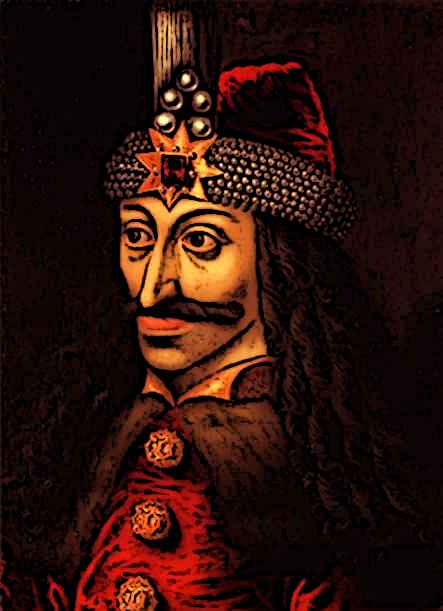
Vlad the Impaler is no role model for Christians, but barbaric Crusader thugs could relate.
Beyond executions of individual criminals, he was known to decimate entire Saxon villages in Transylvania, and lock poor or sick citizens in burning buildings simply to eradicate poverty, and stop beggars from draining the state's resources.
Impalement was a notoriously slow and excruciating method of execution. He famously used it to punish everyone from invading armies and disloyal nobles to thieves, liars, and even foreign emissaries who refused to remove their hats in his presence.
Vlad the Impaler was called "Dracula" because it was his patronymic name, translating literally to "son of the dragon". It derives from his father, Vlad II, who was a member of the elite chivalric Order of the Dragon (Societas Draconistarum) and was known as Vlad Dracul.
In the Romanian language, adding the suffix "-a" means "the son of." Thus, Draculasignifies "son of Dracul" (or "son of the dragon").
Historically, this name had absolutely nothing to do with vampires. Because he was born in the Transylvanian city of Sighișoara, and was the son of Dracul, Vlad III simply adopted the name as his royal title and signature.
The name gained its terrifying vampire connotation centuries later, when Irish author Bram Stoker used Vlad III's patronymic and his reputation for gruesome cruelty (such as impaling enemies) to name his iconic 1897 gothic novel, Dracula.