Matthew 18:15-20, verse 17, those words are severe, but the words come from Jesus, the one who called a tax collector named Matthew, ate with tax collectors and sinners and pursued outsiders with mercy, so the church’s posture is not hatred, it is sober recognition with the door of repentance still taken seriously. Different Christian traditions practice church discipline in different formal ways, Matthew 18:15-20 does not settle every question of church government, but the movement Jesus gives is clear enough to obey. Private correction, accountable witnesses, church involvement when refusal persists and the aim of restoration wherever repentance is found.
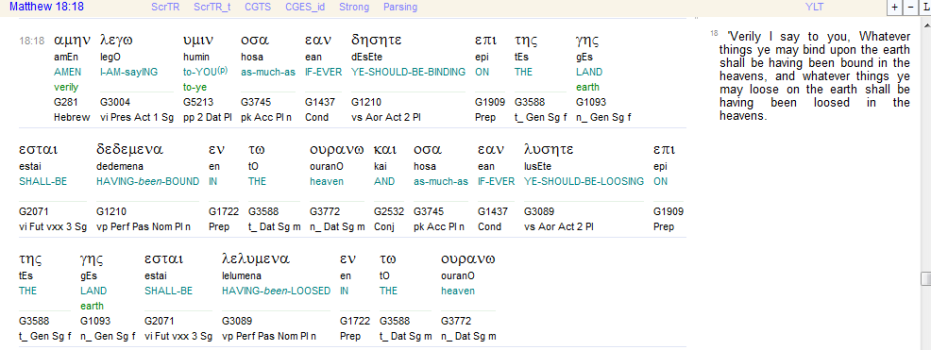
That sequence matters, because the next words are enormous, Jesus moves from a painful earthly process to language about heaven itself, Matthew 18:18, now the issue is authority and this is where the verse can be ignored, because it sounds strange or abused, because it sounds powerful, binding and loosing language also appears in Matthew 16:19, where Jesus speaks to Peter about the keys of the Kingdom. Christians across traditions have understood the details differently, but at minimum in Matthew 18:18, Jesus is not teaching that the church controls heaven, he is teaching that the church’s earthly action must be accountable to heaven’s authority.
Then the hardest question in the room, if Christ himself examined this decision, would he call it faithful? That is where binding and loosing belongs, not in a performance of spiritual authority, not in a leader’s need to sound powerful, not in a congregation’s desire to make an uncomfortable matter disappear, the authority is real, but it is not ownership, it is stewardship under the King. The church does not get to make heaven agree with earth, the church must bring its earthly actions under heaven’s authority as revealed in Christ’s teaching.
That means no leader can hide behind this passage to baptize personal control, no congregation can use it to sanctify favoritism, no group can say, we decided it, so God must honor it, if the decision does not submit to the character, commands and justice of Christ. The binding and loosing of Matthew 18:18 belongs with open scripture, honest facts, clean motives and fear of the Lord.
That sequence matters, because the next words are enormous, Jesus moves from a painful earthly process to language about heaven itself, Matthew 18:18, now the issue is authority and this is where the verse can be ignored, because it sounds strange or abused, because it sounds powerful, binding and loosing language also appears in Matthew 16:19, where Jesus speaks to Peter about the keys of the Kingdom. Christians across traditions have understood the details differently, but at minimum in Matthew 18:18, Jesus is not teaching that the church controls heaven, he is teaching that the church’s earthly action must be accountable to heaven’s authority.
Then the hardest question in the room, if Christ himself examined this decision, would he call it faithful? That is where binding and loosing belongs, not in a performance of spiritual authority, not in a leader’s need to sound powerful, not in a congregation’s desire to make an uncomfortable matter disappear, the authority is real, but it is not ownership, it is stewardship under the King. The church does not get to make heaven agree with earth, the church must bring its earthly actions under heaven’s authority as revealed in Christ’s teaching.
That means no leader can hide behind this passage to baptize personal control, no congregation can use it to sanctify favoritism, no group can say, we decided it, so God must honor it, if the decision does not submit to the character, commands and justice of Christ. The binding and loosing of Matthew 18:18 belongs with open scripture, honest facts, clean motives and fear of the Lord.