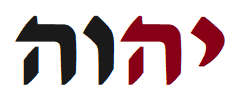
I like to use the Jewish Tanakh for the Hebrew because the Tetragrammaton is clearly seen in the text even though it is substituted with a title (Adonai) in the English translation.
Exodus 3:13-15....
| 13 And Moses said to God, "Behold I come to the children of Israel, and I say to them, 'The God of your fathers has sent me to you,' and they say to me, 'What is His name?' what shall I say to them?" | | יגוַיֹּ֨אמֶר משֶׁ֜ה אֶל־הָֽאֱלֹהִ֗ים הִנֵּ֨ה אָֽנֹכִ֣י בָא֘ אֶל־בְּנֵ֣י יִשְׂרָאֵל֒ וְאָֽמַרְתִּ֣י לָהֶ֔ם אֱלֹהֵ֥י אֲבֽוֹתֵיכֶ֖ם שְׁלָחַ֣נִי אֲלֵיכֶ֑ם וְאָֽמְרוּ־לִ֣י מַה־שְּׁמ֔וֹ מָ֥ה אֹמַ֖ר אֲלֵהֶֽם: |
| 14 God said to Moses, "Ehyeh asher ehyeh (I will be what I will be)," and He said, "So shall you say to the children of Israel, 'Ehyeh (I will be) has sent me to you.'" | | ידוַיֹּ֤אמֶר אֱלֹהִים֙ אֶל־משֶׁ֔ה אֶֽהְיֶ֖ה אֲשֶׁ֣ר אֶֽהְיֶ֑ה וַיֹּ֗אמֶר כֹּ֤ה תֹאמַר֙ לִבְנֵ֣י יִשְׂרָאֵ֔ל אֶֽהְיֶ֖ה שְׁלָחַ֥נִי אֲלֵיכֶֽם: |
| 15 And God said further to Moses, "So shall you say to the children of Israel, 'The Lord God of your forefathers, the God of Abraham, the God of Isaac, and the God of Jacob, has sent me to you.' This is My name forever, and this is how I should be mentioned in every generation.“ | | טווַיֹּ֩אמֶר֩ ע֨וֹד אֱלֹהִ֜ים אֶל־משֶׁ֗ה כֹּ֣ה תֹאמַר֘ אֶל־בְּנֵ֣י יִשְׂרָאֵל֒ יְהֹוָ֞ה אֱלֹהֵ֣י אֲבֹֽתֵיכֶ֗ם אֱלֹהֵ֨י אַבְרָהָ֜ם אֱלֹהֵ֥י יִצְחָ֛ק וֵֽאלֹהֵ֥י יַֽעֲקֹ֖ב שְׁלָחַ֣נִי אֲלֵיכֶ֑ם זֶה־שְּׁמִ֣י לְעֹלָ֔ם וְזֶ֥ה זִכְרִ֖י לְדֹ֥ר דֹּֽר: |
What is interesting is the translation given here....It’s not “I Am”.....but “I Will Be What I Will Be”. And this makes sense because the God of Israel, whom they knew as descendants of Jacob was going “to be” to his people what they had never seen before. They already knew that he existed, but not in the way that they would see his power demonstrated against the Egyptians in liberating them from the grip of their stubborn Pharaoh.
What does John 17:24-26 really say in context?....
24 My Father, I desire that these also which you have given to me be with me where I am, [אהיה]“
Read the way it was said....Jesus is telling his Father that he desired that those he had given him (his disciples) would be where he was....why?
“So that they may behold the glory You have given to me because You loved me before the foundation of the world”.
He was on earth when he said that, indicating that he wanted his disciples to be where he was going...in heaven....to behold his glory in his heavenly body, given to him by his Father.
“O my Righteous Father, the world has not known You, but I have known You, and these have known that You have sent me”....
His disciples knew who he was, even if the world did not.....and they knew who it was that “sent” him.
“And I have made known to them Your Name, and will continue to make it known”
.....whose name was Jesus making known? Not his own name, but the name of his God and Father. Why did he need to say that? Because the Jews had ceased uttering God’s name in their speech, but had retained it in their Scripture. He would return his Father’s name to its rightful place and declare it to his followers....and continue to make it known to all who heard him.
“that the love with-which [אשר] You have loved me might be in them, and I shall be [אהיה] in them.”
“Shall be”...”will be”...same thing.....but what is he talking about? “LOVE”....the same kind of love that Jesus shares with his Father, would be shared with his disciples also.
“אהיה אשר אהיה” ~ Exodus 3:14.....
”I Will Be What I Will Be”.
The problem with your conclusion,
”I Will Be What I Will Be”, is that in the very next verse, (Exo 3:15), the Tetragrammaton derives from that very statement and is not spoken by Mosheh but to Mosheh, (in other words it is the interpretation of the Most High Himself).
Exodus 3:15 TS2000
15 And Elohim said further to Mosheh, “Thus you are to say to the children of Yisra’ĕl, ‘
יהוה Elohim of your fathers, the Elohim of Aḇraham, the Elohim of Yitsḥaq, and the Elohim of Ya‛aqoḇ, has sent me to you. This is My Name forever, and this is My remembrance to all generations.’
The difference is that the Tetragrammaton is not in the first person, (I am, I shall be), but rather in the third person as when a man would speak the Name, (HE WHO IS AND WHO WAS AND WHO SHALL BE). Moreover we have this understanding already provided for us in the scripture elsewhere, in the Apocalypse, which is yet another text that was almost no doubt originally written in Hebrew, and we do have several surviving Hebrew manuscripts and fragments containing the passages and full plene spelling of the Tetragrammaton. The full text of the Apocalypse in Hebrew which I will quote from has been translated in its entirety and may be viewed here:
The first ever complete English translation and Hebrew transcript of an authentic Hebrew manuscript of Revelation! In the introductory sections to the translation, we discuss the following topics: Was Revelation originally written in Hebrew or Greek? What is the Hebrew Title for the Book of...

www.hebrewgospels.com
(click on "View Translation and Transcript", or click
here to skip the main page).
In the first occurrence, (Rev 1:4), we find,
שהיה והוה ויהיה, (according to the translator this is an incorrect word order). The shin is being employed in an archaic form as a single letter prefix representing the relative pronoun, (asher, who, what, where, etc.,), but does not have to do with relative pronoun in the Name found in Exodus 3:14. The reading, at least in imo, is technically correct, which says, "WHO WAS AND IS AND SHALL BE", (but the word order neither agrees with the LXX rendering of the third occurrence of EHYAH, nor with the relevant passages in the first chapter of the Apocalypse).
In the second occurrence, (Rev 1:8), we find, ההיה והוה ויהיה, which is perfect form, "THE ONE WHO WAS AND IS AND SHALL BE", (but again wrong word order). Thus we have the full plene spelling and pronunciation of the Tetragrammaton from the Apocalypse, (a Kohen as per other studies), and in the correct word order it would be in perfect harmony with the first statement in Exo 3:14.
Where the Greek text of the Apocalypse is faulty is in rendering the final portion, (who is to come), and the error is manifestly evident because the Father is omnipresent: the heavens and the heaven of the heavens cannot contain Him, (Deut 10:14, 1Kgs 8:27, 2Chr 2:6, 6:18), and if one could ascend into the heavens, He is already there, and if one could descend into Sheol, He is already there, (see Psa 139:7-12).
Thus "ο ερχομενος", ("THE ONE TO COME" or "THE ONE COMING") is a Greek corruption of the text. And why might this be the case if it was indeed intentional? It would be for the reason that the Meshiah, foretold through Mosheh in Deut 18:15-19, was the one to come, meaning that the early church translator or translators who rendered the Apocalypse from Hebrew into Greek were attempting to make the Anointed One appear to be equal with the Father.
Search "ο ερχομενος" in the N/T Greek, (which I am pretty sure you, as a JW, are quite familiar with), and you will see that it is used for the Meshiah in the Gospel accounts, especially the Gospel now called John, concerning the one who in the Torah, (and Prophets), was prophesied to come, and is not speaking of the Father who is both omnipresent and also does not change.