Logos Logic

  • Welcome to Christian Forums, a Christian Forum that recognizes that all Christians are a work in progress.

    You will need to register to be able to join in fellowship with Christians all over the world.

    We hope to see you as a part of our community soon and God Bless!

dak

Well-Known Member
Feb 9, 2013
1,457
188
63
Messianica
sites.google.com
Faith
Other Faith
Country
United States
Gender
Male
If anyone will, follow the simple systematic logic in the following emphatic statements of the Meshiah, and there is a reward to come for doing so, (once the relative consequences to doctrine are understood and carried out in the faithful one).

First off:

Point #1
The term ho logos in John 1:1, which has the article attached, is typically and rightfully rendered as "the Word", (upper case W), by most translators. The article makes it emphatic so that it may indeed be a proper noun, (name). However, if one is going to do this in John 1:1, and again also in John 1:14, then the same should do it also in any other place where it occurs, that is, at least in this same Gospel account whenever the term plays an important and prominent role in what is being said. Otherwise one who does not do so is merely playing a logical fallacy game called special pleading. One of these instances may be found in John 12:48, and likewise, Point #2, the word ekeinos is found in the same statement in John 12:48. If we then render ekeinos for what it actually literally means, "that one", the meaning of the statement becomes even more forceful and quite obvious. Therefore I render it that way in the following list of verses below which contain John 12:48.

Logos is reason and reasoning, (at the least in basic terms), and logikos is logical reasoning, (logic), which derives from logos, and which is used for the rational-logical (pure milk of) the word in 1Pet 2:2.

Therefore, again I say, if anyone will, follow the simple systematic logic in the following emphatic statements of the Meshiah, and there is no doubt a reward to come for doing so, (once the relative consequences to doctrine are understood and carried out in the faithful one).

John 5:22
22 for the Father judges no one, but has committed all judgment unto the Son:

John 8:15
15 You judge after the flesh: I judge no one.

John 8:50
50 And I seek not mine own glory: there is One who seeks out and judges.

John 12:47-50
47 And if anyone hears my words, (rhema), and believes not, I judge him not: for I came not to judge the world, but to save-deliver the world.
48 The one rejecting me, and receiving not my words, (rhema), has One that judges him: the Logos that I have spoken, that one shall judge him in the last day.
49 For I have not spoken of myself: but the Father who sent me, He gave me a commandment, what I should say, and what I should speak.
50 And I know that His commandment is life eternal: whatsoever therefore I speak, even as the Father has said unto me, so I speak.

The basic logic in the above emphatic statements of the Meshiah:

The Father judges no one.
The Father has committed all judgement unto the Son.
The Meshiah himself, (the Christos, or Anointed One), judges no one.
The Logos which the Meshiah has spoken: that one is the Judge.
 
  • Like
Reactions: Hiddenthings

Matthias

Well-Known Member
May 3, 2022
32,115
24,070
113
Kentucky
Faith
Other Faith
Country
United States
Gender
Male
What we say - expressed in our words and deeds - is a witness.
 

Matthias

Well-Known Member
May 3, 2022
32,115
24,070
113
Kentucky
Faith
Other Faith
Country
United States
Gender
Male
Please feel free to elaborate: for although I agree, I do not understand the reason for your response in regards to what is contained in the opening post.

What I wrote is offered in support of the opening post.
 
  • Like
Reactions: dak

dak

Well-Known Member
Feb 9, 2013
1,457
188
63
Messianica
sites.google.com
Faith
Other Faith
Country
United States
Gender
Male
What I wrote is offered in support of the opening post.

Speaking of witness/testimony: from the context of two of the passages quoted in the opening post, (John 8:15, 50).

John 8:12-28
12 Therefore again Ι̅Η spoke to them, saying, I am the light of the world: the one following me shall not walk in the darkness, but shall have the light of the life.
13 The Pharisees therefore said to him, You testify concerning yourself: your testimony is untrue.
14 Ι̅Η answered and said to them, Though I testify concerning myself, yet my testimony is true: for I know from where I came, and to where I go, but you cannot tell from where I come, and to where I go.
15 You judge after the flesh: I judge no one.
16 And yet if I judge, my judgment is true: for I am not alone, but I myself, and my Sender, the Father.
17 And in the Torah, also pertaining unto you, it is written that the testimony of two men is true.
18 I am one testifying concerning myself, and my Sender, the Father, bears witness concerning me.
19 Then they said to him, Where is your father? Ι̅Η answered, You neither know me, nor my Father: if you had known me, you would have known my Father also.
20 These words Ι̅Η spoke in the treasury, as he taught in the temple, and no man laid hands on him: for his hour was not yet come.
21 Then Ι̅Η said again to them, I go my way, and you shall seek me, and shall die in your sins: where I go, you cannot come.
22 Then said the Yhudim, Will he kill himself? for he says, "Where I go, you cannot come".
23 And he said to them, You are from beneath, I am from above: you are of this world: I am not of this world.
24 I said therefore unto you, that you shall die in your sins: for if you believe not that I am ― ― ― ― ―, you shall die in your sins.
25 Then they said to him, You are who? [for they recognized that he did not complete the "I am" statement]. And Ι̅Η said to them, That which I also said unto you at the commencement [John 8:12].
26 I have many things to speak and to judge concerning you: but the One having sent me is true, and I speak to the world those things which I have heard of Him.
27 They understood not that he spoke to them of the Father.
28 Then Ι̅Η said to them, When you have lifted up [or exalted] the Son of man, then shall you know that I am ― ― ― ― ―, and that I do nothing of myself: but as my Father has taught me, I speak these things.
 
  • Like
Reactions: Matthias

dak

Well-Known Member
Feb 9, 2013
1,457
188
63
Messianica
sites.google.com
Faith
Other Faith
Country
United States
Gender
Male
Before Abraham is done, (not "was", see genesthai link below).


John 8:58
58 Ι̅Η said to them, Amen, amen, I say unto you, Before Abraham is done, I am ― ― ― ― ―.

Uriel is the Light of the World (Greek Kosmos).

The seven "I am" statements:

Sefer Henok 20
[01] These are the Holy Elohim-Malakim-Watchers who Watch:
[02] Uriel, Light of El, one-united of the Holy Malakim, over the Kosmos and Tartarus.
(בור ארץ תחתית – Eze 31:14-18).
[03] Raphael, Healing of El, one-united of the Holy Malakim, over the spirits of the adam.
[04] Reuel, Friend of El, one-united of the Holy Malakim, following (like a shepherd) the world of the luminaries.
[05] Mikael, Who is like El, one-united of the Holy Malakim, over the heart of the adam, Sar Tzaba.
[06] Soreqael, Choice Vine of El, one-united of the Holy Malakim, over the spirits who sin against the Spirit.
[07] Gabriel, Gaber of El, one-united of the Holy Malakim, over the Paradise, the Dragons, and the Krubim.
[08] Remiel, Thunder of El, one-united of the Holy Malakim, whom Elah set over those who rise.

1) I am the Light of the world, (Uriel, Light of El, Henok 20).
2) I am the Bread of Life, (Raphael, Healing of El, Henok 20).
3) I am the Way, the Truth, and the Life, (Reuel/Raguel, Friend of El, Henok 20).
4) I am the Good Shepherd, (Miykael, set over the heart, Henok 20, (and over the holy people, Daniel 12:1)).
5) I am the Vine, (Seruqael/Soreqael, Choice Vine of El, Henok 20).
6) I am the Door, (Gabriel, Gaber/Geber of El, Henok 20).
7) I am the Resurrection and the Life, (Remiel, whom El set over those who rise, Henok 20).

John 18:4-8
4 Ι̅Η therefore, knowing all things that should come upon him, went forth, and said to them, Whom do you seek?
5 They answered him, Ι̅Η of Nazareth. Ι̅Η said to them, I am. And Yhudah also, which betrayed him, stood with them.
6 When therefore he had said unto them, I am [Uriel-Raphael-Reuel-Mikael-Soreqael-Gabriel-Remiel], they went backward, and fell to the ground.
7 Then he asked them again, Whom do you seek? And they said, Ι̅Η of Nazareth.
8 Ι̅Η answered, I have told you that is me, if therefore you seek me, let these go their way:
 
Last edited:

MonoBiblical

Well-Known Member
Apr 18, 2024
1,560
257
83
52
midwest
Faith
Christian
Country
United States
Before Abraham comes to be, (not "was", see genesthai link below).


John 8:58
58 Ι̅Η said to them, Amen, amen, I say unto you, Before Abraham comes to be, I am ― ― ― ― ―.

Uriel is the Light of the World (Greek Kosmos).

The seven "I am" statements:

Sefer Henok 20
[01] These are the Holy Elohim-Malakim-Watchers who Watch:
[02] Uriel, Light of El, one-united of the Holy Malakim, over the Kosmos and Tartarus.
(בור ארץ תחתית – Eze 31:14-18).
[03] Raphael, Healing of El, one-united of the Holy Malakim, over the spirits of the adam.
[04] Reuel, Friend of El, one-united of the Holy Malakim, following (like a shepherd) the world of the luminaries.
[05] Mikael, Who is like El, one-united of the Holy Malakim, over the heart of the adam, Sar Tzaba.
[06] Soreqael, Choice Vine of El, one-united of the Holy Malakim, over the spirits who sin against the Spirit.
[07] Gabriel, Gaber of El, one-united of the Holy Malakim, over the Paradise, the Dragons, and the Krubim.
[08] Remiel, Thunder of El, one-united of the Holy Malakim, whom Elah set over those who rise.

1) I am the Light of the world, (Uriel, Light of El, Henok 20).
2) I am the Bread of Life, (Raphael, Healing of El, Henok 20).
3) I am the Way, the Truth, and the Life, (Reuel/Raguel, Friend of El, Henok 20).
4) I am the Good Shepherd, (Miykael, set over the heart, Henok 20, (and over the holy people, Daniel 12:1)).
5) I am the Vine, (Seruqael/Soreqael, Choice Vine of El, Henok 20).
6) I am the Door, (Gabriel, Gaber/Geber of El, Henok 20).
7) I am the Resurrection and the Life, (Remiel, whom El set over those who rise, Henok 20).

John 18:4-8
4 Ι̅Η therefore, knowing all things that should come upon him, went forth, and said to them, Whom do you seek?
5 They answered him, Ι̅Η of Nazareth. Ι̅Η said to them, I am. And Yhudah also, which betrayed him, stood with them.
6 When therefore he had said unto them, I am [Uriel-Raphael-Reuel-Mikael-Soreqael-Gabriel-Remiel], they went backward, and fell to the ground.
7 Then he asked them again, Whom do you seek? And they said, Ι̅Η of Nazareth.
8 Ι̅Η answered, I have told you that is me, if therefore you seek me, let these go their way:
Before Abraham is so beginning, I am he. Dak, what do you know?
 

Hiddenthings

Well-Known Member
May 19, 2025
3,777
415
83
Leeton NSW
Faith
Christian
Country
Australia
It’s always intrigued me why christians / theologians so quickly read Jesus into a text where he doesn’t explicitly appear.

In John 1:1–3, there’s no mention of Christ; why, then, do you see him there?

If John had intended to say, “In the beginning was Jesus...,” why didn’t he? He knew how to write "Jesus" but instead chose the term "logos."

Many don’t attempt to explain this, yet it’s a crucial point that reveals a reluctance to take Scripture at face value.

Consider the gaps in this interpretation:

Why does “logos” mean “Jesus” instead of just “word”? Why does John use "logos" rather than plainly stating that Jesus pre-existed as God? Who exactly is present in verses 1–3, and how many persons are involved, one, two, or three? And who is the “God” with whom the logos is “with”?

The truth of this interpretation gives rise to a paradox in the prologue, one that remains unresolved to this day.
 

dak

Well-Known Member
Feb 9, 2013
1,457
188
63
Messianica
sites.google.com
Faith
Other Faith
Country
United States
Gender
Male
Before Abraham is so beginning, I am he. Dak, what do you know?

What do I know? Hmmm, well I know that he is not contained in any of the "I am" statements found in John 8, which is why the more honest translations place he in italics in those instances, (as I see you also did in your response). If we follow the context throughout the passage, and truly hang on every word of the Meshiah, he explains why it is wrong to insert he into the "I am" statements in the passage. The answer is right where he says it is in the text, at the commencement of his discussion with them, where he says, "I am the Light of the world", (John 8:12). One either follows, understands, and believes his words, or one does not.
 

dak

Well-Known Member
Feb 9, 2013
1,457
188
63
Messianica
sites.google.com
Faith
Other Faith
Country
United States
Gender
Male
It’s always intrigued me why christians / theologians so quickly read Jesus into a text where he doesn’t explicitly appear.

In John 1:1–3, there’s no mention of Christ; why, then, do you see him there?

If John had intended to say, “In the beginning was Jesus...,” why didn’t he? He knew how to write "Jesus" but instead chose the term "logos."

Many don’t attempt to explain this, yet it’s a crucial point that reveals a reluctance to take Scripture at face value.

Consider the gaps in this interpretation:

Why does “logos” mean “Jesus” instead of just “word”? Why does John use "logos" rather than plainly stating that Jesus pre-existed as God? Who exactly is present in verses 1–3, and how many persons are involved, one, two, or three? And who is the “God” with whom the logos is “with”?

The truth of this interpretation gives rise to a paradox in the prologue, one that remains unresolved to this day.

As for myself, I am an Adoptionist: there is the Anointed One, (Meshiah or Christos), and there is the One who is the very Anointing (Mishchah or Chrisma or Chrestos, (Tob)) upon the Anointed One. The Anointing is the Son, the Word, the Logos: Ruach Elohim, (Gen 1:2, Mat 3:16).

Matthew 3:16-17 ASV
16 And Jesus, when he was baptized, went up straightway from the water: and lo, the heavens were opened unto him, and he saw the Spirit of God descending as a dove, and coming upon him;
17 and lo, a voice out of the heavens, saying, [unto him!] This is my beloved Son, in whom I am well pleased.

The so-called church fathers were apparently not able to see the difference between the two because they are hidden in the Greek nomen sacrum Chi-Rho, (Χ̅Ρ, Christos or Chrisma or also Chrestos, (Good, Gracious)), which is in all of the most ancient texts, (the Uncials, which were written entirely in uppercase Greek).
 
Last edited:
  • Like
Reactions: Hiddenthings

Hiddenthings

Well-Known Member
May 19, 2025
3,777
415
83
Leeton NSW
Faith
Christian
Country
Australia
As for myself, I am an Adoptionist: there is the Anointed One, (Meshiah or Christos), and there is the One who is the very Anointing (Mishchah or Chrisma) upon the Anointed One. The Anointing is the Son, the Word, the Logos: Ruach Elohim, (Gen 1:2, Mat 3:16).

Matthew 3:16-17 ASV
16 And Jesus, when he was baptized, went up straightway from the water: and lo, the heavens were opened unto him, and he saw the Spirit of God descending as a dove, and coming upon him;
17 and lo, a voice out of the heavens, saying, [unto him!] This is my beloved Son, in whom I am well pleased.

The so-called church fathers were apparently not able to see the difference between the two because they are hidden in the Greek nomen sacrum Chi-Rho, (Χ̅Ρ, Christos or Chrisma), which is in all of the most ancient texts, (the Uncials, which were written entirely in uppercase Greek).
This understanding of Jesus becoming the Son of God through a divine anointing (via the Holy Spirit), and that the Logos (which I assume you associate with the Holy Spirit) is correct.

The Gospel affirms that Jesus was a descendant of David, who fully and completely died to sin (death) once for all, and was then raised, clothed in immortality and ascended on High.

1 Paul, a servant of Christ Jesus, called to be an apostle, set apart for the gospel of God,
2 which he promised beforehand through his prophets in the holy Scriptures,
3 concerning his Son, who was descended from David according to the flesh
4
and was declared to be the Son of God in power according to the Spirit of holiness by his resurrection from the dead, Jesus Christ our Lord. Romans 1:1-4

Given the creative context of John 1:1-3 (which mirrors Genesis 1), there is no distinction made between Christ as the Son of Man and Christ as the Son of God with power, except that the Logos became flesh and manifested God's character through His suffering and death.

For a Trinitarian, there is no distinction in the nature of Christ between verses 3 and 4. They make no separation between the suffering servant in sins flesh and the glorified Christ who was granted immortality (Life).

This is why the Nature of Christ is essential in understanding precisely what Jesus became and his unique position with God his Father.
 

dak

Well-Known Member
Feb 9, 2013
1,457
188
63
Messianica
sites.google.com
Faith
Other Faith
Country
United States
Gender
Male
This understanding of Jesus becoming the Son of God through a divine anointing (via the Holy Spirit), and that the Logos (which I assume you associate with the Holy Spirit) is correct.

:gd Luke 4:16-21

The Gospel affirms that Jesus was a descendant of David, who fully and completely died to sin (death) once for all, and was then raised, clothed in immortality and ascended on High.

:gd

1 Paul, a servant of Christ Jesus, called to be an apostle, set apart for the gospel of God,
2 which he promised beforehand through his prophets in the holy Scriptures,
3 concerning his Son, who was descended from David according to the flesh
4
and was declared to be the Son of God in power according to the Spirit of holiness by his resurrection from the dead, Jesus Christ our Lord. Romans 1:1-4

I disagree with the word order, as rendered into English, and the interpretation of the nomina sacra in verse four.

Romans 1:4 T/R, BYZ, N/A, W/H (all the same)
4 του ορισθεντος υιου Θ̅Υ εν δυναμει κατα πνευμα αγιωσυνης εξ αναστασεως νεκρων Ι̅Η Χ̅Ρ του Κ̅Υ ημων

4 having been declared a son of Elohim with power through the Spirit of Holiness, Ι̅Η Χ̅Ρ our Master, by the resurrection of the dead:

Given the creative context of John 1:1-3 (which mirrors Genesis 1), there is no distinction made between Christ as the Son of Man and Christ as the Son of God with power, except that the Logos became flesh and manifested God's character through His suffering and death.

Concerning a passage we've already discussed, containing Psalm 8:4, we later find a companion passage with a companion statement that is not the same, in Psalm 144, as follows:

Psalm 8:4 KJV
4 What is man, [Enosh] that thou art mindful of him? and the son of man, [Adam] that thou visitest him?

Psalm 144:3 KJV
3 LORD, what is man, [Adam] that thou takest knowledge of him! or the son of man, [Enosh] that thou makest account of him!

Why this difference? Which one is which? Enosh means mortal, a mortal man, and because Daniel 7 is written in biblical Aramaic the son of Enosh, (Enash in Aramaic), is referenced in that passage, (Dan 7:13).

The Son of Man, Adam, (as we have discussed in the other thread), is the second or last Adam and is from the heavens, (Gen 1:26-28, Psa 8:4, 1Cor 15:47), for all things are put into subjection under his feet in Gen 1:26-28.

Therefore son of Enosh is a mortal man: the Meshiah, the Anointed One, the Chosen One. Enosh himself is the first preacher of righteousness, (Gen 4:26), which makes Noah the eighth preacher of righteousness, (2Pet 2:5), and so on until the advent of the Meshiah in the first century. The Ancient of Days in Daniel 7 would therefore be the Son of Elohim, the Word, who is also the Son of Adam or Son of Man in Gen 1:26-28, (thus immortal, for the one-of-a-kind Son of Elohim is ever in the bosom of the Father, being the very Word of the Father, which He has never been without, John 1:18).

His ears are pierced, (Psalm 40:6), and his hairs are white as wool, white as snow, (Dan 7:9. Rev 1:14).

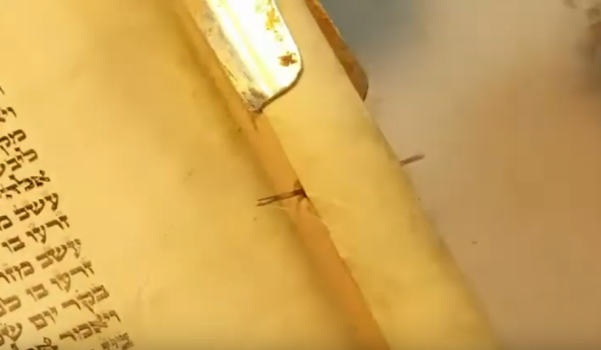
torah-scroll-earlets3.png

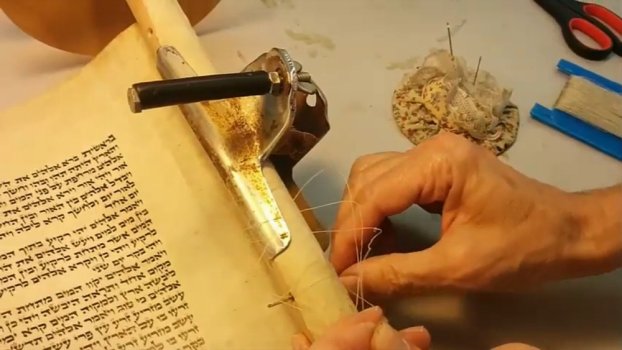
sewing-torah-scroll.JPG

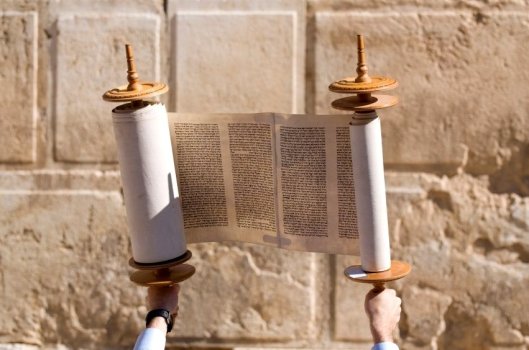
torahscroll.jpg

And he and the body of his brethren hang between trees of life: on the right side and on the left.
 

dak

Well-Known Member
Feb 9, 2013
1,457
188
63
Messianica
sites.google.com
Faith
Other Faith
Country
United States
Gender
Male
Yeshayah-Isaiah 38:9-11 TS2009
9 This is the writing of Ḥizqiyahu sovereign of Yehuḏah, when he had been sick and had recovered from his sickness:
10 I said, “Am I to go into the gates of She’ol in the prime of my life? Shall I be deprived of the rest of my years?”
11 I said, “I shall not see YahYah in the land of the living! I shall no longer look on man with the inhabitants of the world!

How is it that king Hezekiah was able to see Yah in the land of the living while he was alive? For to say that he shall not see Yah in the land of the living after his death, that means he did see Yah in the land of the living while he was alive.

Paul discreetly reveals to the careful reader and student of scripture that Yah Elohim is the Son, and therefore the name Yah cannot be a short form or nickname used in place of the Tetragrammaton which is the name of the Father: for such a thing would be, at the least, sacrilegious if not blasphemous, though translators and most people view the name Yah as such. Yah is the Word, (yes, even the Logos from John 1:1), and the Name of the Father is the Tetragrammaton, which was forbidden to even be spoken publically in the first century, and which injunction the Apostles, including Paul, adhered to at least up to the destruction of Yerushalem in 70 AD, for their mission was not to offend the sensibilities of the people who might read their testimonies, gospel accounts, and letters, but rather their mission was to share the Gospel with the people and even all the world.

Yah also forms the end of the word Halleluyah, and thus, Yah is written all over the place throughout the Psalms and was surely pronounced, hence, the statement of clarification in Ephesians 1:12, meaning that the name Yah is above every name that is named or mentioned, (but is not above the Tetragrammaton name of the Father which was forbidden to be mentioned in those days).

From the Pauline passage in Ephesians we find a critical connection to the Son of Adam in the creation account as follows:

Ephesians 1:21-22 ASV
21 far above all rule, and authority, and power, and dominion, and every name that is named, not only in this world, but also in that which is to come:
22 and he put all things in subjection under his feet, [Psa 8:6] and gave him to be head over all things to the church,

Psalm 8 no doubt speaks of Genesis 1:26-28, and is quoted multiple times by the Apostles, proving that the passages quoted by the Apostles speak of the Son of Adam in the very beginning.

Psalm 8:4-8 ASV
4 What is man, that thou art mindful of him? And the son of man, that thou visitest him? [Heb 2:6]
5 For thou hast made him but little lower than God, [Elohim-Angels] And crownest him with glory and honor. [Heb 2:7]
6 Thou makest him to have dominion over the works of thy hands; [Gen 1:26-28] Thou hast put all things under his feet: [1Cor 15:25-27, Eph 1:22, Heb 2:8]
7 All sheep and oxen, Yea, and the beasts of the field, [Gen 1:26-28]
8 The birds of the heavens, and the fish of the sea, Whatsoever passeth through the paths of the seas. [Gen 1:26-28]

Paul also explains that the order of the text in the first two chapters of the opening creation account are not necessarily in chronological order, as he says, Howbeit that is not first which is spiritual, but that which is natural; then that which is spiritual. The first man is of the earth, earthy: [Gen 2:7] the second man is from the heavens [Gen 1:26-28].

1 Corinthians 15:42-47 ASV
42 So also is the resurrection of the dead. It is sown in corruption; it is raised in incorruption:
43 it is sown in dishonor; it is raised in glory: it is sown in weakness; it is raised in power:
44 it is sown a natural body; it is raised a spiritual body. If there is a natural body, there is also a spiritual body.
45 So also it is written, The first man Adam became a living soul. [Gen 2:7] The last Adam became a life-giving spirit.
46 Howbeit that is not first which is spiritual, but that which is natural; then that which is spiritual.
47 The first man is of the earth, earthy: [Gen 2:7] the second man is of heaven. [Gen 1:26-28]

Moreover it is important to understand at this point that bara' first and formost means to cut down before it means to create.

H1254 ברא bara' ~ literally to cut down as in the sense of cutting down trees to make a house, (Joshua 17:15-18).

This is important when we come to Yeshayah 45 because Paul quotes from this passage in another text which reveals to us that Yah Elohim is indeed the Son. The verb cut-down or cut-down create in the following are all occurrences of H1254 ברא bara'

Isaiah 45:7-8
7 I form the light, and cut-down darkness: I make peace, and cut-down evil: I YHWH do all these things.
8 Drop down, O heavens, from above, and let the skies pour down righteousness: let the earth open up, and let them bring forth salvation, and let righteousness spring up together; I YHWH have cut-down-created it.

Moreover, in 45:13, the OG LXX text is separated differently than the Masoretic text, (which came 1,000 to 1300 years later), and this is critical also because it is going to happen again when we get to Yeshayah 45:23-25 which Paul quotes from in Phil 2:9-11, yet a third witness revealing from the Prophets and Psalms that Yah Elohim is the Son, (however that passage is the most difficult and therefore will be discussed last of the three).

Isaiah 45:13 OG-LXX
13 εγω ηγειρα αυτον μετα δικαιοσυνης βασιλεα και πασαι αι οδοι αυτου ευθειαι ουτος οικοδομησει την πολιν μου και την αιχμαλωσιαν του λαου μου επιστρεψει ου μετα λυτρων ουδε μετα δωρων ειπεν κυριος σαβαωθ

εγω ηγειρα αυτον μετα δικαιοσυνης βασιλεα ~ I have raised him up with the King of Righteousness

Isaiah 45:12-13
12 I have made the earth, and cut-down Adam upon it: I, even My hands, have stretched out the heavens, and all their host have I commanded.
13 I have raised him up with the King of Righteousness, and I will direct all his ways: he shall build My city, and he shall let go my captives, not for price nor reward, says YHWH Tzabaoth.

The Father Most High raised up Adam with the King of Righteousness, His Son, Yah Elohim, who is also Melki-Tzedek, and He is also called the Son of Adam, (Mankind), because He is both the spoken-written Word, (Rhema, written by faithful and inspired men), and He is the Logos-Word, (the Spirit, the Wisdom, and the Mind of the Father Most High within the context of the Rhema, that is, the Logos is the understanding of the Rhema).

Indeed, king Hezekiah was accustomed to seeing Yah in the land of the living every time he opened his Torah, (commanded for kings in Deut 17:15-20). Elohim willing, the next post will address the next Pauline proof passage from Ephesians.
 

dak

Well-Known Member
Feb 9, 2013
1,457
188
63
Messianica
sites.google.com
Faith
Other Faith
Country
United States
Gender
Male
Ephesians 4:7-13
7 But unto each one of us was the grace given according to the measure of the gift of the Χ̅Ρ.
8 Wherefore he saith, When he ascended on high, he led captivity captive, And gave gifts unto men. [Psa 68:18]
9 Now this, "He ascended", what is it but that he also descended into the lower parts of the earth?
10 He that descended is the same also that ascended far above all the heavens, that he might fill all things.
11 And he gave some to be apostles, and some, prophets, and some, evangelists, and some, pastors and teachers,
12 for the perfecting of the saints, unto the work of ministering, unto the building up of the body of the Χ̅Ρ,
13 until we all attain unto the unity of the faith-belief, and of the knowledge of the Son of Elohim, unto a fully-grown man, unto the measure of the stature of the fullness of the Χ̅Ρ:

And what does the remainder of Paul's quote say in the full verse?

Psalm 68:18
עלית למרום שבית שבי לקחת מתנות באדם ואף סוררים לשכן יה אלהים׃

Psalm 68:18
18 You have ascended on high, You have led captivity captive, You have brought gifts among men, [Eph 4:8] but wrath to the rebellious, that Yah Elohim might tabernacle there [or therein].

Paul therefore, by his exegesis of the first half of the verse, inextricably links the Χ̅Ρ to Yah Elohim. Therefore I would strongly suggest a prayerful deep-dive study into the context and background context of the Eph 4 passage quoted above. The Father has no need to descend or ascend because the heavens and the heaven of the heavens cannot contain Him, (Deut 10:14, 1Kgs 8:27, 2Chr 2:6, 6:18), and if one could ascend into the heavens, He is already there, and if one could descend into Sheol, He is already there, (see Psa 139:7-12). To descend and-or ascend, even from the highest heavens to the lowest inward parts of the earth and back up again, is by default an anthropomorphism: but the Father is not any kind of anthropomorphic figure. However the Word, the Torah scroll, is indeed likened to a king dressed in purple or red robes and crown, and thus, an anthropomorphic figure.

Moreover the OG LXX contains blessed twice, instead of only once as found in the M/T at the beginning of the next verse, essentially at the break between verses eighteen and nineteen the word for blessed appears twice, divided at the break, and thus those who rendered the LXX were reading in the Hebrew text, "Yah Elohim the Blessed", (κυριος ο θεος ευλογητος).

Psalm 68:18-19 OG LXX
18 ανεβης εις υψος ηχμαλωτευσας αιχμαλωσιαν ελαβες δοματα εν ανθρωπω και γαρ απειθουντες του κατασκηνωσαι κυριος ο θεος ευλογητος
19 ευλογητος κυριος ημεραν καθ ημεραν κατευοδωσει ημιν ο θεος των σωτηριων ημων διαψαλμα

Psalm 68:18
18 You have ascended on high, You have led captivity captive, You have brought gifts among men [Eph 4:8] and wrath to the rebellious, that Yah Elohim the Blessed might tabernacle there [or therein].

Translation note: I do not read אף as H637 yea in the Hebrew text here, but as H639 wrath, and thus I place it here in my LXX reading also, though it is a departure from the Greek text above.

The nomina sacra Iota-Eta + Chi-Rho (Ι̅Η Χ̅Ρ).

Ι̅Η = Yah Elohim
Χ̅Ρ = Chrestos (Good, Gracious, (in Hebrew, Tob))
Ι̅Η Χ̅Ρ = Yah Elohim the Gracious


And the Meshiah confirms this:

Come to me, all you that labor and are burdened, and I shall give you rest.
29 Take my yoke upon you and learn from me, for I am meek and humble in heart, and you shall find rest for your souls:
30 for my yoke is chrestos, and my burden is light.

His yoke is chrestos? What or who is his yoke? From his immersion his yoke is clearly Ruach Elohim from Gen 1:2, the Spirit of the Father, the one-and-only, one-of-a-kind Son of the Father: Yah Elohim the Good/Gracious, (Chrestos).

But as for the Meshiah, the Christos, the Anointed One, or the Chosen One: his name is also Ι̅Η Χ̅Ρ, but not understood in the same manner, for example, obviously Χ̅Ρ stands for Christos, (rather than Chrestos).
 
Last edited:

Hiddenthings

Well-Known Member
May 19, 2025
3,777
415
83
Leeton NSW
Faith
Christian
Country
Australia
The Ancient of Days in Daniel 7 would therefore be the Son of Elohim, the Word, who is also the Son of Adam or Son of Man in Gen 1:26-28, (thus immortal, for the one-of-a-kind Son of Elohim is ever in the bosom of the Father, being the very Word of the Father, which He has never been without, John 1:18).
Can you explain what you mean by this?

Are you a Trinitarian?
 

Hiddenthings

Well-Known Member
May 19, 2025
3,777
415
83
Leeton NSW
Faith
Christian
Country
Australia
Yeshayah-Isaiah 38:9-11 TS2009
9 This is the writing of Ḥizqiyahu sovereign of Yehuḏah, when he had been sick and had recovered from his sickness:
10 I said, “Am I to go into the gates of She’ol in the prime of my life? Shall I be deprived of the rest of my years?”
11 I said, “I shall not see YahYah in the land of the living! I shall no longer look on man with the inhabitants of the world!

How is it that king Hezekiah was able to see Yah in the land of the living while he was alive? For to say that he shall not see Yah in the land of the living after his death, that means he did see Yah in the land of the living while he was alive.

Paul discreetly reveals to the careful reader and student of scripture that Yah Elohim is the Son, and therefore the name Yah cannot be a short form or nickname used in place of the Tetragrammaton which is the name of the Father: for such a thing would be, at the least, sacrilegious if not blasphemous, though translators and most people view the name Yah as such. Yah is the Word, (yes, even the Logos from John 1:1), and the Name of the Father is the Tetragrammaton, which was forbidden to even be spoken publically in the first century, and which injunction the Apostles, including Paul, adhered to at least up to the destruction of Yerushalem in 70 AD, for their mission was not to offend the sensibilities of the people who might read their testimonies, gospel accounts, and letters, but rather their mission was to share the Gospel with the people and even all the world.
Don't take this the wrong way but your communication is often difficult to read.

Are you saying that “Yah” in scripture refers to Christ, the Son, who Hezekiah saw in the Torah while alive, and Paul’s writings confirm Christ’s role in creation, dominion, and salvation?

No need for a long reply something short and sharp will suffice!
 

dak

Well-Known Member
Feb 9, 2013
1,457
188
63
Messianica
sites.google.com
Faith
Other Faith
Country
United States
Gender
Male
In the two quotes to follow Paul is quoting not from the Hebrew text but from the OG-LXX, (Old Greek Septuagint). There are many places in the OG LXX where the Tetragrammaton is actually divided at the waw, producing Yah, which would have appeared that way in the Paleo Hebrew text but do not now appear that way in the M/T, which is not likely due to anything nefarious, but because of the problem of separating the Ashuri text, (having a waw separator and written in a semi-scriptio continua form like the older Paleo text), if perhaps you no longer had the Paleo text to guide you in that separation process. Another thing which is critical to understand is that Yah may be rendered as either Kurios or Theos in the LXX, and here Yah is rendered as Theos, and this is really only evident because we have now both the LXX and the Hebrew texts to investigate and compare, to get an idea of what has happened.

Philippians 2:9-11
9 Wherefore also Elohim highly exalted him, and gave unto him the name which is above every name: [that is named, Eph 1:21]
10 that in the name of Ι̅Η every knee should bow, of things in heaven and things on earth and things under the earth,
11 and that every tongue should confess that Κ̅Ϲ Ι̅Η Χ̅Ρ, to the glory of Elohim the Father.

The above contains two portions from Yeshayah 45:23, (LXX), but they are not the larger precise quote: for he also quotes from this passage almost verbatim in Romans 14:11, where he likewise quotes from the OG LXX. Why is he not quoting from the Hebrew since he clearly knew Hebrew like the back of his hand, having formerly been a Pharisee the son of Pharisees? (moreover the Master spoke to him in Hebrew during the conversion vision near Damascus). After the Hebrew text was rendered into Greek, (beginning about circa 285BC), the Pharisees, about a hundred years later, began to separate the Hebrew text their own way, according to their understandings and doctrines regarding the scripture text.

This was a process that was not completely finalized until about 1000AD, and the beginning of this process can first be seen in scrolls and fragments discovered at Damascus-Qumran, (Qumran by the modern Arabic name Khirbet Qumran). It appears to me that Paul had realized that even in his day the Perushim were already beginning to subvert the Hebrew text: for they went against the precedent set by those who separated the text before them in order to render it into the Greek OG LXX. And we know that at the very least those who rendered the Torah portions of the LXX would have been Tzadokim, the order of the highest priestly line through the sons of Tzadok the Kohen, for no one but the Kohanim were allowed to copy Torah scrolls besides the Kohanim and Levim, (Priests and Levites), even down to the days wherein the LXX began to be translated. Howbeit, aside from all the arguments pertaining to such things, Paul quotes from the OG LXX, knowing Hebrew, which is significant in this much more critical instance than other passage quotes.

Romans 14:11
11 For it is written, As I live, says the LORD, (YHWH), every knee shall bow to Me, and every tongue shall confess by God.

Romans 14:11 (N/A, T/R, BYZ, W/H, all the same)
11 γεγραπται γαρ ζω εγω λεγει κυριος οτι εμοι καμψει παν γονυ και πασα γλωσσα εξομολογησεται τω θεω

In the above, which is quoted from the OG LXX, the Tetragrammaton is divided in the middle, exactly where we read τω θεω, thus we see that the Kohen who rendered this text into the Greek OG LXX separated the text radically different than the Masoretes who came along much later: and herein Paul approves the separation of the text found in the OG LXX. And because we know that the Tetragrammaton is in the Hebrew text; one should therefore know and understand that Theo in this case cannot be Elohim, (God), and is surely therefore YH, (Yah).

Isaiah 45:23-25 OG LXX
23 κατ εμαυτου ομνυω η μην εξελευσεται εκ του στοματος μου δικαιοσυνη οι λογοι μου ουκ αποστραφησονται οτι εμοι καμψει παν γονυ και εξομολογησεται πασα γλωσσα τω θεω
24 λεγων δικαιοσυνη και δοξα προς αυτον ηξουσιν και αισχυνθησονται παντες οι αφοριζοντες εαυτους
25 απο κυριου δικαιωθησονται και εν τω θεω ενδοξασθησονται [Hebrew reads hallu] παν το σπερμα των υιων ισραηλ

The answer using both the Hebrew and the OG LXX:

Yeshayah 45:23-25
[23] By Myself have I sworn, the righteous Word has gone forth from My mouth and shall not be turned back, that unto Me every knee shall bow: and every tongue shall surely confess by Yah unto Me, saying, He is my righteousness and strength!
[24] All those incensed against Him shall come and be ashamed: [25] by YHWH shall they be justified, and all the seed of Yisrael shall hallu-in-Yah!
 
Last edited:

Hiddenthings

Well-Known Member
May 19, 2025
3,777
415
83
Leeton NSW
Faith
Christian
Country
Australia
As for myself, I am an Adoptionist: there is the Anointed One, (Meshiah or Christos), and there is the One who is the very Anointing (Mishchah or Chrisma or Chrestos, (Tob)) upon the Anointed One. The Anointing is the Son, the Word, the Logos: Ruach Elohim, (Gen 1:2, Mat 3:16).

Matthew 3:16-17 ASV
16 And Jesus, when he was baptized, went up straightway from the water: and lo, the heavens were opened unto him, and he saw the Spirit of God descending as a dove, and coming upon him;
17 and lo, a voice out of the heavens, saying, [unto him!] This is my beloved Son, in whom I am well pleased.

The so-called church fathers were apparently not able to see the difference between the two because they are hidden in the Greek nomen sacrum Chi-Rho, (Χ̅Ρ, Christos or Chrisma or also Chrestos, (Good, Gracious)), which is in all of the most ancient texts, (the Uncials, which were written entirely in uppercase Greek).
And sorry I missed this post entirely.
 

dak

Well-Known Member
Feb 9, 2013
1,457
188
63
Messianica
sites.google.com
Faith
Other Faith
Country
United States
Gender
Male
Tehillim-Psalms 118
[01] Give thanks to YHWH for His goodness, for His kindness into olam.
[02] Let Yisrael now say, For His kindness into olam!
[03] Let the house of Aharon now say, For His kindness into olam!
[04] Let those fearing YHWH now say, For His kindness into olam!
[05] I called on YAH from the narrow-tight place: YAH answered me with a broad place!
[06] YHWH is with me, I shall not fear what man does to me.
[07] YHWH is with me among my helpers, and I shall look upon those hating me.
[08] Better to take refuge in YHWH, than to trust in man.
[09] Better to take refuge in YHWH, than to trust in princes.
[10] All the heathen surrounded me: in the Name of YHWH, I surely cut them off.
[11] They compassed me about, yea, they surrounded me: in the Name of YHWH, I surely cut them off.
[12] They surrounded me as bees: they were consumed as thorns by the fire: in the Name of YHWH, I surely cut them off.
[13] Pushing you pushed at me, that I might fall: but YHWH has helped me.
[14] YAH is my strength and song, and He has become my salvation.
[15] The voice of rejoicing and salvation in the tents of the righteous: the right hand of YHWH doing valiantly.
[16] The right hand of YHWH is exalted: the right hand of YHWH is doing valiantly.
[17] I shall not die, but live, and recount the works of YAH.
[18] Chastening, YAH has chastened me: but has not given me over unto death.
[19] Open to me the gates of righteousness, I shall enter in through them: I thank YAH!
[20] He is the door unto YHWH: the righteous shall enter in through Him:
[21] I thank You, for You have answered me, and are unto me for salvation.
[22] The stone the builders refused has become the chief corner stone.
[23] This has come to be from YHWH: it is wonderful in our eyes.
[24] This is the day YHWH has made, we will rejoice and be glad herein.
[25] I beseech You, O YHWH, Save now! I beseech You, O YHWH, Send prosperity now!
[26] Blessed be the One who comes in the Name of YHWH: we bless You from the house of YHWH!
[27] YHWH is El, and He is our Light: array the feast with strong branches, [palms] as far as unto the horns of the altar.
[28] You are my El, and I praise You, my El, I exalt You!
[29] Give thanks to YHWH for His goodness, for His kindness into olam!
 
Last edited:
  • Like
Reactions: Hiddenthings