My Little Creed From the Meshiah Himself

  • Welcome to Christian Forums, a Christian Forum that recognizes that all Christians are a work in progress.

    You will need to register to be able to join in fellowship with Christians all over the world.

    We hope to see you as a part of our community soon and God Bless!

dak

Well-Known Member
Feb 9, 2013
1,457
188
63
Messianica
sites.google.com
Faith
Other Faith
Country
United States
Gender
Male
This is my little Creed from the Gospel of Yohannei, (a.k.a. John), and following below the Creed, concerning what the following bold, plain, emphatic statements from the Meshiah compel me to logically conclude by simply believing every word.

John 5:22
22 for the Father judges no one, but has committed all judgment unto the Son:

John 8:15
15 You judge after the flesh: I judge no one.

John 8:50
50 And I seek not mine own glory: there is One who seeks out and judges.

John 12:47-50
47 And if anyone hears my words, (rhema), and believes not, I judge him not: for I came not to judge the world, but to save-deliver the world.
48 The one rejecting me, and receiving not my words, (rhema), has One that judges him: the Logos that I have spoken, that One* (He) shall judge him in the last day.
49 For I have not spoken of myself: but the Father who sent me, He gave me a commandment, what I should say, and what I should speak.
50 And I know that His commandment is life eternal: whatsoever therefore I speak, even as the Father has said unto me, so I speak.

* "that One" = G1565 εκεινος ~ literally that one or that thing, which some minimalize by rendering it here as he, (while others even go so far as to omit this word entirely for rather obvious reasons).

The basic flow of the logic in the above emphatic statements of the Meshiah is easy to see:

The Father judges no one, (John 5:22).
The Father has committed all judgement unto the Son, (John 5:22).
The Meshiah himself, (the Christos, or Anointed One), judges no one, (John 8:15, John 8:50, John 12:47).
The Logos which the Meshiah has spoken: that One alone is the Judge, (John 12:48).

Therefore:

The Father is not the Judge, (John 5:22).
The Son is the only Judge, (John 5:22).
The Meshiah himself says that he is not the Judge, (John 8:15, John 8:50, John 12:47)
The Logos spoken through the Meshiah which the Father gave to him is the only Judge, (John 12:48-50).
The Meshiah or Christos, (Anointed One), is not the eternal Logos Son who is the Word of the Father.
 

ScottA

Well-Known Member
Feb 24, 2011
15,578
6,968
113
www.FinishingTheMystery.com
Faith
Christian
Country
United States
This is my little Creed from the Gospel of Yohannei, (a.k.a. John), and following below the Creed, concerning what the following bold, plain, emphatic statements from the Meshiah compel me to logically conclude by simply believing every word.

John 5:22
22 for the Father judges no one, but has committed all judgment unto the Son:

John 8:15
15 You judge after the flesh: I judge no one.

John 8:50
50 And I seek not mine own glory: there is One who seeks out and judges.

John 12:47-50
47 And if anyone hears my words, (rhema), and believes not, I judge him not: for I came not to judge the world, but to save-deliver the world.
48 The one rejecting me, and receiving not my words, (rhema), has One that judges him: the Logos that I have spoken, that One* (He) shall judge him in the last day.
49 For I have not spoken of myself: but the Father who sent me, He gave me a commandment, what I should say, and what I should speak.
50 And I know that His commandment is life eternal: whatsoever therefore I speak, even as the Father has said unto me, so I speak.

* "that One" = G1565 εκεινος ~ literally that one or that thing, which some minimalize by rendering it here as he, (while others even go so far as to omit this word entirely for rather obvious reasons).

The basic flow of the logic in the above emphatic statements of the Meshiah is easy to see:

The Father judges no one, (John 5:22).
The Father has committed all judgement unto the Son, (John 5:22).
The Meshiah himself, (the Christos, or Anointed One), judges no one, (John 8:15, John 8:50, John 12:47).
The Logos which the Meshiah has spoken: that One alone is the Judge, (John 12:48).

Therefore:

The Father is not the Judge, (John 5:22).
The Son is the only Judge, (John 5:22).
The Meshiah himself says that he is not the Judge, (John 8:15, John 8:50, John 12:47)
The Logos spoken through the Meshiah which the Father gave to him is the only Judge, (John 12:48-50).
The Meshiah or Christos, (Anointed One), is not the eternal Logos Son who is the Word of the Father.
I understand this.

What He was saying, is true because man--which in the form of Christ--He also was, was made a mere "image"...and the image form of man is cursed unto death. But He whom He is an image of--He shall not perish under the curse of death, but shall live. For this reason He also preached of those who are His. The point being, is that it is not death that brings forth life everlasting, but Life.
 
Last edited:
  • Like
Reactions: dak

dak

Well-Known Member
Feb 9, 2013
1,457
188
63
Messianica
sites.google.com
Faith
Other Faith
Country
United States
Gender
Male
I understand this.

What He was saying, is true because man--which in the form of Christ--He also was, was made a mere "image"...and the image form of man is cursed unto death. But He whom He is an image of--He shall not perish under the curse of death, but shall live. For this reason He also preached of those who are His. The point being, is that it is not death that brings forth life everlasting, but Life.

So then, those who are believing on/into the (Testimony) of the Meshiah are passing from death into the Life, though they/we are denying ourselves, taking up our own stakes to be crucified with him in the supernal way, and following him. Thank the Goodness and Grace of Elohim that the Testimony of the Meshiah is not only Spirit and Life, (John6:63), but also spiritual in understanding: for if not then we would need to die physically on the stake like he did. In that sense he did it for us, and purchased us, no doubt, but the fact that many miss is that his resurrection proves that his all-important Testimony was accepted and received by the Father and cannot be annulled. And why would the Father not accept it anyway? He gave it to him when He placed His eternal Son upon him: the Logos, the Word, the Princely Power upon his neck, (his yoke), the Spirit of the Father.
 
  • Like
Reactions: ScottA
M

Muna

Guest
I will add to your post the following also

Exodus 4:11And the LORD said unto him (Moses) Who hath made man's mouth?
or who maketh the dumb, or deaf, or the seeing, or the blind? have not I the LORD?

Exodus 4:12 Now therefore ( go ) and I will be with thy mouth,
and teach thee what thou shalt say.

He was a servant to this effect also

Heb 3:5And Moses verily was faithful in all his house, as a servant,
for a testimony ( of those things ) which were to be spoken ( after )

As Moses wrote of Christ, God saying by Moses

Duet 18:18I will raise them up a Prophet from among their brethren, ( like unto ) thee,
and will put my words ( in ) his mouth;
and he shall speak unto them all that ( I shall command him )

Likewise does Jesus say,

John 12:49 For I have ( not spoken of myself )
( but the Father ) which sent me, ( he gave me a commandment )
( what I should say, and what I should speak )

John 5:46 For ( had ye believed ) Moses, ( ye would have ) believed me:
for he wrote ( of me )

John 5:47 But if ye ( believe not ) his writings,
( how shall ye) believe my words?

As God said by Moses concerning what he would speak

Duet 18:19 And it shall come to pass, that whosoever will **not hearken** unto ( my words )
( which he shall speak )in my name, ** I will require it of him **

As Jesus confirms Moses words

John 12:48 ** He that rejecteth me, and receiveth not my words ** hath one** that judgeth him:
( the word that I have spoken ) the same shall judge him in the last day.

It is Jesus words (that he has spoken) that would judge the one who rejects him (or them)

John 7:16 Jesus answered them, and said, My doctrine( is not mine ) **but his** that ( sent me )

Jesus said Moses wrote of me (and in respects to these same things)

Luke 24:27 And beginning ( at Moses ) and all the prophets,
he expounded unto them in all the scriptures the things ( concerning himself )

Whereas the apostles confirm the same saying,

Acts 7:37 ( This is that ) Moses, which said unto the children of Israel,
A prophet shall the Lord your God raise up unto you of your brethren,
like unto me; ( him shall ye hear)

Then Jesus gives them the words (which were given him) according to the commandment

John 17:8 For I have ( given unto them ) the words ( which thou gavest me ) and ( they have received them )
and have known surely that I came out from thee, and they have believed ( that thou didst send me )

Does say here also

Acts 17:31 Because he hath appointed ( a day ) in the which ( he will judge the world in righteousness ) by ( that man ) whom he hath ordained; whereof he hath given assurance unto all men, in that he hath raised him from the dead.
 
  • Like
Reactions: dak

shepherdsword

Encounter Team - Eagle
Staff member
Encounter Team
Feb 12, 2009
2,034
1,631
113
Millington
Faith
Christian
Country
United States
Gender
Male
This is my little Creed from the Gospel of Yohannei, (a.k.a. John), and following below the Creed, concerning what the following bold, plain, emphatic statements from the Meshiah compel me to logically conclude by simply believing every word.

John 5:22
22 for the Father judges no one, but has committed all judgment unto the Son:

John 8:15
15 You judge after the flesh: I judge no one.

John 8:50
50 And I seek not mine own glory: there is One who seeks out and judges.

John 12:47-50
47 And if anyone hears my words, (rhema), and believes not, I judge him not: for I came not to judge the world, but to save-deliver the world.
48 The one rejecting me, and receiving not my words, (rhema), has One that judges him: the Logos that I have spoken, that One* (He) shall judge him in the last day.
49 For I have not spoken of myself: but the Father who sent me, He gave me a commandment, what I should say, and what I should speak.
50 And I know that His commandment is life eternal: whatsoever therefore I speak, even as the Father has said unto me, so I speak.

* "that One" = G1565 εκεινος ~ literally that one or that thing, which some minimalize by rendering it here as he, (while others even go so far as to omit this word entirely for rather obvious reasons).

The basic flow of the logic in the above emphatic statements of the Meshiah is easy to see:

The Father judges no one, (John 5:22).
The Father has committed all judgement unto the Son, (John 5:22).
The Meshiah himself, (the Christos, or Anointed One), judges no one, (John 8:15, John 8:50, John 12:47).
The Logos which the Meshiah has spoken: that One alone is the Judge, (John 12:48).

Therefore:

The Father is not the Judge, (John 5:22).
The Son is the only Judge, (John 5:22).
The Meshiah himself says that he is not the Judge, (John 8:15, John 8:50, John 12:47)
The Logos spoken through the Meshiah which the Father gave to him is the only Judge, (John 12:48-50).
The Meshiah or Christos, (Anointed One), is not the eternal Logos Son who is the Word of the Father.
That's not a syllogism, it's a sillyism. Your conclusion is non sequitur. Jn 1:14 tells us the Word that was in Jn1:1 became flesh.
 

dak

Well-Known Member
Feb 9, 2013
1,457
188
63
Messianica
sites.google.com
Faith
Other Faith
Country
United States
Gender
Male
I will add to your post the following also

Exodus 4:11And the LORD said unto him (Moses) Who hath made man's mouth?
or who maketh the dumb, or deaf, or the seeing, or the blind? have not I the LORD?

Exodus 4:12 Now therefore ( go ) and I will be with thy mouth,
and teach thee what thou shalt say.

He was a servant to this effect also

Heb 3:5And Moses verily was faithful in all his house, as a servant,
for a testimony ( of those things ) which were to be spoken ( after )

As Moses wrote of Christ, God saying by Moses

Duet 18:18I will raise them up a Prophet from among their brethren, ( like unto ) thee,
and will put my words ( in ) his mouth;
and he shall speak unto them all that ( I shall command him )

Likewise does Jesus say,

John 12:49 For I have ( not spoken of myself )
( but the Father ) which sent me, ( he gave me a commandment )
( what I should say, and what I should speak )

John 5:46 For ( had ye believed ) Moses, ( ye would have ) believed me:
for he wrote ( of me )

John 5:47 But if ye ( believe not ) his writings,
( how shall ye) believe my words?

As God said by Moses concerning what he would speak

Duet 18:19 And it shall come to pass, that whosoever will **not hearken** unto ( my words )
( which he shall speak )in my name, ** I will require it of him **

As Jesus confirms Moses words

John 12:48 ** He that rejecteth me, and receiveth not my words ** hath one** that judgeth him:
( the word that I have spoken ) the same shall judge him in the last day.

It is Jesus words (that he has spoken) that would judge the one who rejects him (or them)

John 7:16 Jesus answered them, and said, My doctrine( is not mine ) **but his** that ( sent me )

Jesus said Moses wrote of me (and in respects to these same things)

Luke 24:27 And beginning ( at Moses ) and all the prophets,
he expounded unto them in all the scriptures the things ( concerning himself )

Whereas the apostles confirm the same saying,

Acts 7:37 ( This is that ) Moses, which said unto the children of Israel,
A prophet shall the Lord your God raise up unto you of your brethren,
like unto me; ( him shall ye hear)

Then Jesus gives them the words (which were given him) according to the commandment

John 17:8 For I have ( given unto them ) the words ( which thou gavest me ) and ( they have received them )
and have known surely that I came out from thee, and they have believed ( that thou didst send me )

Does say here also

Acts 17:31 Because he hath appointed ( a day ) in the which ( he will judge the world in righteousness ) by ( that man ) whom he hath ordained; whereof he hath given assurance unto all men, in that he hath raised him from the dead.

Excellent. This is what I had planned on bringing up next but you beat me to it.
John 12:47-50 is confirming and expounding Deuteronomy 18:17-19.
 
  • Like
Reactions: Muna

dak

Well-Known Member
Feb 9, 2013
1,457
188
63
Messianica
sites.google.com
Faith
Other Faith
Country
United States
Gender
Male
That's not a syllogism, it's a sillyism. Your conclusion is non sequitur. Jn 1:14 tells us the Word that was in Jn1:1 became flesh.

What I see is you ignoring plain, bold, emphatic statements from the Savior so that you can maintain something else you believe from Jn 1:1 and Jn 1:14. That's the non sequitur.
 

shepherdsword

Encounter Team - Eagle
Staff member
Encounter Team
Feb 12, 2009
2,034
1,631
113
Millington
Faith
Christian
Country
United States
Gender
Male
What I see is you ignoring plain, bold, emphatic statements from the Savior so that you can maintain something else you believe from Jn 1:1 and Jn 1:14. That's the non sequitur.
I do not ignore anything the Lord says. I just understand that in many places He is speaking in the context of humanity. I suggest you don't ignore this:

Jn 8:58 Jesus said unto them, Verily, verily, I say unto you, Before Abraham was, I AM.

Jn 8:24 I said therefore unto you, that ye shall die in your sins: for if ye believe not that I AM , ye shall die in your sins.


I AM...the great I AM....thus proclaiming His preexistence and His divinity.
 

dak

Well-Known Member
Feb 9, 2013
1,457
188
63
Messianica
sites.google.com
Faith
Other Faith
Country
United States
Gender
Male
I do not ignore anything the Lord says. I just understand that in many places He is speaking in the context of humanity. I suggest you don't ignore this:

Jn 8:58 Jesus said unto them, Verily, verily, I say unto you, Before Abraham was, I AM.

Jn 8:24 I said therefore unto you, that ye shall die in your sins: for if ye believe not that I AM , ye shall die in your sins.


I AM...the great I AM....thus proclaiming His preexistence and His divinity.

1) John 8:58 ειπεν αυτοις ιησους αμην αμην λεγω υμιν πριν αβρααμ γενεσθαι εγω ειμι

Amen amen is a double affirmation, and occurs only in the Gospel of John, and is found twenty-five times therein. This author employs this phrase to inform the observant hearer or reader that the Son is speaking through the Meshiah, (the Christos or Anointed One). You would do well to believe what is in the OP and observe this rule also, but if not, so be it.

2) γενέσθαι does not mean "was" or "was born" as many of your favorite Trinity scholars and translators purport it to be in John 8:58, ("was", as the KJV first rendered it and many others followed suit).


3) And, most importantly, neither you nor your favored translators pay enough attention to the full context for lack of hanging on every word of the Master in this passage, (as true believer should do not only here but everywhere).

From the beginning of this passage:

John 8:12-28
12 Therefore again Ι̅Η spoke to them, saying, I am the light of the world: the one following me shall not walk in the darkness, but shall have the light of the life.
13 The Pharisees therefore said to him, You testify concerning yourself: your testimony is untrue.
14 Ι̅Η answered and said to them, Though I testify concerning myself, yet my testimony is true: for I know from where I came, and to where I go, but you cannot tell from where I come, and to where I go.
15 You judge after the flesh: I judge no one.
16 And yet if I judge, my judgment is true: for I am not alone, but I myself, and my Sender, the Father.
17 And in the Torah, also pertaining unto you, it is written that the testimony of two men is true.
18 I am one testifying concerning myself, and my Sender, the Father, bears witness concerning me.
19 Then they said to him, Where is your father? Ι̅Η answered, You neither know me, nor my Father: if you had known me, you would have known my Father also.
20 These words Ι̅Η spoke in the treasury, as he taught in the temple, and no man laid hands on him: for his hour was not yet come.
21 Then Ι̅Η said again to them, I go my way, and you shall seek me, and shall die in your sins: where I go, you cannot come.
22 Then said the Yhudim, Will he kill himself? for he says, "Where I go, you cannot come".
23 And he said to them, You are from beneath, I am from above: you are of this world: I am not of this world.
24 I said therefore unto you, that you shall die in your sins: for if you believe not that I am ― ― ― ― ―, you shall die in your sins.
25 Then they said to him, You are who? [for they recognized that he did not complete the "I am" statement]. And Ι̅Η said to them, That which I also said unto you at the commencement [John 8:12].
26 I have many things to speak and to judge concerning you: but the One having sent me is true, and I speak to the world those things which I have heard of Him.
27 They understood not that he spoke to them of the Father.
28 Then Ι̅Η said to them, When you have lifted up [or exalted] the Son of man, then shall you know that I am ― ― ― ― ―, and that I do nothing of myself: but as my Father has taught me, I speak these things.

I have underlined the answer for you concerning all of the "I am" statements in the entire passage. However I do not intend at this time to wrangle with you over the interpretation of John 8:58, for the answer is so much more technically involved and you appear only to be interested in disproving the Logos of Elohim in the OP.
 
M

Muna

Guest
Here is another I AM statement

Ex 3:14 And God said unto Moses, I AM THAT I AM

1 Cr 15:10 But by the grace of God I AM WHAT I AM

I thought that was kind of cool
 
  • Like
Reactions: dak

dak

Well-Known Member
Feb 9, 2013
1,457
188
63
Messianica
sites.google.com
Faith
Other Faith
Country
United States
Gender
Male
Here is another I AM statement

Ex 3:14 And God said unto Moses, I AM THAT I AM

1 Cr 15:10 But by the grace of God I AM WHAT I AM

I thought that was kind of cool

That's pretty good evidence that "I am", (εγω ειμι), isn't always cracked up to what people might think it means. It was a common way of speaking in the first century, having a normal every day usage among the common people. I am, (εγω ειμι), not saying that is always true in the N/T scripture but it is something we should be aware of and careful about.
 
M

Muna

Guest
That's pretty good evidence that "I am", (εγω ειμι), isn't always cracked up to what people might think it means. It was a common way of speaking in the first century, having a normal every day usage among the common people. I am, (εγω ειμι), not saying that is always true in the N/T scripture but it is something we should be aware of and careful about.

But even if you take it another way, lets say, before Abraham was (even before Abraham was, just by his name) and bring it back as speaking of Melchizedek

Melchizedek appeared to Abraham "as Abram", and so before his named was changed to Abraham and run with that

John 8:53 Art thou greater than our father Abraham, which is dead? and the prophets are dead: whom makest thou thyself?

John 8:58 Jesus said unto them, Verily, verily, I say unto you, Before Abraham was, I am.

Who was greater? Hebrews answers, Melchizedek even

Heb 7:4 Now consider how great this man was, unto whom even the patriarch Abraham gave the tenth of the spoils.

Abraham was still Abram here

Gen 14:18 And Melchizedek king of Salem brought forth bread and wine (picture of the body of Christ) and he was the priest of the most high God.

Gen 14:19 And he blessed him, and said, Blessed be Abram of the most high God, possessor of heaven and earth:

Gen 14:20 And blessed be the most high God, which hath delivered thine enemies into thy hand. And he gave him tithes of all.

He was still before Abram/ Abraham either way you intend to go with it.

Not to forget to mention that Melchizedek was made after the similitude of the Son of God (without beginning of days and end of days there) so that intends to show us a picture of the Son of God (who was the lamb slain from the foundation of the world). Abraham (being a prophet) seeing before that God would provide a lamb as he knew this when he offered up his only Son (in a picture again showing what God would do by Jesus Christ).

I dont see how you can get around that. There are places I dont catch as others do, but they can become nuts because they think I might be trying to get around Christ's divinity when I am not at all. I might just catch one area (they use for such evidence) in a different way but that doesn't mean I intend to do that.
 
  • Like
Reactions: dak

dak

Well-Known Member
Feb 9, 2013
1,457
188
63
Messianica
sites.google.com
Faith
Other Faith
Country
United States
Gender
Male
But even if you take it another way, lets say, before Abraham was (even before Abraham was, just by his name) and bring it back as speaking of Melchizedek

Melchizedek appeared to Abraham "as Abram", and so before his named was changed to Abraham and run with that

John 8:53 Art thou greater than our father Abraham, which is dead? and the prophets are dead: whom makest thou thyself?

John 8:58 Jesus said unto them, Verily, verily, I say unto you, Before Abraham was, I am.

Who was greater? Hebrews answers, Melchizedek even

Heb 7:4 Now consider how great this man was, unto whom even the patriarch Abraham gave the tenth of the spoils.

Abraham was still Abram here

Gen 14:18 And Melchizedek king of Salem brought forth bread and wine (picture of the body of Christ) and he was the priest of the most high God.

Gen 14:19 And he blessed him, and said, Blessed be Abram of the most high God, possessor of heaven and earth:

Gen 14:20 And blessed be the most high God, which hath delivered thine enemies into thy hand. And he gave him tithes of all.

He was still before Abram/ Abraham either way you intend to go with it.

Not to forget to mention that Melchizedek was made after the similitude of the Son of God (without beginning of days and end of days there) so that intends to show us a picture of the Son of God (who was the lamb slain from the foundation of the world). Abraham (being a prophet) seeing before that God would provide a lamb as he knew this when he offered up his only Son (in a picture again showing what God would do by Jesus Christ).

I dont see how you can get around that. There are places I dont catch as others do, but they can become nuts because they think I might be trying to get around Christ's divinity when I am not at all. I might just catch one area (they use for such evidence) in a different way but that doesn't mean I intend to do that.

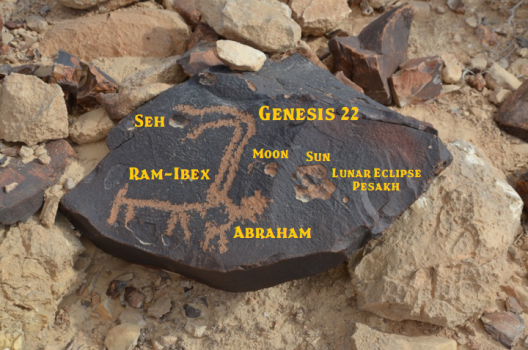
Bingo: Genesis 22!

That is the day. Soon I plan to be posting a thread on the topic, (Elohim willing), including some of the information from here in this thread, perhaps I will call it Abraham and the Ram.

Har Karkom, (Horeb-Sinai) Rock Art

har-karkom-abraham-ram.png
 
M

Muna

Guest
Bingo: Genesis 22!

That is the day. Soon I plan to be posting a thread on the topic, (Elohim willing), including some of the information from here in this thread, perhaps I will call it Abraham and the Ram.

Har Karkom, (Horeb-Sinai) Rock Art

View attachment 72772

You lost me there but I will tune in
 

shepherdsword

Encounter Team - Eagle
Staff member
Encounter Team
Feb 12, 2009
2,034
1,631
113
Millington
Faith
Christian
Country
United States
Gender
Male
1) John 8:58 ειπεν αυτοις ιησους αμην αμην λεγω υμιν πριν αβρααμ γενεσθαι εγω ειμι

Amen amen is a double affirmation, and occurs only in the Gospel of John, and is found twenty-five times therein. This author employs this phrase to inform the observant hearer or reader that the Son is speaking through the Meshiah, (the Christos or Anointed One). You would do well to believe what is in the OP and observe this rule also, but if not, so be it.

2) γενέσθαι does not mean "was" or "was born" as many of your favorite Trinity scholars and translators purport it to be in John 8:58, ("was", as the KJV first rendered it and many others followed suit).


3) And, most importantly, neither you nor your favored translators pay enough attention to the full context for lack of hanging on every word of the Master in this passage, (as true believer should do not only here but everywhere).

From the beginning of this passage:

John 8:12-28
12 Therefore again Ι̅Η spoke to them, saying, I am the light of the world: the one following me shall not walk in the darkness, but shall have the light of the life.
13 The Pharisees therefore said to him, You testify concerning yourself: your testimony is untrue.
14 Ι̅Η answered and said to them, Though I testify concerning myself, yet my testimony is true: for I know from where I came, and to where I go, but you cannot tell from where I come, and to where I go.
15 You judge after the flesh: I judge no one.
16 And yet if I judge, my judgment is true: for I am not alone, but I myself, and my Sender, the Father.
17 And in the Torah, also pertaining unto you, it is written that the testimony of two men is true.
18 I am one testifying concerning myself, and my Sender, the Father, bears witness concerning me.
19 Then they said to him, Where is your father? Ι̅Η answered, You neither know me, nor my Father: if you had known me, you would have known my Father also.
20 These words Ι̅Η spoke in the treasury, as he taught in the temple, and no man laid hands on him: for his hour was not yet come.
21 Then Ι̅Η said again to them, I go my way, and you shall seek me, and shall die in your sins: where I go, you cannot come.
22 Then said the Yhudim, Will he kill himself? for he says, "Where I go, you cannot come".
23 And he said to them, You are from beneath, I am from above: you are of this world: I am not of this world.
24 I said therefore unto you, that you shall die in your sins: for if you believe not that I am ― ― ― ― ―, you shall die in your sins.
25 Then they said to him, You are who? [for they recognized that he did not complete the "I am" statement]. And Ι̅Η said to them, That which I also said unto you at the commencement [John 8:12].
The "I AM" statement was complete and they understood He was claiming to be God. Which is why they tried to stone him:

Ex 3:14 God said unto Moses, I AM THAT I AM: and he said, Thus shalt thou say unto the children of Israel, I AM hath sent me unto you.

Jn 8:58-59 Jesus said unto them, Verily, verily, I say unto you, Before Abraham was, I AM. Then took they up stones to cast at him: but Jesus hid himself, and went out of the temple, going through the midst of them, and so passed by.


26 I have many things to speak and to judge concerning you: but the One having sent me is true, and I speak to the world those things which I have heard of Him.
27 They understood not that he spoke to them of the Father.
28 Then Ι̅Η said to them, When you have lifted up [or exalted] the Son of man, then shall you know that I am ― ― ― ― ―, and that I do nothing of myself: but as my Father has taught me, I speak these things.

I have underlined the answer for you concerning all of the "I am" statements in the entire passage. However I do not intend at this time to wrangle with you over the interpretation of John 8:58, for the answer is so much more technically involved and you appear only to be interested in disproving the Logos of Elohim in the OP.
You won't wrangle because the entire gospel of John proves the divinity of Christ. I am only interested in disputing a new take on an old hersesy...arianism.
 

dak

Well-Known Member
Feb 9, 2013
1,457
188
63
Messianica
sites.google.com
Faith
Other Faith
Country
United States
Gender
Male
You lost me there but I will tune in

I was referring to the following comment, which is a reference to Gen 22, and related to John 8:56-58.

Abraham (being a prophet) seeing before that God would provide a lamb as he knew this when he offered up his only Son (in a picture again showing what God would do by Jesus Christ).
 
  • Like
Reactions: Muna

dak

Well-Known Member
Feb 9, 2013
1,457
188
63
Messianica
sites.google.com
Faith
Other Faith
Country
United States
Gender
Male
The "I AM" statement was complete and they understood He was claiming to be God.

Okay, so you do not believe what he tells them in John 8:25.
Fair enough: I'll leave that between you and the Logos who is the only Judge.

You won't wrangle because the entire gospel of John proves the divinity of Christ. I am only interested in disputing a new take on an old hersesy...arianism.

False accusation: I am not an Arianist.
I'll also leave that accusation between you and the Logos who is the only Judge.
 

shepherdsword

Encounter Team - Eagle
Staff member
Encounter Team
Feb 12, 2009
2,034
1,631
113
Millington
Faith
Christian
Country
United States
Gender
Male
Okay, so you do not believe what he tells them in John 8:25.
Fair enough: I'll leave that between you and the Logos who is the only Judge.
I don't play the game of using one scripture to oppose another, as if there was some contradiction. Jn 8:25 and Jn 8:58 reconcile perfectly. He was claiming to be the "I AM"
False accusation: I am not an Arianist.
I'll also leave that accusation between you and the Logos who is the only Judge.
Do you believe in the divinity of Christ? Because if you don't it's arianism no matter how you try to spin it.
 

dak

Well-Known Member
Feb 9, 2013
1,457
188
63
Messianica
sites.google.com
Faith
Other Faith
Country
United States
Gender
Male
I don't play the game of using one scripture to oppose another, as if there was some contradiction. Jn 8:25 and Jn 8:58 reconcile perfectly. He was claiming to be the "I AM"

Try putting the commencement of the discourse together with the statement in John 8:25 and then maybe you might be able to understand HIS point, (not my point).

John 8:24-25
24 I said therefore unto you, that you shall die in your sins: for if you believe not that I am ― ― ― ― ―, you shall die in your sins.
25 Then they said to him, You are who? And Ι̅Η said to them, That which I also said unto you at the commencement [John 8:12].

The commencement of their discussion:

John 8:12a-b
12 Therefore again Ι̅Η spoke to them, saying, I am the light of the world:

----------------------------------------------------------

Now let's try it another way to drive the point home:

I am the light of the world: if you do not believe that I am you shall die in your sins.

That is what is going on here regardless of what you say or believe. You did not follow the Master all the way through in this passage, you did not hang on his every word: you followed a dogma taught to you by highly esteemed church men and their highly esteemed scholars and translators.

Do you believe in the divinity of Christ? Because if you don't it's arianism no matter how you try to spin it.

You have no idea what you are talking about.
 

shepherdsword

Encounter Team - Eagle
Staff member
Encounter Team
Feb 12, 2009
2,034
1,631
113
Millington
Faith
Christian
Country
United States
Gender
Male
Try putting the commencement of the discourse together with the statement in John 8:25 and then maybe you might be able to understand HIS point, (not my point).

John 8:24-25
24 I said therefore unto you, that you shall die in your sins: for if you believe not that I am ― ― ― ― ―, you shall die in your sins.
Unless you believe He is the incarnate "I AM" creator , you shall die in your sins. That's what He is saying
25 Then they said to him, You are who? And Ι̅Η said to them, That which I also said unto you at the commencement [John 8:12].

The commencement of their discussion:

John 8:12a-b
12 Therefore again Ι̅Η spoke to them, saying, I am the light of the world:
Yes, the light of the world is one of His many names
----------------------------------------------------------

Now let's try it another way to drive the point home:

I am the light of the world: if you do not believe that I am you shall die in your sins.
While that connection is true He was actually saying unless you believe "I AM" you shall die in your sins. That's His PRECISE statement that is unadulterated by a distorted understanding.
That is what is going on here regardless of what you say or believe. You did not follow the Master all the way through in this passage, you did not hang on his every word: you followed a dogma taught to you by highly esteemed church men and their highly esteemed scholars and translators.
Please stop gas lighting. It is you who ignore His clear statement that the is the same "I AM" as the one who sent Moses.
You have no idea what you are talking about.
And you have no idea on what dangerous doctrinal ground your tread. You also failed to answer the question. Do you believe that Jesus Christ is YHVH manifested in the flesh? No man can say Jesus is YHVH but by the Spirit of God.

1 Co 12:3...no man can say that Jesus is the Lord(YHVH), but by the Holy Ghost.

In the Aramaic texts they used the same word for Jesus is Lord as the OT does when using the tetragrammaton.
 
Last edited:
  • Like
Reactions: David in NJ