There is a kind of circular reasoning going on for people who believe the four instructions in Acts 15 were just a “starter kit,” giving Gentiles some temporary grace so they could progressively learn full Torah observance (beyond the common moral commands we all recognize from the text itself, Paul, etc.).
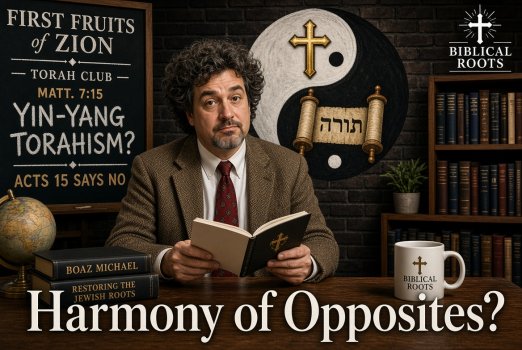
I have also nicknamed this mindset Yin-Yangism, because it reminds me of the “harmony of opposites.” It reads the New Testament as always mandating Torah observance, yet when confronted with the clear problems that reading creates, it reaches for New Testament passages of grace to hand-wave the objection away.
The Problems
1) When the revelation of Acts 15 was received, the New Testament was still in its infancy. Most of the New Testament had not yet been written. Paul was only beginning the earliest of his missionary journeys—the ones that took place before he wrote his first epistles. It is therefore both funny and ironic to invoke later New Testament passages of grace when confronted with actual Torah-keeping problems, when those very scriptures did not yet exist and were themselves new revelation that the early Church was only beginning to come to terms with.
2) Besides the above, simply not requiring circumcision was already a very big deal at that time. Circumcision was necessary for participating in Passover and for entering the Temple itself, which was still fully operational. Beyond that, circumcision was the tangible sign of the Old Covenant—a real, embodied aspect of Israel being a holy nation and a royal priesthood. It was also a practice associated with priesthoods in the surrounding religious cultures of the time.
3A) An objection I have raised before is how large a problem it is to assume a “starter kit” mindset from the biblical text. It not only goes out of its way to avoid a plain reading of the text; it also evades the actual historical witness of the Church itself—and that witness is a big deal according to Scripture.
The first part of the objection is noteworthy because of the principle “How can two walk together unless they are agreed?” (Amos 3:3). It is striking that Christians from the most varied backgrounds read Acts 15 the same way, despite the vast differences between ancient churches such as the Greek Orthodox and the Assyrian Church of the East, and modern ones such as the Southern Baptists and the Vineyard movement. There are countless doctrinal disagreements among them, yet on this point there is remarkable unity. So what changed? I would submit the change did not come from the biblical text itself, but from a worldview that was propagated by Herbert Armstrong’s Worldwide Church of God and then further disseminated in the internet age through the later Hebrew Roots movement.
3B) This issue is a big deal precisely because of what Scripture itself says about the Church’s role.
The Church is called “the pillar and ground of the truth” (1 Timothy 3:15). Jesus promised that the gates of Hades would not prevail against it (Matthew 16:18) and that He would be with His people “always, even to the end of the age” (Matthew 28:20) as they carry out the Great Commission. The apostles were sent to be His witnesses (Acts 1:8), and that witnessing role continues through the Church.
If the plain reading of Acts 15—that Gentiles are not placed under the yoke of the full Mosaic Torah—has been the consistent understanding across such widely different streams of the Church for nearly two thousand years, that historical continuity itself carries weight. The novel “starter kit / progressive Torah observance” reading has to explain not only why the text does not say what it claims, but also why the Church that Scripture calls the pillar of the truth uniformly failed to see it until the twentieth century.
4) These modern assumptions also ignore the historical precedent of righteous Gentile believers already existing within Judaism. We see them in the New Testament itself—in the Gospels and especially in the book of Acts (often called “God-fearers” or “those who fear God”).
Such believers existed in Judaism as a kind of second-class status. They could worship in the synagogue and often supported it financially, but they were barred from the Temple proper and were frequently kept from full table fellowship with Jews by purity and association customs. They lived in a recognized but limited relationship to the covenant people.
This phenomenon continued in Judaism and eventually developed into the formal category of Noahides in later Talmudic Judaism: Gentiles who were considered righteous by keeping a basic set of universal moral commandments (the traditional “Seven Laws of Noah”) without converting and taking on the full yoke of the Torah. They were not required to be circumcised, keep the festivals, or observe the full Mosaic code, yet they were still acknowledged as God-fearers who had a legitimate place.
It is deeply ironic that, under the banner of New Testament “grace,” Torahist interpreters would actually take this grace away from such believers. The apostolic decision in Acts 15 effectively protects and expands the space that already existed for righteous Gentiles; the “starter kit / progressive full Torah” reading collapses it by insisting they must eventually become full Torah-observant Jews in all but name.
5) And lastly, an objection I have raised before: alētheia.
This is the ordinary New Testament Greek word for truth. It refers to truth in its objective, factual, verifiable sense—not private insight or a later recovery of a supposedly lost teaching.
So the question stands: why is the ancient witness against Torahism and the New Testament Judaizer movement so large, while the positive witness for the other side is virtually non-existent?
I could understand if an ancient group like the Essenes had been pushing full Torah observance for Gentile believers in Jesus. But the closest thing we actually see in the early centuries after the Judaizers in the New Testament are the Ebionites. According to the early Church writers (Irenaeus, Origen, Eusebius, and others), the main body of Ebionites regarded Jesus as a mere man—the natural son of Joseph and Mary (denying the virgin birth)—who was chosen or adopted as Messiah because of his righteousness and observance of the Law. They rejected His pre-existence and divinity, insisted on full Torah observance, and treated Paul as an apostate. (A smaller subgroup is said to have accepted the virgin birth while still denying His full divinity.)
Even they do not give us a clean, early, orthodox stream of “Torah-observant Gentile Christianity.” If the “starter kit / progressive full Torah” reading were the original apostolic position, we should expect a substantial and continuous historical footprint. Instead, the overwhelming early Christian witness reads Acts 15 and the related material as releasing Gentile believers from the yoke of the Mosaic Torah. The near-total absence of the opposing view in the early record is itself a problem—especially when the New Testament insists on alētheia, truth that can be examined and verified.
I have also nicknamed this mindset Yin-Yangism, because it reminds me of the “harmony of opposites.” It reads the New Testament as always mandating Torah observance, yet when confronted with the clear problems that reading creates, it reaches for New Testament passages of grace to hand-wave the objection away.
The Problems
1) When the revelation of Acts 15 was received, the New Testament was still in its infancy. Most of the New Testament had not yet been written. Paul was only beginning the earliest of his missionary journeys—the ones that took place before he wrote his first epistles. It is therefore both funny and ironic to invoke later New Testament passages of grace when confronted with actual Torah-keeping problems, when those very scriptures did not yet exist and were themselves new revelation that the early Church was only beginning to come to terms with.
2) Besides the above, simply not requiring circumcision was already a very big deal at that time. Circumcision was necessary for participating in Passover and for entering the Temple itself, which was still fully operational. Beyond that, circumcision was the tangible sign of the Old Covenant—a real, embodied aspect of Israel being a holy nation and a royal priesthood. It was also a practice associated with priesthoods in the surrounding religious cultures of the time.
3A) An objection I have raised before is how large a problem it is to assume a “starter kit” mindset from the biblical text. It not only goes out of its way to avoid a plain reading of the text; it also evades the actual historical witness of the Church itself—and that witness is a big deal according to Scripture.
The first part of the objection is noteworthy because of the principle “How can two walk together unless they are agreed?” (Amos 3:3). It is striking that Christians from the most varied backgrounds read Acts 15 the same way, despite the vast differences between ancient churches such as the Greek Orthodox and the Assyrian Church of the East, and modern ones such as the Southern Baptists and the Vineyard movement. There are countless doctrinal disagreements among them, yet on this point there is remarkable unity. So what changed? I would submit the change did not come from the biblical text itself, but from a worldview that was propagated by Herbert Armstrong’s Worldwide Church of God and then further disseminated in the internet age through the later Hebrew Roots movement.
3B) This issue is a big deal precisely because of what Scripture itself says about the Church’s role.
The Church is called “the pillar and ground of the truth” (1 Timothy 3:15). Jesus promised that the gates of Hades would not prevail against it (Matthew 16:18) and that He would be with His people “always, even to the end of the age” (Matthew 28:20) as they carry out the Great Commission. The apostles were sent to be His witnesses (Acts 1:8), and that witnessing role continues through the Church.
If the plain reading of Acts 15—that Gentiles are not placed under the yoke of the full Mosaic Torah—has been the consistent understanding across such widely different streams of the Church for nearly two thousand years, that historical continuity itself carries weight. The novel “starter kit / progressive Torah observance” reading has to explain not only why the text does not say what it claims, but also why the Church that Scripture calls the pillar of the truth uniformly failed to see it until the twentieth century.
4) These modern assumptions also ignore the historical precedent of righteous Gentile believers already existing within Judaism. We see them in the New Testament itself—in the Gospels and especially in the book of Acts (often called “God-fearers” or “those who fear God”).
Such believers existed in Judaism as a kind of second-class status. They could worship in the synagogue and often supported it financially, but they were barred from the Temple proper and were frequently kept from full table fellowship with Jews by purity and association customs. They lived in a recognized but limited relationship to the covenant people.
This phenomenon continued in Judaism and eventually developed into the formal category of Noahides in later Talmudic Judaism: Gentiles who were considered righteous by keeping a basic set of universal moral commandments (the traditional “Seven Laws of Noah”) without converting and taking on the full yoke of the Torah. They were not required to be circumcised, keep the festivals, or observe the full Mosaic code, yet they were still acknowledged as God-fearers who had a legitimate place.
It is deeply ironic that, under the banner of New Testament “grace,” Torahist interpreters would actually take this grace away from such believers. The apostolic decision in Acts 15 effectively protects and expands the space that already existed for righteous Gentiles; the “starter kit / progressive full Torah” reading collapses it by insisting they must eventually become full Torah-observant Jews in all but name.
5) And lastly, an objection I have raised before: alētheia.
This is the ordinary New Testament Greek word for truth. It refers to truth in its objective, factual, verifiable sense—not private insight or a later recovery of a supposedly lost teaching.
So the question stands: why is the ancient witness against Torahism and the New Testament Judaizer movement so large, while the positive witness for the other side is virtually non-existent?
I could understand if an ancient group like the Essenes had been pushing full Torah observance for Gentile believers in Jesus. But the closest thing we actually see in the early centuries after the Judaizers in the New Testament are the Ebionites. According to the early Church writers (Irenaeus, Origen, Eusebius, and others), the main body of Ebionites regarded Jesus as a mere man—the natural son of Joseph and Mary (denying the virgin birth)—who was chosen or adopted as Messiah because of his righteousness and observance of the Law. They rejected His pre-existence and divinity, insisted on full Torah observance, and treated Paul as an apostate. (A smaller subgroup is said to have accepted the virgin birth while still denying His full divinity.)
Even they do not give us a clean, early, orthodox stream of “Torah-observant Gentile Christianity.” If the “starter kit / progressive full Torah” reading were the original apostolic position, we should expect a substantial and continuous historical footprint. Instead, the overwhelming early Christian witness reads Acts 15 and the related material as releasing Gentile believers from the yoke of the Mosaic Torah. The near-total absence of the opposing view in the early record is itself a problem—especially when the New Testament insists on alētheia, truth that can be examined and verified.