

The Conversion of Saul

  • Welcome to Christian Forums, a Christian Forum that recognizes that all Christians are a work in progress.

    You will need to register to be able to join in fellowship with Christians all over the world.

    We hope to see you as a part of our community soon and God Bless!

Hiddenthings

Well-Known Member
May 19, 2025
3,777
415
83
Leeton NSW
Faith
Christian
Country
Australia
Dear Readers,

This is a study series I presented last year, and I’ve been asked to share it again in the coming weeks. I warmly welcome any and all comments along the way.

Acts 9 marks a dramatic turning point in the Book of Acts. The first eight chapters focus primarily on the activities of the apostles and their early converts. Now, Saul of Tarsus, previously mentioned briefly at Stephen’s stoning steps fully into the narrative. Most of the remaining twenty chapters will recount Saul’s conversion and his subsequent missionary journeys.

The theme before us tonight is conversion, but conversion from what, and to what?

And what occurs in that transition? Between what was, and what is yet to come? We may not experience a transformation as dramatic as Saul’s, yet we all undergo transitions of heart and mind.

In the midst of Saul’s enlightenment, he would later reflect on the experience in 2 Corinthians 7:8–10:

“For godly grief produces a repentance that leads to salvation without regret, whereas worldly grief produces death.”

This is no shallow or fleeting sorrow, no Esau-type tears here! Saul’s grief cut to the very core of his being, as he recognized that his sins and actions had been offenses against God and the Lord Jesus Christ. Yet, as the Lord promised, “Blessed are those who mourn, for they shall be comforted.”

Tonight, we will examine Saul both through Luke’s perspective, Luke, his close friend (Colossians 4:14) and through Paul’s own reflections. This dual perspective offers profound insight into the man and magnifies the magnitude of the transformation he underwent, the depth of God-ordained grief that shaped Saul of Tarsus.

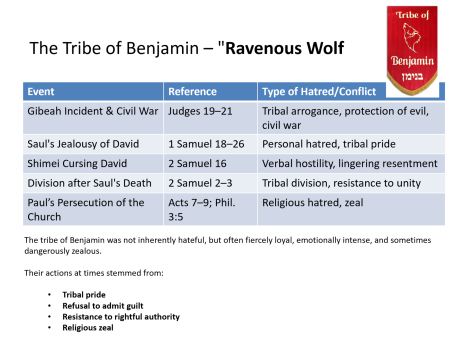
We know Saul was born in Tarsus, from the tribe of Benjamin, a fact he mentions twice, underscoring his family’s devotion to one of the least of Israel’s tribes. He was named after one of his most notable ancestors, King Saul of Gibeah, a man of extremes who, like Saul before his conversion, harbored murderous intent toward one of God’s children.
 

Hiddenthings

Well-Known Member
May 19, 2025
3,777
415
83
Leeton NSW
Faith
Christian
Country
Australia
We might say that the zeal burning in Saul of Tarsus was, in part, an attempt to reverse the shameful reputation of his namesake. Yet, tragically, in striving to avoid one path, he fell into the very same darkness. As Acts 9:1 records, here stands another Saul, this time with murderous intent lodged in his heart, driven by religious hatred. It is a sobering realization when one is confronted with the truth of self, the dark reality of how easily we can be deceived by our own passions. And what does one do when forced to reckon with their own self-deception? If left unresolved, such a failure can torment the inner life mercilessly.

Yet it is in these moments that we see the determinate counsel and foreknowledge of God at work. The timing of Saul’s emergence, the testing of early converts, the circumstances of Israel’s bondage, both to Rome and to sin, all of these were woven into the divine plan. Saul was a prodigy, a rising star, an elitist among the elite of his generation. Wouldn’t it be something to glimpse the angelic work that must have been unfolding quietly in the background, shaping events for God’s purpose?

Consider the setting: modern-day Turkey, conquered by Rome seventy years before Saul’s birth. Though details are debated, it is likely that Saul’s grandparents had owned land prior to colonization. Under Roman law, landowners within Roman territory were granted citizenship, which could be passed down to their descendants. This privilege allowed families like Saul’s to retain both their civic status and their cultural distinctiveness. Unlike the Hellenistic Jews who had blended with surrounding influences, Saul’s family remained steadfastly orthodox, preserving their language, traditions, and separateness.

Tarsus itself, capital of Cilicia, was a city of immense wealth, trade, and learning. It boasted a university renowned throughout the Mediterranean world, rivaled only by Athens. In such a city, Saul grew up in an environment of influence and opportunity. Whether his parents moved him to Jerusalem in early childhood or only when he was fourteen is uncertain. What we do know is that his father had already trained him as a tentmaker, a trade Saul carried throughout his life. Many suggest this indicates his boyhood was spent in Tarsus, perhaps homeschooled, until he was sent to study under Gamaliel.

And Gamaliel was no ordinary mentor. He was one of the most respected Pharisees of his time, renowned for his ability to apply the Law to the social questions of the day. Some would even call him progressive compared to the rigid traditions of his peers. It is striking, then, that Saul, so immersed in Gamaliel’s measured wisdom failed to temper his own fiery zeal. At some point, despite his education and heritage, Saul allowed himself to be radicalized, carried away by a passion unbalanced by understanding.
 

Hiddenthings

Well-Known Member
May 19, 2025
3,777
415
83
Leeton NSW
Faith
Christian
Country
Australia
Some suggest that Saul remained in Jerusalem during the ministry of Christ, observing from the edges, while others believe that after his eight years of rigorous training he returned home, around the age of twenty-two to serve in a local synagogue, almost like an apprenticeship. Still others argue that by thirty he may have even been invited to join the Sanhedrin, becoming one of the select ten Pharisees chosen for that honor.

Yet I personally find it difficult to imagine Saul staying silent for three and a half years while Jesus openly ministered in Jerusalem. Some even believe there are hints in the Gospels that he may have been present in the crowds, watching with burning eyes.

The fury with which Saul later launches himself against the Christians suggests to me a man who once knew Jerusalem as it was, but now returned to find it divided by a new teaching. This was not the Jerusalem he had left behind, that much is certain.

Yes, perhaps his rage simmered quietly during the Lord’s ministry, only to erupt later. But this explanation does not sit easily with what we know of Saul’s personality. He was not the type to remain idle in the face of what he considered blasphemy.

For Saul, the very thought that the Sanhedrin was not the light of the world, and that a crucified man, crucified outside the camp with sinners, could claim to be the Son of God and Israel’s Messiah… this was unthinkable, intolerable. Such an idea would ignite his blood with contempt. His reforming zeal was so fierce, I suspect it even struck fear into some of his peers. His devotion to the things of God was disciplined, uncompromising, relentless.

It is striking that twice Paul identifies himself as being from the tribe of Benjamin. No other New Testament figure ever leans on tribal identity as a credential. And later, as the Apostle Paul, he must have reflected with deep irony on that connection.

You remember Jacob’s prophetic blessing over Benjamin in Genesis 49:27:

Benjamin is a ravenous wolf; in the morning devouring the prey, and in the evening dividing the plunder.”

The ravenous wolf, ferocious, aggressive, predatory. Yet by God’s grace, this wolf would be transformed into a shepherd of lambs, a persecutor turned into an apostle.

Can you picture Stephen lifting his eyes to heaven and beholding the true Benjamite (name means Son of thy Right Hand) —Christ himself—standing at the right hand of God? And there, below, another Benjamite, Saul, standing among the mob, the garments of the slain laid at his feet. That image must have seared itself into Paul’s memory, never to fade.

And consider Luke’s deliberate contrast. The true apostles received gifts and freewill offerings laid humbly at their feet. But Saul, he stood gloating over the blood-stained garments of a murdered man. The very meaning of his tribal heritage was being fulfilled before his eyes, as he gave his consent to the death of the righteous.

And so, we pick up the record in Acts 9:1: “Meanwhile Saul, still breathing threats and murder against the disciples of the Lord, went to the high priest…”

Note: Benjamins History

1756288313818.png
 

Hiddenthings

Well-Known Member
May 19, 2025
3,777
415
83
Leeton NSW
Faith
Christian
Country
Australia
Let’s pause in Acts 9 for a moment and turn with me to 1 Timothy 1:13:

“Even though I was formerly a blasphemer, a persecutor, and a violent man. Yet I was shown mercy because I acted ignorantly in unbelief.”

The word translated “violent” carries the idea of being cruel, arrogant, and even brutal. God’s Word gives us an unflinching and accurate description of Saul. He had been radicalized to the point of dragging men and women from their homes, interrogating them, pressuring them to deny their faith, and even casting his vote for their execution.

What’s fascinating is how both Luke and Paul describe Saul. Together they paint a picture of his human credentials, helping us see the kind of man who was walking that road to Damascus. It’s like we get to stand face to face with him before his encounter with Christ.

Now, turn with me to Philippians 3, beginning at verse 3. Paul writes:

“For we are the circumcision, who worship by the Spirit of God, glory in Christ Jesus, and put no confidence in the flesh.

At this point Paul introduces us to his former self, Saul. Imagine for a moment that we are the Sanhedrin, and Saul is presenting his résumé. While Paul now confesses that his former self trusted entirely in the flesh, we all know that Saul, the zealous Pharisee, would have argued passionately that he was a spiritual man, doing God’s work with unshakable conviction.

That’s a sobering reality, isn’t it? To be so certain you are walking in the light, only to later discover you were in utter darkness. What a devastating realization for such a zealous believer to face!

Paul continues in Philippians 3:4–6:

Though I myself have reason for confidence in the flesh also. If anyone else thinks he has reason for confidence in the flesh, I have more: circumcised on the eighth day, of the people of Israel, of the tribe of Benjamin, a Hebrew of Hebrews; as to the law, a Pharisee; as to zeal, a persecutor of the church; as to righteousness under the law, blameless.”

You can almost hear how naturally these words roll off his tongue, as though he had recited this list many times before. It was his proud declaration of identity.

Saul was, in every respect, the model Pharisee, trained to the highest standard, fully immersed in the Law, able to quote Torah and wisdom literature with ease. He had mastered every argument, and one suspects he rarely, if ever, lost a debate. It’s not hard to imagine the bright future the High Priest envisioned for this brilliant, fiery young man.

And let’s not overlook his tribal heritage. He was of the tribe of Benjamin, sometimes referred to in Scripture as “Little Benjamin” (Psalm 68:27). Perhaps this nickname contributed to a kind of inferiority complex, driving him with even greater zeal to prove himself, to rise above, to be the best.
 

Hiddenthings

Well-Known Member
May 19, 2025
3,777
415
83
Leeton NSW
Faith
Christian
Country
Australia
You’ll remember that the Old Testament Saul emphasized how small and insignificant the tribe of Benjamin was. Yet in time, Benjamin gained a reputation for producing skilled warriors, so violence and cruelty seemed to run in their blood, so to speak.

We could take time to explore Judges 19–20, but for now it’s enough to note how the Saul of Acts 9 seems to embody Jacob’s prophetic words about Benjamin: “a ravenous wolf” (Gen 49:27) a hunter, trained to track down the so-called infidels, and eager to claim the spoils of the kill.

With that in mind, let’s go back to Acts 8 and read about this elite Pharisee on the hunt:

Acts 8:1: And Saul agreed completely with killing Stephen. Now on that day a great persecution began against the church in Jerusalem, and all except the apostles were scattered throughout the regions of Judea and Samaria.”

This appears to suggest that only the Twelve remained in Jerusalem while the rest fled. Yet there are later indications that a strong church continued to exist in the city (see Acts 8:14, 25; 9:26–31; 11:2–18; 12:5, 12–17).

Acts 8:2: “Some devout men buried Stephen and made loud lamentation over him.”

Now here’s something remarkable. By doing this, these devout men were actually breaking the oral law. According to Mishnah Sanhedrin 6.6:

“The relatives of the executed man would not mourn him with the observance of the usual mourning rites, so that his unmourned death would atone for his transgression; but they would grieve over him silently, since grief is only felt in the heart.”

So, for these believers to publicly and loudly lament Stephen’s death required great faith and courage. It’s a powerful lesson for us, brothers and sisters: even under pressure and persecution, faith finds expression, regardless of the risks or the cost.

Acts 8:3–4 tells us: But Saul was trying to destroy the church; entering house after house, he dragged off men and women and put them in prison. Now those who were scattered went about preaching the word.”

Notice that while Saul is tearing homes apart, believers are still proclaiming the gospel wherever they go. Today, if we were suddenly scattered, I suspect our immediate concerns might be housing or family welfare, and understandably so. Yet the record highlights two things: public mourning for a righteous man (despite oral law), and the preaching of the good news. That was their focus and responsibility.

A sobering reminder for us who live in such comfort here in the Australia!

When we turn to Acts 9, Luke deliberately links these events with the word “meanwhile” (or “but” in some translations). He wants us to know that the persecution of 8:1–3 is the backdrop to what happens next.

Acts 9:1: “Meanwhile Saul, still breathing out threats and murder against the disciples of the Lord, went to the high priest…”

Here’s a question worth pondering:

Was Saul radicalized by the Sanhedrin, stirred up to such anger by them? Or was he the one driving them further, pushing for harsher punishment and broader action? Personally, I read the record as though Saul himself was propelling this campaign, not merely following orders.

Acts 9:2 tells us he requested letters from the high priest to the synagogues in Damascus, so that if he found any who belonged to the Way, men or women, he might bring them bound to Jerusalem.”

And what would their charges have been? Scripture records three key accusations used against believers:
  1. Proclaiming in Jesus the resurrection of the dead (Acts 4:2, 17–18).
  2. Acting and speaking with power that provoked Jewish jealousy (Acts 5:17).
  3. Changing the customs handed down by Moses (Acts 6:14).
The irony is striking, every one of these charges had God's Divine approval! And they also foreshadow the very issues that will surface when Christ returns: acknowledgment of a resurrected Jesus, the jealousy of Israel (Rom 11), and the transformation of their customs.

So while Saul was determined to act as guardian and savior of Judaism, the reality was far different. He had no divine mandate, just a rogue Benjamite, zealously cutting down the Lord’s disciples.

It’s worth noting Paul’s later reflection in 1 Timothy 1:13: “I was shown mercy because I acted ignorantly in unbelief.” Perhaps this even suggests he had never truly heard the Lord’s message preached to him, only the distorted versions he imagined he was silencing.
 

Hiddenthings

Well-Known Member
May 19, 2025
3,777
415
83
Leeton NSW
Faith
Christian
Country
Australia
Saul’s role was not that of an executioner, but rather of an arresting officer. His mission was to stamp out the new movement. Yet when it came to matters of execution, he did not hesitate to cast his vote in favor of the death penalty.

Luke records Saul’s own words in Acts 26:10–12:

“And that is what I did in Jerusalem: Not only did I lock up many of the saints in prisons by the authority I received from the chief priests, but I also cast my vote against them when they were sentenced to death. I punished them often in all the synagogues and tried to force them to blaspheme. Because I was so furiously enraged at them, I went to persecute them even in foreign cities. While doing this very thing, as I was going to Damascus with authority and complete power from the chief priests...”

Notice how often Saul uses the word “I”—eight times in just a few verses: I did this, I did that... It is strikingly open and honest.

In the same way, we might confess: “I was an immoral sinner. I stole. I lied. I deceived. I hurt people. I took part in things unlawful. I broke many commandments.” There is honesty, but also a deep pain that follows such reflection. So it must have been with Saul, the proud Pharisee of Pharisees.

Turning to Romans 7 gives us insight into Saul’s own heart:

“What shall we say then? Is the law sin? Absolutely not! Certainly, I would not have known sin except through the law. For indeed I would not have known what it means to covet if the law had not said, ‘Do not covet. But sin, seizing the opportunity through the commandment, produced in me all kinds of wrong desires” (Rom 7:7–8).

As a Pharisee, Saul lacked no material thing. Their lives were well provided for, even to the extent of arranging marriages. They wanted for nothing. So what, then, could a zealous Pharisee covet? I believe it was authority and power. Acts 8, 9, 22, and 26 all highlight his desire for authority and his pride in exercising power over others.

In fact, it may even have irritated him that he needed official permission from the high priest to pursue Christians. His zeal to “purge Israel” was so intense that having to defer to another’s authority might have felt like an insult. He relished preeminence, and the ability to enforce the Law over others. Yet deep down, I believe Saul knew something was missing. He lacked the peace of God. His coveting of authority may even have reached as far as the high priesthood itself—only God knows. But one truth is clear: when life comes easily, the appetite for more is never satisfied.

Coveting always begins with something pleasing to the eye (Gen 3:6). Perhaps this explains Paul’s later passion to work with his own hands and never rely financially on others (Acts 20:33–34). His determination to avoid coveting anything in his ministry was born out of painful self-awareness. In 1 Corinthians 4:11–12 he describes himself laboring night and day, poor and despised, yet content. What a transformation, from a man who once grasped at power, to one who was willing to be considered the “scum of the world.”

The Lord’s rebuke came swiftly and directly: blindness. Saul, who loved to lead others, would now need to be led by the hand. The man who craved authority was stripped of it, until he would receive a far greater authority, not of man, but of Christ himself. His old confidence in wealth, prestige, and position melted away before the glory of the risen Lord.

At this point, Caiaphas was likely still high priest (AD 18–36). Saul sought not official extradition papers, but letters of introduction from the Sanhedrin to the synagogues in Damascus, requesting their support in arresting Christians and returning them to Jerusalem for punishment. The local synagogues governed the affairs of Jewish believers, much like our ecclesial autonomy today. When a matter was too difficult, it was escalated to the Sanhedrin for final ruling.

We know Saul not only carried out arrests, but also inflicted synagogue discipline. He later wrote that he himself had received five synagogue scourging's (2 Cor 11:24)—punishments he had once administered to others. One wonders: how many of us could endure such brutal treatment? Do we know our own breaking point?

Another point of reflection: Saul’s zeal was such that he willingly undertook a six-day foot journey to Damascus. This was no easy task. His perseverance, discipline, and willingness to suffer were evident even then. The very qualities that once fueled his violent zeal would, under Christ’s hand, be redirected to a nobler purpose. As Paul, his sufferings for the gospel became legendary, and his endurance a testimony to the transforming power of God.
 

Hiddenthings

Well-Known Member
May 19, 2025
3,777
415
83
Leeton NSW
Faith
Christian
Country
Australia
We find Saul traveling nearly 280 kilometers in an effort to get ahead of what he considered an “apostate” teaching. There’s a real danger in zeal, brothers and sisters, especially when it’s misplaced. Saul was so focused, so convinced of his cause, that he thought he could actually stop the spread of the Gospel. Imagine that for a moment: believing that by persecuting believers, even if it meant traveling such a distance he could succeed.

But remember Acts 8:1: “Now on that day a great persecution began against the church in Jerusalem, and all except the apostles were scattered throughout the regions of Judea and Samaria.”

Saul’s zeal only fueled the very spread he sought to prevent.

The same principle applies to our discipleship today: if zeal is misguided, it can do harm instead of good. Misplaced zeal can wound others, or even drive them away. Yet, in His wisdom, God often turns such evil intentions into good. We should indeed serve Christ with confidence and passion, but always with wisdom and a temperate spirit, lest we push people away. In Saul’s case, God even used his murderous intent to help spread the Gospel farther than Saul ever imagined.

Saul thought he was being clever, he knew the message had reached Samaria, so he set his sights on Damascus, 160 kilometers further north, determined to head it off. But we know what happened: if the Lord had not intervened, Saul’s persecution would have continued, scattering believers even more widely across the land. Yet Jesus had other plans, didn’t he?

And we see the results: “Now those who had been scattered because of the persecution that took place over Stephen traveled as far as Phoenicia, Cyprus, and Antioch, speaking the message to no one except Jews” (Acts 11:19)—a full 500 kilometers north.
 

Hiddenthings

Well-Known Member
May 19, 2025
3,777
415
83
Leeton NSW
Faith
Christian
Country
Australia
It seems there was a miracle hidden within the glory of that light which blinded Saul, though not his companions. When the light struck him, his natural reaction would have been to shield his eyes—but its intensity either knocked them to the ground or left them prostrate before it. Was the light so piercing that it shone right through Saul’s eyelids, leaving him blind? Was there pain in that blindness? Perhaps—but maybe not. The eyes are incredibly sensitive, and yet this was no ordinary light.

Acts 26:14 tells us: “When we had all fallen to the ground, I heard a voice saying to me in Hebrew, ‘Saoul, Saoul, why are you persecuting me?’”

Out of that brilliant light came a Hebrew voice, repeating his name twice. Saul knew instantly—this was serious. In Scripture, the doubling of a name is always a warning or rebuke: “Martha, Martha…” (Luke 10:41), “O Jerusalem, Jerusalem…” (Luke 13:34), “Simon, Simon…” (Luke 22:31).

And what does this remind us of, brothers and sisters? 1 Kings 19:12—“After the fire, a gentle whisper.” Perhaps the first “Saul” thundered like fire, and the second fell softly, like a whisper. Imagine hearing that—hearing both warning and compassion in the intonation: “Saul (firm), Saul (gentle)… why are you persecuting me?”

The Lord’s love here is astonishing. Saul had been hunting down and killing the Lord’s disciples, yet Christ’s first words are not of wrath, but of appeal. Why then should we fear our Lord? He is loving, compassionate, and deeply aware of our weaknesses. Remember—He Himself was crucified in weakness, so that the power of God might be revealed in Him (2 Cor. 13:4). Saul was about to learn the depth of his own weakness, and it would produce in him a godly sorrow we can hardly imagine.

Whether or not Saul had ever heard Jesus during His ministry, he knew now whose voice it was. “Who are you, Lord?” he asked. And the reply came: “I am Jesus, whom you are persecuting.” Notice—the Lord repeated “persecuting” twice, just as He had repeated Saul’s name. How piercing those words must have been (Acts 9:5).

In Acts 26:14, we also have an added phrase: “It is hard for you to kick against the pricks (or goads).” This deserves our attention.

The word “kick” means to strike with the heel—and remember, Jesus said this in Hebrew. Why point Saul to his heel? Many wiser than me have connected this to Genesis 3:15: “He (the seed of the woman) shall bruise your head, and you (the serpent) shall bruise his heel.” Could Jesus have been saying:
  • “Saul, by kicking with your heel, you are only hurting yourself.”
  • “Saul, I have already crushed the serpent’s head—my work is finished.”
  • “Saul, you are not the seed of the woman—and I am not the serpent!”
It’s a striking thought.

Now, the word “pricks” (or “goads”) is unusual—it appears here in Acts 26:14, and elsewhere it is translated as “sting” (1 Cor. 15:55; Rev. 9:10). Paul himself later wrote: “Where, O death, is your victory? Where, O death, is your sting?” (1 Cor. 15:55).

The Greek idiom “to kick against the goads” means stubborn resistance, like an ox kicking against the prods meant to guide it. I struggle, though, to imagine Jesus using a Greek idiom in a Hebrew conversation. Yet Paul, retelling the story to a Greek-speaking king, may have translated the Lord’s words into an expression Agrippa would understand. Could it have a dual meaning? If so, it is genius—divinely so.

If Saul saw himself as Israel’s savior, Christ’s words reminded him that only the true Seed of the Woman had overcome sin and death. The sting of death was removed, the law of sin and death defeated—yet Saul, in ignorance, had been fighting against the risen Lord Himself.

So here’s a challenge for you, brothers and sisters: during the week, consider whether Jesus’ words carry this deeper meaning—was Saul being rebuked for mistaking himself as the seed of promise, when in fact, Christ alone had triumphed?

For now, we leave Saul in darkness—three days of symbolic death, awaiting new life. He who had been hurting himself, hurting others, and unknowingly striking at Christ Himself, now sits blind, humbled, and waiting. Next time, we will return to behold the work of Christ in transforming this man into a chosen vessel of mercy.