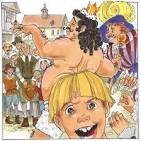
hmmmm, do you not understand the question or are you unfamiliar with the story of The Emperors New Clothes? It is hardly a riddle!
You can find it online.
An AI summary:
The story centers around a vain emperor who is obsessed with clothes and spends all his money on them. Two conmen arrive in the city and offer to weave him a magnificent suit of clothes that are invisible to those who are stupid or unfit for their jobs. The emperor, eager to identify the incompetent, hires them. The conmen pretend to work on the looms, using invisible thread and fabric. They have the emperor's ministers inspect their progress, and each minister, afraid of appearing foolish, lies about seeing the beautiful clothes. The emperor himself eventually visits and, despite seeing nothing, also pretends to admire the "invisible" suit. During a public procession, the emperor parades through the streets in his "invisible" clothes, with the citizens also pretending to admire them. Finally, a child shouts out that the emperor is naked, and the truth is revealed. The people, initially shocked, eventually admit that the child is right, and the emperor is exposed.
Themes:
- Vanity and Deception:
The emperor's vanity makes him susceptible to the conmen's deception. The story highlights how vanity can blind people to reality and make them vulnerable to manipulation.
- Fear of Appearing Foolish:
The ministers' and the citizens' lies demonstrate the fear of appearing unintelligent or incompetent. They prioritize social acceptance over truth, leading to a collective pretense.
- The Power of Truth:
The child's innocent declaration breaks the spell of deception, demonstrating the power of honesty and the impact of speaking truth to power.
- Social Pressure:
The story illustrates how social pressure can lead to conformity and the suppression of individual opinions, even when those opinions are correct.
Moral:
The primary moral of "The Emperor's New Clothes" is that honesty and speaking the truth are essential, even when it is difficult or unpopular. The story also serves as a reminder to be wary of flattery and to think critically about situations rather than blindly following the crowd.