Should the Gospel of John be removed from the Bible?

  • Welcome to Christian Forums, a Christian Forum that recognizes that all Christians are a work in progress.

    You will need to register to be able to join in fellowship with Christians all over the world.

    We hope to see you as a part of our community soon and God Bless!

Zao is life

Well-Known Member
Oct 3, 2020
5,244
1,863
113
Africa
Faith
Christian
Country
South Africa
Gender
Male
Introduction: The Problem of the Fourth Gospel

The above post kinda reminds me of,

"Light is come into the world, and men loved darkness rather than light, because their deeds were evil." (John 3:19).
 
Last edited:
  • Like
Reactions: Lambano

Jericho

Well-Known Member
Aug 10, 2023
900
978
93
51
Texas
Faith
Christian
Country
United States
1. The Insurmountable Dating Problem

Conservative estimates place its composition between 90-110 CE, while more critical scholars often argue for an even later date.

That assumes the dating is correct, which is speculative like most of the other assertions mentioned. Tradition holds that John died around 100AD, which could still fit into that late date.

3. Dionysian Worship and Hellenistic Influence
The symbolic structure of John's Gospel shows striking parallels with Dionysian religion that go beyond superficial similarities:

• *The Cana Miracle (2:1-11)*: This first "sign" transforms water into wine, which:

I looked into this. The earliest known account linking Dionysus to wine miracles is Euripides' Bacchae (c. 405 BC), but it isn't anything remotely like Jesus turning water into wine. Instead, Dionysus uses his divine power to cause vines to miraculously produce wine, milk, and honey. The account of Dionysus turning water into wine at a festival seems to come from Pausanias' Description of Greece (2nd century AD), but Pausanias wasn't even born until around 110 AD, which means he would have written it after the Gospel of John even if we accept the 90-110 AD dating. Interestingly enough, it appears that Pausanias visited Jerusalem and surrounding areas before he wrote Description of Greece. So, how do we know that he didn't get his ideas from the Christians and repurpose them?

Vine Imagery: The extended "I am the true vine" discourse (15:1-17) appropriates Dionysian symbolism while asserting Christian superiority. In Greek religion, the vine represented:

What's the problem? It seems reasonable to me that Jesus would use pagan symbolism as a polemic against the pagan deities. This isn't anything new. Moses did the same thing when he put a bronze serpent, also a pagan symbol, on a pole so that all who looked upon it would be healed (Num 21:4–9). They did it to make a statement.

6. Conflicts with Old Testament
Several Johannine doctrines directly oppose Torah teaching:
Incarnation: The claim that "the Word became flesh" (1:14) violates:
  • Deuteronomy's strict monotheism (6:4)
  • Prophetic warnings against divine embodiment (Isaiah 42:8)
  • "God cannot dwell inside us in flesh'' - Exodus 25–40; Leviticus 16

This seems like nit-picking to me and a misunderstanding what John was saying. By the way, the Holy Spirit can dwell inside of us.
 
  • Like
Reactions: shepherdsword

Ronald David Bruno

Well-Known Member
Nov 7, 2020
5,304
2,592
113
Southern
Faith
Christian
Country
United States
Gender
Male
Doubts, confusion, ... in just a plain strategic intention. This is one of many of Satan's misdirections for sure.
Folks, here's an example of someone who is not born again, has been either drawn to Christ but has taken a fork in the road with signs posted by Satan, "Take the next left turn" OR is just a tare among the wheat who is aware of what he is doing, purposely deceiving others!


The Gospel of John points to Jesus deity. The evangelist is often taught that for unbelievers, the Gospel of John is a good place to start.

You want to discard this book? What about Revelation? That is the culmination of the whole story. Without that. the end of our story would certainly be blurry if we just had the OT and various scriptures through the rest of the Canon to rely on.

Jesus had many titles: The WORD, the Bread of Life, The Way, The Truth and the Life, the Good Shepherd, the Doorway, the Resurrection and the Life, the Alpha and the Omega, the Vine, the Light of the World ... "I AM" came before all these titles AND was also His introduction He gave to Moses in Ex. 3:14. That's right, God who spoke to Moses was the preincarnate Jesus.


“In the beginning was the Word, and the Word was with God, and the Word was God.” John 1:1
>>> This plainly states, Jesus was in the Beginning, Jesus was with God and Jesus is God.

“And the Word became flesh, and "dwelt among us, and we saw His glory, glory as of the only begotten from the Father, full of grace and truth.” John 1:14
>>>God became flesh, pretty straight forward, if you didn't quite catch on to the first verse!

The doctrines within the ;
Book of John and his other writings clearly are supported by and in harmony with all scripture, a true testament to the work of the Holy Spirit. All scripture is God breathed.

You should be ashamed of yourself for presenting such an attack on God's Word. Honestly, I couldn't read through all of it, I skimmed through it with disgust -- I was appalled! What lack of discernment!
This gets my highest level of rebuke and rejection.
 
  • Like
Reactions: Spiritual Israelite

Spiritual Israelite

Well-Known Member
Apr 13, 2022
16,902
6,853
113
Midwest
Faith
Christian
Country
United States
Gender
Male
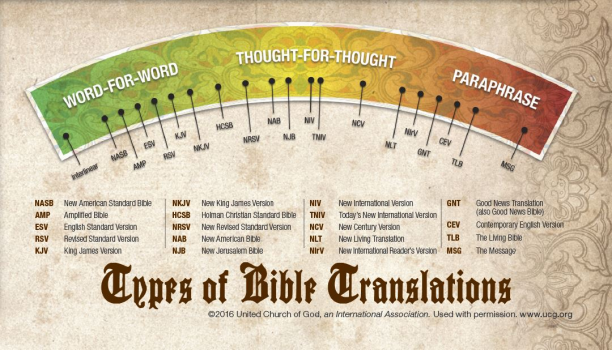
The NIV is gay friendly, go study about especially in the original NIV version that was published
LOL. What in the world are you talking about, dude? Are you just here to play games or what? Someone was claiming that it doesn't teach the deity of Christ and had verses removed that talk about that. I showed that it does teach the deity of Christ and showed several passages from the NIV to back that up. Do you agree or not? How about staying on topic?
 

Grailhunter

Well-Known Member
Jun 19, 2019
14,204
6,181
113
69
FARMINGTON
Faith
Christian
Country
United States
Gender
Male
Introduction: The Problem of the Fourth Gospel

While traditionally viewed as the work of John the Apostle, modern critical scholarship has raised serious questions about its authorship, dating, and theological motivations. My examination will try to analyze ten major areas of concern that collectively undermine the Gospel's claims to historical reliability and divine inspiration..

1. The Insurmountable Dating Problem

Conservative estimates place its composition between 90-110 CE, while more critical scholars often argue for an even later date.

This means that at least 60 to 80 years had passed between Jesus’ ministry (c. 27–30 CE) and the composition of the Gospel of John. Given that the average life expectancy in first-century Palestine was around 35 to 40 years, an author claiming to be an eyewitness would need to be over 70 years old at the time of writing—making such a scenario seem highly unlikely."

The advanced Christology present in John (e.g., the pre-existent Logos in 1:1) reflects theological developments that took decades to emerge. As noted by theologian James Dunn, this represents a clear evolution beyond the more primitive Christology found in Mark and other Gospels.

Gospel of John was first mentioned by the time of Irenaeus (c. 180 CE). The author of the Gospel of John claims to have known Jesus personally, referring to 'The Disciple whom Jesus loved' as a source. However, the Gospel’s late composition, advanced theological development, and signs of later editing suggest it couldn't have been written by an intimate eyewitness.

2. The "Beloved Disciple" Enigma

The mysterious figure described in Gospel of John: the "Disciple whom Jesus loved" presents numerous historical and literary problems:

Complete Absence in Synoptic Tradition: This privileged disciple, who reclines next to Jesus at the Last Supper (John 13:23) and receives special revelation, never appears in Matthew, Mark, or Luke. This absence is particularly striking given that:
  • The Synoptics name multiple disciples
  • They record Jesus' inner circle (Peter, James, John)
  • They do not mention any secret "teachings" or knowledge that was given to apostle John exclusively
Competition with Peter: The Gospel consistently elevates the Beloved Disciple above Peter in key moments:
  • At the empty tomb (20:2-8), the Beloved Disciple outruns Peter
  • At the crucifixion (19:26-27), Jesus entrusts his mother to this disciple
  • The appendix (chapter 21) seems to defend this disciple's authority against Petrine claims
Secret Teaching Claims: Passages like John 13:23-26 and 21:20-24 suggest this disciple received special revelation unavailable to others. This resembles later Gnostic claims of secret knowledge, raising questions about authenticity.

As scholar Raymond Brown concluded in his landmark study, this figure likely represents the idealized founder of the Johannine community rather than a historical individual.

3. Dionysian Worship and Hellenistic Influence
The symbolic structure of John's Gospel shows striking parallels with Dionysian religion that go beyond superficial similarities:

• *The Cana Miracle (2:1-11)*: This first "sign" transforms water into wine, which:
  • Mirrors Dionysus's central miracle
  • Occurs at a wedding feast (Dionysus was patron of weddings)
  • Produces an excessive amount (about 120 gallons) of superior wine
Vine Imagery: The extended "I am the true vine" discourse (15:1-17) appropriates Dionysian symbolism while asserting Christian superiority. In Greek religion, the vine represented:
  • Divine ecstasy
  • Spiritual intoxication
  • Union with the god
Blood/Wine Symbolism: John 6:53-56's shocking language about drinking blood (absolutely forbidden in Judaism, Leviticus 17:10-14) makes more sense in a Hellenistic context where wine represented the god's blood in mystery religions.

Gospel of John tries to present Jesus as better than Dionysus throughout the Gospel.
Many modern scholars, such as Robert M. Price note that these parallels are too extensive to be coincidental, suggesting conscious adaptation of pagan motifs for Christian evangelism.

4. Christological Differences across Gospels
John's portrait of Jesus differs radically from Synoptic tradition in key areas:

Dualism: John's light/darkness framework (1:5, 3:19-21, 8:12, etc.) reflects:
  • Jewish Apocalypticism
  • Qumran community theology
  • Zoroastrian influence
This represents a significant development beyond Hebrew Bible thought.

Eschatology: While the Synoptics emphasize future judgment, John promotes "realized eschatology" where:


ternal life is a present possession (5:24)
  • Judgment is already occurring (3:18-19)
  • Resurrection is spiritualized (11:25-26)

5. Chronological and Topographical Problems

John's narrative contains numerous inconsistencies with Synoptic accounts:
Ministry Duration: John's three-year framework (implied by multiple Passovers) contradicts the Synoptic single-year ministry.

Temple Incident: Placing the Temple cleansing at the beginning of Jesus' ministry (2:13-22) rather than the end creates logical problems:
  • Why no mention in Synoptics of an early incident?
  • How could Jesus continue teaching there if he caused such disruption early on?

Geographical Issues: John's Jesus:
  • Makes multiple trips to Jerusalem unlike the Synoptics' single journey
  • Conducts a Judean ministry before Galilean work (contrary to Synoptic sequence)
  • Places the calling of disciples after the Baptist's imprisonment (1:35-42), unlike Mark 1:14-20

6. Conflicts with Old Testament
Several Johannine doctrines directly oppose Torah teaching:
Incarnation: The claim that "the Word became flesh" (1:14) violates:
  • Deuteronomy's strict monotheism (6:4)
  • Prophetic warnings against divine embodiment (Isaiah 42:8)
  • "God cannot dwell inside us in flesh'' - Exodus 25–40; Leviticus 16
Replacement Theology: John systematically replaces Jewish institutions:
  • Temple replaced by Jesus' body (2:21)
  • Jesus as the new Moses (John 6:32–35)
Predestination Language: Passages like John 6:44 ("No one can come to me unless drawn by the Father") seemingly contradict Deuteronomy's emphasis on free will (30:19).

7. Controversial and Troubling Passages
Several Johannine texts have proven historically problematic:

Anti-Jewish Polemic: John 8:44's "your father is the devil" charge has fueled centuries of antisemitism.

Exclusivism: John 14:6's claim that Jesus is the only way to God represents:
  • A departure from Jewish universalism
  • A late theological development
  • A potential political statement against competing Christian groups
Sacramentalism: The extreme realism of John 6:53-56 ("eat my flesh... drink my blood"):

8. The Johannine Community Context
The Gospel's distinctive features likely reflect its community's historical situation:

Synagogue Expulsion: References to being "put out of the synagogue" (9:22, 12:42, 16:2) match what we know of the Birkat haMinim (c. 85 CE), a curse against heretics added to synagogue prayers.

Sectarian Mentality: The community's:
  • Dualistic worldview
  • Claim to special revelation
  • Resembles sectarian groups like the Qumran community.

9. The Prologue is inspired by Philo of Alexandria
John 1:1-18's Logos theology shows clear dependence on Greek thought:
Philo of Alexandria: The Jewish philosopher's concept of the Logos as:
  • Divine intermediary
  • Cosmic principle
  • God's rational expression
= Provides exact parallels to John's prologue.

The prologue is clearly dependent Stoic Influences; therefore, it is not original to author himself and definitely not the word of God.
The Stoic Logos as:
  • Universal reason
  • Ordering principle
  • Divine spark in humanity

Conclusion:
The cumulative weight of evidence suggests the Fourth Gospel is:
  • A late theological composition (and its further development)
  • Shaped by community conflicts and cultural adaptation
  • Highly Influenced by Hellenistic religion
  • At considerable remove from historical events

It cannot be considered either:
  • An eyewitness account
  • Divinely inspired in any unique sense
  • Theologically aligned with other Gospels or Old Testament
  • Written by actual apostle of John

Beyond that a Gnostic flavor has been noted.
And clear appearance of things missing.
Still take it for what it is worth.
 

Big Boy Johnson

Well-Known Member
Sep 28, 2023
6,328
2,311
113
North America
Faith
Christian
Country
United States
LOL. What in the world are you talking about, dude? Are you just here to play games or what? Someone was claiming that it doesn't teach the deity of Christ and had verses removed that talk about that. I showed that it does teach the deity of Christ and showed several passages from the NIV to back that up. Do you agree or not? How about staying on topic?

Numerous passages in the original NIV were "reimagined" to be gay friendly because they had a lesbian on the "team" that produced the NIV

You should study the origins of the NIV and learn about some of the the nut jobs they had on their board who were servants of the devil there to do the devil's bidding.
 

LoveYeshua

Eagle
Staff member
Sep 25, 2024
1,855
1,101
113
Quebec
Faith
Christian
Country
Canada
Gender
Male
Numerous passages in the original NIV were "reimagined" to be gay friendly because they had a lesbian on the "team" that produced the NIV

You should study the origins of the NIV and learn about some of the the nut jobs they had on their board who were servants of the devil there to do the devil's bidding.
that is why i stick with NKJV, KJV and sometines BSB I like co compare verses and also with greek (NT) the hebrew( OT) if i need help.
 

Spiritual Israelite

Well-Known Member
Apr 13, 2022
16,902
6,853
113
Midwest
Faith
Christian
Country
United States
Gender
Male
Numerous passages in the original NIV were "reimagined" to be gay friendly because they had a lesbian on the "team" that produced the NIV
Such as?

You should study the origins of the NIV and learn about some of the the nut jobs they had on their board who were servants of the devil there to do the devil's bidding.
My point was that it does teach the deity of Christ, and I showed that. Do you agree or not? Try to stay on topic, buddy. I know it's hard for you.
 

LoveYeshua

Eagle
Staff member
Sep 25, 2024
1,855
1,101
113
Quebec
Faith
Christian
Country
Canada
Gender
Male
Well, be advised that the NJKV removed several hundred passages that were in the KJV
yea there is a few missing but its not too bad . I use also a few french versions very close to the original texts that have the same as kjv. Thanks for pointing it out i was forgetting that.
 

XtraPercept

Active Member
Jul 21, 2025
478
212
43
NE USA
Faith
Christian
Country
United States
Does no one recognize the voice? It is abundantly clear in John's Gospel and cannot be imitated. One can speak the language of truth from the pulpit, but it has no meaning when leavened with falsehood. The seminary-trained and carnal 'leaders' lack the coherency of the Scriptures and the consistency of the Spirit. But these are the words people can understand; lies are widespread for their profitability. The wealth of truth will not supply a preacher with a private jet.

But this is why the Master said "My sheep will know My voice."