@Wick Stick
Let's begin to deal with the symbology and the Language of God. He communicates in way's many do not grasp as we shall see.
Let’s set the context!
Tyre held a uniquely privileged position in its relationship with Israel. The close friendship between David and Hiram (2 Samuel 5:11; 1 Kings 5:1, 6–7, 10), and the alliance between Hiram and Solomon—in which Hiram supplied materials for the temple (1 Kings 5:12, 17–18)—reflects a history of cooperation and favor. In Ezekiel 28:13–18, symbolic language drawn from Israelite worship illustrates the depth of this connection, implying that Tyre shared in divine blessing due to its association with Israel.
For example:
“Every precious stone was your covering” (Ezek. 28:13, ESV)
“You walked among the stones of fire” (Ezek. 28:14, ESV)
These are allusions to the stones in the high priest’s breastpiece (Exodus 39:10–14), which represented the twelve tribes of Israel. Called “stones of fire” due to their brilliance under the Shekinah glory, they symbolize divine favor. The king of Tyre "walking among them" symbolically portrays his participation in the blessings and favor extended to Israel, especially in connection with the temple.
This aligns with Genesis 12:3 (ESV): “I will bless those who bless you, and him who dishonors you I will curse…”
Just as Potiphar’s household was blessed because of Joseph: “The LORD blessed the Egyptian's house for Joseph’s sake; the blessing of the LORD was on all that he had, in house and field” (Genesis 39:5, ESV), so too was Tyre “covered” through its alliance with Israel.
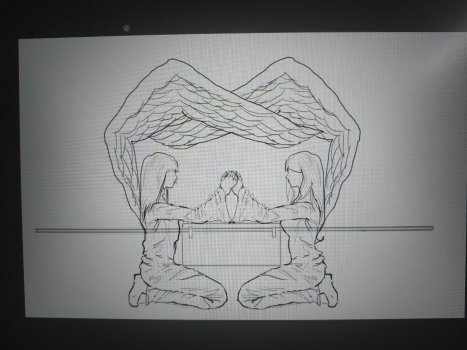
“You were an anointed guardian cherub. I placed you; you were on the holy mountain of God” (Ezekiel 28:14, ESV)
This echoes the cherubim over the mercy seat (Exodus 37:7–9; 25:19–20). Though the translation is debated, the imagery may suggest that Tyre, as a great power, had the opportunity to “cover” or support Israel—perhaps even economically and diplomatically. However, Tyre misused this role, and its pride led to judgment (cf. Ezek. 28:4–5).
“You were on the holy mountain of God” (Ezekiel 28:14, ESV)
This “holy mountain” refers not to heaven, as some argue, but to Mount Zion—the earthly site of God’s future temple:
“It shall come to pass in the latter days that the mountain of the house of the LORD shall be established… and all the nations shall flow to it” (Isaiah 2:2–3, ESV)
“These I will bring to my holy mountain, and make them joyful in my house of prayer” (Isaiah 56:7, ESV)
“For on my holy mountain… there all the house of Israel, all of them, shall serve me in the land” (Ezekiel 20:40, ESV)
“By the multitude of your iniquities, in the unrighteousness of your trade you profaned your sanctuaries” (Ezekiel 28:18, ESV)
This may imply that Tyre developed forms of worship modeled after Israel’s. Given Hiram’s admiration for David and Solomon (1 Kings 5:1–12), the king of Tyre would have been familiar with Israel’s God. Alternatively, this could mean Tyre’s "sanctuaries" were figuratively within Israel’s sphere of spiritual influence—privileged by proximity yet ultimately corrupted by pride.
When Nebuchadnezzar invaded Jerusalem in 586 B.C., Tyre arrogantly proclaimed:
“Aha, the gate of the peoples is broken; it has swung open to me. I shall be replenished, now that she is laid waste” (Ezekiel 26:2, ESV)
In doing so, Tyre violated the covenantal principle of Genesis 12:3, and thus invited judgment upon itself.
“I brought fire out from your midst; it consumed you, and I turned you to ashes on the earth” (Ezekiel 28:18, ESV)
Just as Nadab and Abihu were consumed by fire for profaning the sacred (Leviticus 10:2, ESV), Tyre too was judged. Like Sodom and Gomorrah, it would be reduced to ashes for failing to distinguish between the holy and the profane (Genesis 19:24–25, ESV).
In summary:
Ezekiel 28 is not speaking of a fallen angel, but of a historical
king—one who, through pride and misuse of a privileged relationship with God’s people, fell from divine favor and was judged accordingly.
At some point, we also need to explore how the children of Israel would have understood these symbols and their significance, as well as the deeper lessons God was teaching them through His judgments on Tyre and its king.