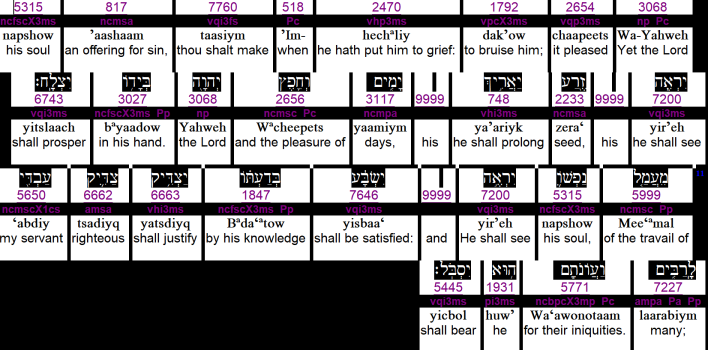
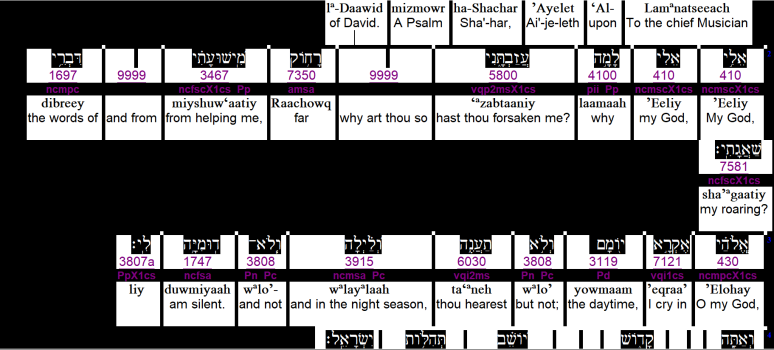
Have you ever questioned the accuracy of your English Bible? Most popular translations of the Old Testament, like the King James Version (KJV), New International Version (NIV), and English Standard Version (ESV), are based on the Masoretic Text (MT), a Hebrew version of the Tanakh (the Jewish Bible, equivalent to the Old Testament) standardized by Jewish scholars between the 7th and 10th centuries AD, but edited as early as the 1st–2nd centuries AD after the destruction of the Second Temple (70 AD). Evidence suggests these edits deliberately shortened the chronology of the patriarchs in Genesis 5 and 11, obscuring messianic prophecies like the 70 weeks in Daniel 9:24–27, which points to Jesus Christ. In contrast, the Septuagint (LXX), a Greek translation from the 3rd–2nd centuries BC, aligns closely with His life and ministry.
In Genesis 11, the Masoretic Text records Arphaxad fathering Shelah at age 35, while the Septuagint says 135—a 100-year difference. This pattern repeats across patriarchs, making the timeline from Adam to Abraham 1,948 years in the MT versus ~3,312 years in the LXX, a gap of 1,300–1,500 years. Why does this matter? The Septuagint’s longer timeline better matches archaeological evidence, such as the dating of Egypt’s pyramids (2600 BC) or Sumerian civilization (4000–3500 BC), lending credibility to the biblical narrative. More crucially, it supports the prophecy of Daniel’s 70 weeks. Starting from Artaxerxes I’s decree in 458 BC (Ezra 7:11–26), the 7 + 62 weeks (483 years) end in 26/27 AD, coinciding with Jesus’ baptism. The final week (7 years) covers His ministry and crucifixion (30–33 AD). The Masoretic Text’s shorter timeline and less explicit wording (“anointed one” vs. “Christ” in the LXX) make this prophecy less clear, potentially leading readers to doubt its connection to Jesus.
Why did Jewish scholars alter the Masoretic Text? Likely to weaken messianic interpretations after Christianity’s rise, as the Septuagint’s chronology clearly points to Jesus. So why did English translators, following the Catholic Vulgate (4th century), use the Masoretic Text instead of the Septuagint, which was quoted in the New Testament and used by early Christians? Jerome, who translated the Vulgate, prioritized Hebrew manuscripts (Hebraica veritas), possibly to align with Jewish communities or standardize the text. Yet, the Dead Sea Scrolls show the Septuagint often reflects older Hebrew texts, suggesting it’s more reliable. Most English Bibles inherit this choice, obscuring the prophecy’s clarity.
Fortunately, a few English translations do justice to the Septuagint’s chronology and wording, preserving its alignment with Jesus as the Messiah. These include:
Brenton’s Septuagint (1844)
New English Translation of the Septuagint (NETS) (2007)
Orthodox Study Bible (2008)
Sadly, these translations are rare, and most English-speaking Christians are unaware of them, relying instead on Masoretic-based Bibles that obscure the full clarity of prophecies like Daniel’s 70 weeks. This raises a critical question: if the Septuagint offers a more accurate timeline pointing to Jesus, why do we continue using translations that muddy the waters?




 1. The Masoretic Text is generally the most carefully preserved Hebrew text
 For Jewish Scripture and most Christian translations → MT is the base text