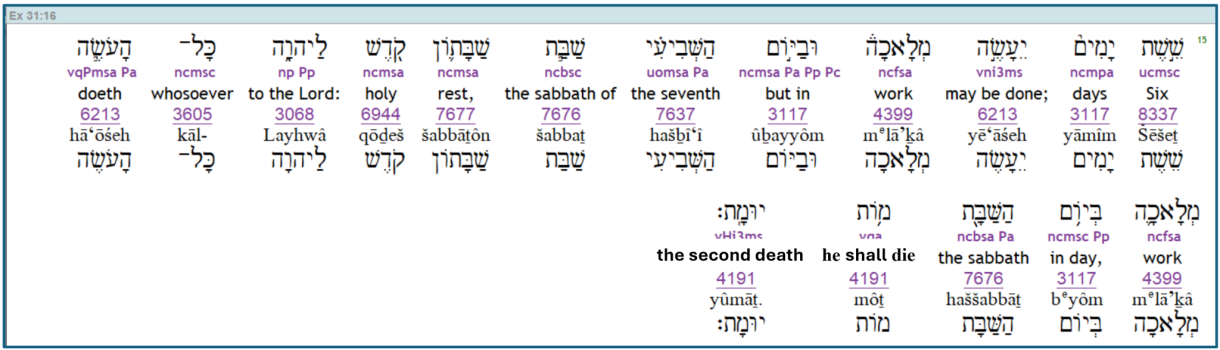
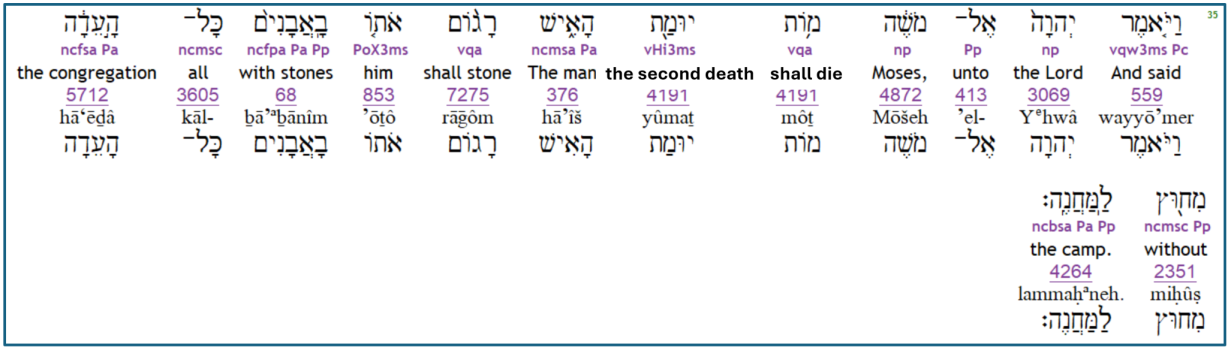
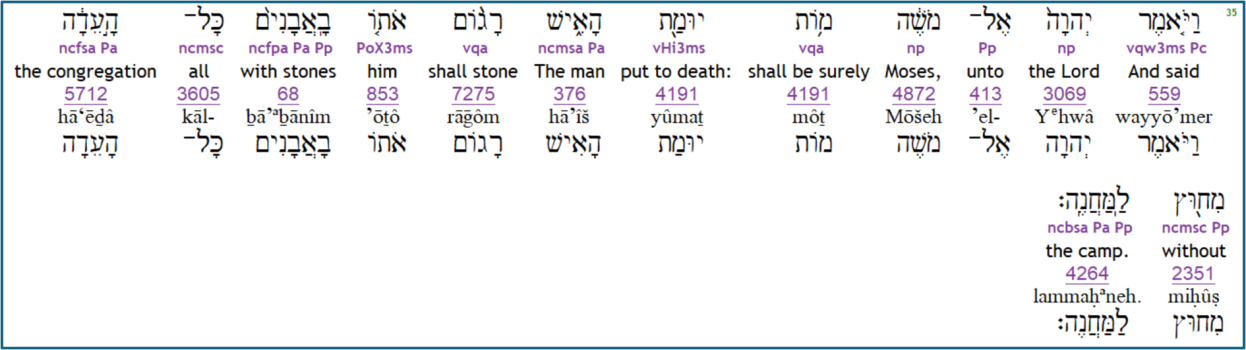
(I spent a number of Grok sessions working on this)
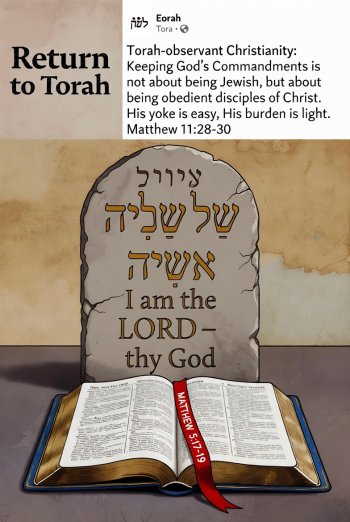
Torahism (also called Torah-observant Christianity or the Hebrew Roots Movement) is a modern theological perspective that teaches all followers of Jesus (often called Yeshua) — both Jewish and Gentile — are required to keep the full Law of Moses (the Torah) as given in the first five books of the Bible. This includes observing the seventh-day Sabbath (Saturday), kosher dietary laws, the biblical feasts (Moedim), circumcision, and other commandments. Proponents argue that the New Covenant does not abolish the Torah but calls believers to walk in it as the true expression of faith, and that mainstream Christianity has been corrupted by later Roman/pagan influences (e.g., Sunday worship, Christmas, Easter, and Trinitarian doctrine in some branches). The term “Torahism” was coined by critic R.L. Solberg to describe this view.
(Author note, usually thought of a part of the Judaizer movement coming from the New Testament. Solberg however avoids that term since it's proponents see it as a pejorative. There however is an important connotation difference in that its proponents do not see Torah observance for Salvation but for Sanctification, and they have formally conceded the circumcision goal of the Early New Testament days.)
Whether one finds Torahism biblically persuasive or not, its historical claims are widely viewed by mainstream biblical scholars and historians as belonging to the same family of 19th-century revisionist restorationism — sincere but methodologically spurious.
Torahism (also called Torah-observant Christianity or the Hebrew Roots Movement) is a modern theological perspective that teaches all followers of Jesus (often called Yeshua) — both Jewish and Gentile — are required to keep the full Law of Moses (the Torah) as given in the first five books of the Bible. This includes observing the seventh-day Sabbath (Saturday), kosher dietary laws, the biblical feasts (Moedim), circumcision, and other commandments. Proponents argue that the New Covenant does not abolish the Torah but calls believers to walk in it as the true expression of faith, and that mainstream Christianity has been corrupted by later Roman/pagan influences (e.g., Sunday worship, Christmas, Easter, and Trinitarian doctrine in some branches). The term “Torahism” was coined by critic R.L. Solberg to describe this view.
(Author note, usually thought of a part of the Judaizer movement coming from the New Testament. Solberg however avoids that term since it's proponents see it as a pejorative. There however is an important connotation difference in that its proponents do not see Torah observance for Salvation but for Sanctification, and they have formally conceded the circumcision goal of the Early New Testament days.)
Vocabulary Used in Torahism
Here’s key terminology common in the movement (drawn from its emphasis on Hebrew roots and returning to “the Way” of the early believers):- Torah (or “the Law”): Instruction/teaching, specifically the Mosaic Law (Genesis–Deuteronomy); seen as eternal and binding.
- Mitzvot: The commandments (613 in total, though emphasis is often on the “weightier” ones or all as feasible).
- Shabbat: The seventh-day Sabbath (Friday sunset to Saturday sunset), not Sunday.
- Moedim: Appointed times/feasts (e.g., Passover/Pesach, Unleavened Bread, Firstfruits, Shavuot/Pentecost, Trumpets, Atonement/Yom Kippur, Tabernacles/Sukkot).
- Kashrut (or clean/unclean): Dietary laws (no pork, shellfish, etc.; Leviticus 11).
- Yeshua/Yahshua: Preferred name for Jesus.
- Yahweh/YHWH (or sacred names): The divine name, often avoiding “Lord” or “God” as substitutes.
- One Law theology: The idea that the same Torah applies equally to Jew and Gentile (e.g., Exodus 12:49).
- Other terms: Tzitzit (fringes), Brit Chadasha (New Covenant), “the commandments of God and the testimony of Yeshua,” Pronomian (pro-Torah), or “walking in Torah.”
Biblical Prooftexts Commonly Cited by Proponents
Torahists appeal heavily to Scripture to argue that the Torah remains obligatory. Here are the most frequently used passages (with how they are typically applied):- Matthew 5:17-19 (Yeshua’s words): “Do not think that I have come to abolish the Law or the Prophets; I have not come to abolish them but to fulfill them. For truly I tell you, until heaven and earth disappear, not the smallest letter, not the least stroke of a pen, will by any means disappear from the Law until everything is accomplished. Therefore anyone who sets aside one of the least of these commands and teaches others accordingly will be called least in the kingdom of heaven, but whoever practices and teaches these commands will be called great in the kingdom of heaven.” Used to argue “fulfill” means to uphold/interpret properly, not end; the Law remains until the new heavens/earth.
- Revelation 12:17 and 14:12: “…the dragon went off to wage war against the rest of her offspring—those who keep God’s commands and hold fast their testimony about Jesus” (12:17); “This calls for patient endurance on the part of the people of God who keep his commands and remain faithful to Jesus” (14:12). Proof that end-times saints keep both the Torah (“commands of God”) and faith in Yeshua.
- Psalm 119 (multiple verses): The longest psalm extols the Torah as perfect, eternal, delightful, and a lamp to the feet (e.g., “Your word, Lord, is eternal; it stands firm in the heavens” v. 89; “I will never forget your precepts, for by them you have preserved my life” v. 93). The Law is forever good and binding.
- Exodus 12:49 (and parallels): “The same law applies both to the native-born and to the foreigner residing among you.” “One Law” for all believers.
- Acts 15:21 (in context of the Jerusalem Council): “For the law of Moses has been proclaimed in every city from the earliest times and is read in the synagogues on every Sabbath.” Gentiles will learn the full Torah gradually after initial entry requirements.
- Other frequent citations:
- Deuteronomy 4:2 / 12:32 (do not add to or subtract from the commandments).
- 1 John 3:4 (“Everyone who sins breaks the law; in fact, sin is lawlessness”).
- Romans 3:31 (“Do we, then, nullify the law by this faith? Not at all! Rather, we uphold the law”).
- Passages claiming the Torah’s statutes are “forever” or “perpetual” (e.g., Exodus 12:14 on Passover; Leviticus 23 on feasts).
- Examples of Yeshua and Paul keeping Torah (e.g., Acts 21:17-26).
Critique as Spurious History from the Milieu of Hislop’s Two Babylons and The Trail of Blood
Torahism can (and often is) critiqued precisely as emerging from the same 19th–20th-century American evangelical restorationist subculture that produced Alexander Hislop’s The Two Babylons (1853/1858) and J.M. Carroll’s The Trail of Blood (1931). Both books are classic examples of spurious, conspiratorial historiography — selective, anachronistic, and methodologically flawed attempts to “recover” a pure original faith supposedly lost to Roman/pagan corruption. Torahism fits squarely in that milieu.- Hislop’s Two Babylons: This wildly popular but thoroughly discredited work claims the Roman Catholic Church is essentially ancient Babylonian paganism (Nimrod + Semiramis mother-child cult) repackaged — with Christmas, Easter, the cross, clergy vestments, etc., all traced to “pagan” roots via etymological leaps, visual similarities, and invented history. Modern scholarship dismisses it for poor methodology, lack of primary sources, and confirmation bias. Torahism echoes this exact narrative but flips the target: mainstream Christianity (Sunday worship, holidays, Trinity) is the paganized corruption introduced by Constantine and Rome after the “pure” Torah-keeping apostolic church. The rhetorical move is identical — “return to the original by rejecting the Babylonian/Roman accretions” — but now aimed at Protestant and Catholic practice alike.
- Carroll’s The Trail of Blood: This Landmark Baptist pamphlet traces an unbroken “trail” of persecuted “true” (Baptist-like) churches from the apostles through marginal groups (Montanists, Novatians, Donatists, Waldensians, etc.), claiming the Catholic/Orthodox mainstream was the corrupt state church. Historians widely regard it as ahistorical: it retrojects modern Baptist distinctives onto ancient groups, ignores actual church history, and relies on conspiracy over evidence. Torahism does the same thing with a different “true remnant”: it elevates early Jewish-Christian sects (Ebionites, Nazarenes) or claims a hidden Torah-observant stream survived the “Great Apostasy” until modern “rediscovery” via the internet and Hebrew Roots teachers. Like Trail of Blood, it skips the overwhelming historical record (Acts 15, Galatians, early patristic writings showing Gentiles were not required to keep full Torah) in favor of a romanticized, invisible succession.
Whether one finds Torahism biblically persuasive or not, its historical claims are widely viewed by mainstream biblical scholars and historians as belonging to the same family of 19th-century revisionist restorationism — sincere but methodologically spurious.
Last edited: