Christians are in Rebellion against God for not following Torah

  • Welcome to Christian Forums, a Christian Forum that recognizes that all Christians are a work in progress.

    You will need to register to be able to join in fellowship with Christians all over the world.

    We hope to see you as a part of our community soon and God Bless!

amigo de christo

Well-Known Member
Sep 12, 2020
38,156
61,867
113
54
San angelo
Faith
Christian
Country
United States
Gender
Male
Abraham did not have the Torah. The Torah came through Moses, who was born 400 years later.
Abraham HAD FAITH . and that was why it was written
that abraham kept my law in genesis .
But you are correct it was not the LAW of MOSES , rather it was on his heart .
FOR YOU SEE , What is the ONE THING above all that GOD desires .
OBEDIANCE .
Abraham rejoiced to see MY DAY and HE saw it and was glad .
THE LAW given b y GOD to MOSES
was for b ut a temporary time TILL HE who both the law and prophets , and oh yes even moses spoke of
Would come and fullfill the righteousness of the law for US .
But let all know and all clearly realize
JESUS IS NOT the minstir of sin . SIN is REBELLION and not OBEDIANCE TO GOD .
IT BE REBELLION .
SO if anyones jesus is holdng up the love of that mighty dollar with a glory hallejah send me
a psalm ninety one seed sown , OOOPSY it aint JESUS , its money the loved and its why they gave
IF anyones jesus is holding up a rainbow and hollering GOD is love and saying judge not
and accepting such a thing , OH IT AINT JESUS AT ALL .
If anyones jesus is creaeting a real b ig , KORAN KISSING , BUDDA statue kissing
Blowing incense to other g ods , and hollering let us all b e one and we all serve the same GOD
and are coming to him in diverse ways , GET THE HECK OUT , ITS THE DEVIL and HIS many anti christs
WHO DO LIE to you and to us all .
 
  • Love
Reactions: Nancy

Soyeong

Active Member
Jan 29, 2024
741
160
43
44
Hudson
Faith
Christian
Country
United States
Abraham did not have the Torah. The Torah came through Moses, who was born 400 years later.
God’s way is the way to know Him and Jesus through embodying His character traits, which is the narrow way to eternal life (John 17:3). In Genesis 18:19, God knew Abraham that he would teach his children and those of his house to walk in His way by being doers of righteousness and justice that the Lord might bring to him all that He has promised. In Genesis 26:4-5, God will multiply Abraham’s children as the stars in the heavens, to his children He will give all of these lands, and through his children all of the nations of the earth shall be blessed because he heard God’s voice and guarded His charge, commandments, statutes, and laws. In Deuteronomy 30:16, if the children of Abraham will love God with all of their hearts by walking in His way in obedience to His commandments, statues, and laws, then they will live and multiply, and God will bless them in the land that they go to possess. So the promise was made to Abraham and brought about because he walked in God’s way, he taught his children and those of his household to do that, and because they did that in obedience to the Torah. In Exodus 33:13, Moses wanted God to be gracious to him by teaching him to walk in His way that he and Israel might know Him, and in 1 Kings 2:1-3, God taught how to walk in His way through the Torah, so both Abraham and Moses taught how to walk in God’s way.
 

Pavel Mosko

Active Member
Dec 19, 2021
327
140
43
59
Boyertown
Faith
Christian
Country
United States
Gender
Male
It is contradictory to have faith in God's Word made flesh instead of in embodying God's Word. The Gospel does not call for freedom from obeying God, but rather it calls for us to repent.

Yeah, I don't think you really get it. But here is another point that needs to be raised, that I also got from Fr. De Young.


Acts 15: 19 “It is my judgment, therefore, that we should not make it difficult for the Gentiles who are turning to God. 20 Instead we should write to them, telling them to abstain from food polluted by idols, from sexual immorality, from the meat of strangled animals and from blood. 21 For the law of Moses has been preached in every city from the earliest times and is read in the synagogues on every Sabbath.”


As De Young points out, those 4 areas were not chosen by random, they did not even come with some special new revelation, they actually came from the Torah itself! Those were 4 Commands specifically given to the Gentiles themselves living in the Land! And that fact, actually makes not only Acts 15 make sense, but the rest of the New Testament make sense itself. Meaning there is no Starter Kit! What you see is what you get!


Besides that point, I also got to point out why that would be because it would make Christian Evangelism basically be like Islamic Dawah lite. You convert everybody by making them ethnically Jewish. And that is not something God wanted, going back to the Early days of Tribes and nations God wanted a plurality of Different Nations in Him, Judaism itself is his original domain, the first called out One. Without that you have something like Islamic proselytizing only minus the Jihad and the persecution of the Dhimmi.

And of course, you see why the Judaizer struggle in the NT was so big, because the Judaizers were looking for Ethnic conversion, and that is even why Torahists are so strong now, wanting a lighter defacto version of that conceding that yes, we should not circumcise the gentiles (even though the Torah calls for it for the celebration of Passover) and we should not do those Pharisaical Kosher customs of refusing to eat with gentiles, but by and large we should do everything else that the Judaizers in the NT were doing we will just be much more nice about it. All I got to say is, this kind of softening pattern plays out in all the Great Heresies in Christianity. It technically is a Dialectal pattern. When there is strong opposition to an argument, the folks that love the argument keep it, but will concede the weakest hardest to defend areas, while keeping the rest. And yes, I have even seen this with my Messianic Rabbi friend, who no longer maintains any claims of antiquity whatsoever, but says with now with the Restoration of Israel and the 3rd Temple Restoration the rest of Christianity needs to come over to his way of doing things. Mind you, if Jesus comes back and the New Jerusalem descends, and Jesus himself wants this, it will happen in almost an instant. But in all honesty, I"m pretty sure Jesus doesn't want it!


Besides all this, I find it very telling concerning what happened to Holy Communion, coming from Passover as well as what actually happened to the Jewish Passover meal. Both sides sort of went back to Melchizedek Bread and Wine offering that typologically pre-figured it. Communion became the central worship practice separating Christianity from Judaism. While Judaism was forced to give up the Lamb roasting with the Jewish Roman Wars and being refugees. I will say, I do find it amusing the Extra Biblical stuff they added to their Haggadah after hearing people complain about "pagan" Easter Eggs, when they got a hard boiled egg as part of their meal and a lamb rib as just a remembrance token (considered bad manners if you try to eat it like I did accidentally not knowing the custom). I do like to tease people on this when they talk about "man made traditions", pagan corruption and the like. I mean Easter Eggs are not actually part of any worship service, while the Passover Haggadah is a formal Liturgy!
 
Last edited:

WalterandDebbie

Well-Known Member
Dec 14, 2009
6,171
3,922
113
79
USA
rememberconnect.com
Faith
Christian
Country
United States
Gender
Male
I might as well include this summary of a video from Professor Solberg of the Biblical Roots Channel. I was actually thinking of doing a Thread on it somewhere on the Board.


Expanded Summary Treatment: Rob Solberg – “Why We Cannot Follow the Gospel of Jesus and the Law of Moses at the Same Time”
Rob Solberg’s video offers a clear, scripture-driven case against combining full Torah observance with the Gospel of Jesus Christ. He argues that while the Torah is good, beautiful, and foundational to the Christian Bible, attempting to live under both the old covenant Law of Moses and the new covenant Gospel creates an untenable, double-minded position that dilutes devotion to Christ. The teaching is structured around four-and-a-half key reasons showing why the two systems are fundamentally incompatible. Solberg acknowledges the sincere motives many have when exploring Hebrew Roots or Torah-observant Christianity but warns of its dangers.

Introduction: Good Intentions and a Slippery Slope

Solberg begins by noting that many Christians drawn to Torahism start with positive desires: a deeper faith, greater understanding of the Bible’s Hebrew roots, and a sincere wish to please God. Practices like eating biblically clean foods, observing Torah feasts, avoiding Christmas and Easter, or keeping a seventh-day Sabbath often appeal as ways to connect more authentically with Scripture.
He references Michael Brown’s four stages many experience on this path: it first fascinates with fresh insights into ancient contexts, then stimulates further study. Soon, however, things become complicated—reconciling Torah commands (such as animal sacrifices) with New Testament teachings about Jesus’ finished work, deciding how to handle holidays, or navigating social situations like meals with non-observant friends. Eventually, the focus suffocates the believer: faith narrows to detailed rules about food and calendars rather than sharing the Gospel or living as Christ’s hands and feet in the world.

Solberg adds a fifth stage: legislate. At this point, some begin pressuring or judging other Christians to adopt the same observances. He is quick to clarify that personal choices like Sabbath-keeping or kosher eating are permitted in Christian freedom and not sinful. However, they are not required, and they contribute nothing to one’s righteousness before God, which rests entirely on faith in Jesus. The core question becomes: What is the proper role and purpose of the Mosaic Law for followers of Jesus today? The answer, Solberg contends, is that we cannot pursue both grace and the works of the Law without compromising the Gospel.

Reason 1: Atonement for Sin

Under the Torah, sin is addressed through repeated animal sacrifices, most prominently the annual Day of Atonement (Yom Kippur) rituals described in Leviticus 16. The high priest would make atonement for the people year after year. Some in the Hebrew Roots movement anticipate a future rebuilt temple where these sacrifices would resume.
The New Testament, however, presents Jesus’ sacrifice on the cross as “once for all.” Hebrews 10 explains that the blood of bulls and goats could never truly take away sins—it served only as a reminder. Jesus’ offering ended the need for any further sacrifice for sin. These are mutually exclusive approaches: If ongoing animal sacrifices are still required, then Christ’s death accomplished nothing substantial. Conversely, if Jesus truly provided the final atonement, the Torah’s sacrificial system has fulfilled its God-given, temporary purpose and is no longer in force. Scripture does not allow a hybrid approach.

Reason 2: The Priesthood

The Torah establishes a strict Levitical priesthood. Only descendants of Levi, and specifically Aaron’s line for high priests, could perform temple services and mediate between God and the people.
In the New Testament, this changes dramatically. All believers—regardless of tribal ancestry—are described as a holy priesthood called to offer spiritual sacrifices acceptable to God through Jesus Christ (1 Peter 2:5). Revelation refers to believers as priests of God multiple times. Even the apostle Paul, from the tribe of Benjamin rather than Levi, speaks of his ministry to the Gentiles in priestly terms (Romans 15:16), and Romans 12:1 calls on all believers to present their bodies as living sacrifices.
Most significantly, Jesus Himself serves as our eternal High Priest—not after the Levitical (Aaronic) order, but after the order of Melchizedek, a priesthood that existed long before the Law was given (Hebrews 6–7). Hebrews 7:12 explicitly states that a change in priesthood necessitates a change in the law. Jesus descended from Judah, a tribe with no priestly rights under Moses’ Law. These two priesthoods cannot coexist: If the Levitical system remains binding, the New Testament’s teachings about believer-priesthood and Christ’s high priesthood violate Torah. If the New Testament reality is true, the old priesthood has served its purpose and been superseded.

Reason 3: The Temple

Solberg highlights the extraordinary beauty, detail, symbolism, and richness of God’s instructions for the tabernacle and temple in the Torah. These structures stood at the heart of Israel’s worship, housing God’s presence and facilitating sacrifices.
The New Testament reorients this reality around Christ and His people. Jesus presents Himself as the true Temple, and believers collectively become the dwelling place of the Holy Spirit. Maintaining the full Torah temple system alongside the Gospel creates irreconcilable practical and theological conflicts, particularly around ongoing sacrifices and access to God’s presence. The old shadows find their fulfillment in the new reality.

Reason 4: The Veil

In the Torah, a physical veil separated the Holy of Holies, restricting access to God’s presence. Only the high priest could enter, and only once a year on the Day of Atonement.
At the moment of Jesus’ death, the temple veil tore from top to bottom (Matthew 27), dramatically symbolizing new, open access to God for all believers through Christ. No longer is there a barrier or exclusive mediator. Attempting to uphold the Torah’s system of restricted access while embracing the Gospel’s open invitation creates a contradictory view of how people relate to God.

Reason 4.5: Circumcision

As a concise additional illustration, Solberg points to circumcision—the covenant sign commanded in the Torah for males. The New Testament (Acts 15 and Galatians) makes clear that this is not required for Gentile believers. The emphasis shifts to circumcision of the heart. Paul strongly resisted imposing this as a continuing obligation, viewing it as a burdensome yoke. This example underscores the broader principle: many Torah ceremonies and signs served as pointers that are fulfilled in Christ rather than carried forward in their literal form.

Conclusion and Pastoral Close

Solberg wraps up by affirming the Torah’s enduring value as Scripture while insisting on proper orientation: it points forward to Christ and is not an additional set of requirements layered onto the Gospel. Christians enjoy freedom in Christ—certain practices may be chosen personally—but they are not obligatory and do not improve one’s standing with God. Righteousness comes through faith alone.
Trying to hold both systems leads to double-mindedness and shifts the center of faith away from Jesus and onto rule-keeping. The Gospel calls believers to freedom, mission, and relationship rather than suffocating legalism. Solberg’s tone throughout remains respectful toward the Torah and those sincerely seeking deeper roots, while firmly urging clarity on the new covenant’s implications.
7-22-26, Looking through our notes, I found so far this search on the above:

Deuteronomy 6:1–25 (KJV) — The Command to Teach the Law​

Deuteronomy 6 is often called the Shema passage and is central to the Jewish command to teach God’s law to children and to keep it in daily life. In the KJV, it begins with Moses reiterating the commandments, statutes, and judgments given by the LORD, and concludes with the “Shema” declaration of Israel’s faith in one God King James Bible Online+1.

To be continued​

Love, Walter
 
Last edited:

Pavel Mosko

Active Member
Dec 19, 2021
327
140
43
59
Boyertown
Faith
Christian
Country
United States
Gender
Male
In regard to the debate between the school of Hillel and the school of Shammai, the school of Hillel is what won out to become Orthodox Judaism and there is strong agreement between what Jesus taught and the school of Hillel. For reference, Hillel was the grandfather of Gamaliel, who argued in defense of early Christians (Acts 5:34)who was Paul's rabbi (Acts 22:3). In Deuteronomy 17:8-13, it gives authority to priests and judges to make rulings about how to correctly obey the Torah that the community was obligated to obey, and in Matthew 23:1-4, Jesus recognized that the scribes and the Pharisees had this authority by saying that they sit in the Seat of Moses and by instructing his followers to do and observe all that they said. It is possible for someone to practice Judaism while rejecting rabbinic traditions, such as with Karaite or Reform Judaism, but they split off from Orthodox Judaism much later. Some Torah observant Christians interpret the phrase "works of the law" as Paul speaking in opposition to the Oral Torah, so they align with Karaite Jews in rejecting rabbinic traditions, though they are just following a different set of traditions.

Well, this part at least is noteworthy. My Messianic rabbi friend actually has inverted the position of Hillel and Shammai, where he makes Shammai the good guy, he actually attributes everything to slander and rabbinic politics. Even though, it seems obvious to me that a wooden literal application of the Torah of Shammai is pretty much the world view of the Pharisees that opposed Jesus, and your Nicodemus Pharisees were much more likely to be Hillel orientated.
 

WalterandDebbie

Well-Known Member
Dec 14, 2009
6,171
3,922
113
79
USA
rememberconnect.com
Faith
Christian
Country
United States
Gender
Male
7-22-26, Looking through our notes, I found so far this search on the above: From:

Deuteronomy 6:1–25 (KJV) — The Command to Teach the Law​


Key Themes​

  1. Command to Teach the Law
    Verses 1–2 state that these commandments are to be taught so that Israel may keep them, fear the LORD, and live long. Verse 7 is the core instruction: “Thou shalt teach them diligently unto thy children… when thou sittest in thine house, and when thou walkest by the way, and when thou liest down, and when thou risest up” King James Bible Online. This is the “command to teach the law” — embedding God’s words into the home and daily routine.
  2. Love for God
    Verse 4–5 declares the LORD is one, and Israel must love Him with all heart, soul, and might. This love is the foundation for obedience King James Bible Online.
  3. Memorization and Signposts
    Verses 6–9 describe binding the law on the hand, setting it before the eyes, and writing it on houseposts and gates — physical reminders to keep God’s words central to life King James Bible Online.
  4. Warning Against Forgetfulness
    Verses 10–12 warn that in prosperity, Israel must not forget the LORD who delivered them from Egypt King James Bible Online.
  5. Exclusive Worship and Obedience
    Verses 13–17 forbid idolatry, tempting God, and turning from His commandments King James Bible Online.
  6. The Shema (Verses 19–25)
    The chapter closes with the declaration: “Hear, O Israel: The LORD our God is one LORD: thou shalt love the LORD thy God with all thine heart… and with all thy might” (verses 4–5 repeated in context) and the command to teach these words to children, binding them, and writing them on doors King James Bible Online+1.

Application in the “Command to Teach the Law”​

This passage is the biblical basis for the Jewish tradition of Sefer Torah teaching, the Shema prayer, and the practice of passing down God’s law to the next generation. It emphasizes:
  • Daily repetition in home life (verses 7)
  • Visible reminders (verses 8–9)
  • Heart-centered obedience (verses 4–5)
  • Guarding against forgetting (verses 10–12)
In summary, Deuteronomy 6:1–25 (KJV) is both a theological statement of Israel’s covenant faithfulness and a practical manual for teaching God’s law to children and living it out in every aspect of daily life King James Bible Online+1.

Love. Walter and Debbie
 

Pavel Mosko

Active Member
Dec 19, 2021
327
140
43
59
Boyertown
Faith
Christian
Country
United States
Gender
Male
As far as your handling of the New Testament @Soyeong most of it seems like rationalizations to me. Maybe tomorrow I will blow the dust off of some of the Apologetics I have covered with Seventh Day Adventism, but I see a running thread that it looks like on the surface that you are doing in Common. The New Testament by and large uses Nomos to describe the Torah. This is where we colloquially get the term "Law" from in English, as opposed to a more literal Hebrew "Instruction". Besides this is another word for command in the New Testament called Entole, for a personal directive. It is a common tactic to conflate those two words, and in the case of Seventh Day Adventism, the actually conflate all words for Command with the very Decalogue itself! Believing that the Decalogue is Eternal for various reasons of personal Revelation, Biblical Typologies and such.


Nomos​

nom'-os
Parts of SpeechNoun Masculine

Nomos Definition​

NAS Word Usage - Total: 196
  1. anything established, anything received by usage, a custom, a law, a command
    1. of any law whatsoever
      1. a law or rule producing a state approved of God 1a
    2. by the observance of which is approved of God
      1. a precept or injunction
      2. the rule of action prescribed by reason
    3. of the Mosaic law, and referring, acc. to the context. either to the volume of the law or to its contents
    4. the Christian religion: the law demanding faith, the moral instruction given by Christ, esp. the precept concerning love
    5. the name of the more important part (the Pentateuch), is put for the entire collection of the sacred books of the OT

Entole​

en-tol-ay'
Parts of SpeechNoun Feminine

Entole Definition​

NAS Word Usage - Total: 67
  1. an order, command, charge, precept, injunction
    1. that which is prescribed to one by reason of his office
  2. a commandment
    1. a prescribed rule in accordance with which a thing is done
      1. a precept relating to lineage, of the Mosaic precept concerning the priesthood
      2. ethically used of the commandments in the Mosaic law or Jewish tradition
 
Last edited:

Pavel Mosko

Active Member
Dec 19, 2021
327
140
43
59
Boyertown
Faith
Christian
Country
United States
Gender
Male
@Soyeong on your not being impressed by Justin Martyr, not surprised. He is a Hellenic Philosopher who converted to Christianity and only learned about Judaism on the back end of things and by that time Judaism was a religion in decline, he himself got the best part in Christ. (Well, that is my fuzzy memory, I may fact check myself on this).

But that being said, I don't think you get how weak your position is. I mean we are talking about the scriptures themselves but their were actual witnesses to these events people who saw, heard, and testify to what my position is. That is where we get the term "Martyr" from people that not only "Witnessed" but in doing that also were often tortured to death for their testimony and not compromising. And this itself is why the Bible calls the Church "the pillar and ground of Truth" without the legacy of such people we would not even have the very New Testament!


But on the Witness front, I do like to point out that I'm talking about is the most fundamental unique doctrine to Christianity, that and the actual Divinity of Jesus Christ. Christ promised to build his "Church and the Gates of Hell will not prevail against it.", but that promise gets undermined if you actually believe the Pagan Corruption won out over some kind of "Biblically Based Torah observance" and that is somehow if not needed for salvation, is necessary for Sanctification. I mean if that was true, shouldn't Apostasy in Torah observance been an actual "work of the flesh". I know people try to make "lawless" people mentioned into that, but that is not born out, but rather expressing people who are extreme libertines.


Anyway besides all this, the notion of pagan corruption, really goes against the very notion of believers as Light to the Nations, A City on a hill. I'm talking about the idea that there was this tiny remnant of true believing Torah practicing Christians other than the ones like James the Just and Apollos etc. I mean Remnants are supposed to remain right, by definition and nomenclature? So why is it harder to find these people than Sasquatch?
 

Anchorite

Well-Known Member
May 1, 2026
717
682
93
68
Peoria
Faith
Christian
Country
United States
Gender
Male
Galatians 2

16 Knowing that a man is not justified by the works of the law, but by the faith of Jesus Christ, even we have believed in Jesus Christ, that we might be justified by the faith of Christ, and not by the works of the law: for by the works of the law shall no flesh be justified.

17 But if, while we seek to be justified by Christ, we ourselves also are found sinners, is therefore Christ the minister of sin? God forbid.

18 For if I build again the things which I destroyed, I make myself a transgressor.

19 For I through the law am dead to the law, that I might live unto God.

20 I am crucified with Christ: nevertheless I live; yet not I, but Christ liveth in me: and the life which I now live in the flesh I live by the faith of the Son of God, who loved me, and gave himself for me.

21 I do not frustrate the grace of God: for if righteousness come by the law, then Christ is dead in vain.
 
  • Love
Reactions: amigo de christo

amigo de christo

Well-Known Member
Sep 12, 2020
38,156
61,867
113
54
San angelo
Faith
Christian
Country
United States
Gender
Male
Galatians 2

16 Knowing that a man is not justified by the works of the law, but by the faith of Jesus Christ, even we have believed in Jesus Christ, that we might be justified by the faith of Christ, and not by the works of the law: for by the works of the law shall no flesh be justified.

17 But if, while we seek to be justified by Christ, we ourselves also are found sinners, is therefore Christ the minister of sin? God forbid.

18 For if I build again the things which I destroyed, I make myself a transgressor.

19 For I through the law am dead to the law, that I might live unto God.

20 I am crucified with Christ: nevertheless I live; yet not I, but Christ liveth in me: and the life which I now live in the flesh I live by the faith of the Son of God, who loved me, and gave himself for me.

21 I do not frustrate the grace of God: for if righteousness come by the law, then Christ is dead in vain.
Look at all that lovely lovely Truth my friend .
THEN KNOW and let us understand that there is INDEED a harlot at work my friend .
And she knows exactly how to seduce all by means of her , brace yourself my friend ,
HER ALL INCLIUSIVE ECUMEINCAL INTERFAITH of love and of peace . SHE a liar and a v ery clever one indeed
as is her father the d evil .
FOR how she has sold such a song
that all religoins be serving the same GOD in d ifferent ways . And how she has sold a song of love and of unity
and of finding common ground WITH such . A t hing GOD WARNED US NOT TO DO i might add .
DO NOT be unequally yoked togther with unbelievers .
And paul would later say , FOR what fellowship , HAS LIGHT with darkness . Oh we been lied too my friend
and lied to we have surely been by a harlot cloaked in wool and all not in the lambs book of life
she will surely FOOL . This sheep dont heed a ho . FOR JESUS has the sheep
and they have THE LOVE FOR TRUTH shed on their hearts . NOT love for a lie . We bess watch out
my freind . That harlot has FOR SURE and for certain INFILTRATED . OH and she has many many many co workers indeed .
 

Pavel Mosko

Active Member
Dec 19, 2021
327
140
43
59
Boyertown
Faith
Christian
Country
United States
Gender
Male
@Soyeong I have definitely seen areas where my word study can be improved. I am going to make it more detailed and will repost later.
 
Last edited:

Dan Clarkston

Well-Known Member
Dec 16, 2023
3,593
1,312
113
56
Denver Colorado
Faith
Christian
Country
United States
unlike my favorite projects where Grok is my editor

Those relying on AI instead of the Holy Spirit are being deceived and are likely already deceived


Jesus was the Messiah of prophecy in the Tanakh. He arrived in 1st century AD. And,he was a Jew.
He said in one of his sermons, I am sent only to the lost sheep of the house of Israel.

Yes, and He came to take away the old covenant and establish the New Covenant.

Now, there is a new house, the Body of Jesus Christ! Under the New Covenant that the Lord said would come forth, we see Jesus Christ as the High Priest. The old covenant with it’s laws and regulations have been taken away because thru Jesus Christ a new and better covenant has come in to place.

Hebrews 10:9
Then said he, Lo, I come to do thy will, O God. He taketh away the first, that he may establish the second.
(God said He would make a New Covenant - see Jeremiah 31:31-34)

Hebrews 8:6 But now hath Jesus obtained a more excellent ministry, by how much also Jesus is the mediator of a better covenant, which was established upon better promises.

And with the changing of the priesthood, God’s Word tells us there is also a change of the law.

Hebrews 7:12
For the priesthood being changed, there is made of necessity a change also of the law.

Some adherents to keeping Saturday sabbath frequently ask “where did the Lord take Saturday sabbatrh way?”
The answer can be found in Hebrews 10:9 and in Hebrews 7:12.

God’s people are no longer living under the Law of Moses. Now God’s people are living under the Law of Christ (also called the law of liberty, law of the spirit of life in Christ Jesus – see Galatians 6:2, 1 Corinthians 9:21, James 2:12, James 1:25, Romans 8:2)

The so called hebrew root movement is in trouble but their "intellectual" followers doing even know it


Messianic Jews believe in Yeshua,Jesus. And follow Torah.

Following the old covenant will land them in hell.

The Galatians turned away from Jesus going back to the old covenant and they fall from grace when they did so.


I get your not liking some of the grammatic glitches that I had trouble having the AI fix but the rest of your comment is not well founded. There is a huge difference in Grok or AI using trusted or verified sources than what happened in earlier days with Chat GPT using fictitious textbook examples.

Those relying on AI instead of the Holy Spirit are being deceived and are likely already deceived


I am just going to answer, as I felt lead:

The spirit of responding to Torah, is responding to God, as He has responded to you.

As Jesus said 'is like loving your neighbour' (Gospels)

Too bad that didn't come from the New Covenant so consequently this is how we know this did not come from the Holy Spirit of Jesus Christ.
 

Pavel Mosko

Active Member
Dec 19, 2021
327
140
43
59
Boyertown
Faith
Christian
Country
United States
Gender
Male
Those relying on AI instead of the Holy Spirit are being deceived and are likely already deceived
lol I can say the same for folks relying on Slogan's devoid of the facts! :) As bas a rap as AI gets often deservingly, you can use trusted sources where it does not sample nonsense, public opinion but uses actual Biblical Lexicons, Theological libraries etc. I will also add, my past experience in the Charismatic movement has shown me how people too loosely proclaim all manner of nonsense "by the Spirit", truth rarely comes from goose bumps, and people often prophesy their own opinions.
 

Pavel Mosko

Active Member
Dec 19, 2021
327
140
43
59
Boyertown
Faith
Christian
Country
United States
Gender
Male
Revised Version

Nomos (νόμος) and Entolē (ἐντολή): Lexical Norms, Overlap, and the Limits of Rigid Bifurcation


Nomos (νόμος) and entolē (ἐντολή) are frequently treated as near-synonyms or selectively distinguished in ways that serve prior theological agendas. This pattern appears in classic SDA argumentation and reappears (often with less self-awareness) among Torah-observant / Hebrew Roots advocates. While a helpful rule of thumb exists—nomos tending to denote the Law as a whole system or covenant, and entolē pointing to specific personal commands or precepts—the Greek New Testament data itself does not support a rigid, systematic bifurcation. Such a split is often used to keep “the commandments” (especially the Decalogue or a preferred Torah subset) as eternally binding in the same covenantal form while treating the rest as mere “shadows.”

Frequency and Distribution Data Approximate counts from standard lexical resources and scholars such as Larry Hurtado:

  • Nomos: Roughly 191–197 occurrences in the NT (including phrases like “the Law and the Prophets”).
    • Pauline corpus: ~118 times in undisputed letters, heavily concentrated in Romans (~74) and Galatians (~32).
    • Other notable: Acts ~16–19, John ~13–15, Hebrews ~12–13, Luke ~9, Matthew ~8.
    • Typical range: The Mosaic Torah as a whole system/covenant, Scripture more broadly, a governing principle/power, or (less often) civil/customary law.
  • Entolē: Roughly 67–74 occurrences.
    • Highest density in Johannine literature (1 John alone ~10 times; 2 John also elevated).
    • Used for specific precepts, Jesus’ own commandments (especially the “new commandment” of love), the Father’s commands to the Son, or even human directives.
    • Romans has a handful; Galatians has essentially none.
They overlap constantly. Context, not a fixed technical glossary, determines sense. A good lexical norm (Academy Apologia–style) treats nomos as oriented toward the Law as a body and entolē toward concrete, personal commands—but this is not absolute. Matthew 5:17–19 shows Jesus moving from nomos (the Law/Prophets as a body) to entolai (individual commandments within it). John often uses nomos for the Mosaic Law given through Moses and entolē for Jesus’ teachings or the love command. Elsewhere the terms interchange with considerable freedom.

In Romans 7 Paul deliberately pairs them: he would not have known sin except through the nomos; the specific entolē (“You shall not covet”) gave sin its opportunity; yet “the law is holy, and the commandment is holy and righteous and good” (Rom 7:12). The entolē is not a surgically removable eternal moral core separate from the nomos; it is embedded within it. Sin exploits both. The problem is not imperfection in the commandment but its powerlessness to deliver the flesh from sin and death.

SDA Pattern and the Torahist Parallel SDA literature commonly elevates “the commandments of God” (entolai tou theou in Rev 12:17; 14:12) as the Decalogue (eternal moral law, Sabbath included) while treating other Mosaic material as ceremonial or “law of Moses.” Critics have long noted that this requires a distinction the Greek does not consistently deliver—the Decalogue itself is embedded in the Sinai covenant documents. Many Torahists make a parallel selective move: they acknowledge the language of shadow, type, and “better covenant” in Hebrews and Colossians, yet resist any real relinquishing of Torah observance because “the law is perfect.”

The psychological and rhetorical pattern is similar. Once “Torah-keeping” (or “commandment-keeping”) becomes a core identity marker and a sign of higher spirituality, texts relativizing the old covenant’s administration are subordinated or spiritualized so the concrete practices remain obligatory. Talking about shadows does not automatically produce willingness to let the shadow recede when the substance arrives.

“The Law Is Perfect” and the Refusal to Relinquish Psalm 19:7 (Hebrew torat YHWH temimah — the Torah of the Lord is perfect/complete) and related statements (Rom 7:12; Jas 1:25 “perfect law of liberty”) are true. The law perfectly reveals God’s holiness, exposes sin, and functions as a guardian/pedagogue (Gal 3:24–25). “Perfect” relative to its God-given purpose does not mean “the final and permanent form of God’s dealing with his people” or “the unchanging rule of life for new-covenant believers in its letter.”

Hebrews is explicit: the law has a shadow of the good things to come, not the true form (Heb 10:1); the first covenant is becoming obsolete and growing old, ready to vanish (Heb 8:13, citing Jer 31); a change in the priesthood necessarily brings a change in the nomos as well (Heb 7:12). 2 Corinthians 3 is especially pointed for those who absolutize the Decalogue: the ministry of death, carved in letters on stone (the very tablets), came with glory that is fading; the ministry of the Spirit has surpassing and permanent glory. Paul does not treat the stone tablets as an eternal exception.

Hebrew Background, Septuagint Rendering, and Progressive Revelation Nothing in the Hebrew Bible or its Septuagint (LXX) translation requires that every divine command or covenantal arrangement be permanent in form. Key resources:

  • Hebrew conceptual range: Torah fundamentally means instruction/teaching rather than a static legal code. Mitzvah refers to a specific commandment or obligation. Progressive revelation (Abrahamic → Mosaic → New) is already visible in the Hebrew Bible’s own narrative.
  • LXX Translation: The Septuagint consistently renders torah with nomos and mitzvah (or similar) with entolē (or related terms). The Greek vocabulary therefore does not encode an eternal-vs-temporary distinction that later interpreters can simply read off the words. The translation choices preserve the broader instructional sense of torah while allowing entolē to highlight concrete directives.
Additional conceptual anchors:

  • Covenant language: Jeremiah 31 / Hebrews 8 presents a new covenant unlike the one made with the fathers. The first had real divine origin and glory; the second is “better,” established on better promises, rendering the first obsolete in its administrative form. God is free to give provisional arrangements.
  • Priesthood and law: Hebrews 7:12 states the necessity of a change of nomos when the priesthood changes from Levi to Melchizedek. The Levitical system was commanded by God; it is not therefore eternal.
  • Typology and shadow: Sacrifices, food laws, festivals, and the earthly sanctuary were divinely mandated and useful; they pointed forward and are fulfilled in Christ (Col 2:16–17; Heb 8–10). Fulfillment ends the provisional form without nullifying its purpose.
  • Pedagogue / guardian: Galatians 3 treats the law as a temporary supervisor until the coming of faith/Christ.
Other Notions

  • Relative vs. absolute perfection: The law is perfect for convicting and guiding under the old covenant; the Spirit-written law on the heart (Jer 31; 2 Cor 3) and the law of Christ (Gal 6:2) represent its eschatological fulfillment.
  • Identity and reaction formation: Clinging to Torah-observance can function as a boundary marker against perceived antinomianism. The fear that “giving it up” equals lawlessness is real, even as the NT redefines obedience around Christ, the Spirit, and the love command that fulfills the law (Rom 13:8–10; Gal 5:14).
  • Jesus as telos of the law (Rom 10:4): Goal/end/fulfillment language honors the law as divine while setting aside its temporary administration.
  • James’s “perfect law of liberty”: In context, this is more naturally read as the gospel or the law reinterpreted and fulfilled in Christ than as a simple reaffirmation of the Sinai code in its original form.
Net Result One can fully affirm the divine inspiration, goodness, and pedagogical value of the Torah without treating its covenantal administration as the permanent rule of life for those who are in Christ. Even when an advocate holds that “the law is eternal for all believers” in a more consistent way, the Greek data, the Hebrew/LXX background, the covenant theology of Hebrews and Paul, and the progressive character of revelation push against making old-covenant letter observance the ongoing boundary marker for new-covenant faithfulness. The selective hermeneutic common to both SDA and Hebrew Roots approaches is ultimately unsustainable on the textual evidence.


Pavel Note - there are similar kind of problems from Lexical uses for "Eternal" in Biblical Hebrew, where they likewise don't actually mean perpetual can simply mean "for a long time with no definite end in sight".
 
Last edited:

Anchorite

Well-Known Member
May 1, 2026
717
682
93
68
Peoria
Faith
Christian
Country
United States
Gender
Male
Galatians 5

13 For, brethren, ye have been called unto liberty; only use not liberty for an occasion to the flesh, but by love serve one another.

14 For all the law is fulfilled in one word, even in this; Thou shalt love thy neighbour as thyself.

15 But if ye bite and devour one another, take heed that ye be not consumed one of another.

16 This I say then, Walk in the Spirit, and ye shall not fulfil the lust of the flesh.

17 For the flesh lusteth against the Spirit, and the Spirit against the flesh: and these are contrary the one to the other: so that ye cannot do the things that ye would.

18 But if ye be led of the Spirit, ye are not under the law.
 
  • Love
Reactions: JimKnox

Dan Clarkston

Well-Known Member
Dec 16, 2023
3,593
1,312
113
56
Denver Colorado
Faith
Christian
Country
United States
lol I can say the same for folks relying on Slogan's devoid of the facts!

Well you shouldn't be using that either.


As bas a rap as AI gets often deservingly, you can use trusted sources where it does not sample nonsense, public opinion but uses actual Biblical Lexicons, Theological libraries etc. I will also add, my past experience in the Charismatic movement has shown me how people too loosely proclaim all manner of nonsense "by the Spirit", truth rarely comes from goose bumps, and people often prophesy their own opinions.

Real Christians are led by the Holy Spirit Whom Jesus sent to lead His true followers in to all Truth and Jesus said God's Word is Truth.

The devil sent AI to lead all mankind in to darkness. Enjoy!
 
  • Love
Reactions: JimKnox

JimKnox

Member
Jun 27, 2026
164
79
28
Western Idaho
Faith
Christian
Country
United States
Gender
Male
I have a feeling this discussion is going to escalate quickly.

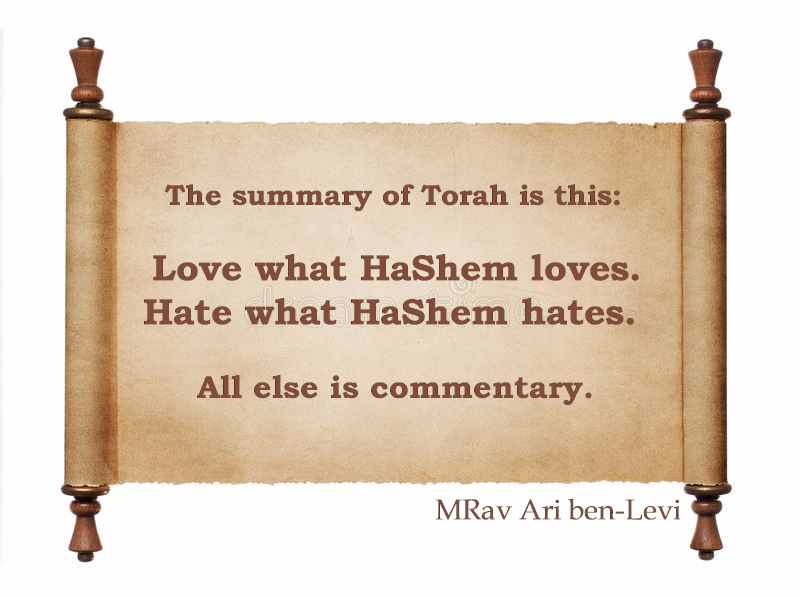
The%20summary%20of%20Torah.png


I think there is something to ponder here.

Jesus was the Messiah of prophecy in the Tanakh. He arrived in 1st century AD. And,he was a Jew.
He said in one of his sermons, I am sent only to the lost sheep of the house of Israel.

Who is of that house?
The Covenant with Abraham,the Abrahamic Covenant, is the foundation of the Old Testament. And the precursor for the New.

Abraham,a Gentile, was the father of the Jewish nation through his seed,his offspring, his sons,Isaac and Jacob.

But for Abraham the father,this would not be so. But it was through God's will.

Messianic Jews believe in Yeshua,Jesus. And follow Torah.

When we are all who hold faith in Christ as his sealed people of The Way of Righteousness, can we truly see as wrong,deluded, heretic, or any insult one might levy so to dismiss the faithfuls Torah observance, as wrong? And condemned by God for doing so?

What would the sacred writings read by those who would as Jews follow the Messiah once arrived be called?
In the New Testament they were people of The Way. And later were called Christians by those in Antioch.

But,what were they first to be known as?
Jews! Because he was the Messiah of their faith.

If you are Messianic,God Bless you. If you identify as Messianic Jew, God Bless you.
If you identify as Christian or a follower of The Way,God Bless you.


Jesus,Yeshua,suffered unimaginable excruciating pain before he died on the cross so to take away our sins covered with his holy precious shed blood.

Is he going to condemn us to damnation because of semantics? Or,because we honored him by participating in the practices first taught before our New Testament, in his Torah?


I'm going to step away from this conversation after inputting these thoughts.

I don't want to see angry debate develop from something added to the discussion in hopes it would stop making us consider the OP proposal is anti-Jesus.
FYI: Abraham was a Hebrew.
Get that wrong and one's entire Theology crumbles.
 

JimKnox

Member
Jun 27, 2026
164
79
28
Western Idaho
Faith
Christian
Country
United States
Gender
Male
Here is where the Born again are to : Exist.
-
-
New International Version
For this reason Christ is the mediator of a new covenant, that those who are called may receive the promised eternal inheritance—now that he has died as a ransom to set them free from the sins committed under the first covenant.

New Living Translation
That is why he is the one who mediates a new covenant between God and people, so that all who are called can receive the eternal inheritance God has promised them. For Christ died to set them free from the penalty of the sins they had committed under that first covenant.

English Standard Version
Therefore he is the mediator of a new covenant, so that those who are called may receive the promised eternal inheritance, since a death has occurred that redeems them from the transgressions committed under the first covenant.

Berean Standard Bible
Therefore Christ is the mediator of a new covenant, so that those who are called may receive the promised eternal inheritance, now that He has died to redeem them from the transgressions committed under the first covenant.

Berean Literal Bible
And because of this, He is the mediator of a new covenant, so that, death having taken place for redemption of the transgressions upon the first covenant, those having been called might receive the promise of the eternal inheritance.

King James Bible
And for this cause he is the mediator of the new testament, that by means of death, for the redemption of the transgressions that were under the first testament, they which are called might receive the promise of eternal inheritance.

New King James Version
And for this reason He is the Mediator of the new covenant, by means of death, for the redemption of the transgressions under the first covenant, that those who are called may receive the promise of the eternal inheritance.

New American Standard Bible
For this reason He is the mediator of a new covenant, so that, since a death has taken place for the redemption of the violations that were committed under the first covenant, those who have been called may receive the promise of the eternal inheritance.

NASB 1995
For this reason He is the mediator of a new covenant, so that, since a death has taken place for the redemption of the transgressions that were committed under the first covenant, those who have been called may receive the promise of the eternal inheritance.

NASB 1977
And for this reason He is the mediator of a new covenant, in order that since a death has taken place for the redemption of the transgressions that were committed under the first covenant, those who have been called may receive the promise of the eternal inheritance.

Legacy Standard Bible
And for this reason He is the mediator of a new covenant, so that, since a death has taken place for the redemption of the trespasses that were committed under the first covenant, those who have been called may receive the promise of the eternal inheritance.

Amplified Bible
For this reason He is the Mediator and Negotiator of a new covenant [that is, an entirely new agreement uniting God and man], so that those who have been called [by God] may receive [the fulfillment of] the promised eternal inheritance, since a death has taken place [as the payment] which redeems them from the sins committed under the obsolete first covenant.

Berean Annotated Bible
Therefore Christ is the mediator (reconciler) of a new covenant {diathēkēs}, so that those who are called may receive the promised eternal inheritance, now that He has died to redeem them from the transgressions committed under the first covenant {diathēkē}.

Christian Standard Bible
Therefore, he is the mediator of a new covenant, so that those who are called might receive the promise of the eternal inheritance, because a death has taken place for redemption from the transgressions committed under the first covenant.

Holman Christian Standard Bible
Therefore, He is the mediator of a new covenant, so that those who are called might receive the promise of the eternal inheritance, because a death has taken place for redemption from the transgressions committed under the first covenant.

American Standard Version
And for this cause he is the mediator of a new covenant, that a death having taken place for the redemption of the transgressions that were under the first covenant, they that have been called may receive the promise of the eternal inheritance.

Contemporary English Version
Christ died to rescue those who had sinned and broken the old agreement. Now he brings his chosen ones a new agreement with its guarantee of God's eternal blessings!

17 various translations = confusion = corruption of Doctrine.
 

JimKnox

Member
Jun 27, 2026
164
79
28
Western Idaho
Faith
Christian
Country
United States
Gender
Male
In Matthew 4:15-23, Christ began his ministry with the Gospel message to repent for the Kingdom of God is at hand, which was a light to the Gentiles, and the Torah was how his audience knew what sin is (Romans 3:20), so repenting from our disobedience to it is a central part of the Gospel. Christ also set a sinless example for us to follow of how to walk in obedience to the Torah and as his followers we are told to follow his example (1 Peter 2:21-22) and that those who are in Christ are obligated to walk in the same way that he walked (1 John 2:6). So Christ spent his ministry teaching his followers to obey the Torah by word and by example and the topic that they were debating in Acts 15 was not whether followers of Christ are required to follow Christ but whether salvation is by grace (Acts 15:11) or by circumcision (Acts 15:1).

In Acts 15:6-7, Peter argued that Gentiles had heard and believed the Gospel, which calls for obedience to the Torah (Matthew 4:15-23), so he was taking the side of the Pharisees from among the believers (Acts 15:1) against the men from Judea (Acts 15:1). In Ezekiel 36:26-27, God will take away our hearts of stone, give us hearts of flesh, and send His Spirit to lead us in obedience to the Torah, which is in accordance with Peter arguing in Acts 15:8-9 that Gentiles had received the Spirit and had their hearts cleansed, so again he was siding with the Pharisees. In Psalm 119:29-30, he wanted to put false ways far from him, for God to be gracious to him by teaching him to obey the Torah, and he chose the way of faith by setting it before him, so this has always been the one and only way of salvation by grace through faith, which is in accordance with Peter arguing in Acts 15:10-11 that Gentiles are saved by grace just as we are, so everything that Peter argued came down on the side of the Pharisees against the men from Judea.


The reason why God commanded circumcision was not in order to become saved as the result, so the Jerusalem Council upheld the Torah by correctly ruling against requiring circumcision for an incorrect reason. In Exodus 12:48, Gentiles who want to eat of the Passover lamb are required to become circumcised, so the Jerusalem Council should not be interpreted as ruling against Gentiles correctly obeying what God has commanded as if they had the authority to countermand God.

In Romans 10:5-8, Paul referred to Deuteronomy 30 as the word of faith that we proclaim in regard to the righteousness that is by faith proclaiming that the Torah is not too difficult for us to obey and that obedience to it brings life and a blessing while disobedience brings death and a curse, so choose life! So if the heavy yoke that no one could bear had referred to the Torah instead of salvation by circumcision, then the Jerusalem Council would have been denying the word of faith that we proclaim, they would have been in disagreement with God, and they would have been ruling that Gentiles should choose death and a curse instead of life and a blessing. In 1 John 5:3, to love God is to obey His commandments, which are not burdensome, so if the yoke had been referring to God's commandments, then they would have been ruling that Gentiles should not love God and been denying that His commandments are not burdensome. The Psalms also express an extremely positive view of obeying the Torah, such as with David repeatedly saying that he loved it and delighted in obeying it, so if the yoke had been referring to the Torah, then they would have been expressing a view that is incompatible with the view that the Psalms are Scripture.


While it is possible for someone to interpret Acts 15:19-21 as ruling that Gentiles shouldn't follow over 99% of what Christ taught, I don't think that it makes much sense to do that. Either Acts 15:19-21 contains an exhaustive list for mature believers or it does not, so it would be contradictory to treat it as being an exhaustive list in order to limit which ways followers of Christ should follow Christ while also treating it as being a non-exhaustive list by taking the position that there are obviously other laws that Gentiles should follow. It was not given as an exhaustive list for mature believers, but rather it was given as a list intended to avoid making things too difficult for those coming to faith, which they excused in Acts 15:21 by saying that Gentiles would continue to learn about how to obey Moses by hearing him taught every Sabbath in the synagogues.


I don't see any reason for Acts 15:21 to make that point if they did not expect that Gentiles would continue to learn about how to obey Moses by hearing him taught every Sabbath in the synagogues.


Paul's problem in Galatians was not with those who were teaching Gentiles how to follow what Christ taught but with those who were wanting to require Gentiles to obey "works of the law" in order to become justified. In Romans 3:27, Paul contrasted a law of works with a law of faith, in Galatians 3:10-12, he contrasted the Book fo the Law with "works of the law", and in Romans 3:31, he said that our faith upholds the Law of God in contrast with saying that "works of the law" are not of faith, so that phrase does not refer to the Law of God, which is why it is not of faith.


In Romana 14:1, the topic of the chapter is in regard to how to handle disputable matters of opinion, not in regard to whether followers of God should follow His commands, so nothing in the chapter should be interpreted in a way that turns it against following what God has commanded. For example, in Romans 14:2-3, they were judging and resenting each other based on whether or not someone chose to eat only vegetables even though God gave no command to do that. In Romans 14:4-6, Paul spoke about those who eat or refrain from eating unto the Lord, so he was speaking about those who esteems certain days for fasting as a disputable matter of opinion. For example, it had become a common practice to fast twice a week even though God did not command to do that and people were judging and resenting each other about whether or not they chose to fast or about which two days of the week they chose to fast (Luke 18:12). Paul was not saying that we are free to commit murder, adultery, theft, kidnapping, break the Sabbath, or eat unclean animals just as long as we are convinced in our own minds that it is ok to disobey what God has commanded, but rather that was only said in regard to disputable matters of opinion in which God has given no command.


In Colossians 2:16-23, the Colossians were celebrating God's feasts, they were being judged for doing that by pagans who were promoting human traditions and precepts, self-made religion, asceticism, and severity to the body, and Paul was encouraging them not to let anyone judge them for obeying what God has commanded. Those promoting asceticism and severity to the body would be judging people for celebrating feasts, not for refraining from doing that. God's feasts are foreshadows of what I stop come and we should live in a way that testifies about the truth of what is to come by celebrating them rather than a way that bears false witness against what is to come, so Paul was emphasizing the importance of not allowing anyone to prevent us from obeying God, which makes it especially ironic that these verses are commonly used by people to try to justify their refusal to obey what God has commanded.


The NT calls for us to repent from our sins and says that it is by the Torah that we have knowledge of what sin is (Romans 3:20).


Those who are in Christ are obligated to walk in the same way that he walked (1 John 2:6), so it is contradictory for someone to want to be in Christ while also not wanting to follow his example of walking in obedience to the Torah.
Galatians 3:1....is against the Judaizers who taught the same doctrine as this poster is attempting to preach.
Oh foolish Galatians, who hath BEWITCHED YOU (emphasis mine).
This passage teaches that returning to Judaism is witchcraft.
If it were me, I would warn others NOT to follow the OP.
 
  • Like
Reactions: Anchorite

Dan Clarkston

Well-Known Member
Dec 16, 2023
3,593
1,312
113
56
Denver Colorado
Faith
Christian
Country
United States
17 various translations = confusion = corruption of Doctrine.

And yer somehow you failed to provide the correct translation of the verse posted.

Weird that someone would point out a problem and then not give the solution.

Was that because you don't know, or were you late to supper and had to run?