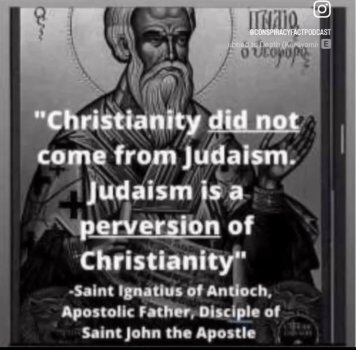
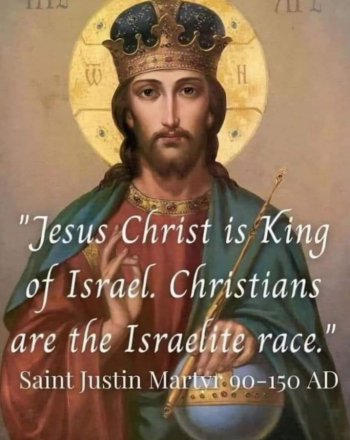
Which part of this is not sinking in?
Matthew 21:43 — the kingdom is taken and given. Not paused, not put on prophetic layaway, not reserved by bloodline.
Please explain the logic of Gentiles who do not obey the Torah thinking that the kingdom has been taken from Jews and given to them because Jews did not obey the Torah.
Romans 9:6 — descent from Israel does not itself equal Israel. Paul destroys the idea that genealogy alone settles covenant identity.
Please explain the logic of Gentiles who do obey the Torah thinking that they have replaced Jews as children of the promise because they did not obey the Torah.
Romans 2:28–29 — the decisive mark is inward, not merely outward. Circumcision of the heart outranks fleshly pedigree.
In Romans 2:17-29, Paul addressed those who were calling themselves Jews, in other words, he was addressing Gentiles who have converted to being Jews and were now calling themselves Jews, but who were not obeying the Torah and he was making the point that being a Jew is not just about being physically circumcised, but also about having a circumcised heart, which is evident by their obedience to the Torah. In Romans 2:25, Paul said that physical circumcision has value if we obey the Torah, so someone being physically circumcised is a sign of then having a circumcised heart and that only has value insofar as what it is a sign of is true.
Someone having a circumcised heart only refers to them being a doer of the Torah (Deuteronomy 10:12-13) while someone having an uncircumcised heart only refers to them not being a doer of the Torah (Jeremiah 9:25). In Romans 2:25-29, the way to recognizer that a Gentile has a circumcised heart is by observing their obedience to the Torah and circumcision of the heart is a matter of the Spirit, which is in contrast with Acts 7:51-53, where those who have uncircumcised hearts resist the Spirit and do not obey the Torah.
Galatians 3:7 — those of faith are Abraham’s children. Paul ties Abrahamic sonship to faith, not ancestry.
In Matthew 4:15-23, Jesus began his ministry with the Gospel message to repent for the Kingdom of God is at hand, which was a light to the Gentiles, and the Torah was how his audience knew what sin is (Romans 3:20), so repenting from our disobedience to it is a central part of the Gospel of the Kingdom/Grace, which is in accordance with Jesus being sent as the promised seed to bless us by turning us from our wickedness (Acts 3:25-26), which is the Gospel that was made known in advance to Abraham in accordance with the promise (Galatians 3:8), which he spread to those in Haran in accordance with promise (Genesis 12:1-5). The promise was made to Abraham and brought about because he walked in God's way, he taught his children and those of his household to do that in accordance with spreading the Gospel of the Kingdom/Grace, and because they did that in obedience to the Torah (Genesis 18:19, Genesis 26:4-5, Deuteronomy 30:16).
Galatians 3:28–29 — if you belong to Christ, you are Abraham’s seed and heir. Paul does not add a second qualification about race.
In Galatians 3:26-29, every aspect of being children of God, through faith, in Christ, and children of Abraham and heirs to the promise is directly connected with being a doer of the Torah. In 1 John 3:10, those who are not doers of righteous works in obedience to the Torah are not children of God. In Romans 3:31, our faith upholds the Torah. In 1 John 2:6, those who are in Christ are obligated to walk in the same way that he walked. In John 8:39, Jesus said that if they were children of Abraham, then they would be doers of the same works as him.
Philippians 3:3 — “we are the circumcision” and we put “no confidence in the flesh.” That is about as hostile as Paul can get to flesh-based religious boasting.
In Exodus 33:13, Moses wanted God to be gracious to him by teaching him to walk in His way that he wand Israel might know Him, and in Matthew 7:23, Jesus said that he would tell those who are workers of lawlessness to depart from him because he never knew them, so the goal of the Torah is to graciously teach us how to know God and Jesus, which is His gift of eternal life (John 17:3). This does not leave room to interpret Philippians 3 as saying that the Torah is rubbish and we just need to know Christ instead.
1 Timothy 1:4 “...nor to devote themselves to myths and endless genealogies, which promote speculations rather than the stewardship from God that is by faith.” ➡ Paul directly warns against obsessing over bloodlines and ancestry because it leads to endless speculation, deception, and false doctrine.
The Gospels contain genealogies, so there is a time and a place for them.
Ephesians 2:14–15 — Christ makes the two one. Not two covenant tracks running side by side forever.
In Ephesians 2:12-19, Gentiles were at one time separated from Christ, alienated from Israel and strangers to the covenants of promise, having no hope and without God in this world, which is in accordance with Gentiles at one time not being doers of the Torah, but through faith in Christ all of that is no longer true in that Gentiles are no longer strangers or aliens but are fellow citizens of Israel along with the saints in the household of God, which is in accordance with Gentiles becoming doers of the Torah.
1 Peter 2:9–10 — believers in Christ are called the "chosen race, royal priesthood, holy nation, God’s people".
Peter applies Israel’s covenant language directly to the Church. <---------
Those are terms used to describe Israel, so Gentiles being included into Israel also have the delight of getting to follow God's instructions in the Torah for how to fulfill those roles. It would be contradictory for a Gentile to want to live as part of a holy nation while not wanting to follow God's instructions in the Torah for how to live as part of a holy nation.
Hebrews 8:13 — the former covenant is called obsolete. Not dormant. Not temporarily shelved. Obsolete.
In Hebrews 8:10, the New Covenant involves God putting the Torah in our minds and writing it on our hearts, so the Mosaic Covenant becoming obsolete does not mean that we should not continue to follow the example of obeying the Torah that Christ set for us to follow. The reason why Christ established the New Covenant was not in order to nullify anything that he seen this ministry teaching or so that we could continue to have the same lawlessness that caused the New Covenant to be needed in the first place.
Hebrews 10:9 — “He takes away the first in order to establish the second.” First removed, second established. The sentence is not hiding.
There is a reality of what is eternally true about the nature of God that was true before God made any covenants with man, that has been revealed through God's covenants, and that is true independently of which covenant someone is under, if any. For example, God's righteousness is eternal (Psalm 119:142), therefore all of God's righteous laws are eternal (Psalm 119:160) and the only way to abolish eternal instructions for how to embody God's eternal righteousness would be by abolishing God's eternal righteousness. Being a doer of charity was a way to embody God's righteousness before He made any covenants with man, so anyone who has the goal of knowing God through embodying His character traits will consider that to be an eternally valid to know God regardless of which covenant they are under, if any. All of God's covenants are made with the same God with the same character traits and therefore the same eternal and cumulatively valid instructions for how to embody His character traits.
Hebrews 11:10,16 — Abraham and the patriarchs were seeking the heavenly city and country. Their final hope was never reducible to dirt, borders, or political possession.
It is both.
So Christ, Paul, Peter, and Hebrews are all cutting in the same direction, and meanwhile, your theology needs every one of them to somehow mean the opposite.
My position is in accordance with what they said.
And you want to call that Christianity.
Christ spent his ministry teaching his followers how to practice Judaism by setting a sinless example of how to walk in obedience to the Torah and Christianity is about following his example (1 Peter 2:21-22).