Christianity is NOT Derived From Judaism

  • Welcome to Christian Forums, a Christian Forum that recognizes that all Christians are a work in progress.

    You will need to register to be able to join in fellowship with Christians all over the world.

    We hope to see you as a part of our community soon and God Bless!

Davy

Well-Known Member
Feb 11, 2018
16,350
3,488
113
Southeastern U.S.
Faith
Christian
Country
United States
Gender
Male
So what do you call the set of those beliefs in regard to worshipping the God of Abraham, Isaac, and Jacob?

There's the TRUTH, and then there's religion. You pick which one is authentic.

Christianity is a religion by definition. The Torah is truth (Psalm 119:142) and Jesus embodied the Torah by setting a sinless example for us to follow of how to walk in obedience to it, so he is the truth (John 14:6), but mainstream Christianity is opposed to following Christ's example of obedience to it. In Matthew 4:15-23, Jesus began his ministry with the Gospel message to repent for the Kingdom of God is at hand and the Torah was how his audience knew what sin is (Romans 3:20), so repenting from our disobedience to it is a central part of believing the Gospel message. In Titus 2:14, Jesus gave himself to redeem us from all lawlessness and to purify for himself a people of his own possession who are zealous for doing good works, so the way to believe in the Gospel that Jesus spent his ministry teaching and in what he accomplished through the cross is by repenting and becoming zealous for doing good works in obedience to the Torah (Acts 21:20), but again mainstream Christianity is opposed to this.

Nah... you're adding your own ideas to Scripture. Lord Jesus nailed the old covenant to His cross.

Heb 10:1-24
10 For the law having a shadow of good things to come, and not the very image of the things, can never with those sacrifices which they offered year by year continually make the comers thereunto perfect.
2 For then would they not have ceased to be offered? because that the worshippers once purged should have had no more conscience of sins.
3 But in those sacrifices there is a remembrance again made of sins every year.
4
For it is not possible that the blood of bulls and of goats should take away sins.
5 Wherefore when He cometh into the world, He saith, Sacrifice and offering Thou wouldest not, but a body hast Thou prepared Me:
6 In burnt offerings and sacrifices for sin Thou hast had no pleasure.
7 Then said I, Lo, I come (in the volume of the book it is written of Me,) to do Thy will, O God.
8 Above when He said, Sacrifice and offering and burnt offerings and offering for sin Thou wouldest not, neither hadst pleasure therein; which are offered by the law;
9 Then said He, Lo, I come to do Thy will, O God.
He taketh away the first, that He may establish the second.
10 By the which will we are sanctified through the offering of the body of Jesus Christ once for all.
11 And every priest standeth daily ministering and offering oftentimes the same sacrifices, which can never take away sins:
12 But this man, after He had offered one sacrifice for sins for ever, sat down on the right hand of God;
13 From henceforth expecting till His enemies be made His footstool.
14
For by one offering He hath perfected for ever them that are sanctified.
15 Whereof the Holy Ghost also is a witness to us: for after that He had said before,
16 This is the covenant that I will make with them after those days, saith the Lord, I will put My laws into their hearts, and in their minds will I write them;
17 And their sins and iniquities will I remember no more.
18 Now where remission of these is, there is no more offering for sin.
19 Having therefore, brethren, boldness to enter into the holiest by the blood of Jesus,
20 By a new and living way, which He hath consecrated for us, through the veil, that is to say, His flesh;
21 And having an high priest over the house of God;
22
Let us draw near with a true heart in full assurance of faith, having our hearts sprinkled from an evil conscience, and our bodies washed with pure water.
23 Let us hold fast the profession of our faith without wavering; (for He is faithful That promised;)
24 And let us consider one another to provoke unto love and to good works:
KJV
 

Davy

Well-Known Member
Feb 11, 2018
16,350
3,488
113
Southeastern U.S.
Faith
Christian
Country
United States
Gender
Male
Where did I say anything that wasn't in accordance with those verses?
When you insinuate that if we don't keep God's law then we can't be saved, that is not in accordance with New Testament Scripture.
Someone who abuses 1 Timothy 1 in order to justify their freedom to be an ungodly sinner thereby becomes someone that the Law of God is for.

When a servant of Jesus Christ stops listening to The Holy Spirit, and breaks God's law, that is because of their listening to their flesh wants and desires, something that even YOU cannot be perfect in. So don't be a hypocrite. It is impossible for us to be perfect in keeping God's law, otherwise we would not need Lord Jesus Christ's sacrifice on His cross for the remission of sins.

Furthermore, Apostle Paul in 1 Timothy 1 was quoting from God's law as part of Christianity, of which many of God's laws are still in effect in western society. But The Holy Spirit is how the Christian is in tune with God's laws, like Apostle Paul also taught, like in Galatians 5 when he said IF... we walk by The Spirit, then God's law has no affect on us, for there is no law against doing the good things of The Spirit.

Thus you preach Torah; Lord Jesus Christ and His Apostles preached The Holy Spirit Which only comes by Faith on Jesus Christ. This only comes by the 'new birth', i.e., being "born again" of The Spirit (John 3).
 

Pavel Mosko

Active Member
Dec 19, 2021
345
146
43
59
Boyertown
Faith
Christian
Country
United States
Gender
Male
A religion grounded in the Law seems different than one founded in Grace.

What you have put your finger on is figuratively speaking we have a different Covenant, we are not bound by the Torah, the way the Jews were per Acts 15 Apostolic Council and the various miscellaneous Pauline Epistles, the book of Hebrews etc.
 

Soyeong

Active Member
Jan 29, 2024
778
163
43
44
Hudson
Faith
Christian
Country
United States
What you have put your finger on is figuratively speaking we have a different Covenant, we are not bound by the Torah, the way the Jews were per Acts 15 Apostolic Council and the various miscellaneous Pauline Epistles, the book of Hebrews etc.
In Psalm 119:29-30, he wanted to put false ways far from him, for God to be gracious to him by teaching him to obey the Torah, and he chose the way of faith by setting it before him, so this has always been the one and only way of salvation by grace through faith. Christ spent his ministry teaching his followers to obey the Torah by word and by example and the reason why he established the New Covenant was not in order to nullify anything that he spent his ministry teaching or so that we could continue to have the same lawlessness that caused it to be needed in the first place, but rather the New Covenant still involves following the Torah (Jeremiah 31:33, Ezekiel 36:26-27). The topic that they were debating in Acts 15 was not whether followers of Christ should follow Christ but whether salvation is by circumcision (Acts 15:1) or by grace (Acts 15:11).

It should not make sense to you to interpret servants of God in a way that turns them against obeying what God has commanded and even less sense to then to think that we should obey man rather than God. In Deuteronomy 13, the way that God instructed to determine that someone is a false prophet is if they speak against obeying the Torah, so if you think that the Apostles were servants of God, then you should be opposed to you interpreting them as speaking against obeying the Torah, and if you think that they should be interpreted as speaking against obeying the Torah, then you should be opposed to you considering them to be servants of God, but either way followers of Christ should follow the example of obedience to the Torah that he set for his followers to follow.
 

Soyeong

Active Member
Jan 29, 2024
778
163
43
44
Hudson
Faith
Christian
Country
United States
There's the TRUTH, and then there's religion. You pick which one is authentic.
That is a false dichotomy. Religion is not inauthentic by definition. The Torah is truth (Psalm 119:142).

Nah... you're adding your own ideas to Scripture.
I based everything I said on Scripture in order to show that I was not adding my own ideas.

Lord Jesus nailed the old covenant to His cross.
Nowhere does the Bible say that. There is a difference between these two statements:

1.) You shall not commit murder.
2.) This person has been found guilty of committing murder.

The first is an example of a law that is for our own good while the second is an example of a handwritten ordinance that was nailed to someone's cross in order to announce the charges that were against them. In Matthew 27:37, they nailed a handwritten ordinance to Christ's cross that announced the charge that was against him, which fits perfectly with the concept of the handwritten ordinance that listed the charges that were against us being nailed to Christ's cross and with him dying in our place in order to pay the penalty for our sins, but has nothing to do with nailing any laws or covenants to the cross. In Titus 2:14, it does not say that Jesus gave himself to free us from the Torah but in order to free us from all lawlessness and to purify for himself a people of his own possession who are zealous for doing good works, so the way to believe in what he accomplished through the cross is by becoming zealous for doing good works in obedience to the Torah (Acts 21:20) while the way to reject what he accomplished would be by returning to the lawlessness that he gave himself to redeem us from.

Heb 10:1-24
10 For the law having a shadow of good things to come, and not the very image of the things, can never with those sacrifices which they offered year by year continually make the comers thereunto perfect.
2 For then would they not have ceased to be offered? because that the worshippers once purged should have had no more conscience of sins.
3 But in those sacrifices there is a remembrance again made of sins every year.
4
For it is not possible that the blood of bulls and of goats should take away sins.
5 Wherefore when He cometh into the world, He saith, Sacrifice and offering Thou wouldest not, but a body hast Thou prepared Me:
6 In burnt offerings and sacrifices for sin Thou hast had no pleasure.
7 Then said I, Lo, I come (in the volume of the book it is written of Me,) to do Thy will, O God.
8 Above when He said, Sacrifice and offering and burnt offerings and offering for sin Thou wouldest not, neither hadst pleasure therein; which are offered by the law;
9 Then said He, Lo, I come to do Thy will, O God.
He taketh away the first, that He may establish the second.
10 By the which will we are sanctified through the offering of the body of Jesus Christ once for all.
11 And every priest standeth daily ministering and offering oftentimes the same sacrifices, which can never take away sins:
12 But this man, after He had offered one sacrifice for sins for ever, sat down on the right hand of God;
13 From henceforth expecting till His enemies be made His footstool.
14
For by one offering He hath perfected for ever them that are sanctified.
15 Whereof the Holy Ghost also is a witness to us: for after that He had said before,
16 This is the covenant that I will make with them after those days, saith the Lord, I will put My laws into their hearts, and in their minds will I write them;
17 And their sins and iniquities will I remember no more.
18 Now where remission of these is, there is no more offering for sin.
19 Having therefore, brethren, boldness to enter into the holiest by the blood of Jesus,
20 By a new and living way, which He hath consecrated for us, through the veil, that is to say, His flesh;
21 And having an high priest over the house of God;
22
Let us draw near with a true heart in full assurance of faith, having our hearts sprinkled from an evil conscience, and our bodies washed with pure water.
23 Let us hold fast the profession of our faith without wavering; (for He is faithful That promised;)
24 And let us consider one another to provoke unto love and to good works:
KJV
Those who want nothing to do with obeying the Torah also want nothing to do with the New Covenant where God will put the torah in our minds and write it on our hearts. Everything in the Torah is in regard to how to love and do good works, so it is contradictory to be provoked unto love and good works instead of obeying the Torah.
 

Soyeong

Active Member
Jan 29, 2024
778
163
43
44
Hudson
Faith
Christian
Country
United States
When you insinuate that if we don't keep God's law then we can't be saved, that is not in accordance with New Testament Scripture.
I did not say anything contrary to Romans 4. Please explain how someone can be saved from not being a doer of the Torah without being a doer of the Torah.

When a servant of Jesus Christ stops listening to The Holy Spirit, and breaks God's law, that is because of their listening to their flesh wants and desires, something that even YOU cannot be perfect in. So don't be a hypocrite. It is impossible for us to be perfect in keeping God's law, otherwise we would not need Lord Jesus Christ's sacrifice on His cross for the remission of sins.
The only reason why someone would need to have sinless obedience to the Torah is if they are going to give themselves to pay for the sins of the world - the rest of us can thankfully have our sins forgiven.

Furthermore, Apostle Paul in 1 Timothy 1 was quoting from God's law as part of Christianity, of which many of God's laws are still in effect in western society. But The Holy Spirit is how the Christian is in tune with God's laws, like Apostle Paul also taught, like in Galatians 5 when he said IF... we walk by The Spirit, then God's law has no affect on us, for there is no law against doing the good things of The Spirit.

Thus you preach Torah; Lord Jesus Christ and His Apostles preached The Holy Spirit Which only comes by Faith on Jesus Christ. This only comes by the 'new birth', i.e., being "born again" of The Spirit (John 3).
God has not commanded anything that I snot in accordance with walking in the Spirit, but rather God's character traits are the fruits of the Spirit and the goal of the Torah is to teach us how to embody God's character traits, which is why the Spirit has the role of leading us to obey it. In Acts 5:32, the Spirit is given to those who obey God. In Ezekiel 36:26-27, the Spirit has the role of leading us to obey the Torah, in John 16:13, the Spirit has the role of leading us in truth, and in Psalm 119:142, the Torah is truth. In John 16:8, the Spirit ha the role of convicting us of isn, and in Romans 3:20, it is by the Torah that we have knowledge of what sin is. In Romans 8:4-14, Paul contrasted those who are born of the Spirit with those who have minds set on the flesh who are enemies of God who refuse to submit to the Torah. In Galatians 5:16-23, Paul contrasted the desires of the flesh with the desires of the Spirit and everything that he listed as works of the flesh that are against the Spirit are also against the Torah while all of the fruits of the Spirit as aspects of God's character traits that the Torah was given in order to teach us how to embody. In Romans 2:25-29, the way to recognize that a Gentile has a circumcised heart is by observing their obedience to the Torah and circumcision of the heart is a matter of the Spirit, which is in contrast with Acts 7:51-53, where those who have uncircumcised hearts resist the Spirit and do not obey the Torah. In 1 John 3:10, those who are not doers of righteous works in obedience to the Torah are not born again.
 

Pavel Mosko

Active Member
Dec 19, 2021
345
146
43
59
Boyertown
Faith
Christian
Country
United States
Gender
Male
I did not say anything contrary to Romans 4. Please explain how someone can be saved from not being a doer of the Torah without being a doer of the Torah.


The only reason why someone would need to have sinless obedience to the Torah is if they are going to give themselves to pay for the sins of the world - the rest of us can thankfully have our sins forgiven.


God has not commanded anything that I snot in accordance with walking in the Spirit, but rather God's character traits are the fruits of the Spirit and the goal of the Torah is to teach us how to embody God's character traits, which is why the Spirit has the role of leading us to obey it. In Acts 5:32, the Spirit is given to those who obey God. In Ezekiel 36:26-27, the Spirit has the role of leading us to obey the Torah, in John 16:13, the Spirit has the role of leading us in truth, and in Psalm 119:142, the Torah is truth. In John 16:8, the Spirit ha the role of convicting us of isn, and in Romans 3:20, it is by the Torah that we have knowledge of what sin is. In Romans 8:4-14, Paul contrasted those who are born of the Spirit with those who have minds set on the flesh who are enemies of God who refuse to submit to the Torah. In Galatians 5:16-23, Paul contrasted the desires of the flesh with the desires of the Spirit and everything that he listed as works of the flesh that are against the Spirit are also against the Torah while all of the fruits of the Spirit as aspects of God's character traits that the Torah was given in order to teach us how to embody. In Romans 2:25-29, the way to recognize that a Gentile has a circumcised heart is by observing their obedience to the Torah and circumcision of the heart is a matter of the Spirit, which is in contrast with Acts 7:51-53, where those who have uncircumcised hearts resist the Spirit and do not obey the Torah. In 1 John 3:10, those who are not doers of righteous works in obedience to the Torah are not born again.


We’ve dealt with this kind of thing before.


The topic also has some relevance for me because I’ve been following Professor Solberg’s work on the Biblical Roots channel. He recently debated David Wilber of Pronomian Publishing (formerly of 119 Ministries). One thing Solberg did not seem to fully register is that the commands given to the Gentiles in Acts 15 specifically reference the ones already given to Gentiles living among Israel in Leviticus. I pointed that out to him twice in detailed comments on his channel.


That detail is extremely important for any “starter-kit” theory of mitzvot. Taken together with the plain reading of the epistles, the rest of the New Testament, and the consistent witness of the Apostolic Fathers and early Church Fathers, it actually cuts against the Torahist reading rather than supporting it.


If your side were correct, a great deal of what we see in the New Testament and the early church should have looked very different. We get abundant instruction in the New Testament on all sorts of things—including ordinary, common-sense matters. If there really were a Messianic Jewish ideal of keeping the festivals and the major Torah commandments as binding on Gentile believers, we should expect clear, repeated apostolic witness to that effect. Being an actual witness is a big deal in Judaism, and the Great Commission plus the principle of doing things “decently and in order” only heighten that expectation.


Instead we find the opposite. What we often see is people employing a de facto Talmudic modus operandi even while they criticize the Oral Tradition of the rabbis.


And to those who want to raise the “argument from silence” objection: all I have to do is start quoting the many biblical passages that stress the importance of a visible, public witness. I may not be able to prove a universal negative (which is largely what that objection is getting at), but I can certainly demonstrate that full Torah observance for Gentiles was not normative. That absence itself creates biblical problems, especially given that the New Testament definition of truth is alētheia—objective, verifiable truth.
 

Taken

Well-Known Member
Feb 6, 2018
30,373
15,910
113
United States
Faith
Christian
Country
United States
Christianity is NOT Derived From Judaism

Gobbledygook…!


One Same Word ..…Jesus…….Lord
One Same God……..Yahweh….God
One Same Power……Christ…..Almighty

Rev 11:
[17] Saying, We give thee thanks, O Lord God Almighty, which art, and wast, and art to come; because thou hast taken to thee thy great power, and hast reigned.

Glory to God,
Taken
 

The Gospel of Christ

Well-Known Member
Apr 5, 2025
1,066
516
113
Maine
Faith
Christian
Country
United States
Gender
Male
There's no argument to even be made here historically.

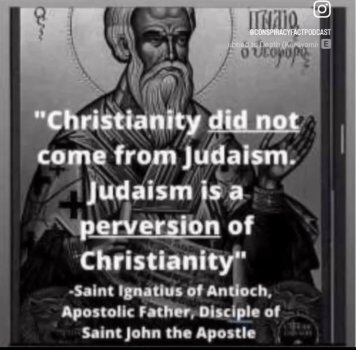
It's like an entire 8 pages of misled insanity that reads crazier than an L. Ron Hubbard novel and meanwhile; Ignatius:

“It is absurd to profess Christ Jesus, and to Judaize.”Letter to the Magnesians 10.

“For Christianity did not embrace Judaism, but Judaism Christianity.”Magnesians 10.

“If any one preach the Jewish law unto you, listen not to him.”Letter to the Philadelphians 6.

And on and on.. The traditional English edition actually titles this section, ‘Beware of Judaizing.’”

And where did he get this idea from???

“The Catholic Encyclopedia identifies Ignatius of Antioch with the Johannine circle and records the accepted tradition that he was a disciple of John the Apostle. And "with great probability” that Ignatius, along with Polycarp, was among the hearers of John the Apostle; it later calls Polycarp Ignatius’s “fellow-disciple in the school of St. John.”

Ignatius is not inventing some late medieval anti-Judaizing theology; he belongs to the apostolic generation and Catholic tradition places him in John’s own circle.

Imagine dismissing the words of John’s own disciple…, "Yea, he's got it all wrong man, and thats antisemitic bro..". laughable.


G5HLkCtaUAA5MQx.jpeg
 

Soyeong

Active Member
Jan 29, 2024
778
163
43
44
Hudson
Faith
Christian
Country
United States
There's no argument to even be made here historically.

It's like an entire 8 pages of misled insanity that reads crazier than an L. Ron Hubbard novel and meanwhile; Ignatius:

“It is absurd to profess Christ Jesus, and to Judaize.”Letter to the Magnesians 10.

“For Christianity did not embrace Judaism, but Judaism Christianity.”Magnesians 10.

“If any one preach the Jewish law unto you, listen not to him.”Letter to the Philadelphians 6.

And on and on.. The traditional English edition actually titles this section, ‘Beware of Judaizing.’”
Christ set a sinless example for us to follow of how to practice Judaism by walking in sinless obedience to the Torah and the problem that the Apostles had with the Judaizers was not that they were teaching Gentiles how to follow Christ but that they were wanting to require Gentiles to become circumcised in order to become saved. In Acts 21:20, they were rejoicing that tens of thousands of Jews were coming to faith in Jesus who were all zealous for the Torah, which is in accordance with Titus 2:14, where Jesus gave himself to redeem us from all lawlessness and to purify for himself a people of his own possession who are zealous for doing good works, so Jews coming to faith in Jesus were not ceasing to practice Judaism but were becoming zealous for it. This means that there was a period of time between the resurrection of Jesus and the inclusion of Gentiles in Acts 10 that is estimated to be around 7-15 years during which all Christians were Torah observant Jews and that Christianity at its origin was the sect of Judaism that recognized Jesus as the Messiah. In Acts 24:14, Paul testified that according to The Way, which they call a sect, he continue to worship the God of their fathers, believing everything laid down by the Torah and written in the Prophets, and the religion of which The Way is a sect is Judaism.

And where did he get this idea from???

“The Catholic Encyclopedia identifies Ignatius of Antioch with the Johannine circle and records the accepted tradition that he was a disciple of John the Apostle. And "with great probability” that Ignatius, along with Polycarp, was among the hearers of John the Apostle; it later calls Polycarp Ignatius’s “fellow-disciple in the school of St. John.”

Ignatius is not inventing some late medieval anti-Judaizing theology; he belongs to the apostolic generation and Catholic tradition places him in John’s own circle.

Imagine dismissing the words of John’s own disciple…, "Yea, he's got it all wrong man, and thats antisemitic bro..". laughable.


View attachment 88380
He notably did not actually say that.
 

Soyeong

Active Member
Jan 29, 2024
778
163
43
44
Hudson
Faith
Christian
Country
United States
We’ve dealt with this kind of thing before.


The topic also has some relevance for me because I’ve been following Professor Solberg’s work on the Biblical Roots channel. He recently debated David Wilber of Pronomian Publishing (formerly of 119 Ministries). One thing Solberg did not seem to fully register is that the commands given to the Gentiles in Acts 15 specifically reference the ones already given to Gentiles living among Israel in Leviticus. I pointed that out to him twice in detailed comments on his channel.


That detail is extremely important for any “starter-kit” theory of mitzvot. Taken together with the plain reading of the epistles, the rest of the New Testament, and the consistent witness of the Apostolic Fathers and early Church Fathers, it actually cuts against the Torahist reading rather than supporting it.


If your side were correct, a great deal of what we see in the New Testament and the early church should have looked very different. We get abundant instruction in the New Testament on all sorts of things—including ordinary, common-sense matters. If there really were a Messianic Jewish ideal of keeping the festivals and the major Torah commandments as binding on Gentile believers, we should expect clear, repeated apostolic witness to that effect. Being an actual witness is a big deal in Judaism, and the Great Commission plus the principle of doing things “decently and in order” only heighten that expectation.


Instead we find the opposite. What we often see is people employing a de facto Talmudic modus operandi even while they criticize the Oral Tradition of the rabbis.


And to those who want to raise the “argument from silence” objection: all I have to do is start quoting the many biblical passages that stress the importance of a visible, public witness. I may not be able to prove a universal negative (which is largely what that objection is getting at), but I can certainly demonstrate that full Torah observance for Gentiles was not normative. That absence itself creates biblical problems, especially given that the New Testament definition of truth is alētheia—objective, verifiable truth.
That detail is not at all contrary to the position that Acts 15:19-21 was a starting point. In 1 Corinthian 5:6-8, Paul spoke in regard to how Passover foreshadowed Christ by drawing the connect of him being our Passover lamb. In Colossians 2:16-23, Paul encouraged them not to let anyone judge them and prevent them from celebrating God's feasts. The Bible says that it is by the Torah that we have knowledge of what sin is (Romans 3:20) and repeatedly calls for Gentiles to repent from sin. For example, in Matthew 4:15-23, Jesus began his ministry with the Gospel message to repent for the Kingdom of God is at hand, so repenting from our disobedient to the Torah is a central part of the Gospel of the Kingdom/Grace, which Jesus commissioned his disciples to spread to all nations. The Talmud derives from the OT many of the same things that were taught in the NT, so it part of the same world.
 

The Gospel of Christ

Well-Known Member
Apr 5, 2025
1,066
516
113
Maine
Faith
Christian
Country
United States
Gender
Male
Christ set a sinless example for us to follow of how to practice Judaism by walking in sinless obedience to the Torah and the problem that the Apostles had with the Judaizers was not that they were teaching Gentiles how to follow Christ but that they were wanting to require Gentiles to become circumcised in order to become saved. In Acts 21:20, they were rejoicing that tens of thousands of Jews were coming to faith in Jesus who were all zealous for the Torah, which is in accordance with Titus 2:14, where Jesus gave himself to redeem us from all lawlessness and to purify for himself a people of his own possession who are zealous for doing good works, so Jews coming to faith in Jesus were not ceasing to practice Judaism but were becoming zealous for it. This means that there was a period of time between the resurrection of Jesus and the inclusion of Gentiles in Acts 10 that is estimated to be around 7-15 years during which all Christians were Torah observant Jews and that Christianity at its origin was the sect of Judaism that recognized Jesus as the Messiah. In Acts 24:14, Paul testified that according to The Way, which they call a sect, he continue to worship the God of their fathers, believing everything laid down by the Torah and written in the Prophets, and the religion of which The Way is a sect is Judaism.


He notably did not actually say that.


It’s absolutely exhausting watching this blasphemous nonsense get dragged out.
Time for the Apostolic Christ-Hammer.

Ignatius:
“Do not Judaize. Christianity did not come from Judaism. If someone preaches the Jewish law to you, do not listen to him.”

Forum guy:
“What he clearly meant was - keep practicing Judaism, keep following Jewish law, and Christianity is basically Judaism with Jesus added; but just don’t make circumcision a salvation requirement.”

That is not an interpretation of Ignatius. That's literally the exact opposite of what Ignatius said.

He did not say, “Judaize, but don’t overdo it.”
He said, Do not Judaize.”

He did not say, “Christianity is Judaism properly understood.”
He said, “Christianity did not embrace Judaism.”

He did not say, “Preach the Jewish law, just don’t make circumcision salvific.”
He said, “If anyone preaches the Jewish law to you, do not listen to them.

At some point, words have to mean something.

You cant take quotes from the disciple of the Apostle John saying A, A, A and then announce that what he “really meant” was not A according to you.

That is not exegesis.

That's rewriting the witness because the witness destroyed your modern theory.

A theory absolutely destroyed by the patristic witness of the early Church itself.


1. Tertullian - An Answer to the Jews - "The old law is abolished, and the new covenant has been revealed in Christ."

2. Augustine - City of God - "The promises made to Israel are now realized in the holy Church."

3. Lactantius - Divine Institutes 4.13 - "There is no salvation except in the name of Christ; all other ways are now void. The religion of Christ is the final and everlasting law."

4. Eusebius - Demonstratio Evangelica - "The church of Christ is the fullness foreseen by the prophets."

5. Justin Martyr - Dialogue with Trypho - "We [Christians] are the true spiritual Israel, and heirs of the promises made by God."

6. Clement of Alexandria - “It is only the Church which is the true spiritual Israel.”

7. Origen (Homilies on Joshua) - “We are the Israel of God who walk in the spirit.”
Even Origen, for all his flaws, understood this essential truth.

8. Eusebius (Ecclesiastical History, Book 1) - “The promises made to Israel have found their fulfillment in the Christian Church.”
NO dual covenant.

9.
Irenaeus, Against Heresies IV.7 says the fruit of Abraham’s promise belongs to “those who are partakers in the faith of Abraham, but not to the Jews who reject the Word of God.”

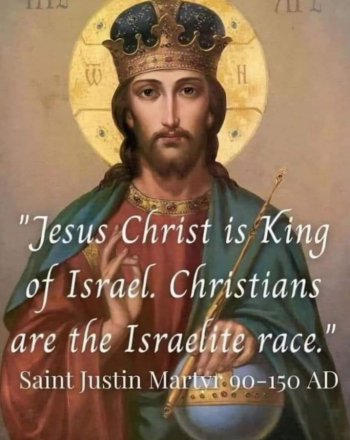
10. Justin Martyr — Dialogue with Trypho 135 - “Christ is the Israel and the Jacob… we [Christians]… are the true Israelitic race.” That means there is no other true Israelitic race in Justin’s argument.


And on and on... I could produce fifty more examples from the patristic witness saying the same thing.

The question then becomes; what religion are you actually defending? Because if your doctrine requires you to contradict Ignatius, Justin Martyr, Tertullian, Augustine, Lactantius, Clement, Origen, Eusebius and the broad trajectory of the early Church, then you cannot simply declare that all of them misunderstood Christianity while your modern reconstruction finally got it right. You don't get to overturn the testimony of the men closest to the apostles and then claim that your revision 2,000 years later is the original revealed faith.

At that point this is no longer harmless interpretation. If you take the apostolic witness handed down through a disciple of John, reverse its meaning, and then preach your reversal as God’s truth, you are no longer interpreting the witness.. you are putting your own voice in God’s mouth. Scripture does not treat that lightly. Christ called men who nullified God’s Word by their tradition hypocrites; John called religious deceivers a brood of vipers. To knowingly corrupt the words of God and sell the corruption back to His people as revelation is not scholarship; it's spiritually satanic.

Repent.


gfawg.jpeg
 
Last edited:

Davy

Well-Known Member
Feb 11, 2018
16,350
3,488
113
Southeastern U.S.
Faith
Christian
Country
United States
Gender
Male
Lord Jesus nailed the old covenant to His cross.
Nowhere does the Bible say that. There is a difference between these two statements:

Yes it does, IF you recognize The New Testament Scriptures, especially the Book of Hebrews.

Don't try to bug me anymore, I won't listen to your attempt to push the Jew's religion JUDAISM here on a Christian forum.
 

Davy

Well-Known Member
Feb 11, 2018
16,350
3,488
113
Southeastern U.S.
Faith
Christian
Country
United States
Gender
Male
“Being a Jew” has more than one sense. You’re using one sense to deny the other. Facts is, no matter how you look at it, Jesus was a Jew and to understand ANYTHING he said one must know the Jewish (Judaism) prophecies he fulfilled and Jewish world view he discussed.

There's another popular false assumption among the Jews, thinking that only Jews can understand The Old Testament.

I have to laugh at that! because that is a bold statement showing ignorance.
 

Soyeong

Active Member
Jan 29, 2024
778
163
43
44
Hudson
Faith
Christian
Country
United States
Ignatius:
“Do not Judaize. Christianity did not come from Judaism. If someone preaches the Jewish law to you, do not listen to him.”
You're criticizing me for not listening to Ignatius, but you are not listening to the fact that he did not actually say that Christianity does not come from Judaism. Ignatius spoke just as strongly against those who preach the one God of the Law and the Prophets while denying Christ to be the Son of God and he did against those who confess Christ Jess is the Lord while dying the God of the Law and the Prophets.

Ignatius - Epistle to the Philadelphians said:
If any one preaches the one God of the law and the prophets, but denies Christ to be the Son of God, he is a liar, even as also is his father the devil, [928] and is a Jew falsely so called, being possessed of [929] mere carnal circumcision. If any one confesses Christ Jesus the Lord, but denies the God of the law and of the prophets, saying that the Father of Christ is not the Maker of heaven and earth, he has not continued in the truth any more than his father the devil, [930] and is a disciple of Simon Magus, not of the Holy Spirit.

While I agree that we should not Judaize, it is important to recognize that the problem that Paul had with the Judaizers was not that they were teaching Gentiles how to follow the example that he set for his followers to follow but that they were wanting to require Gentiles to become circumcised in order to become saved.

1. Tertullian - An Answer to the Jews - "The old law is abolished, and the new covenant has been revealed in Christ."
In Matthew 5:17-10, Jesus said to not even think that he came to abolish the Law and he warned against relaxing the least part of it or teaching others to do the same.

2. Augustine - City of God - "The promises made to Israel are now realized in the holy Church."
The New Covenant is based on better promises and one of those promises is that Israel would never cease to be nation before God (Jeremiah 31:35-37).

3. Lactantius - Divine Institutes 4.13 - "There is no salvation except in the name of Christ; all other ways are now void. The religion of Christ is the final and everlasting law."
The Torah is God's Word and Jesus is God's Word made flesh, so he embodied it by setting a sinless example for us to follow of how to walk in obedience to it. Salvation through Christ alone is in accordance with following his example of embodying God's Word, not in contrast with it.

4. Eusebius - Demonstratio Evangelica - "The church of Christ is the fullness foreseen by the prophets."
The Greek word "ekklesia" is translated as "church" and is first used by the Bible to describe the assembly of Israel at the first Pentecost, so that is when the Church of Christ began and has its fullness.

5. Justin Martyr - Dialogue with Trypho - "We [Christians] are the true spiritual Israel, and heirs of the promises made by God."
The Torah is how the children of Abraham know how to be blessed by walking in His way (Psalm 119:1-3), so the way that the children of Abraham are a blessing to the nations in accordance with inheriting the promise through faith is by turning the nations from their wickedness and by teaching them to obey it in accordance with spreading the Gospel (Matthew 4:25-23, Acts 3:25-26). It is contradictory for someone to want to have the blessing promised to Abraham while not wanting to follow God's instructions for how to receive it.

6. Clement of Alexandria - “It is only the Church which is the true spiritual Israel.”
Please explain the logic of Gentiles who do not obey the Torah thinking that they have replaced Jews because they did not obey the Torah.

7. Origen (Homilies on Joshua) - “We are the Israel of God who walk in the spirit.”
Even Origen, for all his flaws, understood this essential truth.
In Romans 8:4-7, Paul contrasted those who walk in the Spirit with those who have minds set on the flesh who are enemies of God who refuse to submit to the Law of God.

8. Eusebius (Ecclesiastical History, Book 1) - “The promises made to Israel have found their fulfillment in the Christian Church.”
NO dual covenant.
God does not break His promises and given them to someone else.

9. Irenaeus, Against Heresies IV.7 says the fruit of Abraham’s promise belongs to “those who are partakers in the faith of Abraham, but not to the Jews who reject the Word of God.
In Genesis 18:19, God knew Abraham that he would teach his children and those of his household to walk in His way by being doers of righteousness and justice that the Lord might bring to him all that He has promised. In Genesis 26:4-5, God will multiply Abraham's children as the stars in the heavens, to his children he will give all of these lands, and through his children all of the nations of the earth shall be blessed. In Deuteronomy 30:16, if the children of Abraham will love God with all of their hearts by walking in obedience to His commandments, statutes, and laws, then they will live and multiply and God will bless them in the land that they go to possess. So the promise was made to Abraham because he walked in God's way, he taught his children and those of his household to do that, and because they did that in obedience to the Torah.

”10. Justin Martyr — Dialogue with Trypho 135 - “Christ is the Israel and the Jacob… we [Christians]… are the true Israelitic race.”
His Monologue with Trypho contains some pretty abysmal arguments that clearly show that he did not have a very good grasp of the role of the Torah or of the Jews. For example, the Bible repeatedly states that the Torah was given for our own good in order to teach us how to be blessed, but he tried to argue that God gave it as a punishment.

The question then becomes; what religion are you actually defending?
The minority tends to be assimilated by the majority, so the challenged faced by the first Jewish Christians was how to maintain leadership and cultural identity as the minority, but tensions between Jews and Gentiles caused them to polarize and things like the expulsion of the Jews from Rome and Gentiles not wanting to come back under Jewish leadership upon their return created splits and have continued to increase in size. Christianity essentially got overrun by Gentiles who did not grow up following Jewish traditions, who did not have a love for the Torah, and who expressed some shockingly anti-Semitic views, so it did not take long for it to become a separate religion that was opposed to following Christ's example of obedience to the Torah.

f you take the revealed Word, reverse its meaning, and then preach your reversal as God’s truth, you are putting your own voice in God’s mouth. Scripture does not treat that lightly. Christ called men who nullified God’s Word by their tradition hypocrites; John called religious deceivers a brood of vipers. To knowingly corrupt the words of God and sell the corruption back to His people as revelation is not scholarship; it's spiritually satanic.

Repent.
The Torah is truth (Psalm 119:142) and Jesus embodied the Torah through his works by setting a sinless example for us to follow of how to walk in obedience the Torah, so he is the truth (John 14:6-11), which means that I am not the one who is taking the revealed Word, reversing its meaning, and then preaching your reversal as God's truth. Jesus quoted three times from Deuteronomy in order to defeat the temptations of Satan, which included saying that man shall not live by bread alone but by every word that comes from the mouth of God, so he affirmed everything that God spoke to Moses (Deuteronomy 5:31-33), which means that I am not the one putt your own voice in God's mouth. In Matthew 7:6-13, Jesus said that they were hypocrites for setting aside the commands of God in order to establish their own traditions, so it does not work for you to try to apply this passage against me when I am the one arguing in support of obeying the commands of God and you the one who is arguing in favor of setting them aside because of your tradition. In Matthew 23:23-33, Jesus said that tithing as was something that they ought to be doing while not neglecting weightier matters of the Torah of justice, mercy, and faithfulness, so he was calling them to have a higher level of Torah observance, which is what you are speaking against. The Bible never calls for us to repent from our obedience the Torah, but rather it repeatedly calls for us to repent from our disobedience to it.
 

Soyeong

Active Member
Jan 29, 2024
778
163
43
44
Hudson
Faith
Christian
Country
United States
Yes it does, IF you recognize The New Testament Scriptures, especially the Book of Hebrews.
I recognize the NT Scriptures, but I do not recognize interpretations of them that turn the against God's Word.

Don't try to bug me anymore, I won't listen to your attempt to push the Jew's religion JUDAISM here on a Christian forum.
Christ set a perfect example for us to follow of how to practice Judaism by walking in sinless obedience to the Torah, so it is up to you whether you want to follow his example, but there is contradicting to want to be his followers while not wanting to follow his example.
 

The Gospel of Christ

Well-Known Member
Apr 5, 2025
1,066
516
113
Maine
Faith
Christian
Country
United States
Gender
Male
You're criticizing me for not listening to Ignatius, but you are not listening to the fact that he did not actually say that Christianity does not come from Judaism. Ignatius spoke just as strongly against those who preach the one God of the Law and the Prophets while denying Christ to be the Son of God and he did against those who confess Christ Jess is the Lord while dying the God of the Law and the Prophets.


While I agree that we should not Judaize, it is important to recognize that the problem that Paul had with the Judaizers was not that they were teaching Gentiles how to follow the example that he set for his followers to follow but that they were wanting to require Gentiles to become circumcised in order to become saved.


In Matthew 5:17-10, Jesus said to not even think that he came to abolish the Law and he warned against relaxing the least part of it or teaching others to do the same.


The New Covenant is based on better promises and one of those promises is that Israel would never cease to be nation before God (Jeremiah 31:35-37).


The Torah is God's Word and Jesus is God's Word made flesh, so he embodied it by setting a sinless example for us to follow of how to walk in obedience to it. Salvation through Christ alone is in accordance with following his example of embodying God's Word, not in contrast with it.


The Greek word "ekklesia" is translated as "church" and is first used by the Bible to describe the assembly of Israel at the first Pentecost, so that is when the Church of Christ began and has its fullness.


The Torah is how the children of Abraham know how to be blessed by walking in His way (Psalm 119:1-3), so the way that the children of Abraham are a blessing to the nations in accordance with inheriting the promise through faith is by turning the nations from their wickedness and by teaching them to obey it in accordance with spreading the Gospel (Matthew 4:25-23, Acts 3:25-26). It is contradictory for someone to want to have the blessing promised to Abraham while not wanting to follow God's instructions for how to receive it.


Please explain the logic of Gentiles who do not obey the Torah thinking that they have replaced Jews because they did not obey the Torah.


In Romans 8:4-7, Paul contrasted those who walk in the Spirit with those who have minds set on the flesh who are enemies of God who refuse to submit to the Law of God.


God does not break His promises and given them to someone else.


In Genesis 18:19, God knew Abraham that he would teach his children and those of his household to walk in His way by being doers of righteousness and justice that the Lord might bring to him all that He has promised. In Genesis 26:4-5, God will multiply Abraham's children as the stars in the heavens, to his children he will give all of these lands, and through his children all of the nations of the earth shall be blessed. In Deuteronomy 30:16, if the children of Abraham will love God with all of their hearts by walking in obedience to His commandments, statutes, and laws, then they will live and multiply and God will bless them in the land that they go to possess. So the promise was made to Abraham because he walked in God's way, he taught his children and those of his household to do that, and because they did that in obedience to the Torah.


His Monologue with Trypho contains some pretty abysmal arguments that clearly show that he did not have a very good grasp of the role of the Torah or of the Jews. For example, the Bible repeatedly states that the Torah was given for our own good in order to teach us how to be blessed, but he tried to argue that God gave it as a punishment.


The minority tends to be assimilated by the majority, so the challenged faced by the first Jewish Christians was how to maintain leadership and cultural identity as the minority, but tensions between Jews and Gentiles caused them to polarize and things like the expulsion of the Jews from Rome and Gentiles not wanting to come back under Jewish leadership upon their return created splits and have continued to increase in size. Christianity essentially got overrun by Gentiles who did not grow up following Jewish traditions, who did not have a love for the Torah, and who expressed some shockingly anti-Semitic views, so it did not take long for it to become a separate religion that was opposed to following Christ's example of obedience to the Torah.


The Torah is truth (Psalm 119:142) and Jesus embodied the Torah through his works by setting a sinless example for us to follow of how to walk in obedience the Torah, so he is the truth (John 14:6-11), which means that I am not the one who is taking the revealed Word, reversing its meaning, and then preaching your reversal as God's truth. Jesus quoted three times from Deuteronomy in order to defeat the temptations of Satan, which included saying that man shall not live by bread alone but by every word that comes from the mouth of God, so he affirmed everything that God spoke to Moses (Deuteronomy 5:31-33), which means that I am not the one putt your own voice in God's mouth. In Matthew 7:6-13, Jesus said that they were hypocrites for setting aside the commands of God in order to establish their own traditions, so it does not work for you to try to apply this passage against me when I am the one arguing in support of obeying the commands of God and you the one who is arguing in favor of setting them aside because of your tradition. In Matthew 23:23-33, Jesus said that tithing as was something that they ought to be doing while not neglecting weightier matters of the Torah of justice, mercy, and faithfulness, so he was calling them to have a higher level of Torah observance, which is what you are speaking against. The Bible never calls for us to repent from our obedience the Torah, but rather it repeatedly calls for us to repent from our disobedience to it.


Which part of this is not sinking in?

Matthew 21:43 — the kingdom is taken and given. Not paused, not put on prophetic layaway, not reserved by bloodline.

Romans 9:6 — descent from Israel does not itself equal Israel. Paul destroys the idea that genealogy alone settles covenant identity.

Romans 2:28–29 — the decisive mark is inward, not merely outward. Circumcision of the heart outranks fleshly pedigree.

Galatians 3:7 — those of faith are Abraham’s children. Paul ties Abrahamic sonship to faith, not ancestry.

Galatians 3:28–29 — if you belong to Christ, you are Abraham’s seed and heir. Paul does not add a second qualification about race.

Philippians 3:3“we are the circumcision” and we put no confidence in the flesh.” That is about as hostile as Paul can get to flesh-based religious boasting.

1 Timothy 1:4 “...nor to devote themselves to myths and endless genealogies, which promote speculations rather than the stewardship from God that is by faith.” Paul directly warns against obsessing over bloodlines and ancestry because it leads to endless speculation, deception, and false doctrine.

Ephesians 2:14–15
— Christ makes the two one. Not two covenant tracks running side by side forever.

1 Peter 2:9–10 — believers in Christ are called the "chosen race, royal priesthood, holy nation, God’s people".
Peter applies Israel’s covenant language directly to the Church. <---------

Hebrews 8:13
— the former covenant is called obsolete. Not dormant. Not temporarily shelved. Obsolete.

Hebrews 10:9“He takes away the first in order to establish the second.” First removed, second established. The sentence is not hiding.

Hebrews 11:10,16 — Abraham and the patriarchs were seeking the heavenly city and country. Their final hope was never reducible to dirt, borders, or political possession.

So Christ, Paul, Peter, and Hebrews are all cutting in the same direction, and meanwhile, your theology needs every one of them to somehow mean the opposite.

And you want to call that Christianity.
 
Last edited: