

Why Did Jesus Have to Die? --->>> Jesus Lives!

  • Welcome to Christian Forums, a Christian Forum that recognizes that all Christians are a work in progress.

    You will need to register to be able to join in fellowship with Christians all over the world.

    We hope to see you as a part of our community soon and God Bless!

LoveYeshua

Eagle
Staff member
Sep 25, 2024
1,996
1,236
113
Quebec
Faith
Christian
Country
Canada
Gender
Male

Why Did Jesus Have to Die?​


Many Christians can say, "Jesus died for our sins," but that still leaves a deeper question: Why did Jesus have to die? Why could God not simply forgive us without the death of His Son?

The answer begins with something God established from the beginning. Sin brings death. God warned Adam, "for in the day that thou eatest thereof thou shalt surely die" (Genesis 2:17). God later stated the same principle clearly: "The soul that sinneth, it shall die" (Ezekiel 18:20).

Death was therefore not an arbitrary punishment invented when Jesus came. Humanity had entered the condition of death through sin. Yet God did not abandon mankind. From the beginning, God's purpose was to redeem and restore His creation.

This is why Jesus said, "For God so loved the world, that he gave his only begotten Son, that whosoever believeth on him should not perish, but have eternal life" (John 3:16). Where everything begins: God loved the world. The sacrifice was not because God hated humanity. It was because God wanted to save humanity from sin and death.

But why Jesus? Because Jesus was without sin. John said that Christ "was manifested to take away our sins; and in him is no sin" (1 John 3:5). Peter likewise said that Christ "did no sin, neither was guile found in his mouth" (1 Peter 2:22). Jesus did not die because He deserved death. He was the innocent One who willingly gave His life for those who were under death. Jesus Himself explained this when He said, "I am the good shepherd: the good shepherd giveth his life for the sheep" (John 10:11).

And He made something else perfectly clear. His life was not taken from Him against His will: "Therefore doth my Father love me, because I lay down my life, that I might take it again. No man taketh it from me, but I lay it down of myself" (John 10:17–18). This is important. God did not force an unwilling Son to die. Jesus willingly offered Himself. Jesus also said, "Greater love hath no man than this, that a man lay down his life for his friends" (John 15:13).

So the cross was not simply about death. It was an act of love, obedience, sacrifice, and redemption. Jesus also explained that His life would be given as a ransom: "Even as the Son of man came not to be ministered unto, but to minister, and to give his life a ransom for many" (Matthew 20:28). A ransom is a price paid to redeem someone. Humanity was under sin and death, and Jesus gave His sinless life to redeem us.

Scripture also calls Jesus our propitiation. John wrote, "And he is the propitiation for our sins: and not for ours only, but also for the sins of the whole world" (1 John 2:2). Propitiation means that through Christ, the offense of sin has been dealt with and the way to God has been opened. This was not a Father needing to be talked into mercy by the suffering of His Son. It was God Himself, in Christ, providing the very means by which sin could be put away. The initiative was His from the start, just as John had already said: God so loved the world that He gave His Son.

But there is something even deeper. Jesus had to truly die because He came to overcome death itself. If Jesus had only suffered and survived, He would not have entered death. But Jesus actually died. Then God raised Him from the dead. Peter declared that God raised Jesus up, "having loosed the pains of death: because it was not possible that he should be holden of it" (Acts 2:24).

And the risen Jesus declared: "Fear not; I am the first and the last: I am he that liveth, and was dead; and, behold, I am alive for evermore, Amen; and have the keys of hell and of death" (Revelation 1:17–18).
This is one of the greatest truths of the Gospel. Jesus did not merely die instead of us. He entered death itself and came out victorious.

He conquered the very thing that had held humanity. That is why Jesus could say: "Because I live, ye shall live also" (John 14:19).
The death of Jesus and His resurrection cannot be separated. The cross without the resurrection would be only the death of a righteous man. But Jesus died, God raised Him, and He now lives forever.

His death also established the New Covenant. At the Last Supper Jesus took the cup and said: "For this is my blood of the new testament, which is shed for many for the remission of sins" (Matthew 26:28).

God had already promised through Jeremiah that He would establish a New Covenant in which His law would be written upon the hearts of His people (Jeremiah 31:31–33). Jesus came to fulfill that promise. so we may live.

The blood of Jesus therefore was not meaningless suffering. His death was connected with the New Covenant, the forgiveness of sins, reconciliation with God, and the promise of eternal life.
And we must understand something else about the cross: God did not kill His Son because Jesus was sinful. Men killed Jesus.

Peter said that Jesus was delivered up and, "by wicked hands," crucified and slain (Acts 2:23). Yet God knew even the wicked actions of men would accomplish His purpose of salvation, and then raised His Son from the dead. Jesus Himself had already said that no one would take His life from Him. He would lay it down willingly.
So when we look at the cross, we should not see a Father who hated His Son and demanded His death. We see the Father sending His beloved Son, and the Son willingly giving His life because He loved the Father and loved us. Jesus said: "But that the world may know that I love the Father; and as the Father gave me commandment, even so I do" (John 14:31).

This brings us back to the original question: Why did Jesus have to die? Because humanity had fallen into sin and death. God chose to redeem humanity through the willing sacrifice of His sinless Son. Jesus gave His life as a ransom, His blood established the New Covenant, His death provided the way for the remission of sins, and His resurrection conquered death.

Jesus willingly entered death in order to overcome death. He was the sinless Lamb who gave His life for sinners. He entered the grave, but the grave could not hold Him. God raised Him up, and through the risen Christ, the way to eternal life was opened.

This is why Jesus said: "Jesus said unto her, I am the resurrection, and the life: he that believeth in me, though he were dead, yet shall he live" (John 11:25).

The cross therefore is not ultimately a story about death. it is the story of God's love, Jesus' willing sacrifice, the forgiveness of sins, the New Covenant, and the defeat of death itself.

Jesus died, but death did not have the final word.

Jesus lives.
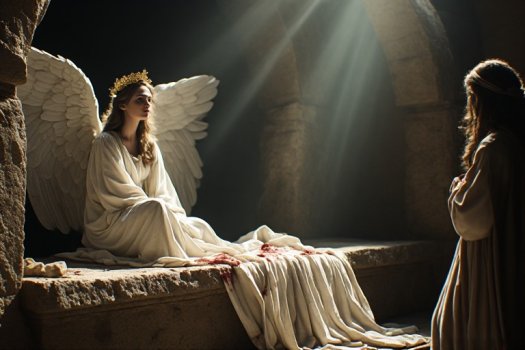
a_111realistic_photograph_of_Jesu.jpeg
 
  • Like
Reactions: Grailhunter

Grailhunter

Well-Known Member
Jun 19, 2019
15,195
6,378
113
69
FARMINGTON
Faith
Christian
Country
United States
Gender
Male

Why Did Jesus Have to Die?​


Many Christians can say, "Jesus died for our sins," but that still leaves a deeper question: Why did Jesus have to die? Why could God not simply forgive us without the death of His Son?

The answer begins with something God established from the beginning. Sin brings death. God warned Adam, "for in the day that thou eatest thereof thou shalt surely die" (Genesis 2:17). God later stated the same principle clearly: "The soul that sinneth, it shall die" (Ezekiel 18:20).

Death was therefore not an arbitrary punishment invented when Jesus came. Humanity had entered the condition of death through sin. Yet God did not abandon mankind. From the beginning, God's purpose was to redeem and restore His creation.

This is why Jesus said, "For God so loved the world, that he gave his only begotten Son, that whosoever believeth on him should not perish, but have eternal life" (John 3:16). Where everything begins: God loved the world. The sacrifice was not because God hated humanity. It was because God wanted to save humanity from sin and death.

But why Jesus? Because Jesus was without sin. John said that Christ "was manifested to take away our sins; and in him is no sin" (1 John 3:5). Peter likewise said that Christ "did no sin, neither was guile found in his mouth" (1 Peter 2:22). Jesus did not die because He deserved death. He was the innocent One who willingly gave His life for those who were under death. Jesus Himself explained this when He said, "I am the good shepherd: the good shepherd giveth his life for the sheep" (John 10:11).

And He made something else perfectly clear. His life was not taken from Him against His will: "Therefore doth my Father love me, because I lay down my life, that I might take it again. No man taketh it from me, but I lay it down of myself" (John 10:17–18). This is important. God did not force an unwilling Son to die. Jesus willingly offered Himself. Jesus also said, "Greater love hath no man than this, that a man lay down his life for his friends" (John 15:13).

So the cross was not simply about death. It was an act of love, obedience, sacrifice, and redemption. Jesus also explained that His life would be given as a ransom: "Even as the Son of man came not to be ministered unto, but to minister, and to give his life a ransom for many" (Matthew 20:28). A ransom is a price paid to redeem someone. Humanity was under sin and death, and Jesus gave His sinless life to redeem us.

Scripture also calls Jesus our propitiation. John wrote, "And he is the propitiation for our sins: and not for ours only, but also for the sins of the whole world" (1 John 2:2). Propitiation means that through Christ, the offense of sin has been dealt with and the way to God has been opened. This was not a Father needing to be talked into mercy by the suffering of His Son. It was God Himself, in Christ, providing the very means by which sin could be put away. The initiative was His from the start, just as John had already said: God so loved the world that He gave His Son.

But there is something even deeper. Jesus had to truly die because He came to overcome death itself. If Jesus had only suffered and survived, He would not have entered death. But Jesus actually died. Then God raised Him from the dead. Peter declared that God raised Jesus up, "having loosed the pains of death: because it was not possible that he should be holden of it" (Acts 2:24).

And the risen Jesus declared: "Fear not; I am the first and the last: I am he that liveth, and was dead; and, behold, I am alive for evermore, Amen; and have the keys of hell and of death" (Revelation 1:17–18).
This is one of the greatest truths of the Gospel. Jesus did not merely die instead of us. He entered death itself and came out victorious.

He conquered the very thing that had held humanity. That is why Jesus could say: "Because I live, ye shall live also" (John 14:19).
The death of Jesus and His resurrection cannot be separated. The cross without the resurrection would be only the death of a righteous man. But Jesus died, God raised Him, and He now lives forever.

His death also established the New Covenant. At the Last Supper Jesus took the cup and said: "For this is my blood of the new testament, which is shed for many for the remission of sins" (Matthew 26:28).

God had already promised through Jeremiah that He would establish a New Covenant in which His law would be written upon the hearts of His people (Jeremiah 31:31–33). Jesus came to fulfill that promise. so we may live.

The blood of Jesus therefore was not meaningless suffering. His death was connected with the New Covenant, the forgiveness of sins, reconciliation with God, and the promise of eternal life.
And we must understand something else about the cross: God did not kill His Son because Jesus was sinful. Men killed Jesus.

Peter said that Jesus was delivered up and, "by wicked hands," crucified and slain (Acts 2:23). Yet God knew even the wicked actions of men would accomplish His purpose of salvation, and then raised His Son from the dead. Jesus Himself had already said that no one would take His life from Him. He would lay it down willingly.
So when we look at the cross, we should not see a Father who hated His Son and demanded His death. We see the Father sending His beloved Son, and the Son willingly giving His life because He loved the Father and loved us. Jesus said: "But that the world may know that I love the Father; and as the Father gave me commandment, even so I do" (John 14:31).

This brings us back to the original question: Why did Jesus have to die? Because humanity had fallen into sin and death. God chose to redeem humanity through the willing sacrifice of His sinless Son. Jesus gave His life as a ransom, His blood established the New Covenant, His death provided the way for the remission of sins, and His resurrection conquered death.

Jesus willingly entered death in order to overcome death. He was the sinless Lamb who gave His life for sinners. He entered the grave, but the grave could not hold Him. God raised Him up, and through the risen Christ, the way to eternal life was opened.

This is why Jesus said: "Jesus said unto her, I am the resurrection, and the life: he that believeth in me, though he were dead, yet shall he live" (John 11:25).

The cross therefore is not ultimately a story about death. it is the story of God's love, Jesus' willing sacrifice, the forgiveness of sins, the New Covenant, and the defeat of death itself.

Jesus died, but death did not have the final word.

Jesus lives.

View attachment 89881

Good job.
And correct.
But it brings up a lot of questions.
Can you really kill a God? Yeshua went through the death process of His body. But He did not die like we do.
How long would have Yeshua lived if He was not crucified?
Why did it have to be the Son of Yahweh?
Buy giving up His Son, was it Yahweh's sacrifice too?
And of course the scenario puts the whole 3 in 1 God thing on its ear.
And the most controversial question of all; Did God have to sacrifice His Son because of His cruelty in the Old Testament? Never again would God say, Kill all that breaths and don't forget the children and kill all the non-virgins.
The God Spirit, the human spirit. Some say that Yeshua while on earth was 100% God and 100% man and some say He was 50/50. I see His Spirit as a God and His body as man. When He ascended to the Father to sit on the throne to His right.....He brought the Human spirit to the Trinity.
When Yeshua passed on the cross the veil in the Temple tore in two. Yeshua ripped that veil and when He took the human spirit back to the Trinity we were fully reconciled with Yahweh.
 
  • Like
Reactions: LoveYeshua

Moonwood

Member
Aug 24, 2026
93
38
18
Pacific Northwest
Faith
Christian
Country
United States
Gender
Female
Many Christians can say, "Jesus died for our sins," but that still leaves a deeper question: Why did Jesus have to die? Why could God not simply forgive us without the death of His Son?

Some will say that as God Jesus could have overcome the need to take flesh in a woman's womb. He could do all, it's true. But reflect on the law of order and goodness which lies in His annihilation in mortal clothing.

The sin committed by man had to be expiated by man and not by the non-incarnate divinity. How could the Divinity, incorporeal Spirit, redeem the sins of the flesh with the sacrifice of Itself? It was, then, necessary that God should pay for the sins of flesh and blood with the agony of an innocent Flesh and Blood, born of an innocent woman.

His mind, His feeling, and His spirit would have suffered for our sins in mind, feeling, and spirit. But to be the Redemption of all forms of concupiscence inoculated into Adam and his descendants by the Tempter, the One Immolated for them all had to be endowed with a nature like ours, made worthy of being given as a ransom to God by the Divinity hidden in it, like a gem of infinite supernatural value hidden under common, natural clothing.

God is order, and God does not violate or do violence to order, except in very exceptional cases, judged useful by His intelligence. Such was not the case with His Redemption.

He had not only to cancel sin from the moment it occurred until the moment of the sacrifice and annul in those to come the effects of sin by having them be born unaware of evil. No. With a total sacrifice He had to make reparation for Sin and all the sins of all mankind, give the men already dead absolution of sin, and give those living at that time and in the future the means to be helped to resist evil and to be forgiven for the evil which their weakness would lead them to do.

His sacrifice thus had to be such as to present all the necessary requisites, and it could be such only in a God made man: a host worthy of God, a means understood by man. In addition, He was coming to bring the Law.


If His humanity had not existed, how could we—His poor brothers and sisters, who labor to have faith in Him, who lived for thirty-three years on the earth, a Man among men—have believed? And, how could He appear, already an adult, to hostile or ignorant peoples, making them convinced of His nature and His doctrine? He would then have appeared, in the eyes of the world, as a spirit Who had taken on a human likeness, but not as a man who was born and died, shedding real blood through the wounds of a real flesh—as proof of being a man—and rose again and ascended to Heaven with His glorified body—as proof of being God returning to His eternal dwelling.

Isn't it sweeter for us to think that He is really our brother, with the destiny of creatures who are born, live, suffer, and die, than to conceive of Him as a spirit superior to the exigencies of humanity?

It was necessary, then, for a woman to give birth to Him according to the flesh, after having conceived Him above the flesh, for from no marriage of creatures, no matter how holy they were, could the God-Man be conceived, but only from a wedding of Purity and Love, the Spirit and the Virgin, created without stain so as to be the matrix for the flesh of a God, the Virgin the thought of Whom was God's joy,
since before time existed, the Virgin in Whom there is a compendium of the Father's creative perfection, the joy of Heaven, the salvation of the Earth, the most beautiful flower of Creation of all the flowers of the Universe, a living star before whom all the suns created by the Father seem dull.
 
Last edited:
  • Love
Reactions: LoveYeshua

LoveYeshua

Eagle
Staff member
Sep 25, 2024
1,996
1,236
113
Quebec
Faith
Christian
Country
Canada
Gender
Male
Some will say that as God Jesus could have overcome the need to take flesh in a woman's womb. He could do all, it's true. But reflect on the law of order and goodness which lies in His annihilation in mortal clothing.

The sin committed by man had to be expiated by man and not by the non-incarnate divinity. How could the Divinity, incorporeal Spirit, redeem the sins of the flesh with the sacrifice of Itself? It was, then, necessary that God should pay for the sins of flesh and blood with the agony of an innocent Flesh and Blood, born of an innocent woman.

His mind, His feeling, and His Spirit would have suffered for our sins in mind, feeling, and spirit. But to be the Redemption of all forms of concupiscence inoculated into Adam and his descendants by the Tempter, the One Immolated for them all had to be endowed with a nature like ours, made worthy of being given as a ransom to God by the Divinity hidden in it, like a gem of infinite supernatural value hidden under common, natural clothing.

God is order, and God does not violate or do violence to order, except in very exceptional cases, judged useful by His intelligence. Such was not the case with His Redemption.

He had not only to cancel sin from the moment it occurred until the moment of the sacrifice and annul in those to come the effects of sin by having them be born unaware of evil. No. With a total sacrifice He had to make reparation for Sin and all the sins of all mankind, give the men already dead absolution of sin, and give those living at that time and in the future the means to be helped to resist evil and to be forgiven for the evil which their weakness would lead them to do.

His sacrifice thus had to be such as to present all the necessary requisites, and it could be such only in a God made man: a host worthy of God, a means understood by man. In addition, He was coming to bring the Law.


If His humanity had not existed, how could we—His poor brothers and sisters, who labor to have faith in Him, who lived for thirty-three years on the earth, a Man among men—have believed? And, how could He appear, already an adult, to hostile or ignorant peoples, making them convinced of His nature and His doctrine? He would then have appeared, in the eyes of the world, as a spirit Who had taken on a human likeness, but not as a man who was born and died, shedding real blood through the wounds of a real flesh—as proof of being a man—and rose again and ascended to Heaven with His glorified body—as proof of being God returning to His eternal dwelling.

Isn't it sweeter for us to think that He is really our brother, with the destiny of creatures who are born, live, suffer, and die, than to conceive of Him as a spirit superior to the exigencies of humanity?

It was necessary, then, for a woman to give birth to Him according to the flesh, after having conceived Him above the flesh, for from no marriage of creatures, no matter how holy they were, could the God-Man be conceived, but only from a wedding of Purity and Love, the Spirit and the Virgin, created without stain so as to be the matrix for the flesh of a God, the Virgin the thought of Whom was God's joy,
since before time existed, the Virgin in Whom there is a compendium of the Fathers creative perfection, the joy of Heaven, the salvation of the Earth, the most beautiful flower of Creation of all the flowers of the Universe, a living star before whom all the suns created by the Father seem dull.
Truly an excellent addition to this thread thank you and God bless.
 

LoveYeshua

Eagle
Staff member
Sep 25, 2024
1,996
1,236
113
Quebec
Faith
Christian
Country
Canada
Gender
Male
Good job.
And correct.
But it brings up a lot of questions.
Can you really kill a God? Yeshua went through the death process of His body. But He did not die like we do.
How long would have Yeshua lived if He was not crucified?
Why did it have to be the Son of Yahweh?
Buy giving up His Son, was it Yahweh's sacrifice too?
And of course the scenario puts the whole 3 in 1 God thing on its ear.
And the most controversial question of all; Did God have to sacrifice His Son because of His cruelty in the Old Testament? Never again would God say, Kill all that breaths and don't forget the children and kill all the non-virgins.
The God Spirit, the human spirit. Some say that Yeshua while on earth was 100% God and 100% man and some say He was 50/50. I see His Spirit as a God and His body as man. When He ascended to the Father to sit on the throne to His right.....He brought the Human spirit to the Trinity.
When Yeshua passed on the cross the veil in the Temple tore in two. Yeshua ripped that veil and when He took the human spirit back to the Trinity we were fully reconciled with Yahweh.
I think He greatly suffered like a man would and died like men do. His Spirit was taken up by the father and after 3 days he was resurrected, death could not hold him. to answer the rest of your question they can be found in post no 3 by moonwood
 

Grailhunter

Well-Known Member
Jun 19, 2019
15,195
6,378
113
69
FARMINGTON
Faith
Christian
Country
United States
Gender
Male
I think He greatly suffered like a man would and died like men do. His Spirit was taken up by the father and after 3 days he was resurrected, death could not hold him. to answer the rest of your question they can be found in post no 3 by moonwood

Well I wonder, could a normal mortal have taken the punishment that Yeshua did? And find the scripture where Yahweh took Yeshua spirit from the cross? I believe.....I am saying believe, that Yeshua went to Sheol to preach the Gospel there and to confront Satan. There is a new sheriff in town.
 

Moonwood

Member
Aug 24, 2026
93
38
18
Pacific Northwest
Faith
Christian
Country
United States
Gender
Female
Well I wonder, could a normal mortal have taken the punishment that Yeshua did? And find the scripture where Yahweh took Yeshua spirit from the cross? I believe.....I am saying believe, that Yeshua went to Sheol to preach the Gospel there and to confront Satan. There is a new sheriff in town.

A mortal could not have borne the punishment Christ bore in the way Scripture describes. A merely human sufferer could die, but he could not offer his death as an atoning sacrifice of infinite value. Hebrews is explicit that the efficacy of Christ’s offering depends on His divine identity: “He offered Himself without blemish to God” (Hebrews 9:14). A mortal can suffer; only the God‑Man can make suffering redemptive.

As for Yahweh “taking Yeshua’s spirit from the cross,” Scripture never states that. What it does say is that Jesus Himself voluntarily hands over His spirit: “Father, into Your hands I commit My spirit” (Luke 23:46). John emphasizes the same point: “He gave up His spirit” (John 19:30). The Gospels present His death not as something taken from Him, but as something He freely offers (John 10:17-18).

Regarding Sheol: the New Testament affirms that Christ descended to the realm of the dead (Acts 2:31; 1 Peter 3:19-20), but the text does not describe a confrontation with Satan. The purpose given is proclamation—His victory, His lordship, and the completion of His redemptive work. The “new sheriff in town” language is a modern metaphor, not a biblical statement.

So the core point remains: the reason the Incarnate Son dies is not because a mortal needed to endure a certain quantity of pain, but because only the God‑Man could offer a sacrifice of infinite worth—one that redeems the living, the dead, and all who will come.
 
  • Loveit!
Reactions: LoveYeshua

Grailhunter

Well-Known Member
Jun 19, 2019
15,195
6,378
113
69
FARMINGTON
Faith
Christian
Country
United States
Gender
Male
A mortal could not have borne the punishment Christ bore in the way Scripture describes. A merely human sufferer could die, but he could not offer his death as an atoning sacrifice of infinite value. Hebrews is explicit that the efficacy of Christ’s offering depends on His divine identity: “He offered Himself without blemish to God” (Hebrews 9:14). A mortal can suffer; only the God‑Man can make suffering redemptive.

As for Yahweh “taking Yeshua’s spirit from the cross,” Scripture never states that. What it does say is that Jesus Himself voluntarily hands over His spirit: “Father, into Your hands I commit My spirit” (Luke 23:46). John emphasizes the same point: “He gave up His spirit” (John 19:30). The Gospels present His death not as something taken from Him, but as something He freely offers (John 10:17-18).

Regarding Sheol: the New Testament affirms that Christ descended to the realm of the dead (Acts 2:31; 1 Peter 3:19-20), but the text does not describe a confrontation with Satan. The purpose given is proclamation—His victory, His lordship, and the completion of His redemptive work. The “new sheriff in town” language is a modern metaphor, not a biblical statement.

So the core point remains: the reason the Incarnate Son dies is not because a mortal needed to endure a certain quantity of pain, but because only the God‑Man could offer a sacrifice of infinite worth—one that redeems the living, the dead, and all who will come.

You are right.....it is more of a tradition that Yeshua confronted Satan after the cross.....Same goes for Yeshua preaching the Gospel in Sheol. In fact most Christians forget about Sheol.
 
  • Like
Reactions: LoveYeshua

quietthinker

Well-Known Member
May 4, 2018
16,073
9,791
113
Sunshine
Faith
Christian
Country
Australia
Gender
Male

Why Did Jesus Have to Die?​

Plato said, if ever there was a perfect man we would kill him.

Here we have the reason. He embarrasses us in our self righteousness.
We have over humanity the King of the abyss, we follow his dictates because we are naturally aligned with him.

Able is killed by Cain. The 'innocent' are killed by the guilty, isn't that the story of colonialism throughout history.
 
  • Like
Reactions: LoveYeshua

Moonwood

Member
Aug 24, 2026
93
38
18
Pacific Northwest
Faith
Christian
Country
United States
Gender
Female
You are right.....it is more of a tradition that Yeshua confronted Satan after the cross.....Same goes for Yeshua preaching the Gospel in Sheol. In fact most Christians forget about Sheol.

Yes, those ideas come from later traditions, not from the biblical text itself. Scripture affirms Christ’s descent to the realm of the dead, but it doesn’t describe a confrontation with Satan or a preaching mission in Sheol. You’re right that many Christians forget Sheol entirely, even though the Old Testament speaks of it often. Keeping the biblical terms clear helps us stay grounded in what the text actually teaches.

But notice — none of that touches the main question we were discussing: why the one who dies for us must be the God‑Man rather than a mere human. That’s the central issue. A mortal can suffer and die, but only the Incarnate Son can offer a sacrifice of infinite worth. That’s why the Redemption required the God‑Man, not simply a righteous human.
 
  • Like
Reactions: Grailhunter

TitusTwoWife

Encounter Team
Staff member
Encounter Team
Apr 26, 2026
505
703
93
31
North Carolina
Faith
Christian
Country
United States
Gender
Female
Yes, those ideas come from later traditions, not from the biblical text itself. Scripture affirms Christ’s descent to the realm of the dead, but it doesn’t describe a confrontation with Satan or a preaching mission in Sheol. You’re right that many Christians forget Sheol entirely, even though the Old Testament speaks of it often. Keeping the biblical terms clear helps us stay grounded in what the text actually teaches.

But notice — none of that touches the main question we were discussing: why the one who dies for us must be the God‑Man rather than a mere human. That’s the central issue. A mortal can suffer and die, but only the Incarnate Son can offer a sacrifice of infinite worth. That’s why the Redemption required the God‑Man, not simply a righteous human.
I thought Christ did preach to those in Sheol. Its in 1 Peter 3.

18 For Christ also hath once suffered for sins, the just for the unjust, that he might bring us to God, being put to death in the flesh, but quickened by the Spirit:

19 By which also he went and preached unto the spirits in prison;

20 Which sometime were disobedient, when once the longsuffering of God waited in the days of Noah, while the ark was a preparing, wherein few, that is, eight souls were saved by water.

21 The like figure whereunto even baptism doth also now save us (not the putting away of the filth of the flesh, but the answer of a good conscience toward God,) by the resurrection of Jesus Christ:
 

Moonwood

Member
Aug 24, 2026
93
38
18
Pacific Northwest
Faith
Christian
Country
United States
Gender
Female
I thought Christ did preach to those in Sheol. Its in 1 Peter 3.

18 For Christ also hath once suffered for sins, the just for the unjust, that he might bring us to God, being put to death in the flesh, but quickened by the Spirit:

19 By which also he went and preached unto the spirits in prison;

20 Which sometime were disobedient, when once the longsuffering of God waited in the days of Noah, while the ark was a preparing, wherein few, that is, eight souls were saved by water.

21 The like figure whereunto even baptism doth also now save us (not the putting away of the filth of the flesh, but the answer of a good conscience toward God,) by the resurrection of Jesus Christ:

1 Peter 3 does say that Christ "preached to the spirits in prison," but notice that Peter himself immediately identifies which spirits he means: those who were disobedient in the days of Noah. The text doesn’t say Christ preached to everyone in Sheol, nor does it describe a general evangelization of the dead. Catholic teaching understands this as a proclamation of His victory, not a preaching mission to all souls in the underworld.

So yes—Christ truly descended to the realm of the dead. But Peter’s passage is very specific, and the Church is careful not to read more into it than the text gives. And even if we grant that Christ proclaimed His triumph there, that still doesn’t touch the main point: only the God‑Man, not a mere human, can offer a sacrifice of infinite worth for the redemption of the world.