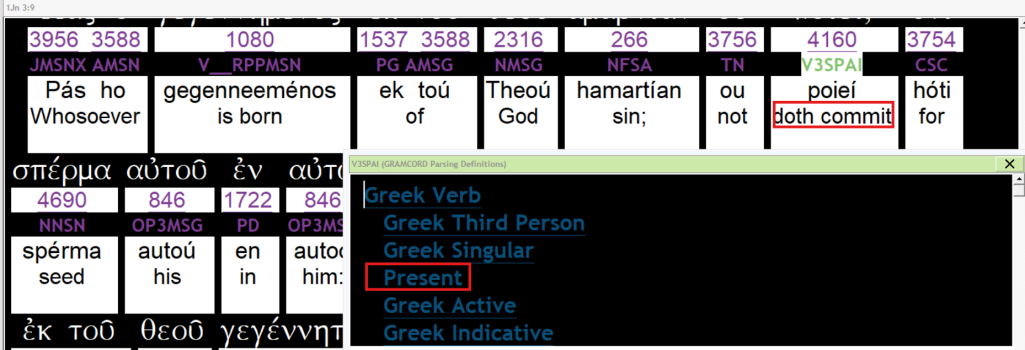
Once a person becomes a true believer, begotten by God through the spirit of His Son, they are said to remain begotten and the “holy seed” is not removed or lost.
Because of this, a believer is regarded as sinless through Christ’s spirit and their new alignment with God’s righteousness, not due to any personal works generated from self-will. There is nothing a believer can achieve on their own; the only role they have is to continue in faith as they grow more like Christ.
These believers are sinless not because of who they are in themselves, it is because of the perfect seed of the Son within them. They do not practice sin as a natural life style anymore, as under the law.
The idea of an “initial grace” is very dubious and questionable. Using the term grace at this stage of salvation is viewed as unnecessary and potentially confusing. The seed of Christ placed by God (his vital piece for salvation by his grace) is described as not leaving or “leaking out,” as if there were a temporary trial period in which a person could decide whether to rely on faith in God or not. Instead, scripture suggested that the decision has already been made in alignment with Christ and God, and that no one can interfere with these spiritual matters once they are established. It is also asserted that a genuine believer would not return to a life driven by carnal self-will after conversion.
It is further stated in scripture, by strong implications, that many who identify as followers of Christ in each generation are not genuine believers, and that only a remnant are chosen whose faith endures throughout their lives.
Those who are begotten of God today and possess the spirit of His Son are described as being dead to the law. A believer is said to be guided by God’s law through His Son, which produces spiritual fruit from God rather than from self-interest or ego. These “few” are described as holy and continue to bear spiritual fruit in their lives, ultimately derived from God and His righteousness by his Son.